

Importo totale (1 articolo articoli):
Destinazione ordine:

ross bowden author (1 risultati)
Vai alla pagina principale dei risultati di ricerca
Filtri di ricerca
Tipo di articolo
- Tutti i tipi di prodotto
- Libri (1)
- Riviste e Giornali (Nessun altro risultato corrispondente a questo perfezionamento)
- Fumetti (Nessun altro risultato corrispondente a questo perfezionamento)
- Spartiti (Nessun altro risultato corrispondente a questo perfezionamento)
- Arte, Stampe e Poster (Nessun altro risultato corrispondente a questo perfezionamento)
- Fotografie (Nessun altro risultato corrispondente a questo perfezionamento)
- Mappe (Nessun altro risultato corrispondente a questo perfezionamento)
- Manoscritti e Collezionismo cartaceo (Nessun altro risultato corrispondente a questo perfezionamento)
Condizioni Maggiori informazioni
- Nuovo (Nessun altro risultato corrispondente a questo perfezionamento)
- Come nuovo, Ottimo o Quasi ottimo (Nessun altro risultato corrispondente a questo perfezionamento)
- Molto buono o Buono (1)
- Discreto o Mediocre (Nessun altro risultato corrispondente a questo perfezionamento)
- Come descritto (Nessun altro risultato corrispondente a questo perfezionamento)
Legatura
- Tutte
- Rilegato (Nessun altro risultato corrispondente a questo perfezionamento)
- Brossura (1)
Ulteriori caratteristiche
- Prima ed. (Nessun altro risultato corrispondente a questo perfezionamento)
- Copia autograf. (Nessun altro risultato corrispondente a questo perfezionamento)
- Sovracoperta (Nessun altro risultato corrispondente a questo perfezionamento)
- Con foto (1)
- Non Print on Demand (1)
Lingua (1)
Prezzo
- Qualsiasi prezzo
- Inferiore a EUR 20 (Nessun altro risultato corrispondente a questo perfezionamento)
- EUR 20 a EUR 45 (Nessun altro risultato corrispondente a questo perfezionamento)
- Superiore a EUR 45
Spedizione gratuita
- Spedizione gratuita in U.S.A. (Nessun altro risultato corrispondente a questo perfezionamento)
Paese del venditore
Valutazione venditore
-
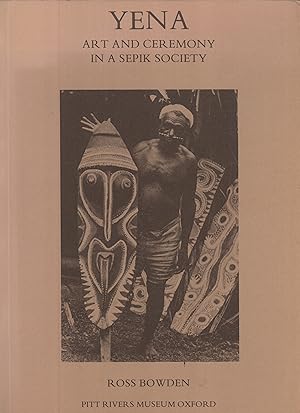
Yena: Art and Ceremony in a Sepik Society (Monograph 3)
Editore: Pitt Rivers Museum, University of Oxford, 1983
Da: Masalai Press, Oakland, CA, U.S.A.
Valutazione del venditore 5 su 5 stelle

Soft cover. Condizione: Very Good. 179 pp., illustrations, bibliography, index. The Sepik River region of Papua New Guinea has long been recognised as one of the great art-producing areas of the tribal world. Exploiting to the full the technical and aesthetic possibilities of natural materials such as wood, clay, bone and feathers, craftsmen living in villages scattered along the Sepik and its tributaries have created masks, wood carvings and paintings that are not only distinctive and compelling in their imagery, but have had a decisive impact on modern western art. And yet, despite nearly a century of European contact, remarkably little of anthropological significance is known about the visual art from this region. Dr. Bowden's book makes a major contribution to our understanding of Sepik art by offering a detailed ethnographic description and analysis of one of the region's most well-known forms of sculpture: the wood carvings that are manufactured for and displayed during the Kwoma yena ceremony, a ritual associated with the harvesting of yams. In addition to describing the social background to the art, and its ceremonial setting, the author provides an interpretation of the symbolism of the sculpture by drawing on myth, world view and values as they are expressed in everyday behaviour, and gives a concise account of all of the other major forms of Kwoma art.
