

Importo totale (1 articolo articoli):
Destinazione ordine:

ryan moore martin fuller (16 risultati)
Vai alla pagina principale dei risultati di ricerca
Filtri di ricerca
Tipo di articolo
- Tutti i tipi di prodotto
- Libri (16)
- Riviste e Giornali (Nessun altro risultato corrispondente a questo perfezionamento)
- Fumetti (Nessun altro risultato corrispondente a questo perfezionamento)
- Spartiti (Nessun altro risultato corrispondente a questo perfezionamento)
- Arte, Stampe e Poster (Nessun altro risultato corrispondente a questo perfezionamento)
- Fotografie (Nessun altro risultato corrispondente a questo perfezionamento)
- Mappe (Nessun altro risultato corrispondente a questo perfezionamento)
- Manoscritti e Collezionismo cartaceo (Nessun altro risultato corrispondente a questo perfezionamento)
Condizioni Maggiori informazioni
- Nuovo (14)
- Come nuovo, Ottimo o Quasi ottimo (2)
- Molto buono o Buono (Nessun altro risultato corrispondente a questo perfezionamento)
- Discreto o Mediocre (Nessun altro risultato corrispondente a questo perfezionamento)
- Come descritto (Nessun altro risultato corrispondente a questo perfezionamento)
Legatura
Ulteriori caratteristiche
- Prima ed. (Nessun altro risultato corrispondente a questo perfezionamento)
- Copia autograf. (Nessun altro risultato corrispondente a questo perfezionamento)
- Sovracoperta (Nessun altro risultato corrispondente a questo perfezionamento)
- Con foto (4)
- Non Print on Demand (16)
Lingua (1)
Prezzo
- Qualsiasi prezzo
- Inferiore a EUR 20
- EUR 20 a EUR 40
- Superiore a EUR 40 (Nessun altro risultato corrispondente a questo perfezionamento)
Spedizione gratuita
Paese del venditore
Valutazione venditore
-

An Analysis of Jane Jacobs's The Death and Life of Great American Cities
Libro 16 di 215: The Macat LibraryLingua: Inglese
Editore: Macat International Limited, GB, 2017
ISBN 10: 1912128594 ISBN 13: 9781912128594
Da: Rarewaves.com USA, London, LONDO, Regno Unito
Valutazione del venditore 5 su 5 stelle

EUR 11,93
Spedizione gratuita
Spedito da Regno Unito a U.S.A.Quantità: 1 disponibili
Aggiungi al carrelloPaperback. Condizione: New. Despite having no formal training in urban planning, Jane Jacobs deftly explores the strengths and weaknesses of policy arguments put forward by American urban planners in the era after World War II. They believed that the efficient movement of cars was of more value in the development of US cities than the everyday lives of the people living there. By carefully examining their relevance in her 1961 book, The Death and Life of Great American Cities, Jacobs dismantles these arguments by highlighting their shortsightedness. She evaluates the information to hand and comes to a very different conclusion, that urban planners ruin great cities, because they don't understand that it is a city's social interaction that makes it great. Proposals and policies that are drawn from planning theory do not consider the social dynamics of city life. They are in thrall to futuristic fantasies of a modern way of living that bears no relation to reality, or to the desires of real people living in real spaces. Professionals lobby for separation and standardization, splitting commercial, residential, industrial, and cultural spaces. But a truly visionary approach to urban planning should incorporate spaces with mixed uses, together with short, walkable blocks, large concentrations of people, and a mix of new and old buildings. This creates true urban vitality.
-

An Analysis of Jane Jacobs's The Death and Life of Great American Cities: The Death and Life of Great American Cities (The Macat Library)
Libro 16 di 215: The Macat LibraryDa: Lucky's Textbooks, Dallas, TX, U.S.A.
Valutazione del venditore 5 su 5 stelle
EUR 10,00
Spedizione EUR 3,36
Spedito in U.S.A.Quantità: Più di 20 disponibili
Aggiungi al carrelloCondizione: New.
-
An Analysis of Jane Jacobs's The Death and Life of Great American Cities: The Death and Life of Great American Cities (The Macat Library)
Libro 16 di 215: The Macat LibraryDa: California Books, Miami, FL, U.S.A.
Valutazione del venditore 5 su 5 stelle
EUR 13,86
Spedizione gratuita
Spedito in U.S.A.Quantità: Più di 20 disponibili
Aggiungi al carrelloCondizione: New.
-
An Analysis of Jane Jacobs's: The Death and Life of Great American Cities
Libro 16 di 215: The Macat LibraryDa: Books Puddle, New York, NY, U.S.A.
Valutazione del venditore 4 su 5 stelle

Condizione: New.
-
An Analysis of Jane Jacobs's: The Death and Life of Great American Cities
Libro 16 di 215: The Macat LibraryDa: Biblios, Frankfurt am main, HESSE, Germania
Valutazione del venditore 4 su 5 stelle
EUR 12,45
Spedizione EUR 9,95
Spedito da Germania a U.S.A.Quantità: 3 disponibili
Aggiungi al carrelloCondizione: New.
-
An Analysis of Jane Jacobs's The Death and Life of Great American Cities: The Death and Life of Great American Cities (The Macat Library)
Libro 16 di 215: The Macat LibraryDa: Ria Christie Collections, Uxbridge, Regno Unito
Valutazione del venditore 5 su 5 stelle
EUR 10,58
Spedizione EUR 13,74
Spedito da Regno Unito a U.S.A.Quantità: Più di 20 disponibili
Aggiungi al carrelloCondizione: New. In.
-
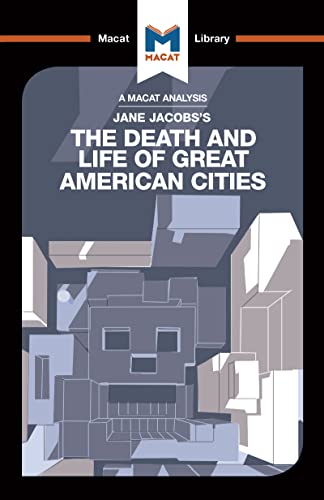
Death and Life of Great American Cities
Libro 16 di 215: The Macat LibraryDa: GreatBookPrices, Columbia, MD, U.S.A.
Valutazione del venditore 5 su 5 stelle
Condizione: As New. Unread book in perfect condition.
-
Death and Life of Great American Cities
Libro 16 di 215: The Macat LibraryDa: GreatBookPrices, Columbia, MD, U.S.A.
Valutazione del venditore 5 su 5 stelle
Condizione: New.
-
An Analysis of Jane Jacobs's The Death and Life of Great American Cities (The Macat Library)
Libro 16 di 215: The Macat LibraryDa: Majestic Books, Hounslow, Regno Unito
Valutazione del venditore 4 su 5 stelle
EUR 26,51
Spedizione EUR 7,45
Spedito da Regno Unito a U.S.A.Quantità: 3 disponibili
Aggiungi al carrelloCondizione: New.
-
An Analysis of Jane Jacobs's The Death and Life of Great American Cities (The Macat Library)
Libro 16 di 215: The Macat LibraryDa: Books Puddle, New York, NY, U.S.A.
Valutazione del venditore 4 su 5 stelle
Condizione: New.
-
An Analysis of Jane Jacobs's The Death and Life of Great American Cities (The Macat Library)
Libro 16 di 215: The Macat LibraryDa: Biblios, Frankfurt am main, HESSE, Germania
Valutazione del venditore 4 su 5 stelle
EUR 31,41
Spedizione EUR 9,95
Spedito da Germania a U.S.A.Quantità: 3 disponibili
Aggiungi al carrelloCondizione: New.
-
Death and Life of Great American Cities
Libro 16 di 215: The Macat LibraryDa: GreatBookPricesUK, Woodford Green, Regno Unito
Valutazione del venditore 5 su 5 stelle
EUR 28,46
Spedizione EUR 17,20
Spedito da Regno Unito a U.S.A.Quantità: 10 disponibili
Aggiungi al carrelloCondizione: As New. Unread book in perfect condition.
-
Death and Life of Great American Cities
Libro 16 di 215: The Macat LibraryDa: GreatBookPricesUK, Woodford Green, Regno Unito
Valutazione del venditore 5 su 5 stelle
EUR 31,28
Spedizione EUR 17,20
Spedito da Regno Unito a U.S.A.Quantità: 10 disponibili
Aggiungi al carrelloCondizione: New.
-

EUR 13,94
Spedizione EUR 48,99
Spedito da Germania a U.S.A.Quantità: 2 disponibili
Aggiungi al carrelloCondizione: New. Dr Martin Fuller holds a PhD in Sociology from the University of Cambridge for research that focused on the Sociology of Art in New York and Berlin. He is currently a researcher at the Technische Universitaet, Berlin.Dr Rya.
-
EUR 32,78
Spedizione EUR 48,99
Spedito da Germania a U.S.A.Quantità: Più di 20 disponibili
Aggiungi al carrelloGebunden. Condizione: New. Dr Martin Fuller holds a PhD in Sociology from the University of Cambridge for research that focused on the Sociology of Art in New York and Berlin. He is currently a researcher at the Technische Universitaet, Berlin.Dr Rya.
-

An Analysis of Jane Jacobs's The Death and Life of Great American Cities
Libro 16 di 215: The Macat LibraryLingua: Inglese
Editore: Macat International Limited, GB, 2017
ISBN 10: 1912128594 ISBN 13: 9781912128594
Da: Rarewaves.com UK, London, Regno Unito
Valutazione del venditore 5 su 5 stelle
EUR 10,31
Spedizione EUR 74,54
Spedito da Regno Unito a U.S.A.Quantità: 1 disponibili
Aggiungi al carrelloPaperback. Condizione: New. Despite having no formal training in urban planning, Jane Jacobs deftly explores the strengths and weaknesses of policy arguments put forward by American urban planners in the era after World War II. They believed that the efficient movement of cars was of more value in the development of US cities than the everyday lives of the people living there. By carefully examining their relevance in her 1961 book, The Death and Life of Great American Cities, Jacobs dismantles these arguments by highlighting their shortsightedness. She evaluates the information to hand and comes to a very different conclusion, that urban planners ruin great cities, because they don't understand that it is a city's social interaction that makes it great. Proposals and policies that are drawn from planning theory do not consider the social dynamics of city life. They are in thrall to futuristic fantasies of a modern way of living that bears no relation to reality, or to the desires of real people living in real spaces. Professionals lobby for separation and standardization, splitting commercial, residential, industrial, and cultural spaces. But a truly visionary approach to urban planning should incorporate spaces with mixed uses, together with short, walkable blocks, large concentrations of people, and a mix of new and old buildings. This creates true urban vitality.

