

Importo totale (1 articolo articoli):
Destinazione ordine:

sechrest larry (24 risultati)
Vai alla pagina principale dei risultati di ricerca
Filtri di ricerca
Tipo di articolo
- Tutti i tipi di prodotto
- Libri (24)
- Riviste e Giornali (Nessun altro risultato corrispondente a questo perfezionamento)
- Fumetti (Nessun altro risultato corrispondente a questo perfezionamento)
- Spartiti (Nessun altro risultato corrispondente a questo perfezionamento)
- Arte, Stampe e Poster (Nessun altro risultato corrispondente a questo perfezionamento)
- Fotografie (Nessun altro risultato corrispondente a questo perfezionamento)
- Mappe (Nessun altro risultato corrispondente a questo perfezionamento)
- Manoscritti e Collezionismo cartaceo (Nessun altro risultato corrispondente a questo perfezionamento)
Condizioni Maggiori informazioni
- Nuovo (19)
- Come nuovo, Ottimo o Quasi ottimo (3)
- Molto buono o Buono (2)
- Discreto o Mediocre (Nessun altro risultato corrispondente a questo perfezionamento)
- Come descritto (Nessun altro risultato corrispondente a questo perfezionamento)
Legatura
Ulteriori caratteristiche
- Prima ed. (Nessun altro risultato corrispondente a questo perfezionamento)
- Copia autograf. (Nessun altro risultato corrispondente a questo perfezionamento)
- Sovracoperta (Nessun altro risultato corrispondente a questo perfezionamento)
- Con foto (11)
- Non Print on Demand (16)
Lingua (1)
Prezzo
- Qualsiasi prezzo
- Inferiore a EUR 20 (Nessun altro risultato corrispondente a questo perfezionamento)
- EUR 20 a EUR 40 (Nessun altro risultato corrispondente a questo perfezionamento)
- Superiore a EUR 40
Spedizione gratuita
Paese del venditore
Valutazione venditore
-

hardcover. Condizione: Good. Connecting readers with great books since 1972! Used textbooks may not include companion materials such as access codes, etc. May have some wear or writing/highlighting. We ship orders daily and Customer Service is our top priority!
-
Free Banking : Theory, History, and a Laissez-Faire Model
Da: Better World Books: West, Reno, NV, U.S.A.
Valutazione del venditore 5 su 5 stelle

Condizione: Very Good. Former library copy. Pages intact with possible writing/highlighting. Binding strong with minor wear. Dust jackets/supplements may not be included. Includes library markings. Stock photo provided. Product includes identifying sticker. Better World Books: Buy Books. Do Good.
-

Philosophers of Capitalism: Menger, Mises, Rand, and Beyond
Da: BennettBooksLtd, Los Angeles, CA, U.S.A.
Valutazione del venditore 5 su 5 stelle
paperback. Condizione: New. In shrink wrap. Looks like an interesting title!
-

Free Banking : Theory, History, and a Laissez-Faire Model
Da: GreatBookPrices, Columbia, MD, U.S.A.
Valutazione del venditore 5 su 5 stelle
EUR 99,91
Spedizione EUR 2,22
Spedito in U.S.A.Quantità: Più di 20 disponibili
Aggiungi al carrelloCondizione: New.
-
Free Banking: Theory, History, and a Laissez-Faire Model
Da: Lucky's Textbooks, Dallas, TX, U.S.A.
Valutazione del venditore 5 su 5 stelle
EUR 102,05
Spedizione EUR 3,36
Spedito in U.S.A.Quantità: Più di 20 disponibili
Aggiungi al carrelloCondizione: New.
-

Free Banking : Theory, History, and a Laissez-Faire Model
Da: GreatBookPricesUK, Woodford Green, Regno Unito
Valutazione del venditore 5 su 5 stelle
EUR 97,16
Spedizione EUR 17,21
Spedito da Regno Unito a U.S.A.Quantità: Più di 20 disponibili
Aggiungi al carrelloCondizione: New.
-
Free Banking: Theory, History, and a Laissez-Faire Model
Da: Ria Christie Collections, Uxbridge, Regno Unito
Valutazione del venditore 5 su 5 stelle
EUR 103,48
Spedizione EUR 13,75
Spedito da Regno Unito a U.S.A.Quantità: Più di 20 disponibili
Aggiungi al carrelloCondizione: New. In.
-

Free Banking
Lingua: Inglese
Editore: Bloomsbury Publishing Plc, US, 1993
ISBN 10: 0899308155 ISBN 13: 9780899308159
EUR 128,37
Spedizione gratuita
Spedito in U.S.A.Quantità: Più di 20 disponibili
Aggiungi al carrelloHardback. Condizione: New. Free banking is a term that refers to the total deregulation of the banking industry. It signifies an absence of such constraints as reserve requirements, capital requirements, government deposit insurance, and limitations on branching. Above all, it means that private banks would be allowed to issue their own currency. This book takes a fresh approach to that controversial topic. Sechrest proposes that free banking constitutes the final vindication of Say's Law, that the optimal monetary goal, monetary equilibrium, can only be achieved under free banking, that the monetarist and Austrian business cycle theories are complementary, and that the most likely form of free banking will be that in which banks issue specie-convertible notes and hold fractional reserves.After defining free banking the author explains why he adopts the well known White-Selgin model. He then discusses the key characteristics of laissez-faire banks, which form the basis for a formal model, complete with graphs, which may be used in the classroom. The unique relationship between the market for money and the market for time that exists under free banking suggests that business cycles will be minimized under such a regime. That relationship also leads to the insight that the Austrian and monetarist cycle theories are really two sides of the same coin. New evidence is presented that leads the author to the conclusion that both Lawrence White's portrayal of Scottish free banking and the traditional image of American free banking are exaggerated. Three different basic models of free banking are then reviewed in detail and critiqued. Finally, the author suggests both some possible topics for future research and that free banking is desirable socially and politically as well as economically.
-
Free Banking: Theory, History, and a Laissez-Faire Model
Da: BennettBooksLtd, Los Angeles, CA, U.S.A.
Valutazione del venditore 5 su 5 stelle
Hardcover. Condizione: New. In shrink wrap. Looks like an interesting title!
-

Free Banking
Lingua: Inglese
Editore: Bloomsbury Publishing Plc, US, 1993
ISBN 10: 0899308155 ISBN 13: 9780899308159
Da: Rarewaves.com USA, London, LONDO, Regno Unito
Valutazione del venditore 5 su 5 stelle
EUR 157,20
Spedizione gratuita
Spedito da Regno Unito a U.S.A.Quantità: Più di 20 disponibili
Aggiungi al carrelloHardback. Condizione: New. Free banking is a term that refers to the total deregulation of the banking industry. It signifies an absence of such constraints as reserve requirements, capital requirements, government deposit insurance, and limitations on branching. Above all, it means that private banks would be allowed to issue their own currency. This book takes a fresh approach to that controversial topic. Sechrest proposes that free banking constitutes the final vindication of Say's Law, that the optimal monetary goal, monetary equilibrium, can only be achieved under free banking, that the monetarist and Austrian business cycle theories are complementary, and that the most likely form of free banking will be that in which banks issue specie-convertible notes and hold fractional reserves.After defining free banking the author explains why he adopts the well known White-Selgin model. He then discusses the key characteristics of laissez-faire banks, which form the basis for a formal model, complete with graphs, which may be used in the classroom. The unique relationship between the market for money and the market for time that exists under free banking suggests that business cycles will be minimized under such a regime. That relationship also leads to the insight that the Austrian and monetarist cycle theories are really two sides of the same coin. New evidence is presented that leads the author to the conclusion that both Lawrence White's portrayal of Scottish free banking and the traditional image of American free banking are exaggerated. Three different basic models of free banking are then reviewed in detail and critiqued. Finally, the author suggests both some possible topics for future research and that free banking is desirable socially and politically as well as economically.
-
Free Banking: Theory, History, and a Laissez-Faire Model
Da: Revaluation Books, Exeter, Regno Unito
Valutazione del venditore 5 su 5 stelle
EUR 151,27
Spedizione EUR 14,34
Spedito da Regno Unito a U.S.A.Quantità: 2 disponibili
Aggiungi al carrelloHardcover. Condizione: Brand New. 224 pages. 9.50x6.50x1.00 inches. In Stock.
-

Free Banking : Theory, History, and a Laissez-Faire Model
Da: GreatBookPricesUK, Woodford Green, Regno Unito
Valutazione del venditore 5 su 5 stelle
EUR 155,99
Spedizione EUR 17,21
Spedito da Regno Unito a U.S.A.Quantità: Più di 20 disponibili
Aggiungi al carrelloCondizione: As New. Unread book in perfect condition.
-
Free Banking: Theory, History, and a Laissez-Faire Model
Da: Mispah books, Redhill, SURRE, Regno Unito
Valutazione del venditore 4 su 5 stelle

EUR 146,55
Spedizione EUR 28,68
Spedito da Regno Unito a U.S.A.Quantità: 1 disponibili
Aggiungi al carrelloHardcover. Condizione: Like New. Like New. book.
-

Free Banking
Lingua: Inglese
Editore: Bloomsbury Publishing Plc, US, 1993
ISBN 10: 0899308155 ISBN 13: 9780899308159
Da: Rarewaves USA United, OSWEGO, IL, U.S.A.
Valutazione del venditore 5 su 5 stelle
EUR 129,91
Spedizione EUR 42,13
Spedito in U.S.A.Quantità: Più di 20 disponibili
Aggiungi al carrelloHardback. Condizione: New. Free banking is a term that refers to the total deregulation of the banking industry. It signifies an absence of such constraints as reserve requirements, capital requirements, government deposit insurance, and limitations on branching. Above all, it means that private banks would be allowed to issue their own currency. This book takes a fresh approach to that controversial topic. Sechrest proposes that free banking constitutes the final vindication of Say's Law, that the optimal monetary goal, monetary equilibrium, can only be achieved under free banking, that the monetarist and Austrian business cycle theories are complementary, and that the most likely form of free banking will be that in which banks issue specie-convertible notes and hold fractional reserves.After defining free banking the author explains why he adopts the well known White-Selgin model. He then discusses the key characteristics of laissez-faire banks, which form the basis for a formal model, complete with graphs, which may be used in the classroom. The unique relationship between the market for money and the market for time that exists under free banking suggests that business cycles will be minimized under such a regime. That relationship also leads to the insight that the Austrian and monetarist cycle theories are really two sides of the same coin. New evidence is presented that leads the author to the conclusion that both Lawrence White's portrayal of Scottish free banking and the traditional image of American free banking are exaggerated. Three different basic models of free banking are then reviewed in detail and critiqued. Finally, the author suggests both some possible topics for future research and that free banking is desirable socially and politically as well as economically.
-

Free Banking : Theory, History, and a Laissez-Faire Model
Da: GreatBookPrices, Columbia, MD, U.S.A.
Valutazione del venditore 5 su 5 stelle
EUR 178,19
Spedizione EUR 2,22
Spedito in U.S.A.Quantità: Più di 20 disponibili
Aggiungi al carrelloCondizione: As New. Unread book in perfect condition.
-

Free Banking
Lingua: Inglese
Editore: Bloomsbury Publishing Plc, US, 1993
ISBN 10: 0899308155 ISBN 13: 9780899308159
Da: Rarewaves.com UK, London, Regno Unito
Valutazione del venditore 5 su 5 stelle
EUR 147,03
Spedizione EUR 74,58
Spedito da Regno Unito a U.S.A.Quantità: Più di 20 disponibili
Aggiungi al carrelloHardback. Condizione: New. Free banking is a term that refers to the total deregulation of the banking industry. It signifies an absence of such constraints as reserve requirements, capital requirements, government deposit insurance, and limitations on branching. Above all, it means that private banks would be allowed to issue their own currency. This book takes a fresh approach to that controversial topic. Sechrest proposes that free banking constitutes the final vindication of Say's Law, that the optimal monetary goal, monetary equilibrium, can only be achieved under free banking, that the monetarist and Austrian business cycle theories are complementary, and that the most likely form of free banking will be that in which banks issue specie-convertible notes and hold fractional reserves.After defining free banking the author explains why he adopts the well known White-Selgin model. He then discusses the key characteristics of laissez-faire banks, which form the basis for a formal model, complete with graphs, which may be used in the classroom. The unique relationship between the market for money and the market for time that exists under free banking suggests that business cycles will be minimized under such a regime. That relationship also leads to the insight that the Austrian and monetarist cycle theories are really two sides of the same coin. New evidence is presented that leads the author to the conclusion that both Lawrence White's portrayal of Scottish free banking and the traditional image of American free banking are exaggerated. Three different basic models of free banking are then reviewed in detail and critiqued. Finally, the author suggests both some possible topics for future research and that free banking is desirable socially and politically as well as economically.
-
Free Banking
Da: PBShop.store UK, Fairford, GLOS, Regno Unito
Valutazione del venditore 4 su 5 stelle
EUR 97,17
Spedizione EUR 5,76
Spedito da Regno Unito a U.S.A.Quantità: Più di 20 disponibili
Aggiungi al carrelloHRD. Condizione: New. New Book. Delivered from our UK warehouse in 4 to 14 business days. THIS BOOK IS PRINTED ON DEMAND. Established seller since 2000.
-
Free Banking
Da: PBShop.store US, Wood Dale, IL, U.S.A.
Valutazione del venditore 5 su 5 stelle
EUR 102,21
Spedizione gratuita
Spedito in U.S.A.Quantità: Più di 20 disponibili
Aggiungi al carrelloHRD. Condizione: New. New Book. Shipped from UK. THIS BOOK IS PRINTED ON DEMAND. Established seller since 2000.
-
Free Banking (Hardcover)
Lingua: Inglese
Editore: Bloomsbury Publishing Plc, Westport, 1993
ISBN 10: 0899308155 ISBN 13: 9780899308159
Da: Grand Eagle Retail, Bensenville, IL, U.S.A.
Valutazione del venditore 5 su 5 stelle
Hardcover. Condizione: new. Hardcover. Free banking is a term that refers to the total deregulation of the banking industry. It signifies an absence of such constraints as reserve requirements, capital requirements, government deposit insurance, and limitations on branching. Above all, it means that private banks would be allowed to issue their own currency. This book takes a fresh approach to that controversial topic. Sechrest proposes that free banking constitutes the final vindication of Say's Law, that the optimal monetary goal, monetary equilibrium, can only be achieved under free banking, that the monetarist and Austrian business cycle theories are complementary, and that the most likely form of free banking will be that in which banks issue specie-convertible notes and hold fractional reserves.After defining free banking the author explains why he adopts the well known White-Selgin model. He then discusses the key characteristics of laissez-faire banks, which form the basis for a formal model, complete with graphs, which may be used in the classroom. The unique relationship between the market for money and the market for time that exists under free banking suggests that business cycles will be minimized under such a regime. That relationship also leads to the insight that the Austrian and monetarist cycle theories are really two sides of the same coin. New evidence is presented that leads the author to the conclusion that both Lawrence White's portrayal of Scottish free banking and the traditional image of American free banking are exaggerated. Three different basic models of free banking are then reviewed in detail and critiqued. Finally, the author suggests both some possible topics for future research and that free banking is desirable socially and politically as well as economically. Free banking means the total deregulation of the banking industry, signifying an absence of constraints on reserve and capital requirements, and government insurance. It also means that private banks could issue their own currency. This work addresses these issues in terms of Says's Law. This item is printed on demand. Shipping may be from multiple locations in the US or from the UK, depending on stock availability.
-
Free Banking: Theory, History, and a Laissez-Faire Model
Da: THE SAINT BOOKSTORE, Southport, Regno Unito
Valutazione del venditore 5 su 5 stelle
EUR 111,58
Spedizione EUR 18,61
Spedito da Regno Unito a U.S.A.Quantità: Più di 20 disponibili
Aggiungi al carrelloHardback. Condizione: New. This item is printed on demand. New copy - Usually dispatched within 5-9 working days.
-
Free Banking (Hardcover)
Lingua: Inglese
Editore: Bloomsbury Publishing Plc, Westport, 1993
ISBN 10: 0899308155 ISBN 13: 9780899308159
Da: CitiRetail, Stevenage, Regno Unito
Valutazione del venditore 5 su 5 stelle
EUR 103,99
Spedizione EUR 42,45
Spedito da Regno Unito a U.S.A.Quantità: 1 disponibili
Aggiungi al carrelloHardcover. Condizione: new. Hardcover. Free banking is a term that refers to the total deregulation of the banking industry. It signifies an absence of such constraints as reserve requirements, capital requirements, government deposit insurance, and limitations on branching. Above all, it means that private banks would be allowed to issue their own currency. This book takes a fresh approach to that controversial topic. Sechrest proposes that free banking constitutes the final vindication of Say's Law, that the optimal monetary goal, monetary equilibrium, can only be achieved under free banking, that the monetarist and Austrian business cycle theories are complementary, and that the most likely form of free banking will be that in which banks issue specie-convertible notes and hold fractional reserves.After defining free banking the author explains why he adopts the well known White-Selgin model. He then discusses the key characteristics of laissez-faire banks, which form the basis for a formal model, complete with graphs, which may be used in the classroom. The unique relationship between the market for money and the market for time that exists under free banking suggests that business cycles will be minimized under such a regime. That relationship also leads to the insight that the Austrian and monetarist cycle theories are really two sides of the same coin. New evidence is presented that leads the author to the conclusion that both Lawrence White's portrayal of Scottish free banking and the traditional image of American free banking are exaggerated. Three different basic models of free banking are then reviewed in detail and critiqued. Finally, the author suggests both some possible topics for future research and that free banking is desirable socially and politically as well as economically. Free banking means the total deregulation of the banking industry, signifying an absence of constraints on reserve and capital requirements, and government insurance. It also means that private banks could issue their own currency. This work addresses these issues in terms of Says's Law. This item is printed on demand. Shipping may be from our UK warehouse or from our Australian or US warehouses, depending on stock availability.
-
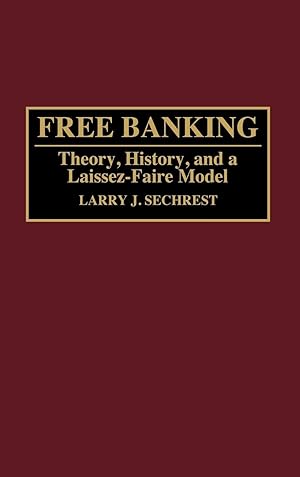
EUR 104,51
Spedizione EUR 48,99
Spedito da Germania a U.S.A.Quantità: Più di 20 disponibili
Aggiungi al carrelloCondizione: New. Dieser Artikel ist ein Print on Demand Artikel und wird nach Ihrer Bestellung fuer Sie gedruckt. Free banking means the total deregulation of the banking industry, signifying an absence of constraints on reserve and capital requirements, and government insurance. It also means that private banks could issue their own currency. This work addresses these.
-

EUR 108,40
Spedizione EUR 70,00
Spedito da Germania a U.S.A.Quantità: 5 disponibili
Aggiungi al carrelloBuch. Condizione: Neu. Free Banking | Theory, History, and a Laissez-Faire Model | Larry J. Sechrest | Buch | Gebunden | Englisch | 1993 | Praeger | EAN 9780899308159 | Verantwortliche Person für die EU: Libri GmbH, Europaallee 1, 36244 Bad Hersfeld, gpsr[at]libri[dot]de | Anbieter: preigu Print on Demand.
-
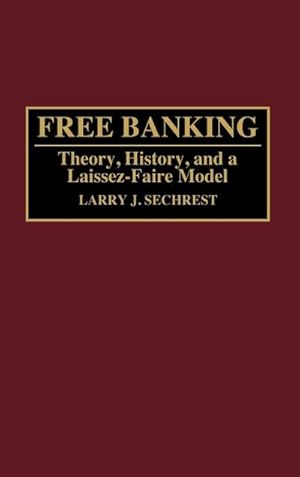
EUR 129,50
Spedizione EUR 62,53
Spedito da Germania a U.S.A.Quantità: 1 disponibili
Aggiungi al carrelloBuch. Condizione: Neu. nach der Bestellung gedruckt Neuware - Printed after ordering - Free banking is a term that refers to the total deregulation of the banking industry. It signifies an absence of such constraints as reserve requirements, capital requirements, government deposit insurance, and limitations on branching. Above all, it means that private banks would be allowed to issue their own currency. This book takes a fresh approach to that controversial topic. Sechrest proposes that free banking constitutes the final vindication of Say's Law, that the optimal monetary goal, monetary equilibrium, can only be achieved under free banking, that the monetarist and Austrian business cycle theories are complementary, and that the most likely form of free banking will be that in which banks issue specie-convertible notes and hold fractional reserves.After defining free banking the author explains why he adopts the well known White-Selgin model. He then discusses the key characteristics of laissez-faire banks, which form the basis for a formal model, complete with graphs, which may be used in the classroom. The unique relationship between the market for money and the market for time that exists under free banking suggests that business cycles will be minimized under such a regime. That relationship also leads to the insight that the Austrian and monetarist cycle theories are really two sides of the same coin. New evidence is presented that leads the author to the conclusion that both Lawrence White's portrayal of Scottish free banking and the traditional image of American free banking are exaggerated. Three different basic models of free banking are then reviewed in detail and critiqued. Finally, the author suggests both some possible topics for future research and that free banking is desirable socially and politically as well as economically.

