
Siegfried quast (16 risultati)
- Rilegato
Da: GreatBookPrices, Columbia, MD, U.S.A.GreatBookPrices
Contatta il venditoreVenditore con 5 stelleCondizione: Nuovo
EUR 26,69
EUR 2,31 spedizioneSpedito in U.S.A.Quantità: 1 disponibili
Condizione: New.
- Rilegato
Da: GreatBookPrices, Columbia, MD, U.S.A.GreatBookPrices
Contatta il venditoreVenditore con 5 stelleCondizione: Usato - Come nuovo
EUR 26,89
EUR 2,31 spedizioneSpedito in U.S.A.Quantità: 1 disponibili
Condizione: As New. Unread book in perfect condition.
- Rilegato
Da: Grand Eagle Retail, Bensenville, IL, U.S.A.Grand Eagle Retail
Contatta il venditoreVenditore con 5 stelleCondizione: Nuovo
EUR 35,82
Spedizione gratuitaSpedito in U.S.A.Quantità: 1 disponibili
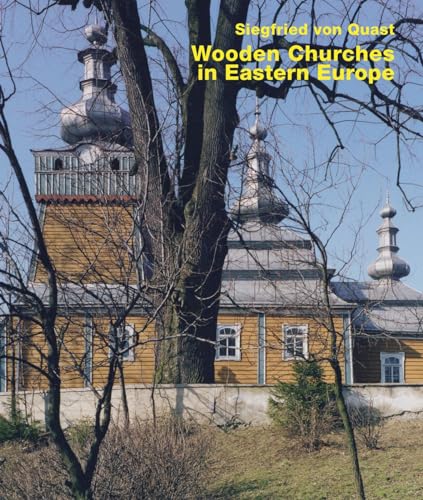
Hardcover. Condizione: new. Hardcover. What all these buildings have in common is that with the available material, wood, and the most modest means, places of worship, centres in the villages, were built with much feeling and love. The constructions in wood were derived in an old tradition from the dwellings and farm buildings o…f the peasant population. Their architecture, the typological forms probably penetrated into this seclusion as an idea. "The idea of a church as a building", brought with them by clergymen and wandering master craftsmen from the more fertile plains and the rich, large mining and trading towns.The oldest churches were built as early as in the 15th century, most of those still standing were built in the 18th and 19th centuries, and quite a few are still being built today. Many were destroyed in the two world wars, many fell victim to ethnic cleansing after 1945. Many were destroyed in the two world wars, many fell victim to ethnic cleansing after 1945, some fell into disrepair during the Soviet era, others were burnt down by lightning or short circuits, and quite a few simply gave way to the more "representative" stone churches as early as the 19th century. But a large number are still standing, consecrated, and believers gather in them. In fact, almost all of them in the various Carpathian countries are protected monuments, and many have been lovingly restored in recent times.More than the architectural-historical value, the question arises here of the aesthetic assessment of these small buildings. It is not a refined canon of forms of great architecture that can be derived and proven from the history of architecture that inspires us so much. Basically, they are not overly sophisticated constructions in terms of craftsmanship, they are safe and beautiful in their simplicity. Their aesthetic appeal, however, also includes the surface-weathered material, deformed structures, colour improvisations, recently ornamented sheet metal, inside wall paintings, altar and iconostasis furnishings derived from Renaissance and Baroque periods, but above all their location in the village, mostly isolated, often elevated, surrounded by old trees, enclosures and graves without cemetery order. Shipping may be from multiple locations in the US or from the UK, depending on stock availability.

- Rilegato
Da: Rarewaves.com USA, London, LONDO, Regno UnitoRarewaves.com USA
Contatta il venditoreVenditore con 5 stelleCondizione: Nuovo
EUR 37,59
Spedizione gratuitaSpedito da Regno Unito a U.S.A.Quantità: 2 disponibili
Hardback. Condizione: New. What all these buildings have in common is that with the available material, wood, and the most modest means, places of worship, centres in the villages, were built with much feeling and love. The constructions in wood were derived in an old tradition from the dwellings and farm buildings of the peasan…t population. Their architecture, the typological forms probably penetrated into this seclusion as an idea. "The idea of a church as a building", brought with them by clergymen and wandering master craftsmen from the more fertile plains and the rich, large mining and trading towns.The oldest churches were built as early as in the 15th century, most of those still standing were built in the 18th and 19th centuries, and quite a few are still being built today. Many were destroyed in the two world wars, many fell victim to ethnic cleansing after 1945. Many were destroyed in the two world wars, many fell victim to ethnic cleansing after 1945, some fell into disrepair during the Soviet era, others were burnt down by lightning or short circuits, and quite a few simply gave way to the more "representative" stone churches as early as the 19th century. But a large number are still standing, consecrated, and believers gather in them. In fact, almost all of them in the various Carpathian countries are protected monuments, and many have been lovingly restored in recent times.More than the architectural-historical value, the question arises here of the aesthetic assessment of these small buildings. It is not a refined canon of forms of great architecture that can be derived and proven from the history of architecture that inspires us so much. Basically, they are not overly sophisticated constructions in terms of craftsmanship, they are safe and beautiful in their simplicity. Their aesthetic appeal, however, also includes the surface-weathered material, deformed structures, colour improvisations, recently ornamented sheet metal, inside wall paintings, altar and iconostasis furnishings derived from Renaissance and Baroque periods, but above all their location in the village, mostly isolated, often elevated, surrounded by old trees, enclosures and graves without cemetery order.

- Rilegato
Da: BargainBookStores, Grand Rapids, MI, U.S.A.BargainBookStores
Contatta il venditoreVenditore con 5 stelleCondizione: Nuovo
EUR 42,90
Spedizione gratuitaSpedito in U.S.A.Quantità: 5 disponibili
Hardback or Cased Book. Condizione: New. Wooden Churches in Eastern Europe. Book.
- Rilegato
Da: Kennys Bookshop and Art Galleries Ltd., Galway, GY, IrlandaKennys Bookshop and Art Galleries Ltd.
Contatta il venditoreVenditore con 5 stelleCondizione: Nuovo
EUR 39,30
EUR 10,50 spedizioneSpedito da Irlanda a U.S.A.Quantità: 2 disponibili
Condizione: New.
- Rilegato
Da: GreatBookPricesUK, Woodford Green, Regno UnitoGreatBookPricesUK
Contatta il venditoreVenditore con 5 stelleCondizione: Nuovo
EUR 35,97
EUR 17,51 spedizioneSpedito da Regno Unito a U.S.A.Quantità: 5 disponibili
Condizione: New.
- Rilegato
Da: Kennys Bookstore, Olney, MD, U.S.A.Kennys Bookstore
Contatta il venditoreVenditore con 5 stelleCondizione: Nuovo
EUR 49,56
EUR 9,18 spedizioneSpedito in U.S.A.Quantità: 2 disponibili
Condizione: New.
- Rilegato
Da: Revaluation Books, Exeter, Regno UnitoRevaluation Books
Contatta il venditoreVenditore con 5 stelleCondizione: Nuovo
EUR 47,06
EUR 14,59 spedizioneSpedito da Regno Unito a U.S.A.Quantità: 2 disponibili
Hardcover. Condizione: Brand New. 80 pages. 1175.01x95.01x0.46 inches. In Stock.

Münchener Fassaden. Bürgerhäuser des Historismus und des Jugendsitls.
Heinrich Habe/ Klaus Maerten / Michael Petzet / Siegfried von Quast.
- Rilegato
Da: Antiquariat Hans Hammerstein, München, GermaniaAntiquariat Hans Hammerstein
Contatta il venditoreVenditore con 4 stelleCondizione: Usato
EUR 40,00
EUR 35,00 spedizioneSpedito da Germania a U.S.A.Quantità: 1 disponibili
Original Leinenband, kl.4°, 329 Seiten. Bleistifteintrag auf Titel. Rücken etwas bestossen, mit Anstreichungen und Anmerkungen, sonst guter Zustand.
- Rilegato
Da: CitiRetail, Stevenage, Regno UnitoCitiRetail
Contatta il venditoreVenditore con 5 stelleCondizione: Nuovo
EUR 41,47
EUR 43,20 spedizioneSpedito da Regno Unito a U.S.A.Quantità: 1 disponibili
Hardcover. Condizione: new. Hardcover. What all these buildings have in common is that with the available material, wood, and the most modest means, places of worship, centres in the villages, were built with much feeling and love. The constructions in wood were derived in an old tradition from the dwellings and farm buildings o…f the peasant population. Their architecture, the typological forms probably penetrated into this seclusion as an idea. "The idea of a church as a building", brought with them by clergymen and wandering master craftsmen from the more fertile plains and the rich, large mining and trading towns.The oldest churches were built as early as in the 15th century, most of those still standing were built in the 18th and 19th centuries, and quite a few are still being built today. Many were destroyed in the two world wars, many fell victim to ethnic cleansing after 1945. Many were destroyed in the two world wars, many fell victim to ethnic cleansing after 1945, some fell into disrepair during the Soviet era, others were burnt down by lightning or short circuits, and quite a few simply gave way to the more "representative" stone churches as early as the 19th century. But a large number are still standing, consecrated, and believers gather in them. In fact, almost all of them in the various Carpathian countries are protected monuments, and many have been lovingly restored in recent times.More than the architectural-historical value, the question arises here of the aesthetic assessment of these small buildings. It is not a refined canon of forms of great architecture that can be derived and proven from the history of architecture that inspires us so much. Basically, they are not overly sophisticated constructions in terms of craftsmanship, they are safe and beautiful in their simplicity. Their aesthetic appeal, however, also includes the surface-weathered material, deformed structures, colour improvisations, recently ornamented sheet metal, inside wall paintings, altar and iconostasis furnishings derived from Renaissance and Baroque periods, but above all their location in the village, mostly isolated, often elevated, surrounded by old trees, enclosures and graves without cemetery order. Shipping may be from our UK warehouse or from our Australian or US warehouses, depending on stock availability.
- Rilegato
Da: AussieBookSeller, Truganina, VIC, AustraliaAussieBookSeller
Contatta il venditoreVenditore con 5 stelleCondizione: Nuovo
EUR 67,61
EUR 32,35 spedizioneSpedito da Australia a U.S.A.Quantità: 1 disponibili
Hardcover. Condizione: new. Hardcover. What all these buildings have in common is that with the available material, wood, and the most modest means, places of worship, centres in the villages, were built with much feeling and love. The constructions in wood were derived in an old tradition from the dwellings and farm buildings o…f the peasant population. Their architecture, the typological forms probably penetrated into this seclusion as an idea. "The idea of a church as a building", brought with them by clergymen and wandering master craftsmen from the more fertile plains and the rich, large mining and trading towns.The oldest churches were built as early as in the 15th century, most of those still standing were built in the 18th and 19th centuries, and quite a few are still being built today. Many were destroyed in the two world wars, many fell victim to ethnic cleansing after 1945. Many were destroyed in the two world wars, many fell victim to ethnic cleansing after 1945, some fell into disrepair during the Soviet era, others were burnt down by lightning or short circuits, and quite a few simply gave way to the more "representative" stone churches as early as the 19th century. But a large number are still standing, consecrated, and believers gather in them. In fact, almost all of them in the various Carpathian countries are protected monuments, and many have been lovingly restored in recent times.More than the architectural-historical value, the question arises here of the aesthetic assessment of these small buildings. It is not a refined canon of forms of great architecture that can be derived and proven from the history of architecture that inspires us so much. Basically, they are not overly sophisticated constructions in terms of craftsmanship, they are safe and beautiful in their simplicity. Their aesthetic appeal, however, also includes the surface-weathered material, deformed structures, colour improvisations, recently ornamented sheet metal, inside wall paintings, altar and iconostasis furnishings derived from Renaissance and Baroque periods, but above all their location in the village, mostly isolated, often elevated, surrounded by old trees, enclosures and graves without cemetery order. Shipping may be from our Sydney, NSW warehouse or from our UK or US warehouse, depending on stock availability.
- Rilegato
Da: GreatBookPricesUK, Woodford Green, Regno UnitoGreatBookPricesUK
Contatta il venditoreVenditore con 5 stelleCondizione: Usato - Come nuovo
EUR 84,19
EUR 17,51 spedizioneSpedito da Regno Unito a U.S.A.Quantità: 5 disponibili
Condizione: As New. Unread book in perfect condition.
- Rilegato
Da: GoldBooks, Denver, CO, U.S.A.GoldBooks
Contatta il venditoreVenditore con 5 stelleCondizione: Nuovo
EUR 102,55
EUR 4,81 spedizioneSpedito in U.S.A.Quantità: 1 disponibili
Hardcover. Condizione: new. New Copy. Customer Service Guaranteed.

- Rilegato
Da: Rarewaves.com UK, London, Regno UnitoRarewaves.com UK
Contatta il venditoreVenditore con 5 stelleCondizione: Nuovo
EUR 35,96
EUR 75,89 spedizioneSpedito da Regno Unito a U.S.A.Quantità: 2 disponibili
Hardback. Condizione: New. What all these buildings have in common is that with the available material, wood, and the most modest means, places of worship, centres in the villages, were built with much feeling and love. The constructions in wood were derived in an old tradition from the dwellings and farm buildings of the peasan…t population. Their architecture, the typological forms probably penetrated into this seclusion as an idea. "The idea of a church as a building", brought with them by clergymen and wandering master craftsmen from the more fertile plains and the rich, large mining and trading towns.The oldest churches were built as early as in the 15th century, most of those still standing were built in the 18th and 19th centuries, and quite a few are still being built today. Many were destroyed in the two world wars, many fell victim to ethnic cleansing after 1945. Many were destroyed in the two world wars, many fell victim to ethnic cleansing after 1945, some fell into disrepair during the Soviet era, others were burnt down by lightning or short circuits, and quite a few simply gave way to the more "representative" stone churches as early as the 19th century. But a large number are still standing, consecrated, and believers gather in them. In fact, almost all of them in the various Carpathian countries are protected monuments, and many have been lovingly restored in recent times.More than the architectural-historical value, the question arises here of the aesthetic assessment of these small buildings. It is not a refined canon of forms of great architecture that can be derived and proven from the history of architecture that inspires us so much. Basically, they are not overly sophisticated constructions in terms of craftsmanship, they are safe and beautiful in their simplicity. Their aesthetic appeal, however, also includes the surface-weathered material, deformed structures, colour improvisations, recently ornamented sheet metal, inside wall paintings, altar and iconostasis furnishings derived from Renaissance and Baroque periods, but above all their location in the village, mostly isolated, often elevated, surrounded by old trees, enclosures and graves without cemetery order.

Lingua: Tedesco
Editore: Springer Auflage: 5. Vollständ. überarb. (18. Oktober 1990), 1990
- Rilegato
Da: BUCHSERVICE / ANTIQUARIAT Lars Lutzer, Wahlstedt, GermaniaBUCHSERVICE / ANTIQUARIAT Lars Lutzer
Contatta il venditoreVenditore con 5 stelleCondizione: Usato - Molto buono
EUR 239,90
EUR 39,95 spedizioneSpedito da Germania a U.S.A.Quantità: 1 disponibili
Hardcover. Condizione: gut. Hagers Handbuch der Pharmazeutischen Praxis, Band 1Waren und DiensteBd. 1 [Gebundene Ausgabe] von R. Braun, F. von Bruchhausen, Hermann Hager, Hubert Schneemann, Gisela Wurm F. von Bruchhausen u. a. (Herausgeber) Hermann Hager (Autor), Franz von Bruchhausen (Autor), Siegfried Ebel (Autor), Eberhard Ha…ckenthal (Autor) In deutscher Sprache. 780 pages. 25 x 18 x 4,5 cm Auflage: 5. Vollständ. überarb. (18. Oktober 1990).


