Importo totale (1 articolo articoli):
Destinazione ordine:

stanley kramer director (20 risultati)
Vai alla pagina principale dei risultati di ricerca
Filtri di ricerca
Tipo di articolo
- Tutti i tipi di prodotto
- Libri (15)
- Riviste e Giornali (Nessun altro risultato corrispondente a questo perfezionamento)
- Fumetti (Nessun altro risultato corrispondente a questo perfezionamento)
- Spartiti (Nessun altro risultato corrispondente a questo perfezionamento)
- Arte, Stampe e Poster (Nessun altro risultato corrispondente a questo perfezionamento)
- Fotografie (Nessun altro risultato corrispondente a questo perfezionamento)
- Mappe (Nessun altro risultato corrispondente a questo perfezionamento)
- Manoscritti e Collezionismo cartaceo (5)
Condizioni Maggiori informazioni
- Nuovo (Nessun altro risultato corrispondente a questo perfezionamento)
- Come nuovo, Ottimo o Quasi ottimo (1)
- Molto buono o Buono (2)
- Discreto o Mediocre (Nessun altro risultato corrispondente a questo perfezionamento)
- Come descritto (17)
Legatura
- Tutte
- Rilegato (Nessun altro risultato corrispondente a questo perfezionamento)
- Brossura (3)
Ulteriori caratteristiche
- Prima ed. (1)
- Copia autograf. (1)
- Sovracoperta (Nessun altro risultato corrispondente a questo perfezionamento)
- Con foto (20)
- Non Print on Demand (20)
Lingua (2)
Spedizione gratuita
- Spedizione gratuita in U.S.A. (Nessun altro risultato corrispondente a questo perfezionamento)
Paese del venditore
Valutazione venditore
-

It's a Mad Mad Mad Mad World (Original photograph from the 1963 film)
Editore: United Artists, Beverly Hills, CA, 1963
Da: Royal Books, Inc., ABAA, Baltimore, MD, U.S.A.
Membro dell'associazione: ABAA ILAB
Valutazione del venditore 5 su 5 stelle

Vintage studio still photograph of Sterling Holloway from the 1963 film. Stanley Kramer's outrageous comedy about a massive group of strangers fighting over hidden treasure, with one of largest, unrivaled ensemble of players including Spencer Tracy, Milton Berle, Sid Caesar, Buddy Hackett, Ethel Merman, Mickey Rooney, Phil Silvers, Jonathan Winters, and many, many others. Winner of one Academy Award and nominated for five others, including Best Cinematography. Shot on location throughout California. 8 x 10 inches. Near Fine. Criterion Collection 692.
-
Judgment at Nuremberg (Original photograph from the 1961 film)
Editore: United Artists, Beverly Hills, CA, 1961
Da: Royal Books, Inc., ABAA, Baltimore, MD, U.S.A.
Membro dell'associazione: ABAA ILAB
Valutazione del venditore 5 su 5 stelle
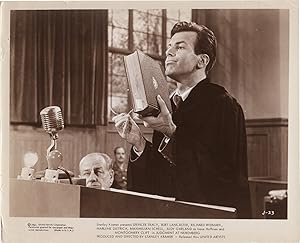
Vintage studio still photograph of Maximilian Schell from the 1961 film. A dramatization of the 1947 Judges' Trial, one of twelve US Nuremberg Military Tribunals held from 1946 to 1949 to decide the fate of individuals accused of crimes against humanity for their involvement in Nazi atrocities. The film was nominated for twelve Academy Awards, winning three, including Best Adapted Screenplay and Best Actor for Maximilian Schell. 10 x 8 inches. Very Good plus. National Film Registry. Twilight Time K1631.
-
On the Beach (Original photograph from the 1990 television re-release)
Editore: Stanley Kramer Productions, N.p., 1990
Da: Royal Books, Inc., ABAA, Baltimore, MD, U.S.A.
Membro dell'associazione: ABAA ILAB
Valutazione del venditore 5 su 5 stelle
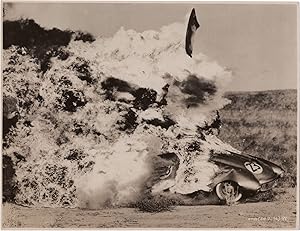
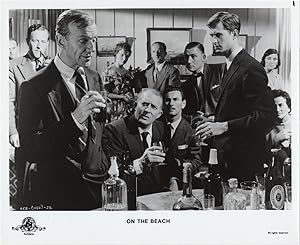
Vintage studio still photograph from the 1990 television re-release of the 1959 film. In the wake of WWIII, what remains of the human race is rapidly annihilated by radiation poisoning. The only habitable part of the planet is southern Australia, which will soon become toxic as air currents bring the poisonous fumes south. Survivors grapple with their impending mortality, hopeful that somehow they might be spared. The film received two Academy Award nominations. Set in Australia, shot on location in California and Australia. 8 x 10 inches. Near Fine with a manuscript ink notation to the verso.
-
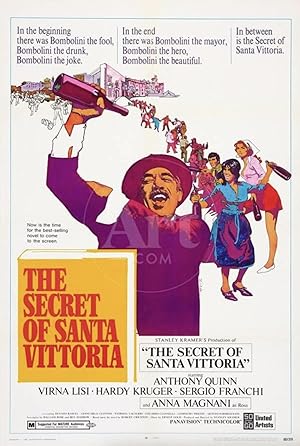
The Secret of Santa Vittoria One Sheet Movie Poster
Editore: United Artists, Beverly Hills, 1969
Da: 32.1 Rare Books + Ephemera, IOBA, ESA, Princeton, NJ, U.S.A.
Membro dell'associazione: IOBA
Valutazione del venditore 5 su 5 stelle
Manoscritto / Collezionismo cartaceo Prima edizione
Softcover. Bob Peak (illustratore). 27" x 41" four color. Folded. Original one sheet movie poster for of the 1969 American war film produced and directed by Stanley Kramer and co-produced by George Glass from a screenplay by Ben Maddow and William Rose. It was based on the best-selling 1966 novel by Robert Crichton. The film stars Anthony Quinn, Anna Magnani, Virna Lisi, Hardy Kryger, and Sergio Franch and was shot almost entirely on location in Anticoli Corrado, Italy [near Rome]. Very Good, unused and folded, with some light handling.
-

Guess Who's Coming to Dinner (Original photograph from the 1967 film)
Editore: Columbia Pictures, Culver City, CA, 1967
Da: Royal Books, Inc., ABAA, Baltimore, MD, U.S.A.
Membro dell'associazione: ABAA ILAB
Valutazione del venditore 5 su 5 stelle
Vintage studio still photograph from the 1967 film. An older couple's left-leaning views meet the ultimate test when their daughter unexpectedly brings home a Black fiancé. Released at a time when interracial marriage had just barely been legalized in 17 states, the film offered an unusually progressive position on the topic, and was structured intentionally to debunk ethnic stereotypes. Winner of two Academy Awards and nominated for eight others. Set and shot on location in San Francisco. 10 x 8 inches. Very Good plus, with old paper tape on the verso of the left corner. Twilight Time.
-

Judgment at Nuremberg (Original photograph from the 1961 film)
Editore: United Artists, Beverly Hills, CA, 1961
Da: Royal Books, Inc., ABAA, Baltimore, MD, U.S.A.
Membro dell'associazione: ABAA ILAB
Valutazione del venditore 5 su 5 stelle
Vintage studio still photograph from the 1961 film. Mimeo snipe on the verso. A dramatization of the 1947 Judges' Trial, one of twelve US Nuremberg Military Tribunals held from 1946 to 1949 to decide the fate of individuals accused of crimes against humanity for their involvement in Nazi atrocities. Nominated for twelve Academy Awards, winning three, including Best Adapted Screenplay and Best Actor for Maximilian Schell. Set in Nuremberg, shot on location in Nuremberg and Berlin. 10 x 8 inches. Very Good plus. National Film Registry. Twilight Time 1631.
-

Ship of Fools (Original photograph of Michael Dunn from the 1965 film)
Editore: Stanley Kramer Productions, Los Angeles, 1965
Da: Royal Books, Inc., ABAA, Baltimore, MD, U.S.A.
Membro dell'associazione: ABAA ILAB
Valutazione del venditore 5 su 5 stelle
Vintage reference photograph of actor Michael Dunn from the 1965 film. With mimeo snipe affixed to the verso. Based on the 1962 novel by Katherine Anne Porter, about the varied passengers on an ocean liner bound for Germany from Mexico in 1933. Vivien Leigh's final film before her death in 1967. Nominated for eight Academy Awards, winning two. 8 x 10 inches. About Fine.
-

On the Beach (Original photograph from the 1959 film)
Editore: United Artists, Beverly Hills, CA, 1959
Da: Royal Books, Inc., ABAA, Baltimore, MD, U.S.A.
Membro dell'associazione: ABAA ILAB
Valutazione del venditore 5 su 5 stelle
Vintage studio still photograph from the 1959 film, showing actors Gregory Peck and Ava Gardner. Based on Nevil Shute's 1957 post-apocalyptic novel. In the wake of WWIII, what remains of the human race is rapidly annihilated by radiation poisoning. The only habitable part of the planet is southern Australia, which will soon become toxic as air currents bring the poisonous fumes south. Survivors grapple with their impending mortality, hopeful that somehow they might be spared. Nominated for two Academy Awards. Set and shot on location in Australia and California. 10 x 8 inches. Lightly age toned, else about Near Fine.
-
On the Beach (Two original photographs from the 1959 film)
Editore: Stanley Kramer Productions, N.p., 1959
Da: Royal Books, Inc., ABAA, Baltimore, MD, U.S.A.
Membro dell'associazione: ABAA ILAB
Valutazione del venditore 5 su 5 stelle
Two vintage reference studio still photographs from the 1959 film. In the wake of WWIII, what remains of the human race is rapidly annihilated by radiation poisoning. The only habitable part of the planet is southern Australia, which will soon become toxic as air currents bring the poisonous fumes south. Survivors grapple with their impending mortality, hopeful that somehow they might be spared. The film received two Academy Award nominations. Set in Australia, shot on location in California and Australia. 8 x 10 inches. Near Fine with light toning overall and manuscript graphite annotations to the verso.
-
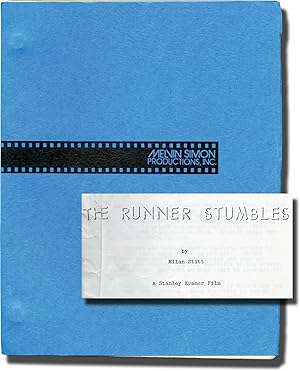
The Runner Stumbles (Original screenplay for the 1979 film)
Editore: Mel Simon Productions, Beverly Hills, CA, 1978
Da: Royal Books, Inc., ABAA, Baltimore, MD, U.S.A.
Membro dell'associazione: ABAA ILAB
Valutazione del venditore 5 su 5 stelle
Manoscritto / Collezionismo cartaceo
First Draft script for the 1979 film. Father Brian (Dyke) is a priest in a depressing mining town, until one day a new Sister, Rita (Quinlan) joins his parish and changes his perception of life. She is trusting and kind and listens to Father Brian, but their relationship takes a turn for the worse, landing Father Brian in the role of suspect. Blue production company (Mel Simon Productions) wrappers. Title page present, dated May 10, 1978, noted as FIRST DRAFT, with credits for screenwriter Stitt and director Kramer. Last leaf of text numbered 129. Xerographic duplication, with photocopied punch holes. Pages and wrapper Near Fine, bound internally with two gold brads.
-
The Secret of Santa Vittoria (Two original oversize photographs from the 1969 film)
Editore: N.p., N.p., 1969
Da: Royal Books, Inc., ABAA, Baltimore, MD, U.S.A.
Membro dell'associazione: ABAA ILAB
Valutazione del venditore 5 su 5 stelle
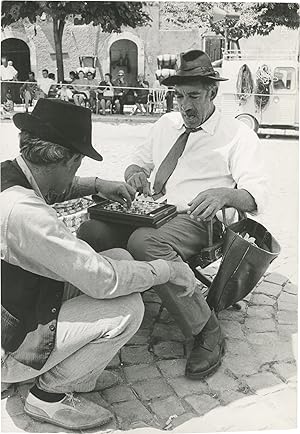
Two vintage oversize borderless reference photographs from the set of the 1969 film, one showing director Stanley Kramer with actors Anthony Quinn and Hardy Kruger, and one showing Quinn and an unknown man playing chess on a small portable set. With the stamp of Roman Press Photo on the verso, along with two printed mimeo snipes. From the archive of the PIX Agency, a photo house that acted as an intermediary between emigre photographers (as well as those still living in Europe) and the American magazine and newspaper market between 1935-1969. Based on the 1966 novel by Robert Crichton. A group of poor Italian winemaking villagers attempts to hide their substantial stashes of wine from the newly arrived German army. Set in Santa Vittoria, and shot on location in Anticoli Corrado, Italy. One photograph 7.5 x 10.25 inches, the other 7.75 x 11 inches. Near Fine, one with light creasing to the top right corner.
-
Stanley Kramer (1913-2001) - Signed card + Photo - 1987
Lingua: Francese
Data di pubblicazione: 1987
Manoscritto / Collezionismo cartaceo Copia autografata
EUR 39,99
Spedizione EUR 40,00
Spedito da Belgio a U.S.A.Quantità: 1 disponibili
Aggiungi al carrelloPas de couverture. Condizione: Très bon. Rare - Card signed in 1987. + Photo 15x15 cm (recent print). Size : 7.5x12.5 cm. Condition : please see scans. Provenance : Jason Stahl family collection. Certificate of Authenticity and lifetime guarantee. Signé par l'auteur.
-
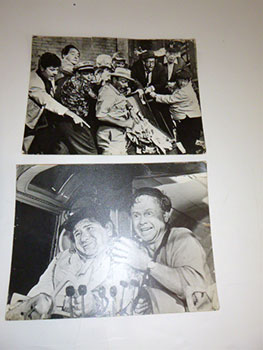
A group of 3 original photographs for the film "It's a Mad Mad Mad Mad World."
Editore: Hollywood: United Artists, 1963
Da: Wittenborn Art Books, San Francisco, CA, U.S.A.
Valutazione del venditore 5 su 5 stelle
Manoscritto / Collezionismo cartaceo
Condizione: Good. 3 large format photographs mounted on board, 29 x 39.4cm. These are the actual display photos . Images include Milton Berle, Phil Silvers, Buddy Hackett,Mickey Rooney. One with a tear without loss. It premiered on November 7, 1963. The principal cast features Edie Adams, Milton Berle, Sid Caesar, Buddy Hackett, Ethel Merman, Dorothy Provine, Mickey Rooney.
-
The Secret of Santa Vittoria (Original photograph of Anthony Quinn and Stanley Kramer from the set of the 1969 film)
Editore: N.p., N.p., 1969
Da: Royal Books, Inc., ABAA, Baltimore, MD, U.S.A.
Membro dell'associazione: ABAA ILAB
Valutazione del venditore 5 su 5 stelle
Vintage borderless double weight reference photograph of Anthony Quinn and Stanley Kramer on the set of the 1969 film. Mimeo snipe and photographer "L. Trumpler" stamps on verso. Based on the 1966 novel by Robert Crichton. A group of poor Italian winemaking villagers attempts to hide their substantial stashes of wine from the newly arrived German army. Set in the fictitious town of Santa Vittoria, shot on location in Anticoli Corrado, Capranica, and Tivoli, Italy. 8 x 10.5 inches. Light edgewear, else Near Fine.
-

On The Beach (Original press photograph from the set of the 1959 film)
Editore: United Artists, Beverly Hills, CA, 1959
Da: Royal Books, Inc., ABAA, Baltimore, MD, U.S.A.
Membro dell'associazione: ABAA ILAB
Valutazione del venditore 5 su 5 stelle
Vintage press photograph of director Stanley Kramer and actor Gregory Peck on the set of the 1959 film. With brief manuscript annotations on the verso. Based on Nevil Shute's 1957 post-apocalyptic novel, set in 1964, about a nuclear submarine that survives the Third World War. Commander Dwight Lionel Towers (Peck) confirms that the world has been destroyed and the nuclear dust is coming to Australia. He befriends the free-spirited Moira (Gardner), and together with his men, determine to return to San Diego, following faint radio signals. Shot on location in Australia and California. 10 x 8 inches. Near Fine.
-
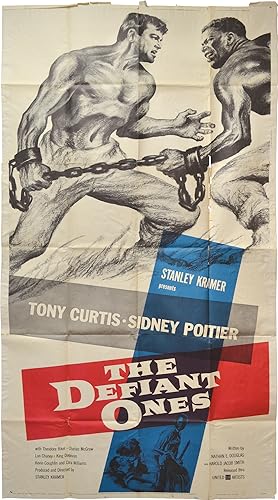
The Defiant Ones (Original poster for the 1958 film)
Editore: Curtleigh Productions, N.p., 1958
Da: Royal Books, Inc., ABAA, Baltimore, MD, U.S.A.
Membro dell'associazione: ABAA ILAB
Valutazione del venditore 5 su 5 stelle
Vintage US three-sheet poster for the 1958 US film. The film won two Academy Awards, for best writing and cinematography, and was nominated for another seven. Tony Curtis and Sidney Poitier were lauded for their performances in this Academy Award winning drama, in which two prisoners from a chain-gang escape. One white, one African American, the men originally cooperate out of necessity, as they are chained to one another. However, as they grow familiar with one another, a deep bond and mutual respect develops between the men. "The Defiant Ones" was shot on a closed set due to the then-provocative subject matter. Special screenings were orchestrated in the southern United States for integrated audiences, a relatively uncommon occurrence at the time. Montgomery, Alabama, however, chose to cancel an integrated screening when the White Citizen's Committee Council protested the film, claiming it gave rise to "moral support and financial gain to subversive propagandists" (AFI catalogue). Set in the American South, shot on location in California. 41 x 81 inches, folded. Very Good, with numerous pin holes, moderate edgewear, and extensive tape reinforcements to the verso. Manuscript annotations to the verso and a stamp indicating three-sheet poster. Royal Books can arrange for archival linen backing of posters. Please inquire.
-

Campaign poster book for the film "Inherit the Wind ." First edition.
Editore: Hollywood: United Artists, 1960
Da: Wittenborn Art Books, San Francisco, CA, U.S.A.
Valutazione del venditore 5 su 5 stelle
Manoscritto / Collezionismo cartaceo
Condizione: Good. . 8 pp. 45.8x33.8 cm (18x13¼"). Moderate wear, edges toned,."The film's title, as noted in the picture, comes from the Biblical passage of Proverbs 11:29: "He that troubleth his own house shall inherit the wind." Although the picture was copyrighted twice by Lomitas Productions, Inc., the first copyright, dated 2 Sep 1960 under number LP17779, lists the production company as Lomitas Productions, Germany, and was for a 16mm version. This version was probably shown at the film's premiere at the Berlin Film Festival on 25 Jun 1960. The second copyright, also held by Lomitas Productions, Inc. and for a 35mm version, was registerd on 12 Nov 1960 under number LP17367, and the company is listed by the copyright records only as Lomitas Productions. .Director Stanley Kramer stated in a Nov 1959 NYT article that he considered Inherit the Wind the third in his trilogy of socially provocative films beginning with The Defiant Ones (1958, see above) and On the Beach (1959, see below). The film is based on the play Inherit the Wind, which was inspired by the 1925 "Scopes Monkey Trial" in Dayton, TN. During that trial, then dubbed "The Trial of the Century," Chicago labor lawyer Clarence Darrow (1857?1938) defended teacher John T. Scopes (1900?1970). Scopes was accused of propounding Charles Darwin's theory of evolution in defiance of Tennessee's Butler Law, which prohibited the teaching of any theory other than creationism. The prosecution was led by fundamentalist politician William Jennings Bryan (1860?1925), who was known as "The Great Commoner." Bryan ran for United States President three times, in 1896, 1900 and 1908 and served as Secretary of State from 1913--1915. Unlike as depicted in the film, Bryan died not on the day the trial ended but five days later, of complications from diabetes. Another famous figure represented in the play and film versions of the story was H. L. Mencken (1880?1956), a journalist celebrated for his clever wit and iconoclastic liberalism. In the play and film, the names of the major characters are changed from Clarence Darrow to Henry Drummond; William Jennings Bryan to Matthew Harrison Brady; H. L. Mencken to E. K. Hornbeck; and John T. Scopes to Bertram T. Cates. Although the film's version of the trial hewed closely to actual events, in other areas many facts were changed. For example, unlike in the film, the real trial was initiated by the American Civil Liberties Union (ACLU), which considered the Butler Law, prohibiting the teaching of evolution in Tennessee classrooms, unconstitutional. When Dayton resident George W. Rappelyea learned of the ACLU's desire to test the law, he convinced Scopes, who rarely even taught evolution, to join the case. According to modern sources, because the theory of evolution was included in the state's textbook, many Tennessee teachers included it in the curriculum. Also in contrast to the film, according to some historians, Darrow wanted Scopes to be found guilty so he could appeal the decision to a higher court.
-

The Defiant Ones (Original photograph of Stanley Kramer and Sidney Poitier on the set of the 1958 film)
Editore: United Artists, Beverly Hills, CA, 1958
Da: Royal Books, Inc., ABAA, Baltimore, MD, U.S.A.
Membro dell'associazione: ABAA ILAB
Valutazione del venditore 5 su 5 stelle
Vintage reference photograph taken on location for the 1958 film, showing Stanley Kramer directing actor Sidney Poitier. Annotations in manuscript ink and pencil on the verso. Two prisonersone white, one Blackare shackled together on a chain gang. Deciding to escape, they are forced to cooperate in order to survive in the countryside, eventually finding empathy for each other in the process. The film was shot on a closed set due to the then-provocative subject matter, with special screenings orchestrated in the southern United States for integrated audiences, a fairly uncommon occurrence at the time. Nominated for seven Academy Awards, winning two for Best Cinematography and Best Screenplay. 8 x 10 inches. About Near Fine, lightly toned and worn at the corners.
-
R.P.M. (Three original photographs from the 1970 film)
Editore: N.p., N.p., 1970
Da: Royal Books, Inc., ABAA, Baltimore, MD, U.S.A.
Membro dell'associazione: ABAA ILAB
Valutazione del venditore 5 su 5 stelle
Three vintage borderless reference photographs from the 1970 film, including two showing actress Ann-Margret alone, the other showing the actress on the set with director Stanley Kramer and actor Anthony Quinn. A liberal-minded college professor at a west coast university is appointed president of the school after a group of radical student activists compel the former president to resign. 10 x 8 inches. Two Near Fine, one Very Good plus.
-
Guess Who's Coming to Dinner (Two original photographs and one color transparency from the 1967 film)
Editore: N.p., N.p., 1967
Da: Royal Books, Inc., ABAA, Baltimore, MD, U.S.A.
Membro dell'associazione: ABAA ILAB
Valutazione del venditore 5 su 5 stelle
Two vintage borderless reference photographs and one medium-size color transparency from the 1967 film. One photograph with a Dutch dealer label on the verso. A left-leaning white couple struggle to overcome their prejudices when their daughter unexpectedly brings home a Black fiancé. Released at a time when interracial marriage had just barely been legalized in 17 states, the film offered an unusually progressive position on the topic, and was structured intentionally to debunk ethnic stereotypes. Winner of two Academy Awards and nominated for eight others. Set and shot on location in San Francisco. Photographs 8 x 10 inches. Near Fine. Transparency 4 x 5 inches. Fine. Twilight Time.