

Importo totale (1 articolo articoli):
Destinazione ordine:

stonecipher donna (132 risultati)
Vai alla pagina principale dei risultati di ricerca
Filtri di ricerca
Tipo di articolo
- Tutti i tipi di prodotto
- Libri (132)
- Riviste e Giornali (Nessun altro risultato corrispondente a questo perfezionamento)
- Fumetti (Nessun altro risultato corrispondente a questo perfezionamento)
- Spartiti (Nessun altro risultato corrispondente a questo perfezionamento)
- Arte, Stampe e Poster (Nessun altro risultato corrispondente a questo perfezionamento)
- Fotografie (Nessun altro risultato corrispondente a questo perfezionamento)
- Mappe (Nessun altro risultato corrispondente a questo perfezionamento)
- Manoscritti e Collezionismo cartaceo (Nessun altro risultato corrispondente a questo perfezionamento)
Condizioni Maggiori informazioni
Legatura
Ulteriori caratteristiche
- Prima ed. (4)
- Copia autograf. (Nessun altro risultato corrispondente a questo perfezionamento)
- Sovracoperta (Nessun altro risultato corrispondente a questo perfezionamento)
- Con foto (55)
- Non Print on Demand (116)
Lingua (3)
Spedizione gratuita
Paese del venditore
Valutazione venditore
-

Transaction Histories (Kuhl House Poets)
Libro 15 di 16: Kuhl House PoetsDa: World of Books (was SecondSale), Montgomery, IL, U.S.A.
Valutazione del venditore 5 su 5 stelle

Condizione: Good. Item in good condition. Textbooks may not include supplemental items i.e. CDs, access codes etc.
-
Transaction Histories
Libro 15 di 16: Kuhl House PoetsDa: Better World Books, Mishawaka, IN, U.S.A.
Valutazione del venditore 5 su 5 stelle
Prima edizione
Condizione: Good. 1st Edition. Pages intact with minimal writing/highlighting. The binding may be loose and creased. Dust jackets/supplements are not included. Stock photo provided. Product includes identifying sticker. Better World Books: Buy Books. Do Good.
-
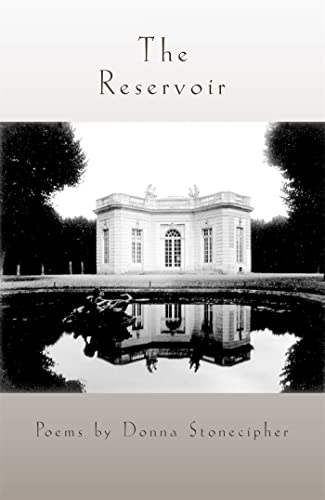
The Reservoir: Poems
Lingua: Inglese
Editore: University of Georgia Press, 2002
ISBN 10: 0820324639 ISBN 13: 9780820324630
Da: ThriftBooks-Dallas, Dallas, TX, U.S.A.
Valutazione del venditore 5 su 5 stelle
Paperback. Condizione: Very Good. No Jacket. May have limited writing in cover pages. Pages are unmarked. ~ ThriftBooks: Read More, Spend Less.
-
Transaction Histories (Kuhl House Poets)
Libro 15 di 16: Kuhl House PoetsDa: Midtown Scholar Bookstore, Harrisburg, PA, U.S.A.
Valutazione del venditore 5 su 5 stelle
Paperback. Condizione: Good. Good - Bumped and creased book with tears to the extremities, but not affecting the text block, may have remainder mark or previous owner's name - GOOD PAPERBACK Standard-sized.
-
Transaction Histories (Kuhl House Poets)
Libro 15 di 16: Kuhl House PoetsDa: Midtown Scholar Bookstore, Harrisburg, PA, U.S.A.
Valutazione del venditore 5 su 5 stelle
Paperback. Condizione: Acceptable. Acceptable - This is a significantly damaged book. It should be considered a reading copy only. Please order this book only if you are interested in the content and not the condition. May be ex-library. PAPERBACK Standard-sized.
-
The Reservoir
Lingua: Inglese
Editore: University of Georgia Press, 2002
ISBN 10: 0820324639 ISBN 13: 9780820324630
Da: Better World Books, Mishawaka, IN, U.S.A.
Valutazione del venditore 5 su 5 stelle
Condizione: Good. F First Edition. Former library copy. Pages intact with minimal writing/highlighting. The binding may be loose and creased. Dust jackets/supplements are not included. Includes library markings. Stock photo provided. Product includes identifying sticker. Better World Books: Buy Books. Do Good.
-

The Ruins of Nostalgia (Wesleyan Poetry Series)
Da: Cucamonga Books, Rancho Cucamonga, CA, U.S.A.
Valutazione del venditore 5 su 5 stelle
Hardcover. Condizione: New.
-
The Reservoir: Poems
Lingua: Inglese
Editore: University of Georgia Press, 2002
ISBN 10: 0820324639 ISBN 13: 9780820324630
Da: World of Books (was SecondSale), Montgomery, IL, U.S.A.
Valutazione del venditore 5 su 5 stelle
Condizione: Very Good. Item in very good condition! Textbooks may not include supplemental items i.e. CDs, access codes etc.
-
The Ruins of Nostalgia (Wesleyan Poetry Series)
Da: Midtown Scholar Bookstore, Harrisburg, PA, U.S.A.
Valutazione del venditore 5 su 5 stelle
hardcover. Condizione: Good. HARDCOVER Good - Bumped and creased book with tears to the extremities, but not affecting the text block, may have remainder mark or previous owner's name - GOOD Standard-sized.
-

The Ruins of Nostalgia (Wesleyan Poetry Series)
Da: Midtown Scholar Bookstore, Harrisburg, PA, U.S.A.
Valutazione del venditore 5 su 5 stelle
paperback. Condizione: Good. Good - Bumped and creased book with tears to the extremities, but not affecting the text block, may have remainder mark or previous owner's name - GOOD PAPERBACK Standard-sized.
-

Model City
Da: The Haunted Bookshop, LLC, Iowa City, IA, U.S.A.
Valutazione del venditore 5 su 5 stelle
Paperback. Condizione: Very Good. Clean pages, with no owners' marks; the soft cover shows just a hint of shelf rubbing at the bottom corners, otherwise well-kept. 93pp. ; Large 8vo.
-

paperback. Condizione: Good. softcover book light wear to cover and book edges, has some light reader wear.
-

Paperback. Condizione: Very Good. Open Books is a nonprofit social venture that provides literacy experiences for thousands of readers each year through inspiring programs and creative capitalization of books.
-
The Ruins of Nostalgia (Wesleyan Poetry Series)
Da: Midtown Scholar Bookstore, Harrisburg, PA, U.S.A.
Valutazione del venditore 5 su 5 stelle
paperback. Condizione: Acceptable. Acceptable - This is a significantly damaged book. It should be considered a reading copy only. Please order this book only if you are interested in the content and not the condition. May be ex-library. PAPERBACK Standard-sized.
-
The Reservoir: Poems (The Contemporary Poetry)
Lingua: Inglese
Editore: University of Georgia Press, 2002
ISBN 10: 0820324639 ISBN 13: 9780820324630
Da: Chaparral Books, Portland, OR, U.S.A.
Membro dell'associazione: CBA
Valutazione del venditore 5 su 5 stelle
Prima edizione
paperback. Condizione: Very Good. First Edition, first printing. Inscribed by the author on the title page. First printing with full number line. Minor wear to wraps. Text is unmarked.
-

Condizione: New.
-
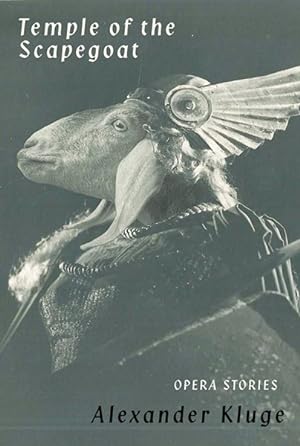
Temple of the Scapegoat : Opera Stories
Da: GreatBookPrices, Columbia, MD, U.S.A.
Valutazione del venditore 5 su 5 stelle
Condizione: New.
-
The Ruins of Nostalgia (Wesleyan Poetry Series)
Lingua: Inglese
Editore: Wesleyan University Press October 2023, 2023
ISBN 10: 0819500836 ISBN 13: 9780819500830
Da: Open Books West Loop, Chicago, IL, U.S.A.
Valutazione del venditore 4 su 5 stelle

Hardcover. Condizione: Used.
-
Ruins of Nostalgia
Da: GreatBookPrices, Columbia, MD, U.S.A.
Valutazione del venditore 5 su 5 stelle
Condizione: New.
-
The Ruins of Nostalgia (Paperback)
Da: Grand Eagle Retail, Bensenville, IL, U.S.A.
Valutazione del venditore 5 su 5 stelle
Paperback. Condizione: new. Paperback. New work from one of the most compelling and transformative writers of the contemporary prose poem What is it to feel nostalgia, to be skeptical of it yet cleave intently to the complex truths of feeling and thought? In a series of 64 gorgeous, ramifying, unsettling prose poems addressing late-twentieth- and twenty-first century experience and its discontents, The Ruins of Nostalgia offers a strikingly original exploration of the misunderstood phenomenon of nostalgia as both feeling-state and historical phenomenon. Each poem, also titled The Ruins of Nostalgia, is a kind of lyrical mini-essay, playful, passionate, analytic. Some poems take a location, memory, conceit, or object as their theme. Throughout the series, the poems recognize and celebrate the nostalgias they ironize, which are in turn celebrated and then ironized again. Written often in the fictional persona of the first-person plural, The Ruins of Nostalgia explores the rich territory where individual response meets a collective phenomenon. [sample poem] The Ruins of Nostalgia 13Where once there had been a low-end stationery store minded by an elderly beauty queen, there was now a store for high-end espresso machines minded by nobody. Where once there had been an illegal beer garden in a weedy lot, there was now a complex of luxury lofts with Parisian-style ivory facades. Where once there had been a bookstore and a bike shop and a bakery, there was now a wax museum for tourists. Where once there had been an empty lot there was now a building. Where once there had been an empty lot there was now a building. Where once there had been an empty lot there was now a building. Where once there had been an empty lot there was now a building. Where once there had been farms there were now subdivisions. Where once there had been subdivisions there were now sub-subdivisions. We lived in a sub-subdivision of a subdivision. We ourselves had become subdividedwhere once we had merely been of two minds. * Where once there had been a river there was now a road. A vocal local group had started a movement to break up the road and "daylight" the river, which still flowed, in the dark, underneath the road. * Could we daylight the farms, the empty lots, the stationery store, the elderly beauty queen, the city we moved to? Was it still flowing somewhere, under the luxury lofts, deliquescing in the dark, inhabited by our luxury selves, not yet subdivided, because not yet whole? * Could we daylight the ruins of nostalgia? "What is it to feel nostalgia, to be skeptical of it yet cleave intently to the complex truths of feeling and thought? In a series of 64 . prose poems addressing late-twentieth- and twenty-first century experience and its discontents, [this book] offers a strikingly original exploration of the misunderstood phenomenon of nostalgia as both feeling-state and historical phenomenon"-- Shipping may be from multiple locations in the US or from the UK, depending on stock availability.
-

Temple of the Scapegoat : Opera Stories
Da: GreatBookPrices, Columbia, MD, U.S.A.
Valutazione del venditore 5 su 5 stelle
Condizione: As New. Unread book in perfect condition.
-

EUR 15,13
Spedizione EUR 2,27
Spedito in U.S.A.Quantità: Più di 20 disponibili
Aggiungi al carrelloCondizione: New.
-

Model City (Paperback or Softback)
Da: BargainBookStores, Grand Rapids, MI, U.S.A.
Valutazione del venditore 5 su 5 stelle
Paperback or Softback. Condizione: New. Model City. Book.
-
Ruins of Nostalgia
Da: GreatBookPrices, Columbia, MD, U.S.A.
Valutazione del venditore 5 su 5 stelle
Condizione: As New. Unread book in perfect condition.
-

Condizione: As New. Unread book in perfect condition.
-

EUR 15,85
Spedizione EUR 2,27
Spedito in U.S.A.Quantità: Più di 20 disponibili
Aggiungi al carrelloCondizione: As New. Unread book in perfect condition.
-
EUR 18,63
Spedizione gratuita
Spedito in U.S.A.Quantità: Più di 20 disponibili
Aggiungi al carrelloCondizione: New.
-

EUR 18,96
Spedizione gratuita
Spedito in U.S.A.Quantità: Più di 20 disponibili
Aggiungi al carrelloPaperback. Condizione: New. Model City answers its own inaugural question 'What was it like?' in 288 different ways. The accumulation of these answers offers a form of sustained and refined negative capability, which by turns is wry, profound and abundant with an unspecified longing for the passing ghost of European idealism. In the various enquiries and explorations of Model City this is also the mapping of a lived condition and its relationships not readily found on every street corner - nor in the broken ideologies from the populist bargain basement proffered by our political cadres. What becomes apparent is that the model city/Model City exists by virtue of a poet's wit and inventiveness, in its accomplished and elegantly measured language. Stonecipher's mesmerizing, epigrammatic fables establish the off-centre polis where, oddly, we find ourselves at home. - Kelvin Corcoran.
-

Model City
Da: Rarewaves.com USA, London, LONDO, Regno Unito
Valutazione del venditore 5 su 5 stelle
EUR 19,25
Spedizione gratuita
Spedito da Regno Unito a U.S.A.Quantità: Più di 20 disponibili
Aggiungi al carrelloPaperback. Condizione: New. Model City answers its own inaugural question 'What was it like?' in 288 different ways. The accumulation of these answers offers a form of sustained and refined negative capability, which by turns is wry, profound and abundant with an unspecified longing for the passing ghost of European idealism. In the various enquiries and explorations of Model City this is also the mapping of a lived condition and its relationships not readily found on every street corner - nor in the broken ideologies from the populist bargain basement proffered by our political cadres. What becomes apparent is that the model city/Model City exists by virtue of a poet's wit and inventiveness, in its accomplished and elegantly measured language. Stonecipher's mesmerizing, epigrammatic fables establish the off-centre polis where, oddly, we find ourselves at home. - Kelvin Corcoran.
-

The Ruins of Nostalgia
Lingua: Inglese
Editore: Wesleyan University Press, US, 2024
ISBN 10: 0819500844 ISBN 13: 9780819500847
Da: Rarewaves.com USA, London, LONDO, Regno Unito
Valutazione del venditore 5 su 5 stelle
EUR 19,34
Spedizione gratuita
Spedito da Regno Unito a U.S.A.Quantità: 2 disponibili
Aggiungi al carrelloPaperback. Condizione: New. New work from one of the most compelling and transformative writers of the contemporary prose poem What is it to feel nostalgia, to be skeptical of it yet cleave intently to the complex truths of feeling and thought? In a series of 64 gorgeous, ramifying, unsettling prose poems addressing late-twentieth- and twenty-first century experience and its discontents, The Ruins of Nostalgia offers a strikingly original exploration of the misunderstood phenomenon of nostalgia as both feeling-state and historical phenomenon. Each poem, also titled The Ruins of Nostalgia, is a kind of lyrical mini-essay, playful, passionate, analytic. Some poems take a location, memory, conceit, or object as their theme. Throughout the series, the poems recognize and celebrate the nostalgias they ironize, which are in turn celebrated and then ironized again. Written often in the fictional persona of the first-person plural, The Ruins of Nostalgia explores the rich territory where individual response meets a collective phenomenon. [sample poem] The Ruins of Nostalgia 13Where once there had been a low-end stationery store minded by an elderly beauty queen, there was now a store for high-end espresso machines minded by nobody. Where once there had been an illegal beer garden in a weedy lot, there was now a complex of luxury lofts with Parisian-style ivory façades. Where once there had been a bookstore and a bike shop and a bakery, there was now a wax museum for tourists. Where once there had been an empty lot there was now a building. Where once there had been an empty lot there was now a building. Where once there had been an empty lot there was now a building. Where once there had been an empty lot there was now a building. Where once there had been farms there were now subdivisions. Where once there had been subdivisions there were now sub-subdivisions. We lived in a sub-subdivision of a subdivision. We ourselves had become subdivided-where once we had merely been of two minds. * Where once there had been a river there was now a road. A vocal local group had started a movement to break up the road and "daylight" the river, which still flowed, in the dark, underneath the road. * Could we daylight the farms, the empty lots, the stationery store, the elderly beauty queen, the city we moved to? Was it still flowing somewhere, under the luxury lofts, deliquescing in the dark, inhabited by our luxury selves, not yet subdivided, because not yet whole? * Could we daylight the ruins of nostalgia?

