
Tempczyk katarzyna (39 risultati)

- Rilegato
- Prima edizione
Da: ISD LLC, Bristol, CT, U.S.A.ISD LLC
Contatta il venditoreVenditore con 5 stelleCondizione: Nuovo
EUR 38,31
EUR 4,37 spedizioneSpedito in U.S.A.Quantità: 5 disponibili
hardcover. Condizione: New. 1st.

- Rilegato
Da: Rarewaves USA, OSWEGO, IL, U.S.A.Rarewaves USA
Contatta il venditoreVenditore con 5 stelleCondizione: Nuovo
EUR 55,26
Spedizione gratuitaSpedito in U.S.A.Quantità: Più di 20 disponibili
Hardback. Condizione: New. The book by Abjar Bakhou presents Medieval Christian author Gerasimus and his discussion with Islam. His aim was to show that Christian teachings are not irrational, but rather subtle and complex. As a Christian philosopher and theologian, Gerasimus used the experiences of those of the past to facilita…te his own response to critics. However, two important differences separated him from earlier apologists, which demand his own insight and innovation. First, the new language of intellectual discourse was Arabic, which was not accommodating for expressing traditional Christian doctrine, and required the development of a vocabulary out of terms already heavily influenced by the Qur'anic worldview. Second, the new religion challenging Christianity was one of absolute monotheism, which shared neither a common scriptural nor cultural heritage, and rejected the very possibility of a Trinity and Incarnation. Although a common theme in early Christian apologetics was the refutation of Judaism, the debate generally centered on the interpretation of the Old Testament, showing that Jesus was indeed the Messiah. The Qur'an, while acknowledging Jesus as the Messiah, explicitly rejects the Christian doctrines of the Incarnation and the Trinity, and presents itself as the revelation, which supersedes all previous revelation. Thus, although Christians and Muslims share certain themes and figures (such as Creation and the Last Judgement, Abraham, Moses, Mary and Jesus), Muslims refuse evidence contrary to the Qur'an, leaving Christians without recourse to traditional scripture-based arguments. Gerasimus, as a Christian apologist and mutakallim, accepted these challenges and began the process of explaining and translating his faith in the new milieu to make it coherent and rational. In his treatise, Gerasimus reveals himself to be a full participant in this important period of intellectual history; he sets down the basic points of controversy and outlines a response to them in a form that would be an excellent introduction to Christian theology written for the Muslim environment.Gerasimus was also a mutakallim in his own right, the Christian counterpart to those Islamic scholars who sought to defend their faith through rational arguments. In an effort to argue the legitimacy of Christianity, Gerasimus attempts to create a common language that influences the meaning of terminology and concepts of intellectual development in Muslim - Christian debates. Such language would set the stage for centuries to come. This is certainly his greatest contribution.

- Rilegato
Da: GreatBookPrices, Columbia, MD, U.S.A.GreatBookPrices
Contatta il venditoreVenditore con 5 stelleCondizione: Nuovo
EUR 60,92
EUR 2,31 spedizioneSpedito in U.S.A.Quantità: Più di 20 disponibili
Condizione: New.
- Rilegato
Da: GreatBookPrices, Columbia, MD, U.S.A.GreatBookPrices
Contatta il venditoreVenditore con 5 stelleCondizione: Nuovo
EUR 62,94
EUR 2,31 spedizioneSpedito in U.S.A.Quantità: Più di 20 disponibili
Condizione: New.

- Rilegato
Da: Rarewaves.com USA, London, LONDO, Regno UnitoRarewaves.com USA
Contatta il venditoreVenditore con 5 stelleCondizione: Nuovo
EUR 65,75
Spedizione gratuitaSpedito da Regno Unito a U.S.A.Quantità: Più di 20 disponibili
Hardback. Condizione: New. The book by Abjar Bakhou presents Medieval Christian author Gerasimus and his discussion with Islam. His aim was to show that Christian teachings are not irrational, but rather subtle and complex. As a Christian philosopher and theologian, Gerasimus used the experiences of those of the past to facilita…te his own response to critics. However, two important differences separated him from earlier apologists, which demand his own insight and innovation. First, the new language of intellectual discourse was Arabic, which was not accommodating for expressing traditional Christian doctrine, and required the development of a vocabulary out of terms already heavily influenced by the Qur'anic worldview. Second, the new religion challenging Christianity was one of absolute monotheism, which shared neither a common scriptural nor cultural heritage, and rejected the very possibility of a Trinity and Incarnation. Although a common theme in early Christian apologetics was the refutation of Judaism, the debate generally centered on the interpretation of the Old Testament, showing that Jesus was indeed the Messiah. The Qur'an, while acknowledging Jesus as the Messiah, explicitly rejects the Christian doctrines of the Incarnation and the Trinity, and presents itself as the revelation, which supersedes all previous revelation. Thus, although Christians and Muslims share certain themes and figures (such as Creation and the Last Judgement, Abraham, Moses, Mary and Jesus), Muslims refuse evidence contrary to the Qur'an, leaving Christians without recourse to traditional scripture-based arguments. Gerasimus, as a Christian apologist and mutakallim, accepted these challenges and began the process of explaining and translating his faith in the new milieu to make it coherent and rational. In his treatise, Gerasimus reveals himself to be a full participant in this important period of intellectual history; he sets down the basic points of controversy and outlines a response to them in a form that would be an excellent introduction to Christian theology written for the Muslim environment.Gerasimus was also a mutakallim in his own right, the Christian counterpart to those Islamic scholars who sought to defend their faith through rational arguments. In an effort to argue the legitimacy of Christianity, Gerasimus attempts to create a common language that influences the meaning of terminology and concepts of intellectual development in Muslim - Christian debates. Such language would set the stage for centuries to come. This is certainly his greatest contribution.

- Rilegato
Da: GreatBookPrices, Columbia, MD, U.S.A.GreatBookPrices
Contatta il venditoreVenditore con 5 stelleCondizione: Usato - Come nuovo
EUR 63,60
EUR 2,31 spedizioneSpedito in U.S.A.Quantità: Più di 20 disponibili
Condizione: As New. Unread book in perfect condition.

- Rilegato
Da: GreatBookPrices, Columbia, MD, U.S.A.GreatBookPrices
Contatta il venditoreVenditore con 5 stelleCondizione: Usato - Come nuovo
EUR 64,86
EUR 2,31 spedizioneSpedito in U.S.A.Quantità: Più di 20 disponibili
Condizione: As New. Unread book in perfect condition.
- Rilegato
Da: Ria Christie Collections, Uxbridge, Regno UnitoRia Christie Collections
Contatta il venditoreVenditore con 5 stelleCondizione: Nuovo
EUR 59,47
EUR 14,10 spedizioneSpedito da Regno Unito a U.S.A.Quantità: Più di 20 disponibili
Condizione: New. In English.
- Rilegato
Da: Ria Christie Collections, Uxbridge, Regno UnitoRia Christie Collections
Contatta il venditoreVenditore con 5 stelleCondizione: Nuovo
EUR 59,47
EUR 14,10 spedizioneSpedito da Regno Unito a U.S.A.Quantità: Più di 20 disponibili
Condizione: New. In.

- Rilegato
Da: GreatBookPricesUK, Woodford Green, Regno UnitoGreatBookPricesUK
Contatta il venditoreVenditore con 5 stelleCondizione: Nuovo
EUR 58,29
EUR 17,65 spedizioneSpedito da Regno Unito a U.S.A.Quantità: Più di 20 disponibili
Condizione: New.
- Rilegato
Da: Books Puddle, New York, NY, U.S.A.Books Puddle
Contatta il venditoreVenditore con 4 stelleCondizione: Nuovo
EUR 73,89
EUR 3,49 spedizioneSpedito in U.S.A.Quantità: 1 disponibili
Condizione: New. pp. 200.

- Rilegato
Da: GreatBookPricesUK, Woodford Green, Regno UnitoGreatBookPricesUK
Contatta il venditoreVenditore con 5 stelleCondizione: Nuovo
EUR 59,46
EUR 17,65 spedizioneSpedito da Regno Unito a U.S.A.Quantità: Più di 20 disponibili
Condizione: New.
- Rilegato
Da: Majestic Books, Hounslow, Regno UnitoMajestic Books
Contatta il venditoreVenditore con 4 stelleCondizione: Nuovo
EUR 71,56
EUR 7,65 spedizioneSpedito da Regno Unito a U.S.A.Quantità: 1 disponibili
Condizione: New. pp. 200.

- Rilegato
Da: GreatBookPricesUK, Woodford Green, Regno UnitoGreatBookPricesUK
Contatta il venditoreVenditore con 5 stelleCondizione: Usato - Come nuovo
EUR 65,51
EUR 17,65 spedizioneSpedito da Regno Unito a U.S.A.Quantità: Più di 20 disponibili
Condizione: As New. Unread book in perfect condition.

- Rilegato
Da: GreatBookPricesUK, Woodford Green, Regno UnitoGreatBookPricesUK
Contatta il venditoreVenditore con 5 stelleCondizione: Usato - Come nuovo
EUR 65,50
EUR 17,65 spedizioneSpedito da Regno Unito a U.S.A.Quantità: Più di 20 disponibili
Condizione: As New. Unread book in perfect condition.

- Rilegato
- Prima edizione
Da: moluna, Greven, Germaniamoluna
Contatta il venditoreVenditore con 5 stelleCondizione: Nuovo
EUR 48,41
EUR 48,99 spedizioneSpedito da Germania a U.S.A.Quantità: Più di 20 disponibili
Condizione: New.

- Rilegato
Da: Rarewaves USA United, OSWEGO, IL, U.S.A.Rarewaves USA United
Contatta il venditoreVenditore con 5 stelleCondizione: Nuovo
EUR 58,30
EUR 43,76 spedizioneSpedito in U.S.A.Quantità: Più di 20 disponibili
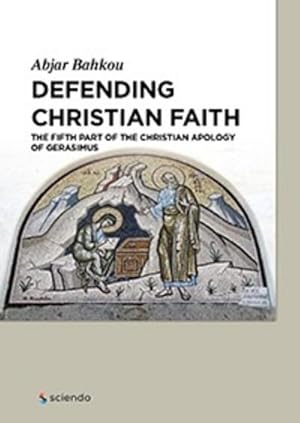
Hardback. Condizione: New. The book by Abjar Bakhou presents Medieval Christian author Gerasimus and his discussion with Islam. His aim was to show that Christian teachings are not irrational, but rather subtle and complex. As a Christian philosopher and theologian, Gerasimus used the experiences of those of the past to facilita…te his own response to critics. However, two important differences separated him from earlier apologists, which demand his own insight and innovation. First, the new language of intellectual discourse was Arabic, which was not accommodating for expressing traditional Christian doctrine, and required the development of a vocabulary out of terms already heavily influenced by the Qur'anic worldview. Second, the new religion challenging Christianity was one of absolute monotheism, which shared neither a common scriptural nor cultural heritage, and rejected the very possibility of a Trinity and Incarnation. Although a common theme in early Christian apologetics was the refutation of Judaism, the debate generally centered on the interpretation of the Old Testament, showing that Jesus was indeed the Messiah. The Qur'an, while acknowledging Jesus as the Messiah, explicitly rejects the Christian doctrines of the Incarnation and the Trinity, and presents itself as the revelation, which supersedes all previous revelation. Thus, although Christians and Muslims share certain themes and figures (such as Creation and the Last Judgement, Abraham, Moses, Mary and Jesus), Muslims refuse evidence contrary to the Qur'an, leaving Christians without recourse to traditional scripture-based arguments. Gerasimus, as a Christian apologist and mutakallim, accepted these challenges and began the process of explaining and translating his faith in the new milieu to make it coherent and rational. In his treatise, Gerasimus reveals himself to be a full participant in this important period of intellectual history; he sets down the basic points of controversy and outlines a response to them in a form that would be an excellent introduction to Christian theology written for the Muslim environment.Gerasimus was also a mutakallim in his own right, the Christian counterpart to those Islamic scholars who sought to defend their faith through rational arguments. In an effort to argue the legitimacy of Christianity, Gerasimus attempts to create a common language that influences the meaning of terminology and concepts of intellectual development in Muslim - Christian debates. Such language would set the stage for centuries to come. This is certainly his greatest contribution.
- Rilegato
Da: AHA-BUCH GmbH, Einbeck, GermaniaAHA-BUCH GmbH
Contatta il venditoreVenditore con 5 stelleCondizione: Nuovo
EUR 60,02
EUR 62,64 spedizioneSpedito da Germania a U.S.A.Quantità: 1 disponibili
Buch. Condizione: Neu. Druck auf Anfrage Neuware - Printed after ordering - The book by Abjar Bakhou presents Medieval Christian author Gerasimus and his discussion with Islam. His aim was to show that Christian teachings are not irrational, but rather subtle and complex. As a Christian philosopher and theologian, Gerasimus used… the experiences of those of the past to facilitate his own response to critics. However, two important differences separated him from earlier apologists, which demand his own insight and innovation. First, the new language of intellectual discourse was Arabic, which was not accommodating for expressing traditional Christian doctrine, and required the development of a vocabulary out of terms already heavily influenced by the Qur'anic worldview. Second, the new religion challenging Christianity was one of absolute monotheism, which shared neither a common scriptural nor cultural heritage, and rejected the very possibility of a Trinity and Incarnation. Although a common theme in early Christian apologetics was the refutation of Judaism, the debate generally centered on the interpretation of the Old Testament, showing that Jesus was indeed the Messiah. The Qur'an, while acknowledging Jesus as the Messiah, explicitly rejects the Christian doctrines of the Incarnation and the Trinity, and presents itself as the revelation, which supersedes all previous revelation. Thus, although Christians and Muslims share certain themes and figures (such as Creation and the Last Judgement, Abraham, Moses, Mary and Jesus), Muslims refuse evidence contrary to the Qur'an, leaving Christians without recourse to traditional scripture-based arguments. Gerasimus, as a Christian apologist and mutakallim, accepted these challenges and began the process of explaining and translating his faith in the new milieu to make it coherent and rational. In his treatise, Gerasimus reveals himself to be a full participant in this important period of intellectual history; he sets down the basic points of controversy and outlines a response to them in a form that would be an excellent introduction to Christian theology written for the Muslim environment.Gerasimus was also a mutakallim in his own right, the Christian counterpart to those Islamic scholars who sought to defend their faith through rational arguments. In an effort to argue the legitimacy of Christianity, Gerasimus attempts to create a common language that influences the meaning of terminology and concepts of intellectual development in Muslim - Christian debates. Such language would set the stage for centuries to come. This is certainly his greatest contribution.

- Rilegato
Da: Rarewaves.com UK, London, Regno UnitoRarewaves.com UK
Contatta il venditoreVenditore con 5 stelleCondizione: Nuovo
EUR 60,98
EUR 76,48 spedizioneSpedito da Regno Unito a U.S.A.Quantità: Più di 20 disponibili
Hardback. Condizione: New. The book by Abjar Bakhou presents Medieval Christian author Gerasimus and his discussion with Islam. His aim was to show that Christian teachings are not irrational, but rather subtle and complex. As a Christian philosopher and theologian, Gerasimus used the experiences of those of the past to facilita…te his own response to critics. However, two important differences separated him from earlier apologists, which demand his own insight and innovation. First, the new language of intellectual discourse was Arabic, which was not accommodating for expressing traditional Christian doctrine, and required the development of a vocabulary out of terms already heavily influenced by the Qur'anic worldview. Second, the new religion challenging Christianity was one of absolute monotheism, which shared neither a common scriptural nor cultural heritage, and rejected the very possibility of a Trinity and Incarnation. Although a common theme in early Christian apologetics was the refutation of Judaism, the debate generally centered on the interpretation of the Old Testament, showing that Jesus was indeed the Messiah. The Qur'an, while acknowledging Jesus as the Messiah, explicitly rejects the Christian doctrines of the Incarnation and the Trinity, and presents itself as the revelation, which supersedes all previous revelation. Thus, although Christians and Muslims share certain themes and figures (such as Creation and the Last Judgement, Abraham, Moses, Mary and Jesus), Muslims refuse evidence contrary to the Qur'an, leaving Christians without recourse to traditional scripture-based arguments. Gerasimus, as a Christian apologist and mutakallim, accepted these challenges and began the process of explaining and translating his faith in the new milieu to make it coherent and rational. In his treatise, Gerasimus reveals himself to be a full participant in this important period of intellectual history; he sets down the basic points of controversy and outlines a response to them in a form that would be an excellent introduction to Christian theology written for the Muslim environment.Gerasimus was also a mutakallim in his own right, the Christian counterpart to those Islamic scholars who sought to defend their faith through rational arguments. In an effort to argue the legitimacy of Christianity, Gerasimus attempts to create a common language that influences the meaning of terminology and concepts of intellectual development in Muslim - Christian debates. Such language would set the stage for centuries to come. This is certainly his greatest contribution.

- Rilegato
Da: Ria Christie Collections, Uxbridge, Regno UnitoRia Christie Collections
Contatta il venditoreVenditore con 5 stelleCondizione: Nuovo
EUR 176,75
EUR 14,10 spedizioneSpedito da Regno Unito a U.S.A.Quantità: Più di 20 disponibili
Condizione: New. In.
- Rilegato
Da: Books Puddle, New York, NY, U.S.A.Books Puddle
Contatta il venditoreVenditore con 4 stelleCondizione: Nuovo
EUR 217,71
EUR 3,49 spedizioneSpedito in U.S.A.Quantità: 1 disponibili
Condizione: New. pp. 527.
- Rilegato
Da: Majestic Books, Hounslow, Regno UnitoMajestic Books
Contatta il venditoreVenditore con 4 stelleCondizione: Nuovo
EUR 225,46
EUR 7,65 spedizioneSpedito da Regno Unito a U.S.A.Quantità: 1 disponibili
Condizione: New. pp. 527.

- Rilegato
Da: AHA-BUCH GmbH, Einbeck, GermaniaAHA-BUCH GmbH
Contatta il venditoreVenditore con 5 stelleCondizione: Nuovo
EUR 173,95
EUR 66,03 spedizioneSpedito da Germania a U.S.A.Quantità: 1 disponibili
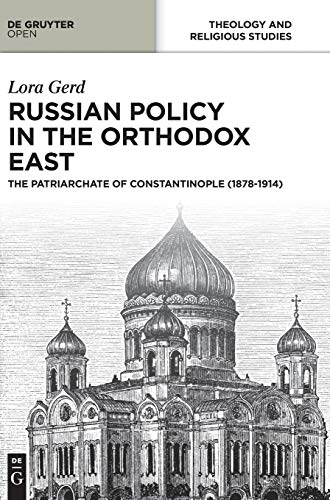
Buch. Condizione: Neu. Druck auf Anfrage Neuware - Printed after ordering - Drawing on the variety of archival sources in the host of European and Oriental languages, the book focuses on the history, ethnography, and convoluted ethnic identity of the Polish-Lithuanian Karaites. The vanishing community of the Karaites, a non-Talm…udic Turkic-speaking Jewish minority that had been living in Eastern Europe since the late Middle Ages, developed a unique ethnographic culture and religious tradition. The book offers the first comprehensive study of the dramatic history of the Polish-Lithuanian Karaite community in the twentieth century. Especially important is the analysis of the dejudaization (or Turkicization) of the community that saved the Karaites from horrors of the Holocaust.
- Rilegato
- Print on Demand
Da: PBShop.store US, Wood Dale, IL, U.S.A.PBShop.store US
Contatta il venditoreVenditore con 5 stelleCondizione: Nuovo
EUR 63,31
Spedizione gratuitaSpedito in U.S.A.Quantità: Più di 20 disponibili
HRD. Condizione: New. New Book. Shipped from UK. THIS BOOK IS PRINTED ON DEMAND. Established seller since 2000.
- Rilegato
- Print on Demand
Da: PBShop.store UK, Fairford, GLOS, Regno UnitoPBShop.store UK
Contatta il venditoreVenditore con 5 stelleCondizione: Nuovo
EUR 60,15
EUR 5,91 spedizioneSpedito da Regno Unito a U.S.A.Quantità: Più di 20 disponibili
HRD. Condizione: New. New Book. Delivered from our UK warehouse in 4 to 14 business days. THIS BOOK IS PRINTED ON DEMAND. Established seller since 2000.
- Rilegato
- Print on Demand
Da: PBShop.store US, Wood Dale, IL, U.S.A.PBShop.store US
Contatta il venditoreVenditore con 5 stelleCondizione: Nuovo
EUR 65,33
Spedizione gratuitaSpedito in U.S.A.Quantità: Più di 20 disponibili
HRD. Condizione: New. New Book. Shipped from UK. THIS BOOK IS PRINTED ON DEMAND. Established seller since 2000.
- Rilegato
- Print on Demand
Da: PBShop.store UK, Fairford, GLOS, Regno UnitoPBShop.store UK
Contatta il venditoreVenditore con 5 stelleCondizione: Nuovo
EUR 60,15
EUR 6,91 spedizioneSpedito da Regno Unito a U.S.A.Quantità: Più di 20 disponibili
HRD. Condizione: New. New Book. Delivered from our UK warehouse in 4 to 14 business days. THIS BOOK IS PRINTED ON DEMAND. Established seller since 2000.
- Rilegato
- Print on Demand
Da: BuchWeltWeit Ludwig Meier e.K., Bergisch Gladbach, GermaniaBuchWeltWeit Ludwig Meier e.K.
Contatta il venditoreVenditore con 5 stelleCondizione: Nuovo
EUR 54,95
EUR 23,00 spedizioneSpedito da Germania a U.S.A.Quantità: 2 disponibili
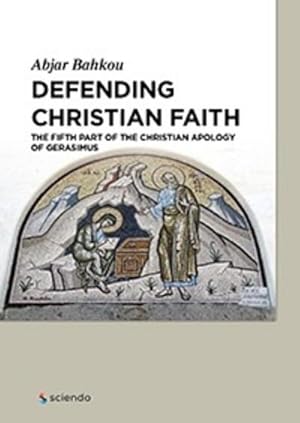
Buch. Condizione: Neu. This item is printed on demand - it takes 3-4 days longer - Neuware -The book by Abjar Bakhou presents Medieval Christian author Gerasimus and his discussion with Islam. His aim was to show that Christian teachings are not irrational, but rather subtle and complex. As a Christian philosopher and theologian…, Gerasimus used the experiences of those of the past to facilitate his own response to critics. However, two important differences separated him from earlier apologists, which demand his own insight and innovation. First, the new language of intellectual discourse was Arabic, which was not accommodating for expressing traditional Christian doctrine, and required the development of a vocabulary out of terms already heavily influenced by the Qur'anic worldview. Second, the new religion challenging Christianity was one of absolute monotheism, which shared neither a common scriptural nor cultural heritage, and rejected the very possibility of a Trinity and Incarnation. Although a common theme in early Christian apologetics was the refutation of Judaism, the debate generally centered on the interpretation of the Old Testament, showing that Jesus was indeed the Messiah. The Qur'an, while acknowledging Jesus as the Messiah, explicitly rejects the Christian doctrines of the Incarnation and the Trinity, and presents itself as the revelation, which supersedes all previous revelation. Thus, although Christians and Muslims share certain themes and figures (such as Creation and the Last Judgement, Abraham, Moses, Mary and Jesus), Muslims refuse evidence contrary to the Qur'an, leaving Christians without recourse to traditional scripture-based arguments. Gerasimus, as a Christian apologist and mutakallim, accepted these challenges and began the process of explaining and translating his faith in the new milieu to make it coherent and rational. In his treatise, Gerasimus reveals himself to be a full participant in this important period of intellectual history; he sets down the basic points of controversy and outlines a response to them in a form that would be an excellent introduction to Christian theology written for the Muslim environment.Gerasimus was also a mutakallim in his own right, the Christian counterpart to those Islamic scholars who sought to defend their faith through rational arguments. In an effort to argue the legitimacy of Christianity, Gerasimus attempts to create a common language that influences the meaning of terminology and concepts of intellectual development in Muslim - Christian debates. Such language would set the stage for centuries to come. This is certainly his greatest contribution. 178 pp. Englisch.
- Rilegato
- Print on Demand
Da: BuchWeltWeit Ludwig Meier e.K., Bergisch Gladbach, GermaniaBuchWeltWeit Ludwig Meier e.K.
Contatta il venditoreVenditore con 5 stelleCondizione: Nuovo
EUR 54,95
EUR 23,00 spedizioneSpedito da Germania a U.S.A.Quantità: 2 disponibili
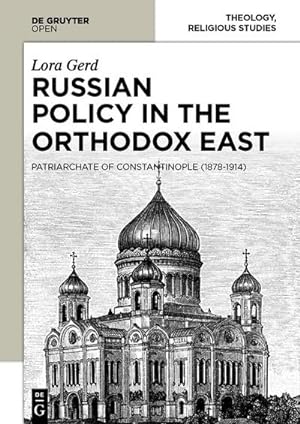
Buch. Condizione: Neu. This item is printed on demand - it takes 3-4 days longer - Neuware -The book is the first attempt to make a systematic analysis of the Russian ecclesiastical policy in the diocese of the Patriarchate of Constantinople in the period of 1878-1914. It is based mainly on unedited materials from the archives o…f Moscow, St. Petersburg, Sofia, Athens, Belgrade and Istanbul. Using the existing publications on the political aspects of the Eastern question, the author presents a new understanding of the role of Russia in the East Mediterranean region at the end of the 19th and the beginning of the 20th centuries. 144 pp. Englisch.

- Rilegato
- Print on Demand
Da: moluna, Greven, Germaniamoluna
Contatta il venditoreVenditore con 5 stelleCondizione: Nuovo
EUR 48,41
EUR 48,99 spedizioneSpedito da Germania a U.S.A.Quantità: Più di 20 disponibili
Condizione: New. Dieser Artikel ist ein Print on Demand Artikel und wird nach Ihrer Bestellung fuer Sie gedruckt. Lora Gerd, St. Peters.


