

Importo totale (1 articolo articoli):
Destinazione ordine:

thomas nail (558 risultati)
Vai alla pagina principale dei risultati di ricerca
Filtri di ricerca
Tipo di articolo
- Tutti i tipi di prodotto
- Libri (557)
- Riviste e Giornali (1)
- Fumetti (Nessun altro risultato corrispondente a questo perfezionamento)
- Spartiti (Nessun altro risultato corrispondente a questo perfezionamento)
- Arte, Stampe e Poster (Nessun altro risultato corrispondente a questo perfezionamento)
- Fotografie (Nessun altro risultato corrispondente a questo perfezionamento)
- Mappe (Nessun altro risultato corrispondente a questo perfezionamento)
- Manoscritti e Collezionismo cartaceo (Nessun altro risultato corrispondente a questo perfezionamento)
Condizioni Maggiori informazioni
Legatura
Ulteriori caratteristiche
- Prima ed. (8)
- Copia autograf. (Nessun altro risultato corrispondente a questo perfezionamento)
- Sovracoperta (Nessun altro risultato corrispondente a questo perfezionamento)
- Con foto (189)
- Non Print on Demand (469)
Lingua (3)
Spedizione gratuita
Paese del venditore
Valutazione venditore
-
![Immagine dell'editore per Roadmap to Success: Briefing Managers about Affirmative Action Results [With Mini CDROM] (HR Professional's Guide) venduto da ThriftBooks-Dallas](https://pictures.abebooks.com/isbn/9780972181426-it-300.jpg)
Roadmap to Success: Briefing Managers about Affirmative Action Results [With Mini CDROM] (HR Professional's Guide)
Da: ThriftBooks-Dallas, Dallas, TX, U.S.A.
Valutazione del venditore 5 su 5 stelle

Paperback. Condizione: Fair. No Jacket. Readable copy. Pages may have considerable notes/highlighting. ~ ThriftBooks: Read More, Spend Less.
-

The Figure of the Migrant
Da: Midtown Scholar Bookstore, Harrisburg, PA, U.S.A.
Valutazione del venditore 5 su 5 stelle
Paperback. Condizione: Good. Good - Bumped and creased book with tears to the extremities, but not affecting the text block, may have remainder mark or previous owner's name - GOOD PAPERBACK Standard-sized.
-

Matter and Motion: A Brief History of Kinetic Materialism
Lingua: Inglese
Editore: Edinburgh University Press, 2023
ISBN 10: 1399525433 ISBN 13: 9781399525435
Da: Zoom Books East, Glendale Heights, IL, U.S.A.
Valutazione del venditore 5 su 5 stelle
Condizione: very_good. Book is in very good condition and may include minimal underlining highlighting. The book can also include "From the library of" labels. May not contain miscellaneous items toys, dvds, etc. . We offer 100% money back guarantee and 24 7 customer service.
-
The Figure of the Migrant
Lingua: Inglese
Editore: Stanford University Press, Stanford, California, 2015
ISBN 10: 0804796580 ISBN 13: 9780804796583
Da: FITZ BOOKS AND WAFFLES, Buffalo, NY, U.S.A.
Valutazione del venditore 5 su 5 stelle
Prima edizione
Soft cover. Condizione: Very Good. 1st Edition. Theory-Philosophy. This is a clean, unmarked copy with curling covers.
-
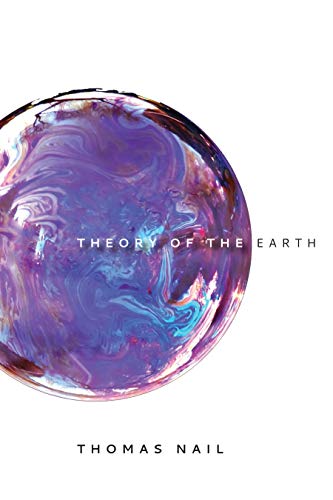
Theory of the Earth
Da: ThriftBooks-Atlanta, AUSTELL, GA, U.S.A.
Valutazione del venditore 5 su 5 stelle
Paperback. Condizione: Very Good. No Jacket. May have limited writing in cover pages. Pages are unmarked. ~ ThriftBooks: Read More, Spend Less.
-
Matter and Motion : A Brief History of Kinetic Materialism
Lingua: Inglese
Editore: Edinburgh University Press, 2023
ISBN 10: 1399525433 ISBN 13: 9781399525435
Da: GreatBookPrices, Columbia, MD, U.S.A.
Valutazione del venditore 5 su 5 stelle
EUR 17,67
Spedizione EUR 2,32
Spedito in U.S.A.Quantità: Più di 20 disponibili
Aggiungi al carrelloCondizione: As New. Unread book in perfect condition.
-
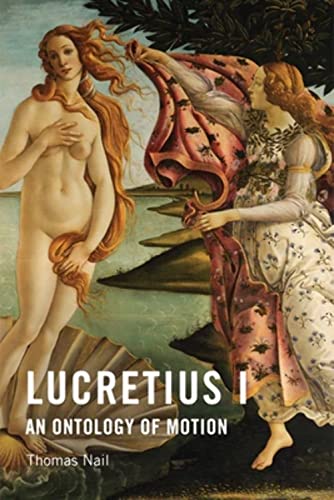
Lucretius I: An Ontology of Motion
Lingua: Inglese
Editore: Edinburgh University Press, 2018
ISBN 10: 1474434673 ISBN 13: 9781474434676
Da: Spenlow & Jorkins, Denver, CO, U.S.A.
Valutazione del venditore 5 su 5 stelle
Trade Paperback. Condizione: Good. *Clean, bright, solid* No internal marks. An uncreased binding. Ships to you from Colorado.
-

Lucretius : An Ethics of Motion
Lingua: Inglese
Editore: Edinburgh University Press, 2020
ISBN 10: 1474466648 ISBN 13: 9781474466646
Da: GreatBookPrices, Columbia, MD, U.S.A.
Valutazione del venditore 5 su 5 stelle
Condizione: New.
-
![Immagine dell'editore per Lucretius II: An Ethics of Motion [Paperback] Nail, Thomas venduto da Lost Time Books](https://pictures.abebooks.com/isbn/9781474466646-it-300.jpg)
Lucretius II: An Ethics of Motion [Paperback] Nail, Thomas
Lingua: Inglese
Editore: Edinburgh University Press, 2020
ISBN 10: 1474466648 ISBN 13: 9781474466646
Da: Lost Time Books, Brattleboro, VT, U.S.A.
Valutazione del venditore 5 su 5 stelle
paperback. Condizione: New.
-
Lucretius I: An Ontology of Motion
Lingua: Inglese
Editore: Edinburgh University Press, 2018
ISBN 10: 1474434673 ISBN 13: 9781474434676
Da: ThriftBooks-Dallas, Dallas, TX, U.S.A.
Valutazione del venditore 5 su 5 stelle
Paperback. Condizione: Good. No Jacket. Pages can have notes/highlighting. Spine may show signs of wear. ~ ThriftBooks: Read More, Spend Less.
-

Lucretius III : A History of Motion
Lingua: Inglese
Editore: Edinburgh University Press, 2022
ISBN 10: 1474464246 ISBN 13: 9781474464246
Da: GreatBookPrices, Columbia, MD, U.S.A.
Valutazione del venditore 5 su 5 stelle
Condizione: As New. Unread book in perfect condition.
-
Matter and Motion : A Brief History of Kinetic Materialism
Lingua: Inglese
Editore: Edinburgh University Press, 2023
ISBN 10: 1399525433 ISBN 13: 9781399525435
Da: GreatBookPrices, Columbia, MD, U.S.A.
Valutazione del venditore 5 su 5 stelle
EUR 19,05
Spedizione EUR 2,32
Spedito in U.S.A.Quantità: Più di 20 disponibili
Aggiungi al carrelloCondizione: New.
-
Matter and Motion
Lingua: Inglese
Editore: Edinburgh University Press, 2023
ISBN 10: 1399525433 ISBN 13: 9781399525435
Da: PBShop.store US, Wood Dale, IL, U.S.A.
Valutazione del venditore 5 su 5 stelle
PAP. Condizione: New. New Book. Shipped from UK. Established seller since 2000.
-
Theory of the Earth
Da: Midtown Scholar Bookstore, Harrisburg, PA, U.S.A.
Valutazione del venditore 5 su 5 stelle
Paperback. Condizione: Good. Good - Bumped and creased book with tears to the extremities, but not affecting the text block, may have remainder mark or previous owner's name - GOOD PAPERBACK Standard-sized.
-

Matter and Motion
Lingua: Inglese
Editore: Edinburgh University Press, GB, 2023
ISBN 10: 1399525433 ISBN 13: 9781399525435
Da: Rarewaves.com USA, London, LONDO, Regno Unito
Valutazione del venditore 5 su 5 stelle
EUR 21,77
Spedizione gratuita
Spedito da Regno Unito a U.S.A.Quantità: 5 disponibili
Aggiungi al carrelloPaperback. Condizione: New. Tells a new history of materialism from prehistory to the present that resists stasis, heirarchy and dominationTraces a lineage of thinkers who have philosophically integrated ideas of matter, motion, indeterminacy, relationality and processDiscusses thinkers drawn from the ancient to the modern from the Bronze Age to quantum physics who each offer their own kind of evidence for a world without metaphysics or hierarchyShows that the established hierarchies that govern Western thought and society are in fact contingent and performative there is no ontologically legitimate justification for social, aesthetic or scientific dominationThomas Nail traces an alternative history of ancient and modern thinkers who share a radically different understanding of the nature of matter and motion compared to the rest of the Euro-Western tradition. From Archaic Greek poetry and Bronze Age Minoan religion to the Roman poet Lucretius, and from German philosopher Karl Marx and English writer Virginia Woolf to contemporary physicists Carlo Rovelli and Karen Barad, Nail identifies a minor tradition of what he calls kinetic materialism and its three central ideas: indeterminacy, relationality and process.For the most part, Western thinkers have considered matter and motion to be inferior to more formal and static principles. Philosophers placed metaphysical categories such as eternity, God, the soul, forms and essences at the 'top' of a hierarchy that secured and ordered the movement at the bottom. This has real consequences in our world. By placing stasis above motion, this hierarchy places form above matter, life above death, God above humans, humans above nature, men above women, white skin above brown skin, the first world over the third world, citizens above migrants, straight above queer The result? Patriarchy, capitalism, racism, homophobia, ecocide. Nail seeks to undermine this inherited hierarchy and the notion that matter and motion are inferior. There are no fixed authorities. This new history of matter and motion leaves the good life up to us, whoever we may become.
-

Lucretius II: An Ethics of Motion (Paperback or Softback)
Lingua: Inglese
Editore: Edinburgh University Press 3/12/2020, 2020
ISBN 10: 1474466648 ISBN 13: 9781474466646
Da: BargainBookStores, Grand Rapids, MI, U.S.A.
Valutazione del venditore 5 su 5 stelle
Paperback or Softback. Condizione: New. Lucretius II: An Ethics of Motion. Book.
-

Matter and Motion
Lingua: Inglese
Editore: Edinburgh University Press, GB, 2023
ISBN 10: 1399525433 ISBN 13: 9781399525435
Paperback. Condizione: New. Tells a new history of materialism from prehistory to the present that resists stasis, heirarchy and dominationTraces a lineage of thinkers who have philosophically integrated ideas of matter, motion, indeterminacy, relationality and processDiscusses thinkers drawn from the ancient to the modern from the Bronze Age to quantum physics who each offer their own kind of evidence for a world without metaphysics or hierarchyShows that the established hierarchies that govern Western thought and society are in fact contingent and performative there is no ontologically legitimate justification for social, aesthetic or scientific dominationThomas Nail traces an alternative history of ancient and modern thinkers who share a radically different understanding of the nature of matter and motion compared to the rest of the Euro-Western tradition. From Archaic Greek poetry and Bronze Age Minoan religion to the Roman poet Lucretius, and from German philosopher Karl Marx and English writer Virginia Woolf to contemporary physicists Carlo Rovelli and Karen Barad, Nail identifies a minor tradition of what he calls kinetic materialism and its three central ideas: indeterminacy, relationality and process.For the most part, Western thinkers have considered matter and motion to be inferior to more formal and static principles. Philosophers placed metaphysical categories such as eternity, God, the soul, forms and essences at the 'top' of a hierarchy that secured and ordered the movement at the bottom. This has real consequences in our world. By placing stasis above motion, this hierarchy places form above matter, life above death, God above humans, humans above nature, men above women, white skin above brown skin, the first world over the third world, citizens above migrants, straight above queer The result? Patriarchy, capitalism, racism, homophobia, ecocide. Nail seeks to undermine this inherited hierarchy and the notion that matter and motion are inferior. There are no fixed authorities. This new history of matter and motion leaves the good life up to us, whoever we may become.
-
Lucretius III : A History of Motion
Lingua: Inglese
Editore: Edinburgh University Press, 2022
ISBN 10: 1474464246 ISBN 13: 9781474464246
Da: GreatBookPrices, Columbia, MD, U.S.A.
Valutazione del venditore 5 su 5 stelle
Condizione: New.
-
Lucretius III
Lingua: Inglese
Editore: Edinburgh University Press, 2022
ISBN 10: 1474464246 ISBN 13: 9781474464246
Da: PBShop.store US, Wood Dale, IL, U.S.A.
Valutazione del venditore 5 su 5 stelle
PAP. Condizione: New. New Book. Shipped from UK. Established seller since 2000.
-

Lucretius : An Ethics of Motion
Lingua: Inglese
Editore: Edinburgh University Press, 2020
ISBN 10: 1474466648 ISBN 13: 9781474466646
Da: GreatBookPrices, Columbia, MD, U.S.A.
Valutazione del venditore 5 su 5 stelle
Condizione: As New. Unread book in perfect condition.
-
Lucretius II: An Ethics of Motion
Lingua: Inglese
Editore: Edinburgh University Press, 2020
ISBN 10: 1474466648 ISBN 13: 9781474466646
Da: California Books, Miami, FL, U.S.A.
Valutazione del venditore 4 su 5 stelle

EUR 23,53
Spedizione gratuita
Spedito in U.S.A.Quantità: Più di 20 disponibili
Aggiungi al carrelloCondizione: New.
-

Lucretius II
Lingua: Inglese
Editore: Edinburgh University Press, GB, 2020
ISBN 10: 1474466648 ISBN 13: 9781474466646
EUR 23,85
Spedizione gratuita
Spedito in U.S.A.Quantità: Più di 20 disponibili
Aggiungi al carrelloPaperback. Condizione: New. Human suffering, the fear of death, war, poverty, ecological destruction and social inequality: almost 2,000 ago Lucretius proposed an ethics of motion as simple and stunning solution to these ethical problems. Thomas Nail argues that Lucretius was the first to locate the core of all these ethical ills in our obsession with stasis, our fear of movement and our hatred of matter. Instead of trying to transcend nature with our minds, escape it with our immortal souls and dominate it with our technologies, Lucretius was perhaps the first in the Western tradition to forcefully argue for a completely materialist, immanent and naturalistic ethics based on moving well with and as nature. If we want to survive and live well on this planet, Lucretius taught us, our best chance is not to struggle against nature but to embrace it and facilitate its movement.
-

Lucretius II
Lingua: Inglese
Editore: Edinburgh University Press, GB, 2020
ISBN 10: 1474466648 ISBN 13: 9781474466646
Da: Rarewaves.com USA, London, LONDO, Regno Unito
Valutazione del venditore 5 su 5 stelle
EUR 24,03
Spedizione gratuita
Spedito da Regno Unito a U.S.A.Quantità: Più di 20 disponibili
Aggiungi al carrelloPaperback. Condizione: New. Human suffering, the fear of death, war, poverty, ecological destruction and social inequality: almost 2,000 ago Lucretius proposed an ethics of motion as simple and stunning solution to these ethical problems. Thomas Nail argues that Lucretius was the first to locate the core of all these ethical ills in our obsession with stasis, our fear of movement and our hatred of matter. Instead of trying to transcend nature with our minds, escape it with our immortal souls and dominate it with our technologies, Lucretius was perhaps the first in the Western tradition to forcefully argue for a completely materialist, immanent and naturalistic ethics based on moving well with and as nature. If we want to survive and live well on this planet, Lucretius taught us, our best chance is not to struggle against nature but to embrace it and facilitate its movement.
-

The Philosophy of Movement: An Introduction
Lingua: Inglese
Editore: University of Minnesota Press, 2024
ISBN 10: 151791745X ISBN 13: 9781517917456
Da: Midtown Scholar Bookstore, Harrisburg, PA, U.S.A.
Valutazione del venditore 5 su 5 stelle
paperback. Condizione: Very Good. Very Good - Crisp, clean, unread book with some shelfwear/edgewear, may have a remainder mark - NICE PAPERBACK Standard-sized.
-
The Philosophy of Movement: An Introduction
Lingua: Inglese
Editore: University of Minnesota Press, 2024
ISBN 10: 151791745X ISBN 13: 9781517917456
Da: Midtown Scholar Bookstore, Harrisburg, PA, U.S.A.
Valutazione del venditore 5 su 5 stelle
paperback. Condizione: Good. Good - Bumped and creased book with tears to the extremities, but not affecting the text block, may have remainder mark or previous owner's name - GOOD PAPERBACK Standard-sized.
-

Lucretius III
Lingua: Inglese
Editore: Edinburgh University Press, GB, 2022
ISBN 10: 1474464246 ISBN 13: 9781474464246
Paperback. Condizione: New. Offers a new theory of history through an original reading of Lucretius' De Rerum NaturaFor Lucretius, history means something surprisingly different than we ordinarily think. Instead of thinking of history in terms of time, he thought of it in terms of motion. This book unpacks the implications of this unique kinetic philosophy of history. In the final volume of his trilogy on De Rerum Natura, Thomas Nail argues that in books five and six, Lucretius described a world born to die. What does it mean to live in such a world? De Rerum Natura provides a guidebook to answering this question.
-
Lucretius II
Lingua: Inglese
Editore: Edinburgh University Press, 2020
ISBN 10: 1474466648 ISBN 13: 9781474466646
Da: PBShop.store US, Wood Dale, IL, U.S.A.
Valutazione del venditore 5 su 5 stelle
PAP. Condizione: New. New Book. Shipped from UK. Established seller since 2000.
-
Matter and Motion (Paperback)
Lingua: Inglese
Editore: Edinburgh University Press, Edinburgh, 2023
ISBN 10: 1399525433 ISBN 13: 9781399525435
Da: Grand Eagle Retail, Bensenville, IL, U.S.A.
Valutazione del venditore 5 su 5 stelle
Paperback. Condizione: new. Paperback. Thomas Nail traces an alternative history of ancient and modern thinkers who share a radically different understanding of the nature of matter and motion compared to the rest of the Euro-Western tradition. From Archaic Greek poetry and Bronze Age Minoan religion to the Roman poet Lucretius, and from German philosopher Karl Marx and English writer Virginia Woolf to contemporary physicists Carlo Rovelli and Karen Barad, Nail identifies a minor tradition of what he calls 'kinetic materialism' and its three central ideas: indeterminacy, relationality and process. For the most part, Western thinkers have considered matter and motion to be inferior to more formal and static principles. Philosophers placed metaphysical categories such as eternity, God, the soul, forms and essences at the 'top' of a hierarchy that secured and ordered the movement at the bottom. This has real consequences in our world. By placing stasis above motion, this hierarchy places form above matter, life above death, God above humans, humans above nature, men above women, white skin above brown skin, the first world over the third world, citizens above migrants, straight above queer. The result? Patriarchy, capitalism, racism, homophobia, ecocide. Nail seeks to undermine this inherited hierarchy and the notion that matter and motion are inferior. There are no fixed authorities. This new history of matter and motion leaves the good life up to us, whoever we may become. Thomas Nail traces an alternative history of ancient and modern thinkers from the Bronze Age to quantum physics who share a radically different understanding of the nature of matter and motion compared to the rest of the Euro-Western tradition. Shipping may be from multiple locations in the US or from the UK, depending on stock availability.
-
Lucretius III (Paperback)
Lingua: Inglese
Editore: Edinburgh University Press, Edinburgh, 2022
ISBN 10: 1474464246 ISBN 13: 9781474464246
Da: Grand Eagle Retail, Bensenville, IL, U.S.A.
Valutazione del venditore 5 su 5 stelle
Paperback. Condizione: new. Paperback. For Lucretius, history means something surprisingly different than we ordinarily think. Instead of thinking of history in terms of time, he thought of it in terms of motion. This book unpacks the implications of this unique kinetic philosophy of history. In the final volume of his trilogy on Lucretius, Thomas Nail argues that in books five and six of De Rerum Natura, Lucretius described a world born to die long before humans theorised about thermodynamics or began to see the catastrophic consequences of man-made climate change. What does it mean to live in such a world; a world that is increasinly obviously our world? Nail shows us how De Rerum Natura provides a guidebook for us to answer this question. A guidebook to living in a world that's destined to die, through a new reading of Lucretius' De Rerum Natura Shipping may be from multiple locations in the US or from the UK, depending on stock availability.
-

Lucretius III
Lingua: Inglese
Editore: Edinburgh University Press, GB, 2022
ISBN 10: 1474464246 ISBN 13: 9781474464246
Da: Rarewaves.com USA, London, LONDO, Regno Unito
Valutazione del venditore 5 su 5 stelle
EUR 25,26
Spedizione gratuita
Spedito da Regno Unito a U.S.A.Quantità: Più di 20 disponibili
Aggiungi al carrelloPaperback. Condizione: New. Offers a new theory of history through an original reading of Lucretius' De Rerum NaturaFor Lucretius, history means something surprisingly different than we ordinarily think. Instead of thinking of history in terms of time, he thought of it in terms of motion. This book unpacks the implications of this unique kinetic philosophy of history. In the final volume of his trilogy on De Rerum Natura, Thomas Nail argues that in books five and six, Lucretius described a world born to die. What does it mean to live in such a world? De Rerum Natura provides a guidebook to answering this question.

