Importo totale (1 articolo articoli):
Destinazione ordine:

wexler haskell (9 risultati)
Vai alla pagina principale dei risultati di ricerca
Filtri di ricerca
Tipo di articolo
- Tutti i tipi di prodotto
- Libri (9)
- Riviste e Giornali (Nessun altro risultato corrispondente a questo perfezionamento)
- Fumetti (Nessun altro risultato corrispondente a questo perfezionamento)
- Spartiti (Nessun altro risultato corrispondente a questo perfezionamento)
- Arte, Stampe e Poster (Nessun altro risultato corrispondente a questo perfezionamento)
- Fotografie (Nessun altro risultato corrispondente a questo perfezionamento)
- Mappe (Nessun altro risultato corrispondente a questo perfezionamento)
- Manoscritti e Collezionismo cartaceo (Nessun altro risultato corrispondente a questo perfezionamento)
Condizioni Maggiori informazioni
- Nuovo (Nessun altro risultato corrispondente a questo perfezionamento)
- Come nuovo, Ottimo o Quasi ottimo (1)
- Molto buono o Buono (4)
- Discreto o Mediocre (Nessun altro risultato corrispondente a questo perfezionamento)
- Come descritto (4)
Legatura
- Tutte
- Rilegato (Nessun altro risultato corrispondente a questo perfezionamento)
- Brossura (3)
Ulteriori caratteristiche
- Prima ed. (2)
- Copia autograf. (1)
- Sovracoperta (Nessun altro risultato corrispondente a questo perfezionamento)
- Con foto (5)
- Non Print on Demand (9)
Lingua (2)
Spedizione gratuita
- Spedizione gratuita in U.S.A. (Nessun altro risultato corrispondente a questo perfezionamento)
Paese del venditore
Valutazione venditore
-
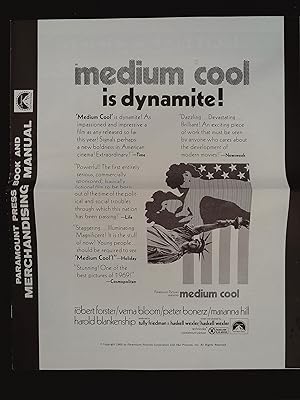
Medium Cool Pressbook 1969 Robert Forster, Verna Bloom
Editore: Paramount Pictures, 1969
Da: AcornBooksNH, New Harbor, ME, U.S.A.
Valutazione del venditore 5 su 5 stelle

Soft cover. Condizione: VG. A VG folded pressbook with no cuts. HC-1. Size: 11" X 14". Book.
-

Film Quarterly: Winter 1969-1970
Editore: University of California Press, Berkeley, 1969
Da: Monroe Street Books, Middlebury, VT, U.S.A.
Valutazione del venditore 4 su 5 stelle

Prima edizione
Condizione: Very Good. Condizione sovraccoperta: None. 64 pages plus ads. Softcover. Features: End of the Road?, Prospects of the Ethnographic Film, Wajda Redivivus, Comparative Anatomy of Folk-Myth Film: Robin Hood and Antonio das Mortes, Film Reviews, and more. Clean, tight copy. Record # 611563.
-
Film Quarterly: Spring 1968
Editore: University of California Press, Berkeley, 1968
Da: Monroe Street Books, Middlebury, VT, U.S.A.
Valutazione del venditore 4 su 5 stelle
Prima edizione
Condizione: Good. Condizione sovraccoperta: None. 64 pages. Softcover. Features: The Danger Is Seduction: An Interview with Haskell Wexler, Masquage: The Multi-Image Film, Fellini's Voices, One Man's Truth.Another Man's Poison, Film Reviews, and more. Library stamps on covers. Clean, tight copy. Record # 611562.
-
Film Quarterly Magazine
Editore: Film Quarterly, CA., 1968
Da: Ira Joel Haber - Cinemage Books, Brooklyn, NY, U.S.A.
Valutazione del venditore 4 su 5 stelle
Paper. Spring. Interview with Haskell Wexler, the multi-image film, Fellini & more. Vg. Book.
-

Emile de Antonio: A Reader (Visible Evidence, Book 8)
Da: Book House in Dinkytown, IOBA, Minneapolis, MN, U.S.A.
Membro dell'associazione: IOBA
Valutazione del venditore 5 su 5 stelle
Library Binding. Condizione: Good. Condizione sovraccoperta: No Dust Jacket. A nice reading/study copy. No dust jacket. Deaccessioned from archive library stamp on inside front board, else clean and very good. Ships from Dinkytown in Minneapolis, Minnesota.
-
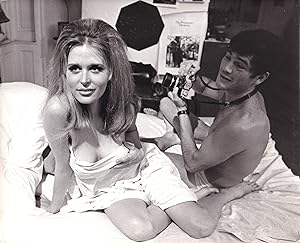
Medium Cool (Five original photographs from the 1969 film)
Editore: Paramount Pictures, Hollywood, 1969
Da: Royal Books, Inc., ABAA, Baltimore, MD, U.S.A.
Membro dell'associazione: ABAA ILAB
Valutazione del venditore 5 su 5 stelle
Five vintage studio still photographs from the 1969 film. A semi-documentary dramatization of the violence that surrounded the 1968 Democratic National Convention, and a film that questions the politics inherent in journalism and image-making, "Medium Cool" is a remarkable directorial accomplishment, highlighting the political unrest of the late 1960s, in part by using real footage. 8 x 10 inches. Near Fine, one uniformly faded.
-

SIGNED PHOTO
Da: Daniel Montemarano, Newfield, NJ, U.S.A.
Valutazione del venditore 5 su 5 stelle
Copia autografata
Photo. Condizione: Near Fine. Color Photo (on 8"x11" bonded paper w/to folds) -- SIGNED (with short note below photo) by Haskell Wexler. He was an American cinematographer, film producer, and director. SIGNED PHOTO.
-

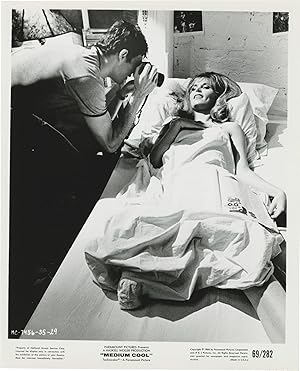
Medium Cool (Original photograph taken on the set of the 1969 film)
Editore: Paramount Pictures, Los Angeles, 1969
Da: Royal Books, Inc., ABAA, Baltimore, MD, U.S.A.
Membro dell'associazione: ABAA ILAB
Valutazione del venditore 5 su 5 stelle
Vintage reference photograph from the 1969 film, showing Haskell Wexler capturing a scene with Robert Forster. Annotations in manuscript pencil on the verso. A hardened and dubiously ethical television cameraman finds out he is being watched by the FBI amidst the tumultuous protests taking place around the 1968 Democratic National Convention. Highly influential for its groundbreaking use of factual historical events interspersed with fictional narrative, and its frank depiction of the contemporary countercultural movement. Featuring early music by Frank Zappa's band Mothers of Invention. Due to its startlingly political narrative, as well as nudity and language, the film was originally given an X rating by the MPAA, though by 1970 this would be downgraded to an R. 10 x 8 inches. Near Fine. Criterion Collection 658. Spicer US Neo-Noir.
-
Medium Cool (Three original photographs from the 1969 film)
Editore: Paramount Pictures, Los Angeles, 1969
Da: Royal Books, Inc., ABAA, Baltimore, MD, U.S.A.
Membro dell'associazione: ABAA ILAB
Valutazione del venditore 5 su 5 stelle
Three vintage borderless reference photographs from the 1969 film, a highlight of early New Hollywood cinema. One shows actor Harold Blankenship, the other with actors Robert Forster, Peter Bonerz, and Janet Langhart. One with a printed mimeo snipe affixed to the verso along with the stamp of Paramount Pictures, the other with the stamp of Israel Film Archive on the verso. A hardened and dubiously ethical television cameraman finds out he is being watched by the FBI amidst the tumultuous protests taking place around the 1968 Democratic National Convention. Highly influential for its groundbreaking use of factual historical events interspersed with fictional narrative. Featuring early music by Frank Zappa's band Mothers of Invention, and addressing underlying social issues of race, gender, and poverty, the film frankly depicted much of the growing countercultural movement of the late 1960s, even going so far as to use real-life footage of civil disobedience occurring in 1968 Chicago. Due to its startlingly political narrative, as well as nudity and language, the film was originally given an X rating by the MPAA, though by 1970 this would be downgraded to an R. One photograph 10 x 8 inches, one photograph 9.5 x 7.25 inches. Near Fine. Criterion Collection 658. Spicer US Neo-Noir.