

Importo totale (1 articolo articoli):
Destinazione ordine:

woodger michael (8 risultati)
Vai alla pagina principale dei risultati di ricerca
Filtri di ricerca
Tipo di articolo
- Tutti i tipi di prodotto
- Libri (8)
- Riviste e Giornali (Nessun altro risultato corrispondente a questo perfezionamento)
- Fumetti (Nessun altro risultato corrispondente a questo perfezionamento)
- Spartiti (Nessun altro risultato corrispondente a questo perfezionamento)
- Arte, Stampe e Poster (Nessun altro risultato corrispondente a questo perfezionamento)
- Fotografie (Nessun altro risultato corrispondente a questo perfezionamento)
- Mappe (Nessun altro risultato corrispondente a questo perfezionamento)
- Manoscritti e Collezionismo cartaceo (Nessun altro risultato corrispondente a questo perfezionamento)
Condizioni Maggiori informazioni
- Nuovo (1)
- Come nuovo, Ottimo o Quasi ottimo (Nessun altro risultato corrispondente a questo perfezionamento)
- Molto buono o Buono (5)
- Discreto o Mediocre (Nessun altro risultato corrispondente a questo perfezionamento)
- Come descritto (2)
Legatura
Ulteriori caratteristiche
- Prima ed. (1)
- Copia autograf. (Nessun altro risultato corrispondente a questo perfezionamento)
- Sovracoperta (1)
- Con foto (1)
- Non Print on Demand (8)
Lingua (2)
Spedizione gratuita
Paese del venditore
Valutazione venditore
-
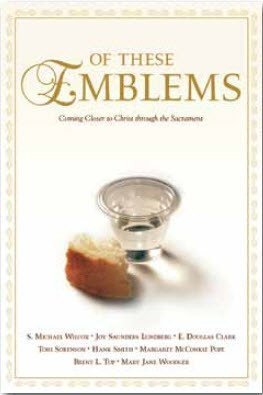
Of These Emblems - Coming Closer to Christ through the Sacrament
Lingua: Inglese
Editore: Covenant Communications, Inc. January 2010, 2010
ISBN 10: 1598117068 ISBN 13: 9781598117066
Da: The Book Garden, Bountiful, UT, U.S.A.
Valutazione del venditore 3 su 5 stelle

Hardcover. Condizione: Very Good - Cash. No Jacket. Minor rubbing and edge wear to cover, with light reader wear to pages. Still great condition. Text has underlining and/or notations. Secure pages, solid binding. Stock photos may not look exactly like the book.
-

Counselors to the Prophets
Lingua: Inglese
Editore: Eborn Books, 2001
Da: Lexington Books Inc, Idaho Falls, ID, U.S.A.
Valutazione del venditore 5 su 5 stelle

hardcover. Condizione: Very Good.
-
Counselors to the Prophets
Lingua: Inglese
Editore: Eborn Books, 2001
Da: Lexington Books Inc, Idaho Falls, ID, U.S.A.
Valutazione del venditore 5 su 5 stelle
Hardcover. Condizione: Very Good. Condizione sovraccoperta: Very Good.
-
![Immagine dell'editore per Presiding Bishops. [of The Church of Jesus Christ of Latter-day Saints]. (Eborn Books Mormon Library Series.)(Limited to 500 Copies) venduto da ThriftBooks-Dallas](https://pictures.abebooks.com/isbn/9781890718107-it-300.jpg)
Presiding Bishops. [of The Church of Jesus Christ of Latter-day Saints]. (Eborn Books Mormon Library Series.)(Limited to 500 Copies)
Da: ThriftBooks-Dallas, Dallas, TX, U.S.A.
Valutazione del venditore 5 su 5 stelle
Hardcover. Condizione: Very Good. No Jacket. May have limited writing in cover pages. Pages are unmarked. ~ ThriftBooks: Read More, Spend Less.
-
Presiding Bishops. [of The Church of Jesus Christ of Latter-day Saints]. (Eborn Books Mormon Library Series.)(Limited to 500 Copies)
Da: Lexington Books Inc, Idaho Falls, ID, U.S.A.
Valutazione del venditore 5 su 5 stelle
hardcover. Condizione: Very Good. Contents are tight and clean.
-
Counselors to the Prophets
Editore: Eborn Books, 2001
Da: BookResQ., West Valley City, UT, U.S.A.
Valutazione del venditore 5 su 5 stelle
Hardcover. Condizione: Very Good. Ex-library book with typical stickers and stampings. Priority shipping available on this item. ***No international shipping.
-
Presiding Bishops. [of The Church of Jesus Christ of Latter-day Saints]. (Eborn Books Mormon Library Series.)(Limited to 500 Copies)
Da: BennettBooksLtd, Los Angeles, CA, U.S.A.
Valutazione del venditore 5 su 5 stelle
hardcover. Condizione: New. In shrink wrap. Looks like an interesting title!
-
Automatic Computing Engine of the National Physical Laboratory. Offprint from Nature
Data di pubblicazione: 1951
Da: Jeremy Norman's historyofscience, Novato, CA, U.S.A.
Membro dell'associazione: ABAA ILAB
Valutazione del venditore 5 su 5 stelle
Prima edizione
Woodger, Michael (1923- ). Automatic Computing Engine of the National Physical Laboratory. Offprint from Nature 167 (1951). [4]pp. 211 x 140 mm. Without wrappers; in later paper sleeve with printed label. Slight creasing, a few tiny marginal tears but very good. First Edition, Offprint Issue of the first published description of the completed Pilot ACE computer. The National Physical Laboratory's ACE (Automatic Computing Engine) was designed by Alan Turing, who began working on the project a few months before he joined the NPL's mathematics division on October 1, 1945. Construction of the ACE began with a "test assembly" to try out Turing's ideas of computer design. Although Turing's design was workable, the effect of the Official Secrets Act surrounding the wartime work at Bletchley Park made it impossible for Turing to explain the basis of his analysis of how a computer installation involving human operators would work. This led to delays in starting the project, and Turing became disillusioned, leaving the NPL in September 1947 to take a sabbatical year at Cambridge University. After Turing's departure from the NPL, the ACE project was taken over by his assistants, James H. Wilkinson and Michael Woodger. In early 1949 the original ACE test assembly was abandoned and a new version, redesigned to make the electronics as simple as possible, began construction in early 1949. This machine, completed in 1950, came to be known as the "Pilot ACE." The Pilot ACE, although intended as a prototype, was immediately pressed into service, as it was then the only computer in a British government department. It remained in operation until 1956, undergoing several modifications during its lifetime. "The pilot model of the automatic computing machine (A.C.E.), recently demonstrated at the National Physical Laboratory, is a general-purpose automatic electronic digital computer employing mercury-tube ultrasonic delay lines for the storage of numerical data and instruction sequences, and using a modified Hollerith reproducing-punch for the input and output of these data on punched cards. Calculation proceeds in the binary scale . . ." (p. [1]). Woodger's report includes a description of five test computations run on the ACE. Not in Origins of Cyberspace. .


