
Yaotang (5 risultati)

Selected Works of Ba Jin, Vol 2: Garden of Repose, Bitter Cold Nights
Ba Jin; Pa Chin; Li Yaotang; Li Fei-Kan; Jock Hoe (trans); Sidney Shapiro (trans)
- Rilegato
- Prima edizione
Da: Books of the World, Arlington, VA, U.S.A.Books of the World
Contatta il venditoreVenditore con 5 stelleCondizione: Usato - Ottimo
EUR 35,57
Spedizione gratuitaSpedito in U.S.A.Quantità: 1 disponibili
Hardcover. Condizione: Fine. Condizione sovraccoperta: Fine. First Edition. Foreign Languages Press, 1988. Hardcover. First Edition (stated, actually First English-language Edition). Blue leatherette over boards with gold titles to spine and front board. Sewn binding. Sewn-in yellow silk place-marker. Fine book in a Fine jacket.… Interior pristine. Spine straight and very tight. Light remainder mark to top edge. Very slight edge-wear to jacket. No tears. Not from a library. Not clipped. 502 pages. Garden of Repose (憩园, Qì Yuán, 1944) and Bitter Cold Nights (aka Cold Nights, 寒夜, Hán Yè, 1947) are both critiques of China's traditional Confucian family system focusing on emotionally fragile and weak men struggling and failing to deal with family demands and social pressure. Both are set in Sichuan during the Sino-Japanese War (World War II) and both have been adapted into movies at least twice. Garden of Repose is the story of two decadent and decaying families. It follows the live of two characters: a drug addict from a rich family forced to sell his family home to a businessman, and the businessman's son, a spoiled and rude boy. The drug addict squats in an abandoned temple and is beaten to death in the streets; the boy falls down a garden well and drowns. Cold Nights portrays a Chinese Everyman's slow death by tuberculosis; his consumption apparently caused less by the bacteria in his lungs than by the debilitative generational tensions of Republican China. The protagonist is torn between his traditional mother and his modern wife. With air raid alarms sounding through the cold winter nights, it is the arguments between mother and daughter-in-law in their small apartment that are the most corrosive and frustrating as relationships deteriorate in the social depression and ennui that pervade 1940s China. Ba Jin was the grand old man of Chinese literature from the heady years of the real cultural revolution in the 1920s and 1930s. Born into a large, wealthy Sichuanese clan, he was raised in a compound with as many as 100 relatives: the despotic grandfather, his two wives, all the adult sons and their wives and children, and eventually the grandchildren, plus dozens of servants. Family feuds broke out when Ba's grandfather died and authority was eventually transferred to an elder uncle. Ba Jin read widely and was deeply influenced by Piotr Kropotkin's famous pamphlet, "An Appeal to the Young." He called Emma Goldman his "spiritual mother" and engaged in a lifelong correspondence with her. After moving to Paris in his early 20s, he joined a group of young Chinese anarchists adopted the name Ba Jin: Ba from the first syllable in the surname of Mikhail Bakunin, and Jin for the last syllable of Kropotkin. Huang Yinghao (illustratore).
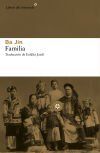
- Brossura
Da: Agapea Libros, Malaga, MA, SpagnaAgapea Libros
Contatta il venditoreVenditore con 5 stelleCondizione: Nuovo
EUR 18,95
EUR 18,55 spedizioneSpedito da Spagna a U.S.A.Quantità: 1 disponibili
Condizione: New. Idioma/Language: Español. Chengdú, China Central, 1919. Los tres hermanos Gao, Juexin, Juemin y Juehui, viven conforme a las tradiciones que ha seguido su familia durante siglos; cuatro generaciones de la familia conviven ahora bajo el mismo techo, lo que supone un especial motivo de orgullo para el abuelo Gao,…el patriarca del clan. En la gran casa familiar, los mayores continúan su vida indolente como si nada fuese a cambiar: como si las tropas del general Zhang, que en las puertas de la ciudad preparan un nuevo ataque, no pudieran alcanzarlos; como si los aires nuevos traídos por libros y revistas no fueran a transformar su existencia. Los tres hermanos Gao están de acuerdo en que las viejas tradiciones los matrimonios concertados, los ritos obsoletos, que las mujeres tengan que vendarse los pies o llevar el pelo largo. - carecen de sentido, pero no todos tendrán la fuerza necesaria para rebelarse. Publicada por primera vez en 1931, Familia retrata la desintegración de la China feudal a comienzos del siglo XX y está considerada como una de las obras fundamentales de la literatura china contemporánea. *** Nota: Los envíos a España peninsular, Baleares y Canarias se realizan a través de mensajería urgente. No aceptamos pedidos con destino a Ceuta y Melilla.

- Brossura
Da: KALAMO BOOKS, Burriana, CS, SpagnaKALAMO BOOKS
Contatta il venditoreVenditore con 5 stelleCondizione: Nuovo
EUR 19,94
EUR 19,86 spedizioneSpedito da Spagna a U.S.A.Quantità: 1 disponibili
Tapa blanda. Condizione: Nuevo.

- Brossura
Da: Antártica, Madrid, M, SpagnaAntártica
Contatta il venditoreVenditore con 5 stelleCondizione: Nuovo
EUR 19,95
EUR 20,00 spedizioneSpedito da Spagna a U.S.A.Quantità: 1 disponibili
Rustica (tapa blanda). Condizione: New. Condizione sovraccoperta: Nuevo. 01. Chengdú, China Central, 1919. Los tres hermanos Gao, Juexin, Juemin y Juehui, viven conforme a las tradiciones que ha seguido su familia durante siglos; cuatro generaciones de la familia conviven ahora bajo el mismo techo, lo que supone un especial moti…vo de orgullo para el abuelo Gao, el patriarca del clan.En la gran casa familiar, los mayores continúan su vida indolente como si nada fuese a cambiar: como si las tropas del general Zhang, que en las puertas de la ciudad preparan un nuevo ataque, no pudieran alcanzarlos; como si los aires nuevos traídos por libros y revistas no fueran a transformar su existencia.Los tres hermanos Gao están de acuerdo en que las viejas tradiciones -los matrimonios concertados, los ritos obsoletos, que las mujeres tengan que vendarse los pies o llevar el pelo largo.- carecen de sentido, pero no todos tendrán la fuerza necesaria para rebelarse.Publicada por primera vez en 1931, Familia retrata la desintegración de la China feudal a comienzos del siglo XX y está considerada como una de las obras fundamentales de la literatura china contemporánea. LIBRO.
- Brossura
Da: La Librería, Iberoamerikan. Buchhandlung, Bonn, NRW, GermaniaLa Librería, Iberoamerikan. Buchhandlung
Contatta il venditoreVenditore con 4 stelleCondizione: Usato
EUR 19,75
EUR 39,50 spedizioneSpedito da Germania a U.S.A.Quantità: 1 disponibili
Broschiert. 14x21cm, 2014, 1a.ed., 372p., Sprache: Spanisch, Rústica con solapas. / Buen estado. Publicada por primera vez en 1931, Familia retrata la desintegración de la China feudal a comienzos del siglo XX y está considerada como una de las obras fundamentales de la literatura china contemporánea. ** 10% DESCUENTO/RABATT/DIS…COUNT PRIMAVERA * excl. New German Books * * * * 19,75 (original price 22,00) **.


