
Antenne publishing gb (16 risultati)

- Brossura
Da: Rarewaves.com USA, London, LONDO, Regno UnitoRarewaves.com USA
Contatta il venditoreVenditore con 5 stelleCondizione: Nuovo
EUR 17,64
Spedizione gratuitaSpedito da Regno Unito a U.S.A.Quantità: 15 disponibili
Paperback. Condizione: New. Estate Of is the new publication series from Antenne Publishing. Published twice a year in a magazine-like stapled format, each edition is given to a single artist working with photographs as a space to realise projects. Estate Of aims to become a meeting point between an informal physical object, and a substantial body of work from an individual artist. Kronos by Victor Boullet is the first publication in the Estate Of series. Victor Boullet's title refers to the Greek god Kronos, a deity known for its doublesidedness, a concept closely connected to his project The Institute of Social Hypocrisy. The publication Kronos is a means to carry his work forward into a newer form of expression, whilst maintaining a constant sense of dichotomy. The act of art production becomes a performance. The photographs serve as a documentation of performances made in the artist's private domain; his apartment in Paris, a holiday home on the Scottish coast. Spaces that are so personal as to allow the work to become an existential exploration. The works themselves, invariably, seem to hold no meaning with a rawness and naivety that could be perceived as covertly provocative. When asked to discuss the content and concept of this publication, Boullet declined, saying it was all too personal and to make of it what we will. Boullet uses text as a means for miscommunication and confusion where personal musings are incomprehensible and impenetrable. Where elements of commercial branding are integrated into painting, performance and text works, Boullet considers the pretense and affectation brought about by wearing brands, thus creating a product of himself. Questions are raised as to whether the works are entirely serious or whether there is an element of fun being poked at the notion of what it is to be an artist. The imagery is presented as an imperfect document not to be taken at face value. The very question of truth underpins Kronos.…

- Brossura
Da: Rarewaves.com USA, London, LONDO, Regno UnitoRarewaves.com USA
Contatta il venditoreVenditore con 5 stelleCondizione: Nuovo
EUR 17,67
Spedizione gratuitaSpedito da Regno Unito a U.S.A.Quantità: Più di 20 disponibili
Paperback. Condizione: New. Antenne Publishing presents its second publication in the ESTATE OF series, a publication that offers artists a space to realise projects in a specified format. Loops is Anders Edström's narrative chronology, from front to back covers. Shot during walks driving, during his travels, always looking, noticing, then stopping when the light and circumstance synthesize for him. He doesn't look for the spectacular or unusual, but rather for the preternatural union of light and circumstance. For this reason, they may seem mundane, but each is a statement about this union of light, time, and energy. Interspersed are reflective paint puddles, which he poured at home, getting the light to work for him. Each is a study in "light, form, and texture" - to use E. H. Gombrich's words from his essay on15th century paintings north and south of the Alps. In Loops, they are the creative investigations during this chronology. In Vladimir Nabokov's Bend Sinister, the novel before writing Lolita, one of his tropes was a puddle, which his main character, Adam Krug, first notices gazing out a window, a recent widower. Puddles distort reflections in reverse, like a "bend sinister," a heraldic shield with the band going from top left to bottom right instead of the reverse, a bend dexter. The puddle motif reappears as an inkblot, a footprint, an ink stain. Nabokov was a lucky sufferer of synesthesia, the crossing of one sensory modality into another, with words revealing different meanings. He played with language as sound and image, "caressing" details, as he called it, looking for the unnoticed, infusing his stories with undercurrents of his special intuition. Anders Edström was first discovered by the fashion industry, and first by Martin Margiela, who changed the look of fashion by being unspectacular, for example, simply covering boots, jeans, and backpacks in white gesso. Like Margiela, Anders Edström has always avoided the transcendent, spectacular, or highly stylized in preference for unaffected naturalism, but also for an alternative enlightenment in his synesthetic photography. Loops is a time capsule of his research. - Jeff Rian.…

- Brossura
Da: Rarewaves.com USA, London, LONDO, Regno UnitoRarewaves.com USA
Contatta il venditoreVenditore con 5 stelleCondizione: Nuovo
EUR 19,87
Spedizione gratuitaSpedito da Regno Unito a U.S.A.Quantità: Più di 20 disponibili
Paperback. Condizione: New. A collection of U. K. Rave Flyers from 1991 to 1996. Courtesy of Stefania Fiorendi and Junior Tomlin.

- Brossura
Da: Rarewaves USA, HEBRON, KY, U.S.A.Rarewaves USA
Contatta il venditoreVenditore con 5 stelleCondizione: Nuovo
EUR 19,98
Spedizione gratuitaSpedito in U.S.A.Quantità: 1 disponibile
Paperback. Condizione: New. Estate Of is the new publication series from Antenne Publishing. Published twice a year in a magazine-like stapled format, each edition is given to a single artist working with photographs as a space to realise projects. Estate Of aims to become a meeting point between an informal physical object, and a substantial body of work from an individual artist. Kronos by Victor Boullet is the first publication in the Estate Of series. Victor Boullet's title refers to the Greek god Kronos, a deity known for its doublesidedness, a concept closely connected to his project The Institute of Social Hypocrisy. The publication Kronos is a means to carry his work forward into a newer form of expression, whilst maintaining a constant sense of dichotomy. The act of art production becomes a performance. The photographs serve as a documentation of performances made in the artist's private domain; his apartment in Paris, a holiday home on the Scottish coast. Spaces that are so personal as to allow the work to become an existential exploration. The works themselves, invariably, seem to hold no meaning with a rawness and naivety that could be perceived as covertly provocative. When asked to discuss the content and concept of this publication, Boullet declined, saying it was all too personal and to make of it what we will. Boullet uses text as a means for miscommunication and confusion where personal musings are incomprehensible and impenetrable. Where elements of commercial branding are integrated into painting, performance and text works, Boullet considers the pretense and affectation brought about by wearing brands, thus creating a product of himself. Questions are raised as to whether the works are entirely serious or whether there is an element of fun being poked at the notion of what it is to be an artist. The imagery is presented as an imperfect document not to be taken at face value. The very question of truth underpins Kronos.…

- Brossura
Da: Rarewaves USA, HEBRON, KY, U.S.A.Rarewaves USA
Contatta il venditoreVenditore con 5 stelleCondizione: Nuovo
EUR 19,98
Spedizione gratuitaSpedito in U.S.A.Quantità: 4 disponibili
Paperback. Condizione: New. Antenne Publishing presents its second publication in the ESTATE OF series, a publication that offers artists a space to realise projects in a specified format. Loops is Anders Edström's narrative chronology, from front to back covers. Shot during walks driving, during his travels, always looking, noticing, then stopping when the light and circumstance synthesize for him. He doesn't look for the spectacular or unusual, but rather for the preternatural union of light and circumstance. For this reason, they may seem mundane, but each is a statement about this union of light, time, and energy. Interspersed are reflective paint puddles, which he poured at home, getting the light to work for him. Each is a study in "light, form, and texture" - to use E. H. Gombrich's words from his essay on15th century paintings north and south of the Alps. In Loops, they are the creative investigations during this chronology. In Vladimir Nabokov's Bend Sinister, the novel before writing Lolita, one of his tropes was a puddle, which his main character, Adam Krug, first notices gazing out a window, a recent widower. Puddles distort reflections in reverse, like a "bend sinister," a heraldic shield with the band going from top left to bottom right instead of the reverse, a bend dexter. The puddle motif reappears as an inkblot, a footprint, an ink stain. Nabokov was a lucky sufferer of synesthesia, the crossing of one sensory modality into another, with words revealing different meanings. He played with language as sound and image, "caressing" details, as he called it, looking for the unnoticed, infusing his stories with undercurrents of his special intuition. Anders Edström was first discovered by the fashion industry, and first by Martin Margiela, who changed the look of fashion by being unspectacular, for example, simply covering boots, jeans, and backpacks in white gesso. Like Margiela, Anders Edström has always avoided the transcendent, spectacular, or highly stylized in preference for unaffected naturalism, but also for an alternative enlightenment in his synesthetic photography. Loops is a time capsule of his research. - Jeff Rian.…

- Brossura
Da: Rarewaves.com USA, London, LONDO, Regno UnitoRarewaves.com USA
Contatta il venditoreVenditore con 5 stelleCondizione: Nuovo
EUR 22,29
Spedizione gratuitaSpedito da Regno Unito a U.S.A.Quantità: Più di 20 disponibili
Paperback. Condizione: New. A collection of New York Rave Flyers from 1991 to 1995. Courtesy of Ernie Villalobos.

- Rilegato
Da: Rarewaves.com USA, London, LONDO, Regno UnitoRarewaves.com USA
Contatta il venditoreVenditore con 5 stelleCondizione: Nuovo
EUR 43,91
Spedizione gratuitaSpedito da Regno Unito a U.S.A.Quantità: Più di 20 disponibili
Hardback. Condizione: New. In 1995, while visiting New York, Victor Boullet managed to secure a portrait sitting with the composer Philip Glass in his New York townhouse. In 'Philip Glass 5th October 1995 New York City', Boullet reveals the entire unedited portrait session including every frame, along with his contact sheets. In this sequence of photographs and Boullet's accompanying essay, which amusingly recounts the story behind his morning with Philip Glass, Boullet's portrayal of the composer and his own thoughts, mishaps and insecurities coincide to create a double portrait of the artist and his sitter. "Portraying someone connected to culture or fame can be a way of climbing a social ladder just by being associated with the sitter, I have used this to my advantage, but this was not the case that day I rang Philip Glass, I was a fan and bored. The playing stopped. Silence. Footsteps. There he was in front of me, Philip Glass. He looked at me with a startled expression, first at my face, then down at my shoes. He then rapidly moved his eyeballs towards my yellow plastic suitcase containing my camera, he lifted his head and sort of looked behind me, and uttered: is that all?" - Victor BoulletAntenne Publishing is delighted to present its first major publication: Philip Glass 5th October 1995 New York City by Victor Boullet. …

- Rilegato
Da: Rarewaves.com USA, London, LONDO, Regno UnitoRarewaves.com USA
Contatta il venditoreVenditore con 5 stelleCondizione: Nuovo
EUR 53,45
Spedizione gratuitaSpedito da Regno Unito a U.S.A.Quantità: Più di 20 disponibili
Hardback. Condizione: New. 'Come Closer, Closer Please' is a book of photographs taken by Leigh Johnson over a decade. To look through Leigh Johnson's viewfinder is to see the world as a series of awkward angles, both physical and psychological. Although they range from guilelessly straightforward to layered to the point of indeterminacy, her images derive from a singular, distinctive point of view. Whatever the qualities of her surfaces, her sensibility is consistently off kilter. A typical Johnson image lays bare an uncomfortably intimate moment. She fixes events that we might prefer to be fleeting and so holds attention upon objects and situations that make us flinch. She induces our collusion in her practice of invasion, not only into the lives of others, but also into her own: the out of focus face of a mildly discomfited child and an unguarded teenager swigging from a carton sit alongside the remains of a meal that looks to be better left uneaten and a moment from a holiday that suggests more agony than ecstasy. The large part of Johnson's pictures are snatched, yet it is her compositions that are most revealing of her relationship with her subjects. Even while they perform for her, she refuses them the resolution of their moment. Instead she lets them hover in an instant either immediately before or just after, and, in doing so, creates punctured narratives that allow her anxieties to flow unchecked across her entire body of work. She is held by a fraught identification with not only the people, but also the things that she photographs. The key image in this selection is the double portrait of herself and her lover grafted together by the angle of the mirrors on a cupboard door to become a wary, sexless hybrid. Ostensibly an image of unification, the image actually documents the mundane catastrophe of a broken relationship.Arranging her pictures in a constellation that slides between harmony and dissonance, Johnson adopts a diaristic approach. Multiple tales can be traced across these walls. Domesticity, work and travel, everyday life and adventure, beauty and disgust all sit side by side. Above all, there is a love story, told in fragments, that is pitilessly honest while being characteristically oblique.…

- Brossura
Da: Rarewaves USA United, HEBRON, KY, U.S.A.Rarewaves USA United
Contatta il venditoreVenditore con 5 stelleCondizione: Nuovo
EUR 20,83
EUR 44,63 spedizioneSpedito in U.S.A.Quantità: 1 disponibile
Paperback. Condizione: New. Estate Of is the new publication series from Antenne Publishing. Published twice a year in a magazine-like stapled format, each edition is given to a single artist working with photographs as a space to realise projects. Estate Of aims to become a meeting point between an informal physical object, and a substantial body of work from an individual artist. Kronos by Victor Boullet is the first publication in the Estate Of series. Victor Boullet's title refers to the Greek god Kronos, a deity known for its doublesidedness, a concept closely connected to his project The Institute of Social Hypocrisy. The publication Kronos is a means to carry his work forward into a newer form of expression, whilst maintaining a constant sense of dichotomy. The act of art production becomes a performance. The photographs serve as a documentation of performances made in the artist's private domain; his apartment in Paris, a holiday home on the Scottish coast. Spaces that are so personal as to allow the work to become an existential exploration. The works themselves, invariably, seem to hold no meaning with a rawness and naivety that could be perceived as covertly provocative. When asked to discuss the content and concept of this publication, Boullet declined, saying it was all too personal and to make of it what we will. Boullet uses text as a means for miscommunication and confusion where personal musings are incomprehensible and impenetrable. Where elements of commercial branding are integrated into painting, performance and text works, Boullet considers the pretense and affectation brought about by wearing brands, thus creating a product of himself. Questions are raised as to whether the works are entirely serious or whether there is an element of fun being poked at the notion of what it is to be an artist. The imagery is presented as an imperfect document not to be taken at face value. The very question of truth underpins Kronos.…

- Brossura
Da: Rarewaves USA United, HEBRON, KY, U.S.A.Rarewaves USA United
Contatta il venditoreVenditore con 5 stelleCondizione: Nuovo
EUR 20,83
EUR 44,63 spedizioneSpedito in U.S.A.Quantità: 4 disponibili
Paperback. Condizione: New. Antenne Publishing presents its second publication in the ESTATE OF series, a publication that offers artists a space to realise projects in a specified format. Loops is Anders Edström's narrative chronology, from front to back covers. Shot during walks driving, during his travels, always looking, noticing, then stopping when the light and circumstance synthesize for him. He doesn't look for the spectacular or unusual, but rather for the preternatural union of light and circumstance. For this reason, they may seem mundane, but each is a statement about this union of light, time, and energy. Interspersed are reflective paint puddles, which he poured at home, getting the light to work for him. Each is a study in "light, form, and texture" - to use E. H. Gombrich's words from his essay on15th century paintings north and south of the Alps. In Loops, they are the creative investigations during this chronology. In Vladimir Nabokov's Bend Sinister, the novel before writing Lolita, one of his tropes was a puddle, which his main character, Adam Krug, first notices gazing out a window, a recent widower. Puddles distort reflections in reverse, like a "bend sinister," a heraldic shield with the band going from top left to bottom right instead of the reverse, a bend dexter. The puddle motif reappears as an inkblot, a footprint, an ink stain. Nabokov was a lucky sufferer of synesthesia, the crossing of one sensory modality into another, with words revealing different meanings. He played with language as sound and image, "caressing" details, as he called it, looking for the unnoticed, infusing his stories with undercurrents of his special intuition. Anders Edström was first discovered by the fashion industry, and first by Martin Margiela, who changed the look of fashion by being unspectacular, for example, simply covering boots, jeans, and backpacks in white gesso. Like Margiela, Anders Edström has always avoided the transcendent, spectacular, or highly stylized in preference for unaffected naturalism, but also for an alternative enlightenment in his synesthetic photography. Loops is a time capsule of his research. - Jeff Rian.…

- Brossura
Da: Rarewaves.com UK, London, Regno UnitoRarewaves.com UK
Contatta il venditoreVenditore con 5 stelleCondizione: Nuovo
EUR 15,61
EUR 76,79 spedizioneSpedito da Regno Unito a U.S.A.Quantità: 15 disponibili
Paperback. Condizione: New. Estate Of is the new publication series from Antenne Publishing. Published twice a year in a magazine-like stapled format, each edition is given to a single artist working with photographs as a space to realise projects. Estate Of aims to become a meeting point between an informal physical object, and a substantial body of work from an individual artist. Kronos by Victor Boullet is the first publication in the Estate Of series. Victor Boullet's title refers to the Greek god Kronos, a deity known for its doublesidedness, a concept closely connected to his project The Institute of Social Hypocrisy. The publication Kronos is a means to carry his work forward into a newer form of expression, whilst maintaining a constant sense of dichotomy. The act of art production becomes a performance. The photographs serve as a documentation of performances made in the artist's private domain; his apartment in Paris, a holiday home on the Scottish coast. Spaces that are so personal as to allow the work to become an existential exploration. The works themselves, invariably, seem to hold no meaning with a rawness and naivety that could be perceived as covertly provocative. When asked to discuss the content and concept of this publication, Boullet declined, saying it was all too personal and to make of it what we will. Boullet uses text as a means for miscommunication and confusion where personal musings are incomprehensible and impenetrable. Where elements of commercial branding are integrated into painting, performance and text works, Boullet considers the pretense and affectation brought about by wearing brands, thus creating a product of himself. Questions are raised as to whether the works are entirely serious or whether there is an element of fun being poked at the notion of what it is to be an artist. The imagery is presented as an imperfect document not to be taken at face value. The very question of truth underpins Kronos.…

- Brossura
Da: Rarewaves.com UK, London, Regno UnitoRarewaves.com UK
Contatta il venditoreVenditore con 5 stelleCondizione: Nuovo
EUR 15,61
EUR 76,79 spedizioneSpedito da Regno Unito a U.S.A.Quantità: Più di 20 disponibili
Paperback. Condizione: New. Antenne Publishing presents its second publication in the ESTATE OF series, a publication that offers artists a space to realise projects in a specified format. Loops is Anders Edström's narrative chronology, from front to back covers. Shot during walks driving, during his travels, always looking, noticing, then stopping when the light and circumstance synthesize for him. He doesn't look for the spectacular or unusual, but rather for the preternatural union of light and circumstance. For this reason, they may seem mundane, but each is a statement about this union of light, time, and energy. Interspersed are reflective paint puddles, which he poured at home, getting the light to work for him. Each is a study in "light, form, and texture" - to use E. H. Gombrich's words from his essay on15th century paintings north and south of the Alps. In Loops, they are the creative investigations during this chronology. In Vladimir Nabokov's Bend Sinister, the novel before writing Lolita, one of his tropes was a puddle, which his main character, Adam Krug, first notices gazing out a window, a recent widower. Puddles distort reflections in reverse, like a "bend sinister," a heraldic shield with the band going from top left to bottom right instead of the reverse, a bend dexter. The puddle motif reappears as an inkblot, a footprint, an ink stain. Nabokov was a lucky sufferer of synesthesia, the crossing of one sensory modality into another, with words revealing different meanings. He played with language as sound and image, "caressing" details, as he called it, looking for the unnoticed, infusing his stories with undercurrents of his special intuition. Anders Edström was first discovered by the fashion industry, and first by Martin Margiela, who changed the look of fashion by being unspectacular, for example, simply covering boots, jeans, and backpacks in white gesso. Like Margiela, Anders Edström has always avoided the transcendent, spectacular, or highly stylized in preference for unaffected naturalism, but also for an alternative enlightenment in his synesthetic photography. Loops is a time capsule of his research. - Jeff Rian.…
- Brossura
Da: Rarewaves.com UK, London, Regno UnitoRarewaves.com UK
Contatta il venditoreVenditore con 5 stelleCondizione: Nuovo
EUR 17,79
EUR 76,79 spedizioneSpedito da Regno Unito a U.S.A.Quantità: Più di 20 disponibili
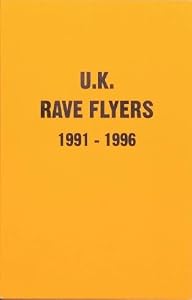
Paperback. Condizione: New. A collection of U. K. Rave Flyers from 1991 to 1996. Courtesy of Stefania Fiorendi and Junior Tomlin.

- Brossura
Da: Rarewaves.com UK, London, Regno UnitoRarewaves.com UK
Contatta il venditoreVenditore con 5 stelleCondizione: Nuovo
EUR 20,31
EUR 76,79 spedizioneSpedito da Regno Unito a U.S.A.Quantità: Più di 20 disponibili
Paperback. Condizione: New. A collection of New York Rave Flyers from 1991 to 1995. Courtesy of Ernie Villalobos.

- Rilegato
Da: Rarewaves.com UK, London, Regno UnitoRarewaves.com UK
Contatta il venditoreVenditore con 5 stelleCondizione: Nuovo
EUR 41,65
EUR 76,79 spedizioneSpedito da Regno Unito a U.S.A.Quantità: Più di 20 disponibili
Hardback. Condizione: New. In 1995, while visiting New York, Victor Boullet managed to secure a portrait sitting with the composer Philip Glass in his New York townhouse. In 'Philip Glass 5th October 1995 New York City', Boullet reveals the entire unedited portrait session including every frame, along with his contact sheets. In this sequence of photographs and Boullet's accompanying essay, which amusingly recounts the story behind his morning with Philip Glass, Boullet's portrayal of the composer and his own thoughts, mishaps and insecurities coincide to create a double portrait of the artist and his sitter. "Portraying someone connected to culture or fame can be a way of climbing a social ladder just by being associated with the sitter, I have used this to my advantage, but this was not the case that day I rang Philip Glass, I was a fan and bored. The playing stopped. Silence. Footsteps. There he was in front of me, Philip Glass. He looked at me with a startled expression, first at my face, then down at my shoes. He then rapidly moved his eyeballs towards my yellow plastic suitcase containing my camera, he lifted his head and sort of looked behind me, and uttered: is that all?" - Victor BoulletAntenne Publishing is delighted to present its first major publication: Philip Glass 5th October 1995 New York City by Victor Boullet. …

- Rilegato
Da: Rarewaves.com UK, London, Regno UnitoRarewaves.com UK
Contatta il venditoreVenditore con 5 stelleCondizione: Nuovo
EUR 51,04
EUR 76,79 spedizioneSpedito da Regno Unito a U.S.A.Quantità: Più di 20 disponibili
Hardback. Condizione: New. 'Come Closer, Closer Please' is a book of photographs taken by Leigh Johnson over a decade. To look through Leigh Johnson's viewfinder is to see the world as a series of awkward angles, both physical and psychological. Although they range from guilelessly straightforward to layered to the point of indeterminacy, her images derive from a singular, distinctive point of view. Whatever the qualities of her surfaces, her sensibility is consistently off kilter. A typical Johnson image lays bare an uncomfortably intimate moment. She fixes events that we might prefer to be fleeting and so holds attention upon objects and situations that make us flinch. She induces our collusion in her practice of invasion, not only into the lives of others, but also into her own: the out of focus face of a mildly discomfited child and an unguarded teenager swigging from a carton sit alongside the remains of a meal that looks to be better left uneaten and a moment from a holiday that suggests more agony than ecstasy. The large part of Johnson's pictures are snatched, yet it is her compositions that are most revealing of her relationship with her subjects. Even while they perform for her, she refuses them the resolution of their moment. Instead she lets them hover in an instant either immediately before or just after, and, in doing so, creates punctured narratives that allow her anxieties to flow unchecked across her entire body of work. She is held by a fraught identification with not only the people, but also the things that she photographs. The key image in this selection is the double portrait of herself and her lover grafted together by the angle of the mirrors on a cupboard door to become a wary, sexless hybrid. Ostensibly an image of unification, the image actually documents the mundane catastrophe of a broken relationship.Arranging her pictures in a constellation that slides between harmony and dissonance, Johnson adopts a diaristic approach. Multiple tales can be traced across these walls. Domesticity, work and travel, everyday life and adventure, beauty and disgust all sit side by side. Above all, there is a love story, told in fragments, that is pitilessly honest while being characteristically oblique.…


