

Importo totale (1 articolo articoli):
Destinazione ordine:

artifice press london (9 risultati)
Casa editrice:
artifice press london
Perfeziona con la Ricerca avanzata
Vai alla pagina principale dei risultati di ricerca
Filtri di ricerca
Tipo di articolo
- Tutti i tipi di prodotto
- Libri (9)
- Riviste e Giornali (Nessun altro risultato corrispondente a questo perfezionamento)
- Fumetti (Nessun altro risultato corrispondente a questo perfezionamento)
- Spartiti (Nessun altro risultato corrispondente a questo perfezionamento)
- Arte, Stampe e Poster (Nessun altro risultato corrispondente a questo perfezionamento)
- Fotografie (Nessun altro risultato corrispondente a questo perfezionamento)
- Mappe (Nessun altro risultato corrispondente a questo perfezionamento)
- Manoscritti e Collezionismo cartaceo (Nessun altro risultato corrispondente a questo perfezionamento)
Condizioni Maggiori informazioni
- Nuovo (7)
- Come nuovo, Ottimo o Quasi ottimo (Nessun altro risultato corrispondente a questo perfezionamento)
- Molto buono o Buono (2)
- Discreto o Mediocre (Nessun altro risultato corrispondente a questo perfezionamento)
- Come descritto (Nessun altro risultato corrispondente a questo perfezionamento)
Legatura
Ulteriori caratteristiche
- Prima ed. (1)
- Copia autograf. (1)
- Sovracoperta (Nessun altro risultato corrispondente a questo perfezionamento)
- Con foto (Nessun altro risultato corrispondente a questo perfezionamento)
- Non Print on Demand (9)
Lingua (1)
Prezzo
- Qualsiasi prezzo
- Inferiore a EUR 20 (Nessun altro risultato corrispondente a questo perfezionamento)
- EUR 20 a EUR 45
- Superiore a EUR 45
Spedizione gratuita
Paese del venditore
Valutazione venditore
-

The Modern House (Paperback)
Da: Grand Eagle Retail, Bensenville, IL, U.S.A.
Valutazione del venditore 5 su 5 stelle

Paperback. Condizione: new. Paperback. The modern House reflects upon the complicated relationship architecture has with the terms "Modernist", "Modernism" and "Modern" specifically in relation to the potent concept of the home, reflecting in part the narrative of how some of the most important examples of Modern houses were commissioned and built in the UK.These special examples of British Modernism include such progressive experiments on communal urban living as London's Isokon Building, completed in 1934 by eminent architect Wells Coates, and Berthold Lubetkin's Highpoint, which is today considered one of the most prominent examples of the early International Style. Compared with these urban enormities are private houses, such as the Laslett House in Cambridge, 1958, by the architect Trevor Dannatt, or the Winter House, designed by John Winter as his own residence.Included are an extended introductory essay by acclaimed architectural journalist Jonathan Bell, former architecture editor for Wallpaper* and contributing editor at Blueprint, and projects such as those designed by renowned architect Carl Turner, responsible for the low energy Slip House, a cantilevered sculptural abode of translucent glass, steel and concrete.With images of yet to be seen interiors and restorations, The Modern House illuminates the convergent characteristics of functionalism, truth to materials, flowing space and natural light within the Modern home as a space for living. The Modern House is, in part, the narrative of how some of the most important examples of modern houses were commissioned and built in the UK. The book presents an inspiring selection of properties from innovative estate agents, The Modern House, and is split into four sections: town houses, conversions, country houses and apartments. Shipping may be from multiple locations in the US or from the UK, depending on stock availability.
-
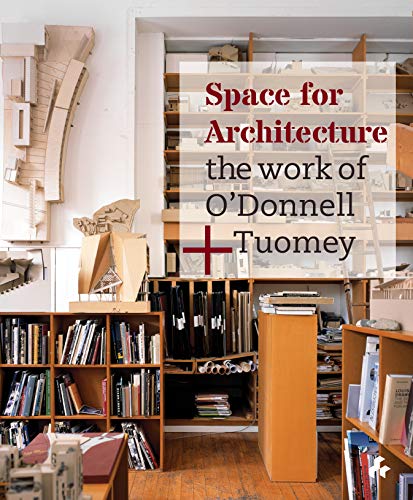
Space for Architecture : The Work of O'Donnell +Tuomey (Hardcover)
Da: Grand Eagle Retail, Bensenville, IL, U.S.A.
Valutazione del venditore 5 su 5 stelle
Hardcover. Condizione: new. Hardcover. Based in Dublin, Cork and London, O'Donnell + Tuomey Architects are revered for their work with urban design, public and private housing, and key educational and cultural buildings in Ireland, the Netherlands and the UK. In London they are best known for two major projects: the Photographers' Gallery and the London School of Economics Saw Swee Hock Student Centre. Sheila O'Donnell and John Tuomey, who both taught at University College Dublin and lecture internationally, constantly look at the way in which different geographical, social and political influences have shaped their iconic works and approach to architecture generally. This book, which is a second edition following the success of the first edition published in 2014, is divided into eight sections, each dealing with a different aspect of the practice's concerns: Studio, Courtyards, The World Outside, London Times, Subtraction and Addition, Venice Excursions, Building Ground and Cat's Cradles. Somewhere between a monograph and a memoir, a studio portfolio and a personal scrapbook, this book describes some of the motivating ideas behind the architects' iconic designs. Nine short essays, alternately written by Sheila O'Donnell and John Tuomey, set the theoretical background for thirteen projects carried out between 1999-2014. Illustrations range from early stage concept sketches to specific photography that has been especially commissioned for the book, to evocatively capture the essence of O'Donnell and Tuomey's buildings. Based in Dublin, Cork and London, O'Donnell + Tuomey Architects are revered for their work with urban design, public and private housing, and key educational and cultural buildings. In London they are best known for two major projects: the Photographers' Gallery and the London School of Economics Saw Swee Hock Student Centre. Shipping may be from multiple locations in the US or from the UK, depending on stock availability.
-
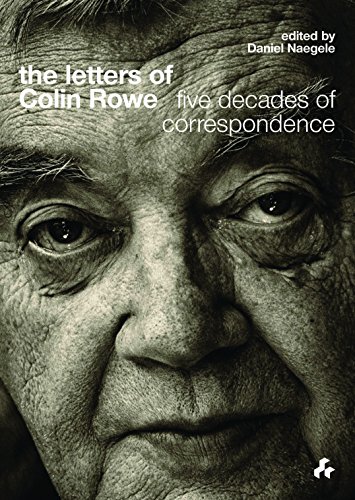
The Letters of Colin Rowe (Hardcover)
Da: Grand Eagle Retail, Bensenville, IL, U.S.A.
Valutazione del venditore 5 su 5 stelle
Hardcover. Condizione: new. Hardcover. Legendary architect, historian and critic, Colin Rowe taught Architecture and Urban Design at Liverpool University, the University of Texas at Austin, Cambridge University and for another 30 years at Cornell. From the late 1940s through to the early 1960s he wrote a uniquely perceptive series of articles on architecture that remains seminal to the discipline today. His books include The Mathematics of the Ideal villa and Other Essays, The Architecture of Good Intentions, the volume As I Was Saying, and most notably, Collage City, 1978, written with Fred Koetter. The recipient of the profession's highest honours, he was awarded the Topaz Medallion for Excellence in Architectural Education in 1985; and the Gold Medal of the Royal Institute of British Architects in 1995. Rowe was an inveterate letter writer. From his student days at Liverpool in the early 1940s until his death in Washington in 1999, he wrote innumerable letters to his parents, renowned architects and scholars, friends, colleagues and former students on both sides of the Atlantic; and most consistently and intimately to his brother, David, and sister in law, Dorothy, in England. Informal and elegant ruminations, they illuminate moments in Rowe's migratory life, addressing a wide range of subjects from books, furniture, landscapes, politics, history, and education, to architecture and the urban condition and a host of other engaging topics. Rich with wit and an astonishing array of scholarship, each is written in the incomparable style for which Rowe has long been famous, making evident his love affair with words and revealing a man of great humour, warmth and charm. This selection of more than 250 of the surviving Rowe letters is edited and introduced by Daniel Naegele. A selection of more than 250 of the surviving letters of legendary architect, historian and critic Colin Rowe. Shipping may be from multiple locations in the US or from the UK, depending on stock availability.
-
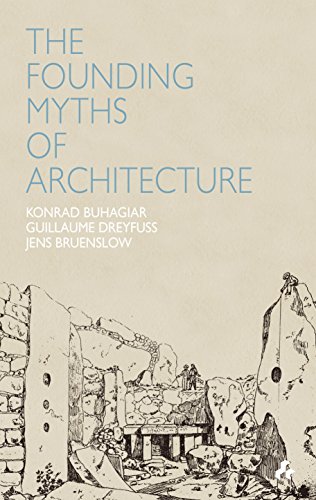
The Founding Myths of Architecture (Paperback)
Da: AussieBookSeller, Truganina, VIC, Australia
Valutazione del venditore 5 su 5 stelle
EUR 46,72
Spedizione EUR 31,92
Spedito da Australia a U.S.A.Quantità: 1 disponibili
Aggiungi al carrelloPaperback. Condizione: new. Paperback. The Founding Myths of Architecture brings together and discusses the work of some of the most influential and intriguing figures in the history of architecture. By returning to the authentic roots from which modern architectural thought has sprung, it explores the significance of the discipline in relation to the evolution of mankind. The contributors, international leading theorists from a variety of disciplines, provide fascinating texts that contribute to the broad discussion on architecture and its relationship with science, nature, art and society. Kari Jormakka, Fabio Barry, Pedro Azara, Caspar Pearson and Henry Dietrich Fernndez are just some of the respected scholars whose writings comprise this authoritative look at the origins of architectural practice and its importance to the development of modern society. By exploring architecture as a basic human instinct, linking contemporary architecture to ideas surrounding mythology and cosmos and assessing the importance of architecture from an anthropological viewpoint, The Founding Myths of Architecture is a refreshing take on architectural theory. The oeuvre of Frank Lloyd Wright, Le Corbusier, Louis Kahn, Francesco Borromini, Andre Le Notre, Giorgio Grognet and Marcus Vitruvius Pollio amongst others is visually referenced in the context of these topics. Published in both French and English editions, this collection of essays pushes the boundaries of architectural criticism by encompassing history and anthropology in its analysis of design theory and by moving away from a purely rational and functional understanding of architecture. This book brings together and discusses the work of some of the most influential and intriguing figures in the history of architecture. Shipping may be from our Sydney, NSW warehouse or from our UK or US warehouse, depending on stock availability.
-

Shaping the World - Two Hundred Years of the Institution of Civil Engineers
Lingua: Inglese
Editore: Artifice Press, United Kingdom, London, 2018
ISBN 10: 191133929X ISBN 13: 9781911339298
Da: WorldofBooks, Goring-By-Sea, WS, Regno Unito
Valutazione del venditore 5 su 5 stelle
EUR 80,50
Spedizione EUR 6,44
Spedito da Regno Unito a U.S.A.Quantità: 1 disponibili
Aggiungi al carrelloPaperback. Condizione: Very Good. The book has been read, but is in excellent condition. Pages are intact and not marred by notes or highlighting. The spine remains undamaged.
-
The Modern House (Paperback)
Da: AussieBookSeller, Truganina, VIC, Australia
Valutazione del venditore 5 su 5 stelle
EUR 60,69
Spedizione EUR 31,92
Spedito da Australia a U.S.A.Quantità: 1 disponibili
Aggiungi al carrelloPaperback. Condizione: new. Paperback. The modern House reflects upon the complicated relationship architecture has with the terms "Modernist", "Modernism" and "Modern" specifically in relation to the potent concept of the home, reflecting in part the narrative of how some of the most important examples of Modern houses were commissioned and built in the UK.These special examples of British Modernism include such progressive experiments on communal urban living as London's Isokon Building, completed in 1934 by eminent architect Wells Coates, and Berthold Lubetkin's Highpoint, which is today considered one of the most prominent examples of the early International Style. Compared with these urban enormities are private houses, such as the Laslett House in Cambridge, 1958, by the architect Trevor Dannatt, or the Winter House, designed by John Winter as his own residence.Included are an extended introductory essay by acclaimed architectural journalist Jonathan Bell, former architecture editor for Wallpaper* and contributing editor at Blueprint, and projects such as those designed by renowned architect Carl Turner, responsible for the low energy Slip House, a cantilevered sculptural abode of translucent glass, steel and concrete.With images of yet to be seen interiors and restorations, The Modern House illuminates the convergent characteristics of functionalism, truth to materials, flowing space and natural light within the Modern home as a space for living. The Modern House is, in part, the narrative of how some of the most important examples of modern houses were commissioned and built in the UK. The book presents an inspiring selection of properties from innovative estate agents, The Modern House, and is split into four sections: town houses, conversions, country houses and apartments. Shipping may be from our Sydney, NSW warehouse or from our UK or US warehouse, depending on stock availability.
-

FROM NOW ON
Lingua: Inglese
Editore: ARTIFICE PRESS LTD, LONDON, 2020
ISBN 10: 1911339400 ISBN 13: 9781911339403
Da: Camilla's Bookshop, Eastbourne, SX, Regno Unito
Valutazione del venditore 4 su 5 stelle

Prima edizione Copia autografata
EUR 59,26
Spedizione EUR 33,37
Spedito da Regno Unito a U.S.A.Quantità: 1 disponibili
Aggiungi al carrelloHardcover. Condizione: Very Good. Condizione sovraccoperta: No Dustjacket. 1st Edition. BOUND IN BLACK CLOTH WITH WHITE TITLES AND TEXT TO BOARDS, WITH COLOR PRINTED PASTEDOWN TO FRONT BOARD WITH ARCHITECTUAL IMAGES, THIS DATED 2020 HARDCOVER FIRST EDITION IS VG. "INSCIPTION ON SECOND FRONT ENDPAPER, READS AS FOLLOWS,"PAUL, I NEED AN HONEST No 1 CONTRACTOR, G." (GUY HOLLAWAY)). 293pp WITH NUMEROUS COLOR PHOTOS OF HOLLAWAY ARCHITECTUAL PROJECTS, INCLUDING BENENDEN SCHOOL, CHAPEL DOWN GIN WORKS AND MARGATE BEACH HOUSES. CONDITION ALL VG. Signed by Author(s).
-
Space for Architecture : The Work of O'Donnell +Tuomey (Hardcover)
Da: AussieBookSeller, Truganina, VIC, Australia
Valutazione del venditore 5 su 5 stelle
EUR 66,29
Spedizione EUR 31,92
Spedito da Australia a U.S.A.Quantità: 1 disponibili
Aggiungi al carrelloHardcover. Condizione: new. Hardcover. Based in Dublin, Cork and London, O'Donnell + Tuomey Architects are revered for their work with urban design, public and private housing, and key educational and cultural buildings in Ireland, the Netherlands and the UK. In London they are best known for two major projects: the Photographers' Gallery and the London School of Economics Saw Swee Hock Student Centre. Sheila O'Donnell and John Tuomey, who both taught at University College Dublin and lecture internationally, constantly look at the way in which different geographical, social and political influences have shaped their iconic works and approach to architecture generally. This book, which is a second edition following the success of the first edition published in 2014, is divided into eight sections, each dealing with a different aspect of the practice's concerns: Studio, Courtyards, The World Outside, London Times, Subtraction and Addition, Venice Excursions, Building Ground and Cat's Cradles. Somewhere between a monograph and a memoir, a studio portfolio and a personal scrapbook, this book describes some of the motivating ideas behind the architects' iconic designs. Nine short essays, alternately written by Sheila O'Donnell and John Tuomey, set the theoretical background for thirteen projects carried out between 1999-2014. Illustrations range from early stage concept sketches to specific photography that has been especially commissioned for the book, to evocatively capture the essence of O'Donnell and Tuomey's buildings. Based in Dublin, Cork and London, O'Donnell + Tuomey Architects are revered for their work with urban design, public and private housing, and key educational and cultural buildings. In London they are best known for two major projects: the Photographers' Gallery and the London School of Economics Saw Swee Hock Student Centre. Shipping may be from our Sydney, NSW warehouse or from our UK or US warehouse, depending on stock availability.
-
The Letters of Colin Rowe (Hardcover)
Da: AussieBookSeller, Truganina, VIC, Australia
Valutazione del venditore 5 su 5 stelle
EUR 101,55
Spedizione EUR 31,92
Spedito da Australia a U.S.A.Quantità: 1 disponibili
Aggiungi al carrelloHardcover. Condizione: new. Hardcover. Legendary architect, historian and critic, Colin Rowe taught Architecture and Urban Design at Liverpool University, the University of Texas at Austin, Cambridge University and for another 30 years at Cornell. From the late 1940s through to the early 1960s he wrote a uniquely perceptive series of articles on architecture that remains seminal to the discipline today. His books include The Mathematics of the Ideal villa and Other Essays, The Architecture of Good Intentions, the volume As I Was Saying, and most notably, Collage City, 1978, written with Fred Koetter. The recipient of the profession's highest honours, he was awarded the Topaz Medallion for Excellence in Architectural Education in 1985; and the Gold Medal of the Royal Institute of British Architects in 1995. Rowe was an inveterate letter writer. From his student days at Liverpool in the early 1940s until his death in Washington in 1999, he wrote innumerable letters to his parents, renowned architects and scholars, friends, colleagues and former students on both sides of the Atlantic; and most consistently and intimately to his brother, David, and sister in law, Dorothy, in England. Informal and elegant ruminations, they illuminate moments in Rowe's migratory life, addressing a wide range of subjects from books, furniture, landscapes, politics, history, and education, to architecture and the urban condition and a host of other engaging topics. Rich with wit and an astonishing array of scholarship, each is written in the incomparable style for which Rowe has long been famous, making evident his love affair with words and revealing a man of great humour, warmth and charm. This selection of more than 250 of the surviving Rowe letters is edited and introduced by Daniel Naegele. A selection of more than 250 of the surviving letters of legendary architect, historian and critic Colin Rowe. Shipping may be from our Sydney, NSW warehouse or from our UK or US warehouse, depending on stock availability.

