
Mit press ma march 2005 (1 risultati)
- Rilegato
Da: Hennessey + Ingalls, Los Angeles, CA, U.S.A.Hennessey + Ingalls
Contatta il venditoreVenditore con 4 stelleCondizione: Usato - Molto buono
EUR 13,42
EUR 5,66 spedizioneSpedito in U.S.A.Quantità: 1 disponibili
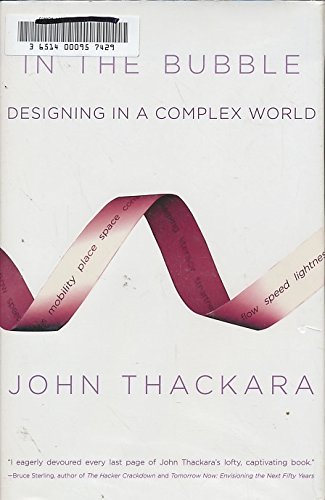
Hardcover. Condizione: Used - Very Good. We're filling up the world with technology and devices, but we've lostsight of an important question: What is this stuff for? What value does it add toour lives? So asks author John Thackara in his new book, In the Bubble: Designingfor a Complex World.These are tough questions for the pus…hers of technology toanswer. Our economic system is centered on technology, so it would be no smallmatter if 'tech' ceased to be an end-in-itself in our daily lives.Technology is notgoing to go away, but the time to discuss the end it will serve is before we deployit, not after. We need to ask what purpose will be served by the broadbandcommunications, smart materials, wearable computing, and connected appliances thatwe're unleashing upon the world. We need to ask what impact all this stuff will haveon our daily lives. Who will look after it, and how?In the Bubble is about a worldbased less on stuff and more on people. Thackara describes a transformation that istaking place now -- not in a remote science fiction future; it's not about, as heputs it, 'the schlock of the new' but about radical innovation already emerging indaily life. We are regaining respect for what people can do that technology can't.In the Bubble describes services designed to help people carry out daily activitiesin new ways. Many of these services involve technology -- ranging from body implantsto wide-bodied jets. But objects and systems play a supporting role in apeople-centered world. The design focus is on services, not things. And newprinciples -- above all, lightness -- inform the way these services are designed andused. At the heart of In the Bubble is a belief, informed by a wealth of real-worldexamples, that ethics and responsibility can inform design decisions withoutimpeding social and technical innovation. How to design a world in which we rely less on stuff, and more on people.
