

Importo totale (1 articolo articoli):
Destinazione ordine:

9780190656737 - Language Policy and Political Economy: English in a Global Context (21 risultati)
Vai alla pagina principale dei risultati di ricerca
Filtri di ricerca
Tipo di articolo
- Tutti i tipi di prodotto
- Libri (21)
- Riviste e Giornali (Nessun altro risultato corrispondente a questo perfezionamento)
- Fumetti (Nessun altro risultato corrispondente a questo perfezionamento)
- Spartiti (Nessun altro risultato corrispondente a questo perfezionamento)
- Arte, Stampe e Poster (Nessun altro risultato corrispondente a questo perfezionamento)
- Fotografie (Nessun altro risultato corrispondente a questo perfezionamento)
- Mappe (Nessun altro risultato corrispondente a questo perfezionamento)
- Manoscritti e Collezionismo cartaceo (Nessun altro risultato corrispondente a questo perfezionamento)
Condizioni Maggiori informazioni
- Nuovo (19)
- Come nuovo, Ottimo o Quasi ottimo (2)
- Molto buono o Buono (Nessun altro risultato corrispondente a questo perfezionamento)
- Discreto o Mediocre (Nessun altro risultato corrispondente a questo perfezionamento)
- Come descritto (Nessun altro risultato corrispondente a questo perfezionamento)
Legatura
- Tutte
- Rilegato (Nessun altro risultato corrispondente a questo perfezionamento)
- Brossura (21)
Ulteriori caratteristiche
- Prima ed. (Nessun altro risultato corrispondente a questo perfezionamento)
- Copia autograf. (Nessun altro risultato corrispondente a questo perfezionamento)
- Sovracoperta (Nessun altro risultato corrispondente a questo perfezionamento)
- Con foto (8)
- Non Print on Demand (11)
Lingua (1)
Prezzo
- Qualsiasi prezzo
- Inferiore a EUR 20 (Nessun altro risultato corrispondente a questo perfezionamento)
- EUR 20 a EUR 45
- Superiore a EUR 45
Spedizione gratuita
Paese del venditore
Valutazione venditore
-

Language Policy and Political Economy : English in a Global Context
Da: GreatBookPrices, Columbia, MD, U.S.A.
Valutazione del venditore 5 su 5 stelle

EUR 38,33
Spedizione EUR 2,31
Spedito in U.S.A.Quantità: Più di 20 disponibili
Aggiungi al carrelloCondizione: New.
-
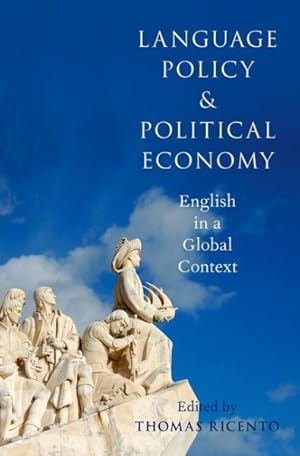
Language Policy and Political Economy : English in a Global Context
Da: GreatBookPrices, Columbia, MD, U.S.A.
Valutazione del venditore 5 su 5 stelle
EUR 38,48
Spedizione EUR 2,31
Spedito in U.S.A.Quantità: Più di 20 disponibili
Aggiungi al carrelloCondizione: As New. Unread book in perfect condition.
-

Language Policy and Political Economy
Lingua: Inglese
Editore: Oxford University Press Inc, US, 2016
ISBN 10: 0190656735 ISBN 13: 9780190656737
Da: Rarewaves.com USA, London, LONDO, Regno Unito
Valutazione del venditore 5 su 5 stelle
EUR 42,30
Spedizione gratuita
Spedito da Regno Unito a U.S.A.Quantità: Più di 20 disponibili
Aggiungi al carrelloPaperback. Condizione: New. This volume articulates a new framework for language policy research that explores the connections between language policy and political economy. The chapters are united in their focus on English, a language that has enjoyed a reputation as a "global language" over the course of the last century and that is perceived as a tool for socioeconomic mobility. The book argues that adopting a new, political economic approach to language policy research will enhance our ability to provide more consistent explanations about the status, functions, benefits, and limitations of English in its various roles in non-English dominant countries. The book poses the questions: Does English serve as a "lingua franca" and does it advance the interests of sustainable economic and social development in low-income countries? Written by leading experts in language policy research, the chapters reveal the myriad and complex ways in which government leaders, policymakers, and communities make decisions about the languages that will be taught as subjects or used as media of instruction in schools. English is often advertised as a social "good" with unquestioned instrumental value, yet access to quality English-medium education in low-income countries tends to be restricted to those with sufficient economic means to pay for it. As the capitalist world economy continues to change and grow, and assuming that translation technologies continue to improve, it is likely that the roles and relative importance of English as a global language will change significantly. Assessing the costs and benefits of acquiring English therefore takes on increased urgency. The book argues that a political economic approach is particularly appropriate in this endeavor, as it takes into account theories and empirical findings from a range of disciplines in order to assess and explain real-world phenomena that do not fit neatly into boxes labeled "economic," "social," "political" or "cultural." Together, the chapters in this volume argue for a new direction in language policy studies-grounded in political economy -- that will explain why English has been experienced as both a blessing and curse in different parts of the world, why English continues to be useful as a lingua franca for particular sectors of the global economy, and why it is a detriment to economic development in many low-income countries. The book will be invaluable to language policy scholars, policy-makers, and educators, significantly advancing research in this important field.
-

Language Policy and Political Economy: English in a Global Context
Da: Ria Christie Collections, Uxbridge, Regno Unito
Valutazione del venditore 5 su 5 stelle
EUR 37,86
Spedizione EUR 14,11
Spedito da Regno Unito a U.S.A.Quantità: Più di 20 disponibili
Aggiungi al carrelloCondizione: New. In.
-
Language Policy and Political Economy
Lingua: Inglese
Editore: Oxford University Press 2016-11, 2016
ISBN 10: 0190656735 ISBN 13: 9780190656737
Da: Chiron Media, Wallingford, Regno Unito
Valutazione del venditore 5 su 5 stelle
EUR 33,71
Spedizione EUR 18,24
Spedito da Regno Unito a U.S.A.Quantità: 10 disponibili
Aggiungi al carrelloPF. Condizione: New.
-

Language Policy and Political Economy : English in a Global Context
Da: GreatBookPricesUK, Woodford Green, Regno Unito
Valutazione del venditore 5 su 5 stelle
EUR 36,73
Spedizione EUR 17,66
Spedito da Regno Unito a U.S.A.Quantità: Più di 20 disponibili
Aggiungi al carrelloCondizione: New.
-

Language Policy and Political Economy : English in a Global Context
Da: GreatBookPricesUK, Woodford Green, Regno Unito
Valutazione del venditore 5 su 5 stelle
EUR 40,84
Spedizione EUR 17,66
Spedito da Regno Unito a U.S.A.Quantità: Più di 20 disponibili
Aggiungi al carrelloCondizione: As New. Unread book in perfect condition.
-
Language Policy and Political Economy: English in a Global Context
Lingua: Inglese
Editore: Oxford University Press Inc, 2016
ISBN 10: 0190656735 ISBN 13: 9780190656737
Da: Kennys Bookstore, Olney, MD, U.S.A.
Valutazione del venditore 5 su 5 stelle
EUR 71,05
Spedizione EUR 9,17
Spedito in U.S.A.Quantità: Più di 20 disponibili
Aggiungi al carrelloCondizione: New. This edited volume will articulate a new framework for language policy research that explores the connections between language policy and political economy in its analysis of how English affects the status of other languages in countries, specifically those where English is now spoken as a foreign or additional language. Editor(s): Ricento, Thomas. Num Pages: 336 pages. BIC Classification: 2AB; CFB; KCP. Category: (UP) Postgraduate, Research & Scholarly. Dimension: 232 x 154 x 20. Weight in Grams: 494. . 2016. Reprint. Paperback. . . . . Books ship from the US and Ireland.
-
Language Policy and Political Economy: English in a Global Context
Da: Revaluation Books, Exeter, Regno Unito
Valutazione del venditore 5 su 5 stelle
EUR 73,32
Spedizione EUR 14,72
Spedito da Regno Unito a U.S.A.Quantità: 2 disponibili
Aggiungi al carrelloPaperback. Condizione: Brand New. reprint edition. 336 pages. 9.25x6.25x1.00 inches. In Stock.
-
Language Policy and Political Economy: English in a Global Context
Lingua: Inglese
Editore: Oxford University Press Inc, 2016
ISBN 10: 0190656735 ISBN 13: 9780190656737
Da: Kennys Bookshop and Art Galleries Ltd., Galway, GY, Irlanda
Valutazione del venditore 5 su 5 stelle
EUR 81,08
Spedizione EUR 10,50
Spedito da Irlanda a U.S.A.Quantità: Più di 20 disponibili
Aggiungi al carrelloCondizione: New. This edited volume will articulate a new framework for language policy research that explores the connections between language policy and political economy in its analysis of how English affects the status of other languages in countries, specifically those where English is now spoken as a foreign or additional language. Editor(s): Ricento, Thomas. Num Pages: 336 pages. BIC Classification: 2AB; CFB; KCP. Category: (UP) Postgraduate, Research & Scholarly. Dimension: 232 x 154 x 20. Weight in Grams: 494. . 2016. Reprint. Paperback. . . . .
-

Language Policy and Political Economy
Lingua: Inglese
Editore: Oxford University Press Inc, US, 2016
ISBN 10: 0190656735 ISBN 13: 9780190656737
Da: Rarewaves.com UK, London, Regno Unito
Valutazione del venditore 5 su 5 stelle
EUR 38,83
Spedizione EUR 76,54
Spedito da Regno Unito a U.S.A.Quantità: Più di 20 disponibili
Aggiungi al carrelloPaperback. Condizione: New. This volume articulates a new framework for language policy research that explores the connections between language policy and political economy. The chapters are united in their focus on English, a language that has enjoyed a reputation as a "global language" over the course of the last century and that is perceived as a tool for socioeconomic mobility. The book argues that adopting a new, political economic approach to language policy research will enhance our ability to provide more consistent explanations about the status, functions, benefits, and limitations of English in its various roles in non-English dominant countries. The book poses the questions: Does English serve as a "lingua franca" and does it advance the interests of sustainable economic and social development in low-income countries? Written by leading experts in language policy research, the chapters reveal the myriad and complex ways in which government leaders, policymakers, and communities make decisions about the languages that will be taught as subjects or used as media of instruction in schools. English is often advertised as a social "good" with unquestioned instrumental value, yet access to quality English-medium education in low-income countries tends to be restricted to those with sufficient economic means to pay for it. As the capitalist world economy continues to change and grow, and assuming that translation technologies continue to improve, it is likely that the roles and relative importance of English as a global language will change significantly. Assessing the costs and benefits of acquiring English therefore takes on increased urgency. The book argues that a political economic approach is particularly appropriate in this endeavor, as it takes into account theories and empirical findings from a range of disciplines in order to assess and explain real-world phenomena that do not fit neatly into boxes labeled "economic," "social," "political" or "cultural." Together, the chapters in this volume argue for a new direction in language policy studies-grounded in political economy -- that will explain why English has been experienced as both a blessing and curse in different parts of the world, why English continues to be useful as a lingua franca for particular sectors of the global economy, and why it is a detriment to economic development in many low-income countries. The book will be invaluable to language policy scholars, policy-makers, and educators, significantly advancing research in this important field.
-
Language Policy and Political Economy
Da: PBShop.store US, Wood Dale, IL, U.S.A.
Valutazione del venditore 5 su 5 stelle
EUR 41,02
Spedizione gratuita
Spedito in U.S.A.Quantità: Più di 20 disponibili
Aggiungi al carrelloPAP. Condizione: New. New Book. Shipped from UK. THIS BOOK IS PRINTED ON DEMAND. Established seller since 2000.
-
Language Policy and Political Economy
Da: PBShop.store UK, Fairford, GLOS, Regno Unito
Valutazione del venditore 5 su 5 stelle
EUR 38,08
Spedizione EUR 5,91
Spedito da Regno Unito a U.S.A.Quantità: Più di 20 disponibili
Aggiungi al carrelloPAP. Condizione: New. New Book. Delivered from our UK warehouse in 4 to 14 business days. THIS BOOK IS PRINTED ON DEMAND. Established seller since 2000.
-
Language Policy and Political Economy: English in a Global Context (eng)
Da: Brook Bookstore On Demand, Napoli, NA, Italia
Valutazione del venditore 5 su 5 stelle
EUR 47,84
Spedizione EUR 6,80
Spedito da Italia a U.S.A.Quantità: Più di 20 disponibili
Aggiungi al carrelloCondizione: new. Questo è un articolo print on demand.
-
Language Policy and Political Economy: English in a Global Context
Lingua: Inglese
Editore: Oxford University Press Inc, 2016
ISBN 10: 0190656735 ISBN 13: 9780190656737
Da: THE SAINT BOOKSTORE, Southport, Regno Unito
Valutazione del venditore 5 su 5 stelle
EUR 42,83
Spedizione EUR 18,48
Spedito da Regno Unito a U.S.A.Quantità: Più di 20 disponibili
Aggiungi al carrelloPaperback / softback. Condizione: New. This item is printed on demand. New copy - Usually dispatched within 5-9 working days.
-
LANGUAGE POLICY AND POLITICAL ECONOMY
Da: Majestic Books, Hounslow, Regno Unito
Valutazione del venditore 4 su 5 stelle

EUR 71,05
Spedizione EUR 7,65
Spedito da Regno Unito a U.S.A.Quantità: 4 disponibili
Aggiungi al carrelloCondizione: New. Print on Demand pp. 336.
-
LANGUAGE POLICY AND POLITICAL ECONOMY
Lingua: Inglese
Editore: Oxford University Press OUP, 2016
ISBN 10: 0190656735 ISBN 13: 9780190656737
Da: Books Puddle, New York, NY, U.S.A.
Valutazione del venditore 4 su 5 stelle
Condizione: New. Print on Demand pp. 336.
-
LANGUAGE POLICY AND POLITICAL ECONOMY
Da: Biblios, Frankfurt am main, HESSE, Germania
Valutazione del venditore 4 su 5 stelle
EUR 70,86
Spedizione EUR 9,95
Spedito da Germania a U.S.A.Quantità: 4 disponibili
Aggiungi al carrelloCondizione: New. PRINT ON DEMAND pp. 336.
-
Language Policy and Political Economy (Paperback)
Lingua: Inglese
Editore: Oxford University Press Inc, New York, 2016
ISBN 10: 0190656735 ISBN 13: 9780190656737
Da: CitiRetail, Stevenage, Regno Unito
Valutazione del venditore 5 su 5 stelle
EUR 42,44
Spedizione EUR 43,57
Spedito da Regno Unito a U.S.A.Quantità: 1 disponibili
Aggiungi al carrelloPaperback. Condizione: new. Paperback. This volume articulates a new framework for language policy research that explores the connections between language policy and political economy. The chapters are united in their focus on English, a language that has enjoyed a reputation as a "global language" over the course of the last century and that is perceived as a tool for socioeconomic mobility. The book argues that adopting a new, political economic approach to language policy research will enhance ourability to provide more consistent explanations about the status, functions, benefits, and limitations of English in its various roles in non-English dominant countries.The bookposes the questions: Does English serve as a "lingua franca" and does it advance the interests of sustainable economic and social development in low-income countries? Written by leading experts in language policy research, the chapters reveal the myriad and complex ways in which government leaders, policymakers, and communities make decisions about the languages that will be taught as subjects or used as media of instruction in schools. English is often advertised as a social "good" withunquestioned instrumental value, yet access to quality English-medium education in low-income countries tends to be restricted to those with sufficient economic means to pay for it. As the capitalist worldeconomy continues to change and grow, and assuming that translation technologies continue to improve, it is likely that the roles and relative importance of English as a global language will change significantly. Assessing the costs and benefits of acquiring English therefore takes on increased urgency. The book argues that a political economic approach is particularly appropriate in this endeavor, as it takes into account theories and empirical findings from a range of disciplines in order toassess and explain real-world phenomena that do not fit neatly into boxes labeled "economic," "social," "political" or "cultural."Together, the chapters in this volume argue fora new direction in language policy studies-grounded in political economy -- that will explain why English has been experienced as both a blessing and curse in different parts of the world, why English continues to be useful as a lingua franca for particular sectors of the global economy, and why it is a detriment to economic development in many low-income countries. The book will be invaluable to language policy scholars, policy-makers, and educators, significantly advancing research in thisimportant field. This edited volume will articulate a new framework for language policy research that explores the connections between language policy and political economy in its analysis of how English affects the status of other languages in countries, specifically those where English is now spoken as a foreign or additional language. This item is printed on demand. Shipping may be from our UK warehouse or from our Australian or US warehouses, depending on stock availability.
-

EUR 54,10
Spedizione EUR 62,85
Spedito da Germania a U.S.A.Quantità: 1 disponibili
Aggiungi al carrelloTaschenbuch. Condizione: Neu. nach der Bestellung gedruckt Neuware - Printed after ordering - This volume articulates a new framework for language policy research that explores the connections between language policy and political economy. The chapters are united in their focus on English, a language that has enjoyed a reputation as a 'global language' over the course of the last century and that is perceived as a tool for socioeconomic mobility. The book argues that adopting a new, political economic approach to language policy research will enhance our ability to provide more consistent explanations about the status, functions, benefits, and limitations of English in its various roles in non-English dominant countries. The book poses the questions: Does English serve as a 'lingua franca' and does it advance the interests of sustainable economic and social development in low-income countries Written by leading experts in language policy research, the chapters reveal the myriad and complex ways in which government leaders, policymakers, and communities make decisions about the languages that will be taught as subjects or used as media of instruction in schools. English is often advertised as a social 'good' with unquestioned instrumental value, yet access to quality English-medium education in low-income countries tends to be restricted to those with sufficient economic means to pay for it. As the capitalist world economy continues to change and grow, and assuming that translation technologies continue to improve, it is likely that the roles and relative importance of English as a global language will change significantly. Assessing the costs and benefits of acquiring English therefore takes on increased urgency. The book argues that a political economic approach is particularly appropriate in this endeavor, as it takes into account theories and empirical findings from a range of disciplines in order to assess and explain real-world phenomena that do not fit neatly into boxes labeled 'economic,' 'social,' 'political' or 'cultural.' Together, the chapters in this volume argue for a new direction in language policy studies-grounded in political economy -- that will explain why English has been experienced as both a blessing and curse in different parts of the world, why English continues to be useful as a lingua franca for particular sectors of the global economy, and why it is a detriment to economic development in many low-income countries. The book will be invaluable to language policy scholars, policy-makers, and educators, significantly advancing research in this important field.
-

EUR 57,10
Spedizione EUR 70,00
Spedito da Germania a U.S.A.Quantità: 5 disponibili
Aggiungi al carrelloTaschenbuch. Condizione: Neu. Language Policy and Political Economy | Thomas Ricento | Taschenbuch | Kartoniert / Broschiert | Englisch | 2016 | Oxford University Press | EAN 9780190656737 | Verantwortliche Person für die EU: Libri GmbH, Europaallee 1, 36244 Bad Hersfeld, gpsr[at]libri[dot]de | Anbieter: preigu Print on Demand.

