
Importo totale (1 articolo articoli):
Destinazione ordine:

9780195386615 - Cry Liberty: The Great Stono River Slave Rebellion of 1739 di Hoffer, Peter Charles (6 risultati)
Vai alla pagina principale dei risultati di ricerca
Filtri di ricerca
Tipo di articolo
- Tutti i tipi di prodotto
- Libri (6)
- Riviste e Giornali (Nessun altro risultato corrispondente a questo perfezionamento)
- Fumetti (Nessun altro risultato corrispondente a questo perfezionamento)
- Spartiti (Nessun altro risultato corrispondente a questo perfezionamento)
- Arte, Stampe e Poster (Nessun altro risultato corrispondente a questo perfezionamento)
- Fotografie (Nessun altro risultato corrispondente a questo perfezionamento)
- Mappe (Nessun altro risultato corrispondente a questo perfezionamento)
- Manoscritti e Collezionismo cartaceo (Nessun altro risultato corrispondente a questo perfezionamento)
Condizioni Maggiori informazioni
- Nuovo (1)
- Come nuovo, Ottimo o Quasi ottimo (1)
- Molto buono o Buono (4)
- Discreto o Mediocre (Nessun altro risultato corrispondente a questo perfezionamento)
- Come descritto (Nessun altro risultato corrispondente a questo perfezionamento)
Legatura
- Tutte
- Rilegato (6)
- Brossura (Nessun altro risultato corrispondente a questo perfezionamento)
Ulteriori caratteristiche
- Prima ed. (Nessun altro risultato corrispondente a questo perfezionamento)
- Copia autograf. (Nessun altro risultato corrispondente a questo perfezionamento)
- Sovracoperta (Nessun altro risultato corrispondente a questo perfezionamento)
- Con foto (2)
- Non Print on Demand (6)
Lingua (1)
Prezzo
- Qualsiasi prezzo
- Inferiore a EUR 20
- EUR 20 a EUR 40
- Superiore a EUR 40 (Nessun altro risultato corrispondente a questo perfezionamento)
Spedizione gratuita
Paese del venditore
Valutazione venditore
-

Cry Liberty: The Great Stono River Slave Rebellion of 1739 (New Narratives in American History)
Da: Zoom Books East, Glendale Heights, IL, U.S.A.
Valutazione del venditore 5 su 5 stelle

Condizione: good. Book is in good condition and may include underlining highlighting and minimal wear. The book can also include "From the library of" labels. May not contain miscellaneous items toys, dvds, etc. . We offer 100% money back guarantee and 24 7 customer service.
-

Cry Liberty: The Great Stono River Slave Rebellion of 1739 (New Narratives in American History)
Da: Greenworld Books, Arlington, TX, U.S.A.
Valutazione del venditore 5 su 5 stelle
Condizione: good. Fast Free Shipping â" Good condition. It may show normal signs of use, such as light writing, highlighting, or library markings, but all pages are intact and the book is fully readable. A solid, complete copy that's ready to enjoy.
-
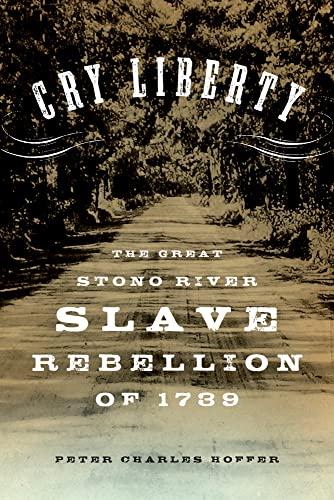
Hardcover. Condizione: Very Good. Connecting readers with great books since 1972! Used books may not include companion materials, and may have some shelf wear or limited writing. We ship orders daily and Customer Service is our top priority!
-
Hardcover. Condizione: Good. Connecting readers with great books since 1972! Used textbooks may not include companion materials such as access codes, etc. May have some wear or writing/highlighting. We ship orders daily and Customer Service is our top priority!
-
Cry Liberty: The Great Stono River Slave Rebellion of 1739 (New Narratives in American History)
Lingua: Inglese
Editore: Oxford University Press, USA, 2010
ISBN 10: 0195386612 ISBN 13: 9780195386615
Condizione: new.
-
Cry Liberty: The Great Stono River Slave Rebellion of 1739 (New Narratives in American History)
Da: Sequitur Books, Boonsboro, MD, U.S.A.
Membro dell'associazione: IOBA
Valutazione del venditore 5 su 5 stelle
Hardcover. Condizione: As New. [Interesting provenance: From the private library of renowned historian, Philip D. Morgan.] Hardcover and dust jacket. Good binding and cover. Contemporary signature of Morgan on front end page. xvii, 173 pages : illustrations, maps ; 18 cm. The Stono rebellion was a large slave uprising on September 9, 1739, near the Stono River, 20 miles (30 km) southwest of Charleston, South Carolina. Slaves gathered, raided a firearms shop, and headed south, killing more than 20 white people as they went. Other slaves joined the rebellion until the group reached about 60 members. The white community set out in armed pursuit, and by dusk half the slaves were dead and half had escaped; most were eventually captured and executed. The slaves may have been hoping to reach St. Augustine, Florida, where the Spanish were offering freedom and land to any fugitive slave. White colonists quickly passed a Negro Act that further limited slave privileges. From the professional library of Dr. Philip D. Morgan, a professor of History at Johns Hopkins University. Morgan specializes in the African-American experience, the history of slavery, the early Caribbean, and the study of the early Atlantic world. Morgan is the author of more than 14 books on Colonial America and African American history. He has won both the Bancroft Prize and the Frederick Douglass Prize for his book Slave Counterpoint: Black Culture in the Eighteenth-Century Chesapeake and Lowcountry (1998).
