

Importo totale (1 articolo articoli):
Destinazione ordine:

9780199256693 - LEWIS:TURKISH LANGUAGE REFORM:CATASTROPHIC SUCCESS PAPER: A Catastrophic Success (Oxford Linguistics) di LEWIS, Geoffrey (24 risultati)
Vai alla pagina principale dei risultati di ricerca
Filtri di ricerca
Tipo di articolo
- Tutti i tipi di prodotto
- Libri (24)
- Riviste e Giornali (Nessun altro risultato corrispondente a questo perfezionamento)
- Fumetti (Nessun altro risultato corrispondente a questo perfezionamento)
- Spartiti (Nessun altro risultato corrispondente a questo perfezionamento)
- Arte, Stampe e Poster (Nessun altro risultato corrispondente a questo perfezionamento)
- Fotografie (Nessun altro risultato corrispondente a questo perfezionamento)
- Mappe (Nessun altro risultato corrispondente a questo perfezionamento)
- Manoscritti e Collezionismo cartaceo (Nessun altro risultato corrispondente a questo perfezionamento)
Condizioni Maggiori informazioni
- Nuovo (18)
- Come nuovo, Ottimo o Quasi ottimo (2)
- Molto buono o Buono (4)
- Discreto o Mediocre (Nessun altro risultato corrispondente a questo perfezionamento)
- Come descritto (Nessun altro risultato corrispondente a questo perfezionamento)
Legatura
- Tutte
- Rilegato (Nessun altro risultato corrispondente a questo perfezionamento)
- Brossura (24)
Ulteriori caratteristiche
- Prima ed. (Nessun altro risultato corrispondente a questo perfezionamento)
- Copia autograf. (Nessun altro risultato corrispondente a questo perfezionamento)
- Sovracoperta (Nessun altro risultato corrispondente a questo perfezionamento)
- Con foto (11)
- Non Print on Demand (15)
Lingua (1)
Spedizione gratuita
Paese del venditore
Valutazione venditore
-
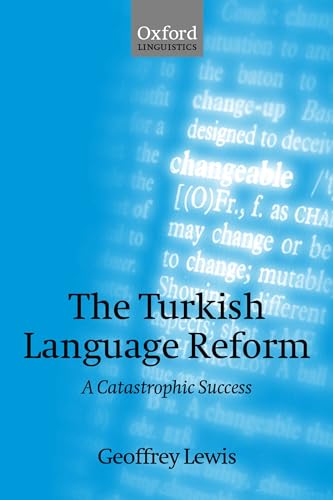
The Turkish Language Reform : A Catastrophic Success
Lingua: Inglese
Editore: Oxford University Press, Incorporated, 2002
ISBN 10: 0199256691 ISBN 13: 9780199256693
Da: Better World Books Ltd, Dunfermline, Regno Unito
Valutazione del venditore 5 su 5 stelle

EUR 14,65
Spedizione EUR 5,74
Spedito da Regno Unito a U.S.A.Quantità: 1 disponibili
Aggiungi al carrelloCondizione: Very Good. Former library copy. Pages intact with possible writing/highlighting. Binding strong with minor wear. Dust jackets/supplements may not be included. Includes library markings. Stock photo provided. Product includes identifying sticker. Better World Books: Buy Books. Do Good.
-
Paperback. Condizione: Good. Connecting readers with great books since 1972! Used textbooks may not include companion materials such as access codes, etc. May have some wear or writing/highlighting. We ship orders daily and Customer Service is our top priority!
-
The Turkish Language Reform: A Catastrophic Success
Da: ThriftBooks-Atlanta, AUSTELL, GA, U.S.A.
Valutazione del venditore 5 su 5 stelle
Paperback. Condizione: Good. No Jacket. Pages can have notes/highlighting. Spine may show signs of wear. ~ ThriftBooks: Read More, Spend Less.
-
The Turkish Language Reform: A Catastrophic Success
Da: ThriftBooks-Dallas, Dallas, TX, U.S.A.
Valutazione del venditore 5 su 5 stelle
Paperback. Condizione: Good. No Jacket. Pages can have notes/highlighting. Spine may show signs of wear. ~ ThriftBooks: Read More, Spend Less.
-

Turkish Language Reform : A Catastrophic Success
Da: GreatBookPrices, Columbia, MD, U.S.A.
Valutazione del venditore 5 su 5 stelle
EUR 30,92
Spedizione EUR 2,22
Spedito in U.S.A.Quantità: Più di 20 disponibili
Aggiungi al carrelloCondizione: New.
-

The Turkish Language Reform
Lingua: Inglese
Editore: Oxford University Press, GB, 2002
ISBN 10: 0199256691 ISBN 13: 9780199256693
Da: Rarewaves.com USA, London, LONDO, Regno Unito
Valutazione del venditore 5 su 5 stelle
EUR 33,22
Spedizione gratuita
Spedito da Regno Unito a U.S.A.Quantità: Più di 20 disponibili
Aggiungi al carrelloPaperback. Condizione: New. This is the first full account of the transformation of Ottoman Turkish into Modern Turkish. It is based on the author's knowledge and experience of the language, history, and people of Turkey. The transformation of the Turkish language is probably the most thorough-going piece of linguistic engineering in history. Its prelude came in 1928, when the Arabo-Persian alphabet was outlawed and replaced by the Latin alphabet. It began in earnest in 1930 when Ataturk declared:'Turkish is one of the richest of languages. It needs only to be used with discrimination. The Turkish nation, which is well able to protect its territory and its sublime independence, must also liberate its language from the yoke of foreign languages.'All Arabic and Persian vocabulary was replaced forthwith by words collected from popular speech, resurrected from ancient texts, or coined from native roots and suffixes. The snag - identified by the author as one element in the catastrophic aspect of the reform - was that when these sources failed to provide the needed words, the reformers simply invented them. The reform was central to the young republic's aspiration to be western and secular, but it did not please those who remained wedded to their mother tongue or to the Islamic past. The controversy is by no means over, but Ottoman Turkish is dead.Geoffrey Lewis both acquaints the general reader with the often bizarre, sometimes tragi-comic, but never dull story of the reform, and provides a stimulating and incisive account for students of Turkish language, history, and culture. The author draws on his own wide experience of Turkey and his personal knowledge of many of the leading actors. He has left no word, phrase, or sentence of Turkish untranslated, other than the names of books and articles.
-

Turkish Language Reform : A Catastrophic Success
Da: GreatBookPrices, Columbia, MD, U.S.A.
Valutazione del venditore 5 su 5 stelle
EUR 36,22
Spedizione EUR 2,22
Spedito in U.S.A.Quantità: Più di 20 disponibili
Aggiungi al carrelloCondizione: As New. Unread book in perfect condition.
-
LEWIS:TURKISH LANGUAGE REFORM:CATASTROPHIC SUCCESS PAPER: A Catastrophic Success (Oxford Linguistics)
Da: Ria Christie Collections, Uxbridge, Regno Unito
Valutazione del venditore 5 su 5 stelle
EUR 30,33
Spedizione EUR 13,74
Spedito da Regno Unito a U.S.A.Quantità: Più di 20 disponibili
Aggiungi al carrelloCondizione: New. In.
-

Turkish Language Reform : A Catastrophic Success
Da: GreatBookPricesUK, Woodford Green, Regno Unito
Valutazione del venditore 5 su 5 stelle
EUR 30,63
Spedizione EUR 17,21
Spedito da Regno Unito a U.S.A.Quantità: Più di 20 disponibili
Aggiungi al carrelloCondizione: New.
-

Turkish Language Reform : A Catastrophic Success
Da: GreatBookPricesUK, Woodford Green, Regno Unito
Valutazione del venditore 5 su 5 stelle
EUR 33,84
Spedizione EUR 17,21
Spedito da Regno Unito a U.S.A.Quantità: Più di 20 disponibili
Aggiungi al carrelloCondizione: As New. Unread book in perfect condition.
-
LEWIS:TURKISH LANGUAGE REFORM:CATASTROPHIC SUCCESS PAPER: A Catastrophic Success (Oxford Linguistics)
Da: Lucky's Textbooks, Dallas, TX, U.S.A.
Valutazione del venditore 5 su 5 stelle
EUR 53,12
Spedizione EUR 3,36
Spedito in U.S.A.Quantità: Più di 20 disponibili
Aggiungi al carrelloCondizione: New.
-

The Turkish Language Reform (Paperback)
Lingua: Inglese
Editore: Oxford University Press, Oxford, 2002
ISBN 10: 0199256691 ISBN 13: 9780199256693
Da: Grand Eagle Retail, Bensenville, IL, U.S.A.
Valutazione del venditore 5 su 5 stelle
Paperback. Condizione: new. Paperback. This is the first full account of the transformation of Ottoman Turkish into Modern Turkish. It is based on the author's knowledge and experience of the language, history, and people of Turkey. The transformation of the Turkish language is probably the most thorough-going piece of linguistic engineering in history. Its prelude came in 1928, when the Arabo-Persian alphabet was outlawed and replaced by the Latin alphabet. It began in earnest in 1930 when Ataturkdeclared:'Turkish is one of the richest of languages. It needs only to be used with discrimination. The Turkish nation, which is well able to protect its territory and its sublimeindependence, must also liberate its language from the yoke of foreign languages.'All Arabic and Persian vocabulary was replaced forthwith by words collected from popular speech, resurrected from ancient texts, or coined from native roots and suffixes. The snag - identified by the author as one element in the catastrophic aspect of the reform - was that when these sources failed to provide the needed words, the reformers simply invented them. The reform was central to theyoung republic's aspiration to be western and secular, but it did not please those who remained wedded to their mother tongue or to the Islamic past. The controversy is by no means over, but OttomanTurkish is dead.Geoffrey Lewis both acquaints the general reader with the often bizarre, sometimes tragi-comic, but never dull story of the reform, and provides a stimulating and incisive account for students of Turkish language, history, and culture. The author draws on his own wide experience of Turkey and his personal knowledge of many of the leading actors. He has left no word, phrase, or sentence of Turkish untranslated, other than the names of books and articles. An account of the transformation of the Turkish language in the years following 1930. Turkey aimed to liberate its language from the yoke of foreign languages, and succeeded: within 15 years Ottoman Turkish was dead. At the root of the reform was the young republic's aspirations to be secular and western. Shipping may be from multiple locations in the US or from the UK, depending on stock availability.
-
LEWIS:TURKISH LANGUAGE REFORM:CATASTROPHIC SUCCESS PAPER: A Catastrophic Success (Oxford Linguistics)
Lingua: Inglese
Editore: Oxford University Press, USA, 2002
ISBN 10: 0199256691 ISBN 13: 9780199256693
Condizione: new.
-
The Turkish Language Reform: A Catastrophic Success
Da: Revaluation Books, Exeter, Regno Unito
Valutazione del venditore 5 su 5 stelle
EUR 77,74
Spedizione EUR 11,47
Spedito da Regno Unito a U.S.A.Quantità: 2 disponibili
Aggiungi al carrelloPaperback. Condizione: Brand New. new ed edition. 208 pages. 9.25x6.25x0.50 inches. In Stock.
-

The Turkish Language Reform
Lingua: Inglese
Editore: Oxford University Press, GB, 2002
ISBN 10: 0199256691 ISBN 13: 9780199256693
Da: Rarewaves.com UK, London, Regno Unito
Valutazione del venditore 5 su 5 stelle
EUR 30,62
Spedizione EUR 74,57
Spedito da Regno Unito a U.S.A.Quantità: Più di 20 disponibili
Aggiungi al carrelloPaperback. Condizione: New. This is the first full account of the transformation of Ottoman Turkish into Modern Turkish. It is based on the author's knowledge and experience of the language, history, and people of Turkey. The transformation of the Turkish language is probably the most thorough-going piece of linguistic engineering in history. Its prelude came in 1928, when the Arabo-Persian alphabet was outlawed and replaced by the Latin alphabet. It began in earnest in 1930 when Ataturk declared:'Turkish is one of the richest of languages. It needs only to be used with discrimination. The Turkish nation, which is well able to protect its territory and its sublime independence, must also liberate its language from the yoke of foreign languages.'All Arabic and Persian vocabulary was replaced forthwith by words collected from popular speech, resurrected from ancient texts, or coined from native roots and suffixes. The snag - identified by the author as one element in the catastrophic aspect of the reform - was that when these sources failed to provide the needed words, the reformers simply invented them. The reform was central to the young republic's aspiration to be western and secular, but it did not please those who remained wedded to their mother tongue or to the Islamic past. The controversy is by no means over, but Ottoman Turkish is dead.Geoffrey Lewis both acquaints the general reader with the often bizarre, sometimes tragi-comic, but never dull story of the reform, and provides a stimulating and incisive account for students of Turkish language, history, and culture. The author draws on his own wide experience of Turkey and his personal knowledge of many of the leading actors. He has left no word, phrase, or sentence of Turkish untranslated, other than the names of books and articles.
-
The Turkish Language Reform
Da: PBShop.store US, Wood Dale, IL, U.S.A.
Valutazione del venditore 5 su 5 stelle
EUR 33,29
Spedizione gratuita
Spedito in U.S.A.Quantità: Più di 20 disponibili
Aggiungi al carrelloPAP. Condizione: New. New Book. Shipped from UK. THIS BOOK IS PRINTED ON DEMAND. Established seller since 2000.
-
The Turkish Language Reform
Da: PBShop.store UK, Fairford, GLOS, Regno Unito
Valutazione del venditore 4 su 5 stelle

EUR 30,71
Spedizione EUR 4,77
Spedito da Regno Unito a U.S.A.Quantità: Più di 20 disponibili
Aggiungi al carrelloPAP. Condizione: New. New Book. Delivered from our UK warehouse in 4 to 14 business days. THIS BOOK IS PRINTED ON DEMAND. Established seller since 2000.
-
The Turkish Language Reform: A Catastrophic Success (eng)
Da: Brook Bookstore On Demand, Napoli, NA, Italia
Valutazione del venditore 4 su 5 stelle
EUR 34,62
Spedizione EUR 5,50
Spedito da Italia a U.S.A.Quantità: Più di 20 disponibili
Aggiungi al carrelloCondizione: new. Questo è un articolo print on demand.
-
The Turkish Language Reform: A Catastrophic Success
Da: THE SAINT BOOKSTORE, Southport, Regno Unito
Valutazione del venditore 5 su 5 stelle
EUR 35,17
Spedizione EUR 16,43
Spedito da Regno Unito a U.S.A.Quantità: Più di 20 disponibili
Aggiungi al carrelloPaperback / softback. Condizione: New. This item is printed on demand. New copy - Usually dispatched within 5-9 working days.
-

The Turkish Language Reform (Paperback)
Lingua: Inglese
Editore: Oxford University Press, Oxford, 2002
ISBN 10: 0199256691 ISBN 13: 9780199256693
Da: AussieBookSeller, Truganina, VIC, Australia
Valutazione del venditore 5 su 5 stelle
EUR 34,40
Spedizione EUR 31,16
Spedito da Australia a U.S.A.Quantità: 1 disponibili
Aggiungi al carrelloPaperback. Condizione: new. Paperback. This is the first full account of the transformation of Ottoman Turkish into Modern Turkish. It is based on the author's knowledge and experience of the language, history, and people of Turkey. The transformation of the Turkish language is probably the most thorough-going piece of linguistic engineering in history. Its prelude came in 1928, when the Arabo-Persian alphabet was outlawed and replaced by the Latin alphabet. It began in earnest in 1930 when Ataturkdeclared:'Turkish is one of the richest of languages. It needs only to be used with discrimination. The Turkish nation, which is well able to protect its territory and its sublimeindependence, must also liberate its language from the yoke of foreign languages.'All Arabic and Persian vocabulary was replaced forthwith by words collected from popular speech, resurrected from ancient texts, or coined from native roots and suffixes. The snag - identified by the author as one element in the catastrophic aspect of the reform - was that when these sources failed to provide the needed words, the reformers simply invented them. The reform was central to theyoung republic's aspiration to be western and secular, but it did not please those who remained wedded to their mother tongue or to the Islamic past. The controversy is by no means over, but OttomanTurkish is dead.Geoffrey Lewis both acquaints the general reader with the often bizarre, sometimes tragi-comic, but never dull story of the reform, and provides a stimulating and incisive account for students of Turkish language, history, and culture. The author draws on his own wide experience of Turkey and his personal knowledge of many of the leading actors. He has left no word, phrase, or sentence of Turkish untranslated, other than the names of books and articles. An account of the transformation of the Turkish language in the years following 1930. Turkey aimed to liberate its language from the yoke of foreign languages, and succeeded: within 15 years Ottoman Turkish was dead. At the root of the reform was the young republic's aspirations to be secular and western. This item is printed on demand. Shipping may be from our Sydney, NSW warehouse or from our UK or US warehouse, depending on stock availability.
-
The Turkish Language Reform (Paperback)
Lingua: Inglese
Editore: Oxford University Press, Oxford, 2002
ISBN 10: 0199256691 ISBN 13: 9780199256693
Da: CitiRetail, Stevenage, Regno Unito
Valutazione del venditore 5 su 5 stelle
EUR 35,44
Spedizione EUR 42,45
Spedito da Regno Unito a U.S.A.Quantità: 1 disponibili
Aggiungi al carrelloPaperback. Condizione: new. Paperback. This is the first full account of the transformation of Ottoman Turkish into Modern Turkish. It is based on the author's knowledge and experience of the language, history, and people of Turkey. The transformation of the Turkish language is probably the most thorough-going piece of linguistic engineering in history. Its prelude came in 1928, when the Arabo-Persian alphabet was outlawed and replaced by the Latin alphabet. It began in earnest in 1930 when Ataturkdeclared:'Turkish is one of the richest of languages. It needs only to be used with discrimination. The Turkish nation, which is well able to protect its territory and its sublimeindependence, must also liberate its language from the yoke of foreign languages.'All Arabic and Persian vocabulary was replaced forthwith by words collected from popular speech, resurrected from ancient texts, or coined from native roots and suffixes. The snag - identified by the author as one element in the catastrophic aspect of the reform - was that when these sources failed to provide the needed words, the reformers simply invented them. The reform was central to theyoung republic's aspiration to be western and secular, but it did not please those who remained wedded to their mother tongue or to the Islamic past. The controversy is by no means over, but OttomanTurkish is dead.Geoffrey Lewis both acquaints the general reader with the often bizarre, sometimes tragi-comic, but never dull story of the reform, and provides a stimulating and incisive account for students of Turkish language, history, and culture. The author draws on his own wide experience of Turkey and his personal knowledge of many of the leading actors. He has left no word, phrase, or sentence of Turkish untranslated, other than the names of books and articles. An account of the transformation of the Turkish language in the years following 1930. Turkey aimed to liberate its language from the yoke of foreign languages, and succeeded: within 15 years Ottoman Turkish was dead. At the root of the reform was the young republic's aspirations to be secular and western. This item is printed on demand. Shipping may be from our UK warehouse or from our Australian or US warehouses, depending on stock availability.
-

EUR 42,67
Spedizione EUR 48,99
Spedito da Germania a U.S.A.Quantità: Più di 20 disponibili
Aggiungi al carrelloCondizione: New. Dieser Artikel ist ein Print on Demand Artikel und wird nach Ihrer Bestellung fuer Sie gedruckt. Designed to be accessible to the general reader as well as of interest to the scholar, this is an account of the transformation of Ottoman Turkish into modern Turkish, based on the author s knowledge and experience of the language, history, and people of Tu.
-

EUR 77,51
Spedizione EUR 61,58
Spedito da Germania a U.S.A.Quantità: 1 disponibili
Aggiungi al carrelloTaschenbuch. Condizione: Neu. nach der Bestellung gedruckt Neuware - Printed after ordering - This is the first account of the transformation of the Turkish language in the years following 1930--probably the most extensive piece of language engineering ever attempted. The book is important both for the study of linguistic change and for the light it throws on twentieth-century Turkish politics and society.
-
EUR 66,25
Spedizione EUR 70,00
Spedito da Germania a U.S.A.Quantità: 5 disponibili
Aggiungi al carrelloTaschenbuch. Condizione: Neu. The Turkish Language Reform | A Catastrophic Success | Geoffrey Lewis | Taschenbuch | Englisch | 2002 | OUP Oxford | EAN 9780199256693 | Verantwortliche Person für die EU: Libri GmbH, Europaallee 1, 36244 Bad Hersfeld, gpsr[at]libri[dot]de | Anbieter: preigu Print on Demand.


