
9780231145398 - prophecy, alchemy, and the end of time: john of rupescissa in the late middle ages di devun, leah (20 risultati)

- Brossura
Da: Midtown Scholar Bookstore, Harrisburg, PA, U.S.A.Midtown Scholar Bookstore
Contatta il venditoreVenditore con 5 stelleCondizione: Usato - Molto buono
EUR 19,94
EUR 5,25 spedizioneSpedito in U.S.A.Quantità: 7 disponibili
Paperback. Condizione: Very Good. Very Good - Crisp, clean, unread book with some shelfwear/edgewear, may have a remainder mark - NICE PAPERBACK Standard-sized.
- Brossura
Da: GreatBookPrices, Columbia, MD, U.S.A.GreatBookPrices
Contatta il venditoreVenditore con 5 stelleCondizione: Usato - Come nuovo
EUR 31,06
EUR 2,31 spedizioneSpedito in U.S.A.Quantità: 5 disponibili
Condizione: As New. Unread book in perfect condition.

- Brossura
Da: Rarewaves.com USA, London, LONDO, Regno UnitoRarewaves.com USA
Contatta il venditoreVenditore con 5 stelleCondizione: Nuovo
EUR 34,72
Spedizione gratuitaSpedito da Regno Unito a U.S.A.Quantità: 1 disponibili
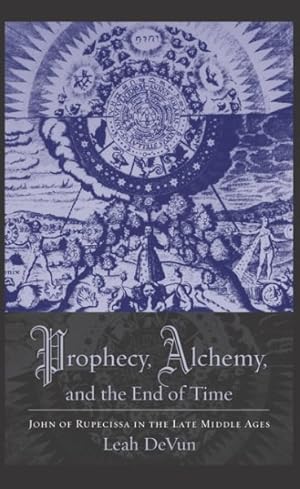
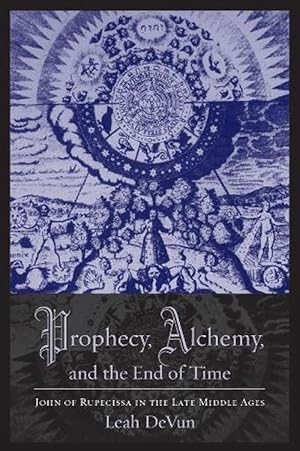
Paperback. Condizione: New. In the middle of the fourteenth century, the Franciscan friar John of Rupescissa sent a dramatic warning to his followers: the last days were coming; the apocalypse was near. Deemed insane by the Christian church, Rupescissa had spent more than a decade confined to prisons--in one case wrapped in chai…ns and locked under a staircase--yet ill treatment could not silence the friar's apocalyptic message. Religious figures who preached the end times were hardly rare in the late Middle Ages, but Rupescissa's teachings were unique. He claimed that knowledge of the natural world, and alchemy in particular, could act as a defense against the plagues and wars of the last days. His melding of apocalyptic prophecy and quasi-scientific inquiry gave rise to a new genre of alchemical writing and a novel cosmology of heaven and earth. Most important, the friar's research represented a remarkable convergence between science and religion. In order to understand scientific knowledge today, Leah DeVun asks that we revisit Rupescissa's life and the critical events of his age--the Black Death, the Hundred Years' War, the Avignon Papacy--through his eyes.Rupescissa treated alchemy as medicine (his work was the conceptual forerunner of pharmacology) and represented the emerging technologies and views that sought to combat famine, plague, religious persecution, and war. The advances he pioneered, along with the exciting strides made by his contemporaries, shed critical light on later developments in medicine, pharmacology, and chemistry.
- Brossura
Da: Grand Eagle Retail, Bensenville, IL, U.S.A.Grand Eagle Retail
Contatta il venditoreVenditore con 5 stelleCondizione: Nuovo
EUR 34,72
Spedizione gratuitaSpedito in U.S.A.Quantità: 1 disponibili
Paperback. Condizione: new. Paperback. In the middle of the fourteenth century, the Franciscan friar John of Rupescissa sent a dramatic warning to his followers: the last days were coming; the apocalypse was near. Deemed insane by the Christian church, Rupescissa had spent more than a decade confined to prisons-in one case wrapp…ed in chains and locked under a staircase-yet ill treatment could not silence the friar's apocalyptic message. Religious figures who preached the end times were hardly rare in the late Middle Ages, but Rupescissa's teachings were unique. He claimed that knowledge of the natural world, and alchemy in particular, could act as a defense against the plagues and wars of the last days. His melding of apocalyptic prophecy and quasi-scientific inquiry gave rise to a new genre of alchemical writing and a novel cosmology of heaven and earth. Most important, the friar's research represented a remarkable convergence between science and religion.In order to understand scientific knowledge today, Leah DeVun asks that we revisit Rupescissa's life and the critical events of his age-the Black Death, the Hundred Years' War, the Avignon Papacy-through his eyes. Rupescissa treated alchemy as medicine (his work was the conceptual forerunner of pharmacology) and represented the emerging technologies and views that sought to combat famine, plague, religious persecution, and war. The advances he pioneered, along with the exciting strides made by his contemporaries, shed critical light on later developments in medicine, pharmacology, and chemistry. In the middle of the fourteenth century, the Franciscan friar John of Rupescissa sent a dramatic warning to his followers: the end times were coming; the apocalypse was near. Rupescissa's teachings were unique in his era. He claimed that knowledge of the natural world, and alchemy in particular, could act as a defense against the calamity of the last days. He treated alchemy as medicine (his work was the conceptual forerunner of pharmacology), and reflected emerging technologies and views that sought to combat famine, plague, religious persecution, and war. In order to understand scientific knowledge as it is today, Leah DeVun asks that we revisit the Black Death, the Hundred Years' War, and the Avignon Papacy through Rupescissa's eyes. The advances he pioneered, along with the exciting strides made by his contemporaries, shed critical light on future developments in medicine, pharmacology, and chemistry. Shipping may be from multiple locations in the US or from the UK, depending on stock availability.
- Brossura
Da: GreatBookPrices, Columbia, MD, U.S.A.GreatBookPrices
Contatta il venditoreVenditore con 5 stelleCondizione: Nuovo
EUR 32,35
EUR 2,31 spedizioneSpedito in U.S.A.Quantità: 5 disponibili
Condizione: New.

- Brossura
Da: Rarewaves USA, OSWEGO, IL, U.S.A.Rarewaves USA
Contatta il venditoreVenditore con 5 stelleCondizione: Nuovo
EUR 40,82
Spedizione gratuitaSpedito in U.S.A.Quantità: Più di 20 disponibili
Paperback. Condizione: New. In the middle of the fourteenth century, the Franciscan friar John of Rupescissa sent a dramatic warning to his followers: the last days were coming; the apocalypse was near. Deemed insane by the Christian church, Rupescissa had spent more than a decade confined to prisons--in one case wrapped in chai…ns and locked under a staircase--yet ill treatment could not silence the friar's apocalyptic message. Religious figures who preached the end times were hardly rare in the late Middle Ages, but Rupescissa's teachings were unique. He claimed that knowledge of the natural world, and alchemy in particular, could act as a defense against the plagues and wars of the last days. His melding of apocalyptic prophecy and quasi-scientific inquiry gave rise to a new genre of alchemical writing and a novel cosmology of heaven and earth. Most important, the friar's research represented a remarkable convergence between science and religion. In order to understand scientific knowledge today, Leah DeVun asks that we revisit Rupescissa's life and the critical events of his age--the Black Death, the Hundred Years' War, the Avignon Papacy--through his eyes.Rupescissa treated alchemy as medicine (his work was the conceptual forerunner of pharmacology) and represented the emerging technologies and views that sought to combat famine, plague, religious persecution, and war. The advances he pioneered, along with the exciting strides made by his contemporaries, shed critical light on later developments in medicine, pharmacology, and chemistry.
- Brossura
Da: BargainBookStores, Grand Rapids, MI, U.S.A.BargainBookStores
Contatta il venditoreVenditore con 5 stelleCondizione: Nuovo
EUR 41,71
Spedizione gratuitaSpedito in U.S.A.Quantità: 5 disponibili
Paperback or Softback. Condizione: New. Prophecy, Alchemy, and the End of Time: John of Rupescissa in the Late Middle Ages. Book.
- Brossura
Da: Kennys Bookshop and Art Galleries Ltd., Galway, GY, IrlandaKennys Bookshop and Art Galleries Ltd.
Contatta il venditoreVenditore con 5 stelleCondizione: Nuovo
EUR 31,55
EUR 10,50 spedizioneSpedito da Irlanda a U.S.A.Quantità: 1 disponibili
Condizione: New. Num Pages: 272 pages, 4 illus. BIC Classification: HRC; HRQX2. Category: (P) Professional & Vocational. Dimension: 230 x 152 x 15. Weight in Grams: 370. . 2014. Reprint. Paperback. . . . .
- Brossura
Da: Kennys Bookstore, Olney, MD, U.S.A.Kennys Bookstore
Contatta il venditoreVenditore con 5 stelleCondizione: Nuovo
EUR 38,39
EUR 9,19 spedizioneSpedito in U.S.A.Quantità: 1 disponibili
Condizione: New. Num Pages: 272 pages, 4 illus. BIC Classification: HRC; HRQX2. Category: (P) Professional & Vocational. Dimension: 230 x 152 x 15. Weight in Grams: 370. . 2014. Reprint. Paperback. . . . . Books ship from the US and Ireland.
- Brossura
Da: GreatBookPricesUK, Woodford Green, Regno UnitoGreatBookPricesUK
Contatta il venditoreVenditore con 5 stelleCondizione: Usato - Come nuovo
EUR 33,31
EUR 17,65 spedizioneSpedito da Regno Unito a U.S.A.Quantità: 4 disponibili
Condizione: As New. Unread book in perfect condition.
- Brossura
Da: GreatBookPricesUK, Woodford Green, Regno UnitoGreatBookPricesUK
Contatta il venditoreVenditore con 5 stelleCondizione: Nuovo
EUR 36,32
EUR 17,65 spedizioneSpedito da Regno Unito a U.S.A.Quantità: 4 disponibili
Condizione: New.
- Brossura
Da: THE SAINT BOOKSTORE, Southport, Regno UnitoTHE SAINT BOOKSTORE
Contatta il venditoreVenditore con 5 stelleCondizione: Nuovo
EUR 36,47
EUR 17,38 spedizioneSpedito da Regno Unito a U.S.A.Quantità: 2 disponibili
Paperback / softback. Condizione: New. New copy - Usually dispatched within 4 working days.
- Brossura
Da: Revaluation Books, Exeter, Regno UnitoRevaluation Books
Contatta il venditoreVenditore con 5 stelleCondizione: Nuovo
EUR 55,75
EUR 11,77 spedizioneSpedito da Regno Unito a U.S.A.Quantità: 2 disponibili
Paperback. Condizione: Brand New. reprint edition. 255 pages. 9.00x6.00x0.75 inches. In Stock.
- Brossura
Da: AussieBookSeller, Truganina, VIC, AustraliaAussieBookSeller
Contatta il venditoreVenditore con 5 stelleCondizione: Nuovo
EUR 38,95
EUR 32,38 spedizioneSpedito da Australia a U.S.A.Quantità: 1 disponibili
Paperback. Condizione: new. Paperback. In the middle of the fourteenth century, the Franciscan friar John of Rupescissa sent a dramatic warning to his followers: the last days were coming; the apocalypse was near. Deemed insane by the Christian church, Rupescissa had spent more than a decade confined to prisons-in one case wrapp…ed in chains and locked under a staircase-yet ill treatment could not silence the friar's apocalyptic message. Religious figures who preached the end times were hardly rare in the late Middle Ages, but Rupescissa's teachings were unique. He claimed that knowledge of the natural world, and alchemy in particular, could act as a defense against the plagues and wars of the last days. His melding of apocalyptic prophecy and quasi-scientific inquiry gave rise to a new genre of alchemical writing and a novel cosmology of heaven and earth. Most important, the friar's research represented a remarkable convergence between science and religion.In order to understand scientific knowledge today, Leah DeVun asks that we revisit Rupescissa's life and the critical events of his age-the Black Death, the Hundred Years' War, the Avignon Papacy-through his eyes. Rupescissa treated alchemy as medicine (his work was the conceptual forerunner of pharmacology) and represented the emerging technologies and views that sought to combat famine, plague, religious persecution, and war. The advances he pioneered, along with the exciting strides made by his contemporaries, shed critical light on later developments in medicine, pharmacology, and chemistry. In the middle of the fourteenth century, the Franciscan friar John of Rupescissa sent a dramatic warning to his followers: the end times were coming; the apocalypse was near. Rupescissa's teachings were unique in his era. He claimed that knowledge of the natural world, and alchemy in particular, could act as a defense against the calamity of the last days. He treated alchemy as medicine (his work was the conceptual forerunner of pharmacology), and reflected emerging technologies and views that sought to combat famine, plague, religious persecution, and war. In order to understand scientific knowledge as it is today, Leah DeVun asks that we revisit the Black Death, the Hundred Years' War, and the Avignon Papacy through Rupescissa's eyes. The advances he pioneered, along with the exciting strides made by his contemporaries, shed critical light on future developments in medicine, pharmacology, and chemistry. Shipping may be from our Sydney, NSW warehouse or from our UK or US warehouse, depending on stock availability.

- Brossura
Da: Rarewaves USA United, OSWEGO, IL, U.S.A.Rarewaves USA United
Contatta il venditoreVenditore con 5 stelleCondizione: Nuovo
EUR 42,54
EUR 43,76 spedizioneSpedito in U.S.A.Quantità: Più di 20 disponibili
Paperback. Condizione: New. In the middle of the fourteenth century, the Franciscan friar John of Rupescissa sent a dramatic warning to his followers: the last days were coming; the apocalypse was near. Deemed insane by the Christian church, Rupescissa had spent more than a decade confined to prisons--in one case wrapped in chai…ns and locked under a staircase--yet ill treatment could not silence the friar's apocalyptic message. Religious figures who preached the end times were hardly rare in the late Middle Ages, but Rupescissa's teachings were unique. He claimed that knowledge of the natural world, and alchemy in particular, could act as a defense against the plagues and wars of the last days. His melding of apocalyptic prophecy and quasi-scientific inquiry gave rise to a new genre of alchemical writing and a novel cosmology of heaven and earth. Most important, the friar's research represented a remarkable convergence between science and religion. In order to understand scientific knowledge today, Leah DeVun asks that we revisit Rupescissa's life and the critical events of his age--the Black Death, the Hundred Years' War, the Avignon Papacy--through his eyes.Rupescissa treated alchemy as medicine (his work was the conceptual forerunner of pharmacology) and represented the emerging technologies and views that sought to combat famine, plague, religious persecution, and war. The advances he pioneered, along with the exciting strides made by his contemporaries, shed critical light on later developments in medicine, pharmacology, and chemistry.

- Brossura
Da: moluna, Greven, Germaniamoluna
Contatta il venditoreVenditore con 5 stelleCondizione: Nuovo
EUR 43,96
EUR 48,99 spedizioneSpedito da Germania a U.S.A.Quantità: Più di 20 disponibili
Condizione: New. Über den AutorLeah DeVun is associate professor of history at Rutgers University. Her research focuses on the history of the human body in premodern Europe and the legacy of that history in the modern world. Her published work cente.

- Brossura
Da: Rarewaves.com UK, London, Regno UnitoRarewaves.com UK
Contatta il venditoreVenditore con 5 stelleCondizione: Nuovo
EUR 36,33
EUR 76,48 spedizioneSpedito da Regno Unito a U.S.A.Quantità: 1 disponibili
Paperback. Condizione: New. In the middle of the fourteenth century, the Franciscan friar John of Rupescissa sent a dramatic warning to his followers: the last days were coming; the apocalypse was near. Deemed insane by the Christian church, Rupescissa had spent more than a decade confined to prisons--in one case wrapped in chai…ns and locked under a staircase--yet ill treatment could not silence the friar's apocalyptic message. Religious figures who preached the end times were hardly rare in the late Middle Ages, but Rupescissa's teachings were unique. He claimed that knowledge of the natural world, and alchemy in particular, could act as a defense against the plagues and wars of the last days. His melding of apocalyptic prophecy and quasi-scientific inquiry gave rise to a new genre of alchemical writing and a novel cosmology of heaven and earth. Most important, the friar's research represented a remarkable convergence between science and religion. In order to understand scientific knowledge today, Leah DeVun asks that we revisit Rupescissa's life and the critical events of his age--the Black Death, the Hundred Years' War, the Avignon Papacy--through his eyes.Rupescissa treated alchemy as medicine (his work was the conceptual forerunner of pharmacology) and represented the emerging technologies and views that sought to combat famine, plague, religious persecution, and war. The advances he pioneered, along with the exciting strides made by his contemporaries, shed critical light on later developments in medicine, pharmacology, and chemistry.

- Brossura
Da: AHA-BUCH GmbH, Einbeck, GermaniaAHA-BUCH GmbH
Contatta il venditoreVenditore con 5 stelleCondizione: Nuovo
EUR 56,67
EUR 61,87 spedizioneSpedito da Germania a U.S.A.Quantità: 2 disponibili
Taschenbuch. Condizione: Neu. Neuware - In the middle of the fourteenth century, the Franciscan friar John of Rupescissa sent a dramatic warning to his followers: the end times were coming; the apocalypse was near. Rupescissa's teachings were unique in his era. He claimed that knowledge of the natural world, and alchemy in parti…cular, could act as a defense against the calamity of the last days. He treated alchemy as medicine (his work was the conceptual forerunner of pharmacology), and reflected emerging technologies and views that sought to combat famine, plague, religious persecution, and war. In order to understand scientific knowledge as it is today, Leah DeVun asks that we revisit the Black Death, the Hundred Years' War, and the Avignon Papacy through Rupescissa's eyes. The advances he pioneered, along with the exciting strides made by his contemporaries, shed critical light on future developments in medicine, pharmacology, and chemistry.
- Brossura
- Print on Demand
Da: Revaluation Books, Exeter, Regno UnitoRevaluation Books
Contatta il venditoreVenditore con 5 stelleCondizione: Nuovo
EUR 34,03
EUR 11,77 spedizioneSpedito da Regno Unito a U.S.A.Quantità: 2 disponibili
Paperback. Condizione: Brand New. reprint edition. 255 pages. 9.00x6.00x0.75 inches. In Stock. This item is printed on demand.
- Brossura
- Print on Demand
Da: CitiRetail, Stevenage, Regno UnitoCitiRetail
Contatta il venditoreVenditore con 5 stelleCondizione: Nuovo
EUR 54,52
EUR 43,53 spedizioneSpedito da Regno Unito a U.S.A.Quantità: 1 disponibili
Paperback. Condizione: new. Paperback. In the middle of the fourteenth century, the Franciscan friar John of Rupescissa sent a dramatic warning to his followers: the last days were coming; the apocalypse was near. Deemed insane by the Christian church, Rupescissa had spent more than a decade confined to prisons-in one case wrapp…ed in chains and locked under a staircase-yet ill treatment could not silence the friar's apocalyptic message. Religious figures who preached the end times were hardly rare in the late Middle Ages, but Rupescissa's teachings were unique. He claimed that knowledge of the natural world, and alchemy in particular, could act as a defense against the plagues and wars of the last days. His melding of apocalyptic prophecy and quasi-scientific inquiry gave rise to a new genre of alchemical writing and a novel cosmology of heaven and earth. Most important, the friar's research represented a remarkable convergence between science and religion.In order to understand scientific knowledge today, Leah DeVun asks that we revisit Rupescissa's life and the critical events of his age-the Black Death, the Hundred Years' War, the Avignon Papacy-through his eyes. Rupescissa treated alchemy as medicine (his work was the conceptual forerunner of pharmacology) and represented the emerging technologies and views that sought to combat famine, plague, religious persecution, and war. The advances he pioneered, along with the exciting strides made by his contemporaries, shed critical light on later developments in medicine, pharmacology, and chemistry. In the middle of the fourteenth century, the Franciscan friar John of Rupescissa sent a dramatic warning to his followers: the end times were coming; the apocalypse was near. Rupescissa's teachings were unique in his era. He claimed that knowledge of the natural world, and alchemy in particular, could act as a defense against the calamity of the last days. He treated alchemy as medicine (his work was the conceptual forerunner of pharmacology), and reflected emerging technologies and views that sought to combat famine, plague, religious persecution, and war. In order to understand scientific knowledge as it is today, Leah DeVun asks that we revisit the Black Death, the Hundred Years' War, and the Avignon Papacy through Rupescissa's eyes. The advances he pioneered, along with the exciting strides made by his contemporaries, shed critical light on future developments in medicine, pharmacology, and chemistry. This item is printed on demand. Shipping may be from our UK warehouse or from our Australian or US warehouses, depending on stock availability.


