

Importo totale (1 articolo articoli):
Destinazione ordine:

9780262525794 - Free Will di Balaguer, Mark (44 risultati)
Vai alla pagina principale dei risultati di ricerca
Filtri di ricerca
Tipo di articolo
- Tutti i tipi di prodotto
- Libri (44)
- Riviste e Giornali (Nessun altro risultato corrispondente a questo perfezionamento)
- Fumetti (Nessun altro risultato corrispondente a questo perfezionamento)
- Spartiti (Nessun altro risultato corrispondente a questo perfezionamento)
- Arte, Stampe e Poster (Nessun altro risultato corrispondente a questo perfezionamento)
- Fotografie (Nessun altro risultato corrispondente a questo perfezionamento)
- Mappe (Nessun altro risultato corrispondente a questo perfezionamento)
- Manoscritti e Collezionismo cartaceo (Nessun altro risultato corrispondente a questo perfezionamento)
Condizioni Maggiori informazioni
- Nuovo (28)
- Come nuovo, Ottimo o Quasi ottimo (5)
- Molto buono o Buono (11)
- Discreto o Mediocre (Nessun altro risultato corrispondente a questo perfezionamento)
- Come descritto (Nessun altro risultato corrispondente a questo perfezionamento)
Legatura
- Tutte
- Rilegato (Nessun altro risultato corrispondente a questo perfezionamento)
- Brossura (42)
Ulteriori caratteristiche
- Prima ed. (Nessun altro risultato corrispondente a questo perfezionamento)
- Copia autograf. (Nessun altro risultato corrispondente a questo perfezionamento)
- Sovracoperta (Nessun altro risultato corrispondente a questo perfezionamento)
- Con foto (11)
- Non Print on Demand (44)
Lingua (2)
Spedizione gratuita
Paese del venditore
Valutazione venditore
-

Free Will (The MIT Press Essential Knowledge series)
Libro 8 di 115: MIT Press Essential KnowledgeDa: Bellwetherbooks, McKeesport, PA, U.S.A.
Valutazione del venditore 5 su 5 stelle

paperback. Condizione: Good. Crease/bruise to cover and pages.
-
Free Will
Libro 8 di 115: MIT Press Essential KnowledgeDa: ThriftBooks-Atlanta, AUSTELL, GA, U.S.A.
Valutazione del venditore 5 su 5 stelle
Paperback. Condizione: Good. No Jacket. Pages can have notes/highlighting. Spine may show signs of wear. ~ ThriftBooks: Read More, Spend Less.
-
Free Will (MIT Press Essential Knowledge series)
Libro 8 di 115: MIT Press Essential KnowledgeDa: Midtown Scholar Bookstore, Harrisburg, PA, U.S.A.
Valutazione del venditore 5 su 5 stelle
Paperback. Condizione: Good. Good - Bumped and creased book with tears to the extremities, but not affecting the text block, may have remainder mark or previous owner's name - GOOD Standard-sized.
-
Free Will (MIT Press Essential Knowledge series)
Libro 8 di 115: MIT Press Essential KnowledgeDa: Midtown Scholar Bookstore, Harrisburg, PA, U.S.A.
Valutazione del venditore 5 su 5 stelle
Paperback. Condizione: Very Good. Very Good - Crisp, clean, unread book with some shelfwear/edgewear, may have a remainder mark - NICE Standard-sized.
-
Free Will
Libro 8 di 115: MIT Press Essential KnowledgeDa: Better World Books, Mishawaka, IN, U.S.A.
Valutazione del venditore 5 su 5 stelle
Condizione: Good. Former library copy. Pages intact with minimal writing/highlighting. The binding may be loose and creased. Dust jackets/supplements are not included. Includes library markings. Stock photo provided. Product includes identifying sticker. Better World Books: Buy Books. Do Good.
-
paperback. Condizione: Very Good. Connecting readers with great books since 1972! Used books may not include companion materials, and may have some shelf wear or limited writing. We ship orders daily and Customer Service is our top priority!
-
Free Will (The MIT Press Essential Knowledge series)
Libro 8 di 115: MIT Press Essential KnowledgeDa: Books From California, Simi Valley, CA, U.S.A.
Valutazione del venditore 4 su 5 stelle

paperback. Condizione: Fine.
-

Free Will (The MIT Press Essential Knowledge series)
Libro 8 di 115: MIT Press Essential KnowledgeDa: Big River Books, Powder Springs, GA, U.S.A.
Valutazione del venditore 5 su 5 stelle
Condizione: very_good. This book is in Very Good condition. The cover and pages have minor shelf wear. Binding is tight and pages are intact.
-
Free Will
Libro 8 di 115: MIT Press Essential KnowledgeDa: Better World Books Ltd, Dunfermline, Regno Unito
Valutazione del venditore 5 su 5 stelle
EUR 5,63
Spedizione EUR 5,76
Spedito da Regno Unito a U.S.A.Quantità: 1 disponibili
Aggiungi al carrelloCondizione: Very Good. Pages intact with possible writing/highlighting. Binding strong with minor wear. Dust jackets/supplements may not be included. Stock photo provided. Product includes identifying sticker. Better World Books: Buy Books. Do Good.
-
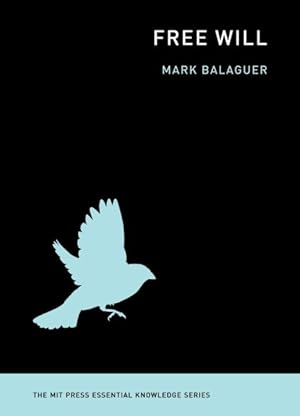
Free Will
Libro 8 di 115: MIT Press Essential KnowledgeDa: GreatBookPrices, Columbia, MD, U.S.A.
Valutazione del venditore 5 su 5 stelle
EUR 12,59
Spedizione EUR 2,30
Spedito in U.S.A.Quantità: Più di 20 disponibili
Aggiungi al carrelloCondizione: New.
-

EUR 14,98
Spedizione gratuita
Spedito in U.S.A.Quantità: Più di 20 disponibili
Aggiungi al carrelloPaperback. Condizione: New. A philosopher considers whether the scientific and philosophical arguments against free will are reason enough to give up our belief in it.In our daily life, it really seems as though we have free will, that what we do from moment to moment is determined by conscious decisions that we freely make. You get up from the couch, you go for a walk, you eat chocolate ice cream. It seems that we're in control of actions like these; if we are, then we have free will. But in recent years, some have argued that free will is an illusion. The neuroscientist (and best-selling author) Sam Harris and the late Harvard psychologist Daniel Wegner, for example, claim that certain scientific findings disprove free will. In this engaging and accessible volume in the Essential Knowledge series, the philosopher Mark Balaguer examines the various arguments and experiments that have been cited to support the claim that human beings don't have free will. He finds them to be overstated and misguided.Balaguer discusses determinism, the view that every physical event is predetermined, or completely caused by prior events. He describes several philosophical and scientific arguments against free will, including one based on Benjamin Libet's famous neuroscientific experiments, which allegedly show that our conscious decisions are caused by neural events that occur before we choose. He considers various religious and philosophical views, including the philosophical pro-free-will view known as compatibilism. Balaguer concludes that the anti-free-will arguments put forward by philosophers, psychologists, and neuroscientists simply don't work. They don't provide any good reason to doubt the existence of free will. But, he cautions, this doesn't necessarily mean that we have free will. The question of whether we have free will remains an open one; we simply don't know enough about the brain to answer it definitively.
-
Free Will (MIT Press Essential Knowledge series)
Libro 8 di 115: MIT Press Essential KnowledgeDa: Lakeside Books, Benton Harbor, MI, U.S.A.
Valutazione del venditore 5 su 5 stelle
Condizione: New. Brand New! Not Overstocks or Low Quality Book Club Editions! Direct From the Publisher! We're not a giant, faceless warehouse organization! We're a small town bookstore that loves books and loves it's customers! Buy from Lakeside Books!
-
Free Will (Paperback)
Libro 8 di 115: MIT Press Essential KnowledgeLingua: Inglese
Editore: MIT Press Ltd, Cambridge, Mass., 2014
ISBN 10: 0262525798 ISBN 13: 9780262525794
Da: Grand Eagle Retail, Bensenville, IL, U.S.A.
Valutazione del venditore 5 su 5 stelle
Paperback. Condizione: new. Paperback. A philosopher considers whether the scientific and philosophical arguments against free will are reason enough to give up our belief in it.In our daily life, it really seems as though we have free will, that what we do from moment to moment is determined by conscious decisions that we freely make. You get up from the couch, you go for a walk, you eat chocolate ice cream. It seems that we're in control of actions like these; if we are, then we have free will. But in recent years, some have argued that free will is an illusion. The neuroscientist (and best-selling author) Sam Harris and the late Harvard psychologist Daniel Wegner, for example, claim that certain scientific findings disprove free will. In this engaging and accessible volume in the Essential Knowledge series, the philosopher Mark Balaguer examines the various arguments and experiments that have been cited to support the claim that human beings don't have free will. He finds them to be overstated and misguided.Balaguer discusses determinism, the view that every physical event is predetermined, or completely caused by prior events. He describes several philosophical and scientific arguments against free will, including one based on Benjamin Libet's famous neuroscientific experiments, which allegedly show that our conscious decisions are caused by neural events that occur before we choose. He considers various religious and philosophical views, including the philosophical pro-free-will view known as compatibilism. Balaguer concludes that the anti-free-will arguments put forward by philosophers, psychologists, and neuroscientists simply don't work. They don't provide any good reason to doubt the existence of free will. But, he cautions, this doesn't necessarily mean that we have free will. The question of whether we have free will remains an open one; we simply don't know enough about the brain to answer it definitively.A philosopher considers whether the scientific and philosophical arguments against free will are reason enough to give up our belief in it.In our daily life, it really seems as though we have free will, that what we do from moment to moment is determined by conscious decisions that we freely make. You get up from the couch, you go for a walk, you eat chocolate ice cream. It seems that we're in control of actions like these; if we are, then we have free will. But in recent years, some have argued that free will is an illusion. The neuroscientist (and best-selling author) Sam Harris and the late Harvard psychologist Daniel Wegner, for example, claim that certain scientific findings disprove free will. In this engaging and accessible volume in the Essential Knowledge series, the philosopher Mark Balaguer examines the various arguments and experiments that have been cited to support the claim that human beings don't have free will. He finds them to be overstated and misguided.Balaguer discusses determinism, the view that every physical event is predetermined, or completely caused by prior events. He describes several philosophical and scientific arguments against free will, including one based on Benjamin Libet's famous neuroscientific experiments, which allegedly show that our conscious decisions are caused by neural events that occur before we choose. He considers various religious and philosophical views, including the philosophical pro-free-will view known as compatibilism. Balaguer concludes that the anti-free-will arguments put forward by philosophers, psychologists, and neuroscientists simply don't work. They don't provide any good reason to doubt the existence of free will. But, he cautions, this doesn't necessarily mean that we have free will. The question of whether we have free will remains an open one; we simply don't know enough about the brain to answer it definitively. A philosopher considers whether the scientific and philosophical a Shipping may be from multiple locations in the US or from the UK, depending on stock availability.
-
Condizione: Very Good.
-
Free Will (The MIT Press Essential Knowledge series)
Libro 8 di 115: MIT Press Essential KnowledgeDa: California Books, Miami, FL, U.S.A.
Valutazione del venditore 4 su 5 stelle
Condizione: New.
-
EUR 8,13
Spedizione EUR 10,00
Spedito da Germania a U.S.A.Quantità: 1 disponibili
Aggiungi al carrelloCondizione: as new. Wie neu/Like new.
-
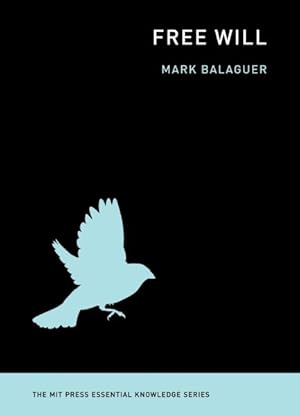
Free Will
Libro 8 di 115: MIT Press Essential KnowledgeDa: GreatBookPrices, Columbia, MD, U.S.A.
Valutazione del venditore 5 su 5 stelle
EUR 16,62
Spedizione EUR 2,30
Spedito in U.S.A.Quantità: Più di 20 disponibili
Aggiungi al carrelloCondizione: As New. Unread book in perfect condition.
-
Free Will
Libro 8 di 115: MIT Press Essential KnowledgeDa: Massive Bookshop, Greenfield, MA, U.S.A.
Valutazione del venditore 4 su 5 stelle
Paperback. Condizione: New.
-
Free Will (The MIT Press Essential Knowledge series)
Libro 8 di 115: MIT Press Essential KnowledgeDa: Lifeways Books and Gifts, Prescott, AZ, U.S.A.
Valutazione del venditore 4 su 5 stelle
Soft cover. Condizione: New. A philosopher considers whether the scientific and philosophical arguments against free will are reason enough to give up our belief in it. In our daily life, it really seems as though we have free will, that what we do from moment to moment is determined by conscious decisions that we freely make. You get up from the couch, you go for a walk, you eat chocolate ice cream. It seems that we're in control of actions like these; if we are, then we have free will. But in recent years, some have argued that free will is an illusion. The neuroscientist (and best-selling author) Sam Harris and the late Harvard psychologist Daniel Wegner, for example, claim that certain scientific findings disprove free will. In this engaging and accessible volume in the Essential Knowledge series, the philosopher Mark Balaguer examines the various arguments and experiments that have been cited to support the claim that human beings don't have free will. He finds them to be overstated and misguided. Balaguer discusses determinism, the view that every physical event is predetermined, or completely caused by prior events. He describes several philosophical and scientific arguments against free will, including one based on Benjamin Libet's famous neuroscientific experiments, which allegedly show that our conscious decisions are caused by neural events that occur before we choose. He considers various religious and philosophical views, including the philosophical pro-free-will view known as compatibilism. Balaguer concludes that the anti-free-will arguments put forward by philosophers, psychologists, and neuroscientists simply don't work. They don't provide any good reason to doubt the existence of free will. But, he cautions, this doesn't necessarily mean that we have free will. The question of whether we have free will remains an open one; we simply don't know enough about the brain to answer it definitively.
-
Free Will
Libro 8 di 115: MIT Press Essential KnowledgeDa: Books Puddle, New York, NY, U.S.A.
Valutazione del venditore 4 su 5 stelle
Condizione: New. pp. 152.
-
Free Will (MIT Press Essential Knowledge series)
Libro 8 di 115: MIT Press Essential KnowledgeDa: Greener Books, London, Regno Unito
Valutazione del venditore 4 su 5 stelle
EUR 4,82
Spedizione EUR 18,42
Spedito da Regno Unito a U.S.A.Quantità: 1 disponibili
Aggiungi al carrelloPaperback. Condizione: Used; Very Good. **SHIPPED FROM UK** We believe you will be completely satisfied with our quick and reliable service. All orders are dispatched as swiftly as possible! Buy with confidence! Greener Books.
-
Free Will
Libro 8 di 115: MIT Press Essential KnowledgeDa: PBShop.store UK, Fairford, GLOS, Regno Unito
Valutazione del venditore 5 su 5 stelle
EUR 19,92
Spedizione EUR 3,79
Spedito da Regno Unito a U.S.A.Quantità: 1 disponibili
Aggiungi al carrelloPAP. Condizione: New. New Book. Shipped from UK. Established seller since 2000.
-
Free Will (MIT Press Essential Knowledge)
Libro 8 di 115: MIT Press Essential KnowledgeDa: Strand Book Store, ABAA, New York, NY, U.S.A.
Membro dell'associazione: ABAA ILAB
Valutazione del venditore 4 su 5 stelle
Paperback. Condizione: New.
-
Free Will
Libro 8 di 115: MIT Press Essential KnowledgeDa: Revaluation Books, Exeter, Regno Unito
Valutazione del venditore 5 su 5 stelle
EUR 17,02
Spedizione EUR 11,52
Spedito da Regno Unito a U.S.A.Quantità: 1 disponibili
Aggiungi al carrelloPaperback. Condizione: Brand New. 160 pages. 6.75x5.00x0.50 inches. In Stock.
-
Free Will (MIT Press Essential Knowledge)
Libro 8 di 115: MIT Press Essential KnowledgeDa: Kennys Bookshop and Art Galleries Ltd., Galway, GY, Irlanda
Valutazione del venditore 5 su 5 stelle
EUR 18,27
Spedizione EUR 10,50
Spedito da Irlanda a U.S.A.Quantità: 15 disponibili
Aggiungi al carrelloCondizione: New. 2014. Paperback. Series: Essential Knowledge. Num Pages: 152 pages, 1 figure. BIC Classification: HPQ. Category: (P) Professional & Vocational. Dimension: 180 x 130 x 11. Weight in Grams: 166. . . . . .
-
Free Will
Libro 8 di 115: MIT Press Essential KnowledgeDa: Revaluation Books, Exeter, Regno Unito
Valutazione del venditore 5 su 5 stelle
EUR 19,01
Spedizione EUR 11,52
Spedito da Regno Unito a U.S.A.Quantità: 2 disponibili
Aggiungi al carrelloPaperback. Condizione: Brand New. 160 pages. 6.75x5.00x0.50 inches. In Stock.
-
Free Will
Libro 8 di 115: MIT Press Essential KnowledgeDa: Biblios, Frankfurt am main, HESSE, Germania
Valutazione del venditore 4 su 5 stelle
EUR 20,19
Spedizione EUR 9,95
Spedito da Germania a U.S.A.Quantità: 3 disponibili
Aggiungi al carrelloCondizione: New. pp. 152.
-
Free Will (MIT Press Essential Knowledge)
Libro 8 di 115: MIT Press Essential KnowledgeDa: Kennys Bookstore, Olney, MD, U.S.A.
Valutazione del venditore 5 su 5 stelle
Condizione: New. 2014. Paperback. Series: Essential Knowledge. Num Pages: 152 pages, 1 figure. BIC Classification: HPQ. Category: (P) Professional & Vocational. Dimension: 180 x 130 x 11. Weight in Grams: 166. . . . . . Books ship from the US and Ireland.
-
Free Will (The MIT Press Essential Knowledge series)
Libro 8 di 115: MIT Press Essential KnowledgeDa: Russell Books, Victoria, BC, Canada
Valutazione del venditore 5 su 5 stelle
EUR 13,62
Spedizione EUR 17,45
Spedito da Canada a U.S.A.Quantità: 1 disponibili
Aggiungi al carrellopaperback. Condizione: New. Special order direct from the distributor.
-
Free Will (The MIT Press Essential Knowledge series)
Libro 8 di 115: MIT Press Essential KnowledgeDa: Ria Christie Collections, Uxbridge, Regno Unito
Valutazione del venditore 5 su 5 stelle
EUR 17,96
Spedizione EUR 13,80
Spedito da Regno Unito a U.S.A.Quantità: 1 disponibili
Aggiungi al carrelloCondizione: New. In.

