

Importo totale (1 articolo articoli):
Destinazione ordine:

9780275980986 - Real-World Nuclear Deterrence: The Making of International Strategy di Coleman, David G.; Siracusa, Joseph M. (20 risultati)
Vai alla pagina principale dei risultati di ricerca
Filtri di ricerca
Tipo di articolo
- Tutti i tipi di prodotto
- Libri (20)
- Riviste e Giornali (Nessun altro risultato corrispondente a questo perfezionamento)
- Fumetti (Nessun altro risultato corrispondente a questo perfezionamento)
- Spartiti (Nessun altro risultato corrispondente a questo perfezionamento)
- Arte, Stampe e Poster (Nessun altro risultato corrispondente a questo perfezionamento)
- Fotografie (Nessun altro risultato corrispondente a questo perfezionamento)
- Mappe (Nessun altro risultato corrispondente a questo perfezionamento)
- Manoscritti e Collezionismo cartaceo (Nessun altro risultato corrispondente a questo perfezionamento)
Condizioni Maggiori informazioni
- Nuovo (17)
- Come nuovo, Ottimo o Quasi ottimo (2)
- Molto buono o Buono (1)
- Discreto o Mediocre (Nessun altro risultato corrispondente a questo perfezionamento)
- Come descritto (Nessun altro risultato corrispondente a questo perfezionamento)
Legatura
- Tutte
- Rilegato (20)
- Brossura (Nessun altro risultato corrispondente a questo perfezionamento)
Ulteriori caratteristiche
- Prima ed. (1)
- Copia autograf. (Nessun altro risultato corrispondente a questo perfezionamento)
- Sovracoperta (1)
- Con foto (7)
- Non Print on Demand (12)
Lingua (1)
Spedizione gratuita
Paese del venditore
Valutazione venditore
-

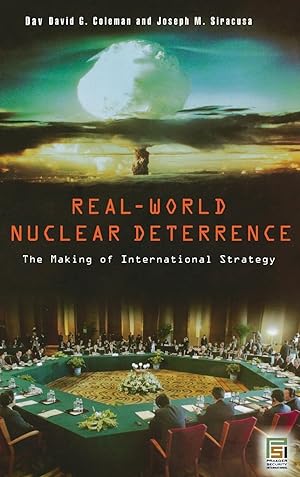
Real-World Nuclear Deterrence: The Making of International Strategy (Praeger Security International)
Lingua: Inglese
Editore: Praeger, Westport, Connecticut, 2006
ISBN 10: 0275980987 ISBN 13: 9780275980986
Da: Conover Books, Martinsville, VA, U.S.A.
Valutazione del venditore 5 su 5 stelle

Prima edizione
Hardcover. Condizione: Good. Condizione sovraccoperta: Good. 1st Edition. Ex-library with the usual library markings (if not for the library markings this copy would be graded in fine condition); overall a nice used copy! Black boards with silver lettering on the spine. 164 historical and informative pages! "The threat of nuclear weapons did not fade away with the collapse of the Soviet Union. Rather, the geopolitical disorders of the post-Cold War era and the rise of global terrorism have ensured that they remain conspicuously present on the world stage as a serious international concern. With the eight or nine nuclear powers maintaining about 27,000 nuclear weapons in their arsenals to this day, it is clear that they are here to stay for the foreseeable future. The primary mission of these nuclear forces has been and remains deterrence. Using plain language rather than policy jargon, this historically focused book shows how nuclear deterrence has worked rather than how it should. It then shows how the growing threat of nuclear proliferation threatens to create a far more complicated international situation largely because of the attendant proliferation of state nuclear deterrents. By drawing on a wide array of new sources from international archives and the latest in international scholarship, Coleman and Siracusa put some of the most important and enduring problems of nuclear deterrence over the past sixty years into global context. Nuclear deterrence in the real world often operates very differently from how it should according to the prevailing theories, and Coleman and Siracusa take a fresh look at how nuclear weapons policy has been made, finding that it often has had surprisingly little to do with what works and what does not. By studying in depth how governments here and abroad have confronted and dealt with some of the most important issues in nuclear weapons policy, for example, How many nuclear weapons are enough? and What is it that will deter? they find that the making of nuclear weapons policy is a complex, fluid bargaining process subject to the tides of politics, budgets, threat perception, ideology, technology, parochial service rivalries, flawed information, and sometimes just plain wishful thinking.".
-
Real-World Nuclear Deterrence: The Making of International Strategy (Praeger Security International)
Da: Basi6 International, Irving, TX, U.S.A.
Valutazione del venditore 5 su 5 stelle
Condizione: Brand New. New. US edition. Expediting shipping for all USA and Europe orders excluding PO Box. Excellent Customer Service.
-
Real-World Nuclear Deterrence : The Making of International Strategy
Da: GreatBookPrices, Columbia, MD, U.S.A.
Valutazione del venditore 5 su 5 stelle
EUR 68,84
Spedizione EUR 2,31
Spedito in U.S.A.Quantità: Più di 20 disponibili
Aggiungi al carrelloCondizione: New.
-

Real-World Nuclear Deterrence
Lingua: Inglese
Editore: Bloomsbury Publishing Plc, US, 2006
ISBN 10: 0275980987 ISBN 13: 9780275980986
Da: Rarewaves.com USA, London, LONDO, Regno Unito
Valutazione del venditore 5 su 5 stelle
EUR 72,89
Spedizione gratuita
Spedito da Regno Unito a U.S.A.Quantità: Più di 20 disponibili
Aggiungi al carrelloHardback. Condizione: New. The threat of nuclear weapons did not fade away with the collapse of the Soviet Union. Rather, the geopolitical disorders of the post-Cold War era and the rise of global terrorism have ensured that they remain conspicuously present on the world stage as a serious international concern. With the eight or nine nuclear powers maintaining about 27,000 nuclear weapons in their arsenals to this day, it is clear that they are here to stay for the foreseeable future. The primary mission of these nuclear forces has been and remains deterrence. Using plain language rather than policy jargon, this historically focused book shows how nuclear deterrence has worked rather than how it should. It then shows how the growing threat of nuclear proliferation threatens to create a far more complicated international situation largely because of the attendant proliferation of state nuclear deterrents.By drawing on a wide array of new sources from international archives and the latest in international scholarship, Coleman and Siracusa put some of the most important and enduring problems of nuclear deterrence over the past sixty years into global context. Nuclear deterrence in the real world often operates very differently from how it should according to the prevailing theories, and Coleman and Siracusa take a fresh look at how nuclear weapons policy has been made, finding that it often has had surprisingly little to do with what works and what does not. By studying in depth how governments here and abroad have confronted and dealt with some of the most important issues in nuclear weapons policy, for example, How many nuclear weapons are enough? and What is it that will deter? they find that the making of nuclear weapons policy is a complex, fluid bargaining process subject to the tides of politics, budgets, threat perception, ideology, technology, parochial service rivalries, flawed information, and sometimes just plain wishful thinking.
-

Real-World Nuclear Deterrence : The Making of International Strategy
Da: GreatBookPrices, Columbia, MD, U.S.A.
Valutazione del venditore 5 su 5 stelle
EUR 71,13
Spedizione EUR 2,31
Spedito in U.S.A.Quantità: Più di 20 disponibili
Aggiungi al carrelloCondizione: As New. Unread book in perfect condition.
-
Real-World Nuclear Deterrence: The Making of International Strategy (Praeger Security International)
Da: Ria Christie Collections, Uxbridge, Regno Unito
Valutazione del venditore 5 su 5 stelle
EUR 66,79
Spedizione EUR 13,89
Spedito da Regno Unito a U.S.A.Quantità: Più di 20 disponibili
Aggiungi al carrelloCondizione: New. In.
-
Real-World Nuclear Deterrence : The Making of International Strategy
Da: GreatBookPricesUK, Woodford Green, Regno Unito
Valutazione del venditore 5 su 5 stelle
EUR 66,78
Spedizione EUR 17,39
Spedito da Regno Unito a U.S.A.Quantità: Più di 20 disponibili
Aggiungi al carrelloCondizione: New.
-
Real-World Nuclear Deterrence: The Making of International Strategy (Praeger Security International)
Da: Kennys Bookshop and Art Galleries Ltd., Galway, GY, Irlanda
Valutazione del venditore 5 su 5 stelle
EUR 75,53
Spedizione EUR 10,50
Spedito da Irlanda a U.S.A.Quantità: Più di 20 disponibili
Aggiungi al carrelloCondizione: New. Shows how nuclear deterrence has worked rather than how theorists say it should work. This work also shows how nuclear proliferation threatens to create a far more complicated international situation as the number of states with nuclear deterrents grows. It puts some of the important problems of nuclear deterrence into global context. Series: Praeger Security International. Num Pages: 184 pages, black & white illustrations. BIC Classification: JPS; JWMN. Category: (G) General (US: Trade); (P) Professional & Vocational; (UP) Postgraduate, Research & Scholarly; (UU) Undergraduate. Dimension: 235 x 155 x 21. Weight in Grams: 449. . 2006. hardcover. . . . .
-

Real-World Nuclear Deterrence : The Making of International Strategy
Da: GreatBookPricesUK, Woodford Green, Regno Unito
Valutazione del venditore 5 su 5 stelle
EUR 73,37
Spedizione EUR 17,39
Spedito da Regno Unito a U.S.A.Quantità: Più di 20 disponibili
Aggiungi al carrelloCondizione: As New. Unread book in perfect condition.
-
Real-World Nuclear Deterrence: The Making of International Strategy (Praeger Security International)
Da: Kennys Bookstore, Olney, MD, U.S.A.
Valutazione del venditore 5 su 5 stelle
EUR 95,52
Spedizione EUR 9,19
Spedito in U.S.A.Quantità: Più di 20 disponibili
Aggiungi al carrelloCondizione: New. Shows how nuclear deterrence has worked rather than how theorists say it should work. This work also shows how nuclear proliferation threatens to create a far more complicated international situation as the number of states with nuclear deterrents grows. It puts some of the important problems of nuclear deterrence into global context. Series: Praeger Security International. Num Pages: 184 pages, black & white illustrations. BIC Classification: JPS; JWMN. Category: (G) General (US: Trade); (P) Professional & Vocational; (UP) Postgraduate, Research & Scholarly; (UU) Undergraduate. Dimension: 235 x 155 x 21. Weight in Grams: 449. . 2006. hardcover. . . . . Books ship from the US and Ireland.
-
Real-World Nuclear Deterrence: The Making of International Strategy
Da: Revaluation Books, Exeter, Regno Unito
Valutazione del venditore 5 su 5 stelle
EUR 108,41
Spedizione EUR 11,59
Spedito da Regno Unito a U.S.A.Quantità: 2 disponibili
Aggiungi al carrelloHardcover. Condizione: Brand New. 164 pages. 9.25x6.00x0.75 inches. In Stock.
-

Real-World Nuclear Deterrence
Lingua: Inglese
Editore: Bloomsbury Publishing Plc, US, 2006
ISBN 10: 0275980987 ISBN 13: 9780275980986
Da: Rarewaves.com UK, London, Regno Unito
Valutazione del venditore 5 su 5 stelle
EUR 67,83
Spedizione EUR 75,35
Spedito da Regno Unito a U.S.A.Quantità: Più di 20 disponibili
Aggiungi al carrelloHardback. Condizione: New. The threat of nuclear weapons did not fade away with the collapse of the Soviet Union. Rather, the geopolitical disorders of the post-Cold War era and the rise of global terrorism have ensured that they remain conspicuously present on the world stage as a serious international concern. With the eight or nine nuclear powers maintaining about 27,000 nuclear weapons in their arsenals to this day, it is clear that they are here to stay for the foreseeable future. The primary mission of these nuclear forces has been and remains deterrence. Using plain language rather than policy jargon, this historically focused book shows how nuclear deterrence has worked rather than how it should. It then shows how the growing threat of nuclear proliferation threatens to create a far more complicated international situation largely because of the attendant proliferation of state nuclear deterrents.By drawing on a wide array of new sources from international archives and the latest in international scholarship, Coleman and Siracusa put some of the most important and enduring problems of nuclear deterrence over the past sixty years into global context. Nuclear deterrence in the real world often operates very differently from how it should according to the prevailing theories, and Coleman and Siracusa take a fresh look at how nuclear weapons policy has been made, finding that it often has had surprisingly little to do with what works and what does not. By studying in depth how governments here and abroad have confronted and dealt with some of the most important issues in nuclear weapons policy, for example, How many nuclear weapons are enough? and What is it that will deter? they find that the making of nuclear weapons policy is a complex, fluid bargaining process subject to the tides of politics, budgets, threat perception, ideology, technology, parochial service rivalries, flawed information, and sometimes just plain wishful thinking.
-
Real-World Nuclear Deterrence
Da: PBShop.store US, Wood Dale, IL, U.S.A.
Valutazione del venditore 5 su 5 stelle
EUR 71,23
Spedizione gratuita
Spedito in U.S.A.Quantità: Più di 20 disponibili
Aggiungi al carrelloHRD. Condizione: New. New Book. Shipped from UK. THIS BOOK IS PRINTED ON DEMAND. Established seller since 2000.
-
Real-World Nuclear Deterrence
Da: PBShop.store UK, Fairford, GLOS, Regno Unito
Valutazione del venditore 5 su 5 stelle
EUR 67,61
Spedizione EUR 4,82
Spedito da Regno Unito a U.S.A.Quantità: Più di 20 disponibili
Aggiungi al carrelloHRD. Condizione: New. New Book. Delivered from our UK warehouse in 4 to 14 business days. THIS BOOK IS PRINTED ON DEMAND. Established seller since 2000.
-
Real-World Nuclear Deterrence (Hardcover)
Lingua: Inglese
Editore: Bloomsbury Publishing Plc, Westport, 2006
ISBN 10: 0275980987 ISBN 13: 9780275980986
Da: Grand Eagle Retail, Bensenville, IL, U.S.A.
Valutazione del venditore 5 su 5 stelle
Hardcover. Condizione: new. Hardcover. The threat of nuclear weapons did not fade away with the collapse of the Soviet Union. Rather, the geopolitical disorders of the post-Cold War era and the rise of global terrorism have ensured that they remain conspicuously present on the world stage as a serious international concern. With the eight or nine nuclear powers maintaining about 27,000 nuclear weapons in their arsenals to this day, it is clear that they are here to stay for the foreseeable future. The primary mission of these nuclear forces has been and remains deterrence. Using plain language rather than policy jargon, this historically focused book shows how nuclear deterrence has worked rather than how it should. It then shows how the growing threat of nuclear proliferation threatens to create a far more complicated international situation largely because of the attendant proliferation of state nuclear deterrents.By drawing on a wide array of new sources from international archives and the latest in international scholarship, Coleman and Siracusa put some of the most important and enduring problems of nuclear deterrence over the past sixty years into global context. Nuclear deterrence in the real world often operates very differently from how it should according to the prevailing theories, and Coleman and Siracusa take a fresh look at how nuclear weapons policy has been made, finding that it often has had surprisingly little to do with what works and what does not. By studying in depth how governments here and abroad have confronted and dealt with some of the most important issues in nuclear weapons policy, for example, How many nuclear weapons are enough? and What is it that will deter? they find that the making of nuclear weapons policy is a complex, fluid bargaining process subject to the tides of politics, budgets, threat perception, ideology, technology, parochial service rivalries, flawed information, and sometimes just plain wishful thinking. Shows how nuclear deterrence has worked rather than how theorists say it should work. This work also shows how nuclear proliferation threatens to create a far more complicated international situation as the number of states with nuclear deterrents grows. It puts some of the important problems of nuclear deterrence into global context. This item is printed on demand. Shipping may be from multiple locations in the US or from the UK, depending on stock availability.
-
Real-World Nuclear Deterrence: The Making of International Strategy
Da: THE SAINT BOOKSTORE, Southport, Regno Unito
Valutazione del venditore 5 su 5 stelle
EUR 77,66
Spedizione EUR 18,02
Spedito da Regno Unito a U.S.A.Quantità: Più di 20 disponibili
Aggiungi al carrelloHardback. Condizione: New. This item is printed on demand. New copy - Usually dispatched within 5-9 working days.
-
Real-World Nuclear Deterrence (Hardcover)
Lingua: Inglese
Editore: Bloomsbury Publishing Plc, Westport, 2006
ISBN 10: 0275980987 ISBN 13: 9780275980986
Da: CitiRetail, Stevenage, Regno Unito
Valutazione del venditore 5 su 5 stelle
EUR 72,83
Spedizione EUR 42,89
Spedito da Regno Unito a U.S.A.Quantità: 1 disponibili
Aggiungi al carrelloHardcover. Condizione: new. Hardcover. The threat of nuclear weapons did not fade away with the collapse of the Soviet Union. Rather, the geopolitical disorders of the post-Cold War era and the rise of global terrorism have ensured that they remain conspicuously present on the world stage as a serious international concern. With the eight or nine nuclear powers maintaining about 27,000 nuclear weapons in their arsenals to this day, it is clear that they are here to stay for the foreseeable future. The primary mission of these nuclear forces has been and remains deterrence. Using plain language rather than policy jargon, this historically focused book shows how nuclear deterrence has worked rather than how it should. It then shows how the growing threat of nuclear proliferation threatens to create a far more complicated international situation largely because of the attendant proliferation of state nuclear deterrents.By drawing on a wide array of new sources from international archives and the latest in international scholarship, Coleman and Siracusa put some of the most important and enduring problems of nuclear deterrence over the past sixty years into global context. Nuclear deterrence in the real world often operates very differently from how it should according to the prevailing theories, and Coleman and Siracusa take a fresh look at how nuclear weapons policy has been made, finding that it often has had surprisingly little to do with what works and what does not. By studying in depth how governments here and abroad have confronted and dealt with some of the most important issues in nuclear weapons policy, for example, How many nuclear weapons are enough? and What is it that will deter? they find that the making of nuclear weapons policy is a complex, fluid bargaining process subject to the tides of politics, budgets, threat perception, ideology, technology, parochial service rivalries, flawed information, and sometimes just plain wishful thinking. Shows how nuclear deterrence has worked rather than how theorists say it should work. This work also shows how nuclear proliferation threatens to create a far more complicated international situation as the number of states with nuclear deterrents grows. It puts some of the important problems of nuclear deterrence into global context. This item is printed on demand. Shipping may be from our UK warehouse or from our Australian or US warehouses, depending on stock availability.
-
EUR 69,69
Spedizione EUR 48,99
Spedito da Germania a U.S.A.Quantità: Più di 20 disponibili
Aggiungi al carrelloGebunden. Condizione: New. Dieser Artikel ist ein Print on Demand Artikel und wird nach Ihrer Bestellung fuer Sie gedruckt. Shows how nuclear deterrence has worked rather than how theorists say it should work. This work also shows how nuclear proliferation threatens to create a far more complicated international situation as the number of states with nuclear deterrents grows. It.
-

EUR 72,30
Spedizione EUR 70,00
Spedito da Germania a U.S.A.Quantità: 5 disponibili
Aggiungi al carrelloBuch. Condizione: Neu. Real-World Nuclear Deterrence | The Making of International Strategy | David G. Coleman (u. a.) | Buch | Gebunden | Englisch | 2006 | Praeger | EAN 9780275980986 | Verantwortliche Person für die EU: Libri GmbH, Europaallee 1, 36244 Bad Hersfeld, gpsr[at]libri[dot]de | Anbieter: preigu Print on Demand.
-

EUR 84,79
Spedizione EUR 62,20
Spedito da Germania a U.S.A.Quantità: 1 disponibili
Aggiungi al carrelloBuch. Condizione: Neu. nach der Bestellung gedruckt Neuware - Printed after ordering - The threat of nuclear weapons did not fade away with the collapse of the Soviet Union. Rather, the geopolitical disorders of the post-Cold War era and the rise of global terrorism have ensured that they remain conspicuously present on the world stage as a serious international concern. With the eight or nine nuclear powers maintaining about 27,000 nuclear weapons in their arsenals to this day, it is clear that they are here to stay for the foreseeable future. The primary mission of these nuclear forces has been and remains deterrence. Using plain language rather than policy jargon, this historically focused book shows how nuclear deterrence has worked rather than how it should. It then shows how the growing threat of nuclear proliferation threatens to create a far more complicated international situation largely because of the attendant proliferation of state nuclear deterrents.By drawing on a wide array of new sources from international archives and the latest in international scholarship, Coleman and Siracusa put some of the most important and enduring problems of nuclear deterrence over the past sixty years into global context. Nuclear deterrence in the real world often operates very differently from how it should according to the prevailing theories, and Coleman and Siracusa take a fresh look at how nuclear weapons policy has been made, finding that it often has had surprisingly little to do with what works and what does not. By studying in depth how governments here and abroad have confronted and dealt with some of the most important issues in nuclear weapons policy, for example, How many nuclear weapons are enough and What is it that will deter they find that the making of nuclear weapons policy is a complex, fluid bargaining process subject to the tides of politics, budgets, threat perception, ideology, technology, parochial service rivalries, flawed information, and sometimes just plain wishful thinking.
