
Importo totale (1 articolo articoli):
Destinazione ordine:

9780300054521 - Science As Writing di Locke, David Millard (18 risultati)
Vai alla pagina principale dei risultati di ricerca
Filtri di ricerca
Tipo di articolo
- Tutti i tipi di prodotto
- Libri (18)
- Riviste e Giornali (Nessun altro risultato corrispondente a questo perfezionamento)
- Fumetti (Nessun altro risultato corrispondente a questo perfezionamento)
- Spartiti (Nessun altro risultato corrispondente a questo perfezionamento)
- Arte, Stampe e Poster (Nessun altro risultato corrispondente a questo perfezionamento)
- Fotografie (Nessun altro risultato corrispondente a questo perfezionamento)
- Mappe (Nessun altro risultato corrispondente a questo perfezionamento)
- Manoscritti e Collezionismo cartaceo (Nessun altro risultato corrispondente a questo perfezionamento)
Condizioni Maggiori informazioni
- Nuovo (9)
- Come nuovo, Ottimo o Quasi ottimo (Nessun altro risultato corrispondente a questo perfezionamento)
- Molto buono o Buono (8)
- Discreto o Mediocre (Nessun altro risultato corrispondente a questo perfezionamento)
- Come descritto (1)
Legatura
- Tutte
- Rilegato (18)
- Brossura (Nessun altro risultato corrispondente a questo perfezionamento)
Ulteriori caratteristiche
- Prima ed. (2)
- Copia autograf. (Nessun altro risultato corrispondente a questo perfezionamento)
- Sovracoperta (4)
- Con foto (3)
- Non Print on Demand (14)
Lingua (1)
Spedizione gratuita
Paese del venditore
Valutazione venditore
-

Science As Writing
Da: Better World Books, Mishawaka, IN, U.S.A.
Valutazione del venditore 5 su 5 stelle

Condizione: Good. Former library book; may include library markings. Used book that is in clean, average condition without any missing pages.
-
Science as Writing
Da: ThriftBooks-Atlanta, AUSTELL, GA, U.S.A.
Valutazione del venditore 5 su 5 stelle
Hardcover. Condizione: Very Good. No Jacket. May have limited writing in cover pages. Pages are unmarked. ~ ThriftBooks: Read More, Spend Less.
-
Hardcover. Condizione: Very Good. Dust Jacket Included. 1992. History of Science. Yale University Press. Very good - fine cloth, very good though black dust jacket is slightly scuffed 10/25.
-
Science As Writing
Da: Better World Books Ltd, Dunfermline, Regno Unito
Valutazione del venditore 5 su 5 stelle
EUR 9,80
EUR 9,24 shipping
Spedito da Regno Unito a U.S.A.Quantità: 1 disponibili
Aggiungi al carrelloCondizione: Good. Ships from the UK. Former library book; may include library markings. Used book that is in clean, average condition without any missing pages.
-
Science as Writing
Lingua: Inglese
Editore: Yale University Press, new Haven and London, 1992
ISBN 10: 0300054521 ISBN 13: 9780300054521
Prima edizione
Hardcover. Condizione: New. Condizione sovraccoperta: As New. 1st Edition. First printing. Gilt letterting on red covers in a black dust jacket. 8vo, 247pp.
-
Science As Writing
Lingua: Inglese
Editore: Yale University Press, New Haven, 1992
ISBN 10: 0300054521 ISBN 13: 9780300054521
Da: Daedalus Books, Portland, OR, U.S.A.
Membro dell'associazione: CBA
Valutazione del venditore 5 su 5 stelle
Prima edizione
First Edition. Cloth. Jacket has short edge tear. Near fine in dustjacket.-moved to KF6; 8vo.
-

Science as Writing
Da: Joseph Burridge Books, Dagenham, Regno Unito
Valutazione del venditore 5 su 5 stelle
EUR 5,95
EUR 26,57 shipping
Spedito da Regno Unito a U.S.A.Quantità: 1 disponibili
Aggiungi al carrelloHardcover. Condizione: Very Good. Condizione sovraccoperta: Very Good. Summary:"For many years it has been assumed that a great gulf exists between science and the humanities, that the writings of science are simply the record of things scientists do and find and are devoid of literary features. Recently this assumption has been challenged by those who regard science and literature as companion endeavors, working side by side to describe, in their respective ways, the world of human experience. Now David Locke, a professor of literature who has also been a scientist, joins the debate, arguing that scientific language can be highly imaginative, expressive, and self-conscious and demonstrating for the first time how the major modes of literary criticism can be keys to the reading of scientific texts.".
-
Science as Writing
Da: Phatpocket Limited, Waltham Abbey, HERTS, Regno Unito
Valutazione del venditore 5 su 5 stelle
EUR 19,82
EUR 12,29 shipping
Spedito da Regno Unito a U.S.A.Quantità: 1 disponibili
Aggiungi al carrelloCondizione: Good. Your purchase helps support Sri Lankan Children's Charity 'The Rainbow Centre'. Ex-library, so some stamps and wear, but in good overall condition. Our donations to The Rainbow Centre have helped provide an education and a safe haven to hundreds of children who live in appalling conditions.
-
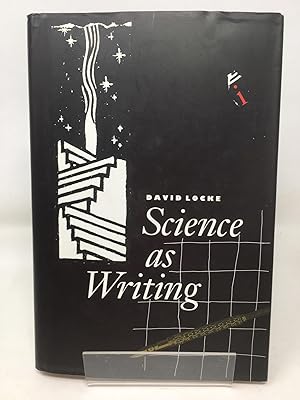
Science as Writing
Da: Cambridge Recycled Books, Cambridge, Regno Unito
Valutazione del venditore 5 su 5 stelle
EUR 23,79
EUR 25,99 shipping
Spedito da Regno Unito a U.S.A.Quantità: 1 disponibili
Aggiungi al carrelloHardcover. Condizione: Very Good. Condizione sovraccoperta: Very Good. Appears to have hardly been read.Same day dispatch (Mon- Fri) from the UK if ordered by 1pm.
-
Science as Writing
Da: Mooney's bookstore, Den Helder, Paesi Bassi
Valutazione del venditore 4 su 5 stelle

EUR 62,47
EUR 9,95 shipping
Spedito da Paesi Bassi a U.S.A.Quantità: 1 disponibili
Aggiungi al carrelloCondizione: Very good.
-
Science as Writing
Da: Ria Christie Collections, Uxbridge, Regno Unito
Valutazione del venditore 5 su 5 stelle
EUR 65,36
EUR 13,84 shipping
Spedito da Regno Unito a U.S.A.Quantità: Più di 20 disponibili
Aggiungi al carrelloCondizione: New. In.
-
Science as Writing
Da: Lucky's Textbooks, Dallas, TX, U.S.A.
Valutazione del venditore 5 su 5 stelle
Condizione: New.
-
Science as Writing (Hardcover)
Lingua: Inglese
Editore: Yale University Press, New Haven, 1992
ISBN 10: 0300054521 ISBN 13: 9780300054521
Da: Grand Eagle Retail, Bensenville, IL, U.S.A.
Valutazione del venditore 5 su 5 stelle
Hardcover. Condizione: new. Hardcover. For many years it has been assumed that a great gulf exists between science and the humanities, that the writings of science are simply the record of things scientists do and find and are devoid of literary features. Recently this assumption has been challenged by those who regard science and literature as companion endeavors, working side by side to describe, in their respective ways, the world of human experience. Now David Locke, a professor of literature who has also been a scientist, joins the debate, arguing that scientific language can be highly imaginative, expressive, and self-conscious and demonstrating for the first time how the major modes of literary criticism can be keys to the reading of scientific texts.Locke takes up in sequence six critical perspectives on reading. These view literary texts as: essentially a representation of the real world; an expression of its author's thoughts and feelings; an activator of response from its readers; a work of art, interesting in its purely formal properties; an artifact situated in a social milieu; or an instrument that brings the world of phenomena into being. Locke applies these perspectives to the reading of a variety of scientific texts, from works by Galileo and Darwin to writings in contemporary molecular biology and theoretical physics. Locke suggests that attention to the literary qualities of scientific discourse will aid in further opening up the literary canon and widening the practice of literary criticism, even as it sharpens science's growing interest in, and understanding of, its own mode of operation. It has been assumed that a gulf existed between science and the humanities and that the writings of scientists had no literary features. Locke argues that scientific language can be imaginative and expressive and shows how modes of literary criticism can be keys to the reading of scientific texts. Shipping may be from multiple locations in the US or from the UK, depending on stock availability.
-

EUR 75,26
EUR 48,99 shipping
Spedito da Germania a U.S.A.Quantità: Più di 20 disponibili
Aggiungi al carrelloCondizione: New. It has been assumed that a gulf existed between science and the humanities and that the writings of scientists had no literary features. Locke argues that scientific language can be imaginative and expressive and shows how modes of literary criticism can be.
-
Science as Writing
Da: PBShop.store US, Wood Dale, IL, U.S.A.
Valutazione del venditore 5 su 5 stelle
EUR 71,57
Spedizione gratuita
Spedito in U.S.A.Quantità: Più di 20 disponibili
Aggiungi al carrelloHRD. Condizione: New. New Book. Shipped from UK. THIS BOOK IS PRINTED ON DEMAND. Established seller since 2000.
-
Science as Writing
Da: PBShop.store UK, Fairford, GLOS, Regno Unito
Valutazione del venditore 5 su 5 stelle
EUR 67,30
EUR 5,80 shipping
Spedito da Regno Unito a U.S.A.Quantità: Più di 20 disponibili
Aggiungi al carrelloHRD. Condizione: New. New Book. Delivered from our UK warehouse in 4 to 14 business days. THIS BOOK IS PRINTED ON DEMAND. Established seller since 2000.
-
Science as Writing
Da: THE SAINT BOOKSTORE, Southport, Regno Unito
Valutazione del venditore 5 su 5 stelle
EUR 77,91
EUR 19,90 shipping
Spedito da Regno Unito a U.S.A.Quantità: Più di 20 disponibili
Aggiungi al carrelloHardback. Condizione: New. This item is printed on demand. New copy - Usually dispatched within 5-9 working days.
-
Science as Writing (Hardcover)
Lingua: Inglese
Editore: Yale University Press, New Haven, 1992
ISBN 10: 0300054521 ISBN 13: 9780300054521
Da: CitiRetail, Stevenage, Regno Unito
Valutazione del venditore 5 su 5 stelle
EUR 73,15
EUR 42,74 shipping
Spedito da Regno Unito a U.S.A.Quantità: 1 disponibili
Aggiungi al carrelloHardcover. Condizione: new. Hardcover. For many years it has been assumed that a great gulf exists between science and the humanities, that the writings of science are simply the record of things scientists do and find and are devoid of literary features. Recently this assumption has been challenged by those who regard science and literature as companion endeavors, working side by side to describe, in their respective ways, the world of human experience. Now David Locke, a professor of literature who has also been a scientist, joins the debate, arguing that scientific language can be highly imaginative, expressive, and self-conscious and demonstrating for the first time how the major modes of literary criticism can be keys to the reading of scientific texts.Locke takes up in sequence six critical perspectives on reading. These view literary texts as: essentially a representation of the real world; an expression of its author's thoughts and feelings; an activator of response from its readers; a work of art, interesting in its purely formal properties; an artifact situated in a social milieu; or an instrument that brings the world of phenomena into being. Locke applies these perspectives to the reading of a variety of scientific texts, from works by Galileo and Darwin to writings in contemporary molecular biology and theoretical physics. Locke suggests that attention to the literary qualities of scientific discourse will aid in further opening up the literary canon and widening the practice of literary criticism, even as it sharpens science's growing interest in, and understanding of, its own mode of operation. It has been assumed that a gulf existed between science and the humanities and that the writings of scientists had no literary features. Locke argues that scientific language can be imaginative and expressive and shows how modes of literary criticism can be keys to the reading of scientific texts. This item is printed on demand. Shipping may be from our UK warehouse or from our Australian or US warehouses, depending on stock availability.

