

Importo totale (1 articolo articoli):
Destinazione ordine:

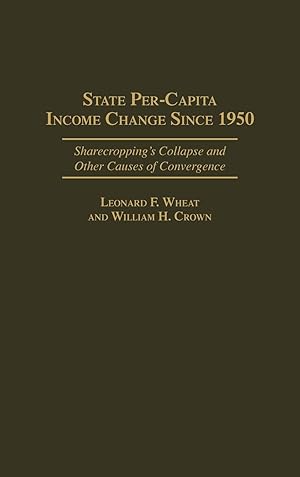
9780313296949 - State Per-Capita Income Change Since 1950: Sharecropping's Collapse and Other Causes of Convergence di Wheat, Leonard F.; Crown, William H. (19 risultati)
Vai alla pagina principale dei risultati di ricerca
Filtri di ricerca
Tipo di articolo
- Tutti i tipi di prodotto
- Libri (19)
- Riviste e Giornali (Nessun altro risultato corrispondente a questo perfezionamento)
- Fumetti (Nessun altro risultato corrispondente a questo perfezionamento)
- Spartiti (Nessun altro risultato corrispondente a questo perfezionamento)
- Arte, Stampe e Poster (Nessun altro risultato corrispondente a questo perfezionamento)
- Fotografie (Nessun altro risultato corrispondente a questo perfezionamento)
- Mappe (Nessun altro risultato corrispondente a questo perfezionamento)
- Manoscritti e Collezionismo cartaceo (Nessun altro risultato corrispondente a questo perfezionamento)
Condizioni Maggiori informazioni
- Nuovo (14)
- Come nuovo, Ottimo o Quasi ottimo (4)
- Molto buono o Buono (Nessun altro risultato corrispondente a questo perfezionamento)
- Discreto o Mediocre (Nessun altro risultato corrispondente a questo perfezionamento)
- Come descritto (1)
Legatura
- Tutte
- Rilegato (19)
- Brossura (Nessun altro risultato corrispondente a questo perfezionamento)
Ulteriori caratteristiche
- Prima ed. (1)
- Copia autograf. (Nessun altro risultato corrispondente a questo perfezionamento)
- Sovracoperta (Nessun altro risultato corrispondente a questo perfezionamento)
- Con foto (5)
- Non Print on Demand (12)
Lingua (1)
Spedizione gratuita
Paese del venditore
Valutazione venditore
-

State-Per-Capita Income Change Since 1950 : Sharecropping's Collapse and Other Causes of Convergence
Da: George Cross Books, Lexington, MA, U.S.A.
Membro dell'associazione: IOBA
Valutazione del venditore 5 su 5 stelle

Prima edizione
Hardcover. First edition. Good/None (12096) Waterstain on edges, pages wavy. No dust jacket, believed as issued. Unmarked. Still usable. . 182.
-

State Per-Capita Income Change Since 1950 : Sharecropping's Collapse and Other Causes of Convergence
Da: GreatBookPrices, Columbia, MD, U.S.A.
Valutazione del venditore 5 su 5 stelle
EUR 100,84
Spedizione EUR 2,31
Spedito in U.S.A.Quantità: Più di 20 disponibili
Aggiungi al carrelloCondizione: New.
-
State Per-Capita Income Change Since 1950.
Da: Yushodo Co., Ltd., Fuefuki-shi, Yamanashi Pref., Giappone
Membro dell'associazione: ILAB
Valutazione del venditore 5 su 5 stelle
EUR 74,33
Spedizione EUR 30,69
Spedito da Giappone a U.S.A.Quantità: 4 disponibili
Aggiungi al carrelloHardcover. Condizione: Fine. 200p.
-
State Per-Capita Income Change Since 1950: Sharecropping's Collapse and Other Causes of Convergence (Contributions in Economics and Economic History)
Da: Ria Christie Collections, Uxbridge, Regno Unito
Valutazione del venditore 5 su 5 stelle
EUR 98,58
Spedizione EUR 14,06
Spedito da Regno Unito a U.S.A.Quantità: Più di 20 disponibili
Aggiungi al carrelloCondizione: New. In.
-
State Per-Capita Income Change Since 1950 : Sharecropping's Collapse and Other Causes of Convergence
Da: GreatBookPricesUK, Woodford Green, Regno Unito
Valutazione del venditore 5 su 5 stelle
EUR 98,56
Spedizione EUR 17,61
Spedito da Regno Unito a U.S.A.Quantità: Più di 20 disponibili
Aggiungi al carrelloCondizione: New.
-
State Per-Capita Income Change Since 1950: Sharecropping's Collapse and Other Causes of Convergence (Contributions in Economics and Economic History)
Da: Kennys Bookshop and Art Galleries Ltd., Galway, GY, Irlanda
Valutazione del venditore 5 su 5 stelle
EUR 109,75
Spedizione EUR 10,50
Spedito da Irlanda a U.S.A.Quantità: Più di 20 disponibili
Aggiungi al carrelloCondizione: New.
-
State Per-Capita Income Change Since 1950
Da: Majestic Books, Hounslow, Regno Unito
Valutazione del venditore 4 su 5 stelle

EUR 122,35
Spedizione EUR 7,63
Spedito da Regno Unito a U.S.A.Quantità: 1 disponibili
Aggiungi al carrelloCondizione: New. pp. 198 52:B&W 6.14 x 9.21in or 234 x 156mm (Royal 8vo) Case Laminate on White w/Gloss Lam.
-
State Per-Capita Income Change Since 1950: Sharecropping's Collapse and Other Causes of Convergence (Contributions in Economics and Economic History)
Da: Kennys Bookstore, Olney, MD, U.S.A.
Valutazione del venditore 5 su 5 stelle
EUR 139,32
Spedizione EUR 9,21
Spedito in U.S.A.Quantità: Più di 20 disponibili
Aggiungi al carrelloCondizione: New.
-
State Per-Capita Income Change Since 1950: Sharecropping's Collapse and Other Causes of Convergence
Da: Revaluation Books, Exeter, Regno Unito
Valutazione del venditore 5 su 5 stelle
EUR 157,05
Spedizione EUR 11,74
Spedito da Regno Unito a U.S.A.Quantità: 2 disponibili
Aggiungi al carrelloHardcover. Condizione: Brand New. 182 pages. 9.75x6.50x0.75 inches. In Stock.
-

State Per-Capita Income Change Since 1950 : Sharecropping's Collapse and Other Causes of Convergence
Da: GreatBookPricesUK, Woodford Green, Regno Unito
Valutazione del venditore 5 su 5 stelle
EUR 162,00
Spedizione EUR 17,61
Spedito da Regno Unito a U.S.A.Quantità: Più di 20 disponibili
Aggiungi al carrelloCondizione: As New. Unread book in perfect condition.
-
State Per-Capita Income Change Since 1950: Sharecropping*s Collapse and Other Causes of Convergence (Contributions in Economics and Economic History)
Da: Mispah books, Redhill, SURRE, Regno Unito
Valutazione del venditore 4 su 5 stelle
EUR 152,34
Spedizione EUR 29,34
Spedito da Regno Unito a U.S.A.Quantità: 1 disponibili
Aggiungi al carrelloHardcover. Condizione: Like New. Like New. book.
-

State Per-Capita Income Change Since 1950 : Sharecropping's Collapse and Other Causes of Convergence
Da: GreatBookPrices, Columbia, MD, U.S.A.
Valutazione del venditore 5 su 5 stelle
EUR 184,97
Spedizione EUR 2,31
Spedito in U.S.A.Quantità: Più di 20 disponibili
Aggiungi al carrelloCondizione: As New. Unread book in perfect condition.
-
State Per-Capita Income Change Since 1950
Da: PBShop.store US, Wood Dale, IL, U.S.A.
Valutazione del venditore 5 su 5 stelle
EUR 103,24
Spedizione gratuita
Spedito in U.S.A.Quantità: Più di 20 disponibili
Aggiungi al carrelloHRD. Condizione: New. New Book. Shipped from UK. THIS BOOK IS PRINTED ON DEMAND. Established seller since 2000.
-
State Per-Capita Income Change Since 1950
Da: PBShop.store UK, Fairford, GLOS, Regno Unito
Valutazione del venditore 5 su 5 stelle
EUR 100,04
Spedizione EUR 5,89
Spedito da Regno Unito a U.S.A.Quantità: Più di 20 disponibili
Aggiungi al carrelloHRD. Condizione: New. New Book. Delivered from our UK warehouse in 4 to 14 business days. THIS BOOK IS PRINTED ON DEMAND. Established seller since 2000.
-
State Per-Capita Income Change Since 1950 (Hardcover)
Lingua: Inglese
Editore: Bloomsbury Publishing Plc, Westport, 1995
ISBN 10: 0313296944 ISBN 13: 9780313296949
Da: Grand Eagle Retail, Bensenville, IL, U.S.A.
Valutazione del venditore 5 su 5 stelle
Hardcover. Condizione: new. Hardcover. This book refutes prevailing theories that attribute post-1950 state per capita income convergence to (1) neo-classical adjustment mechanisms, (2) institutional sclerosis, and (3) southern industrialization. Wheat and Crown argue that southern income was low because of slavery's legacysharecropping, agricultural dependence, low urbanization, poor education, high Black population percentages, and low wage rates. The legacy's dominant feature was the sharecropper-tenant farmer system, which replaced slavery. Sharecropping was the foundation of southern poverty. Sharecropping's collapse, beginning around 1950, affected all of the other features of slavery's legacy. For example, millions of sharecroppers out-migrated from the South, shifting poverty to the North and lowering the South's Black percentage. This out-migration, white in-migration, and the civil rights movement jointly raised educational attainment in the South, further boosting southern income. Southern industrialization had only a marginally significant effect. In 1950's high income region, the West, the transport cost element in the price of manufactured goods shrank because of (1) transportation improvements and (2) rapid manufacturing growth, which reduced the need for long distance imports from the Manufacturing Belt. The resulting decline in the West's relative cost of living led to wage adjustments. Consequently, the Westdespite having the highest manufacturing growth rateshad the nation's lowest per-capita income growth rates. Agricultural decline and educational gains stimulated income growth in the Plains. Nationally, per-capita employment gains were a strong influence. In 1950's high income region, the West, the transport cost element in the price of manufactured goods shrank because of (1) transportation improvements and (2) rapid manufacturing growth, which reduced the need for long distance imports from the Manufacturing Belt. This item is printed on demand. Shipping may be from multiple locations in the US or from the UK, depending on stock availability.
-
State Per-Capita Income Change Since 1950: Sharecropping's Collapse and Other Causes of Convergence
Da: THE SAINT BOOKSTORE, Southport, Regno Unito
Valutazione del venditore 5 su 5 stelle
EUR 114,50
Spedizione EUR 18,30
Spedito da Regno Unito a U.S.A.Quantità: Più di 20 disponibili
Aggiungi al carrelloHardback. Condizione: New. This item is printed on demand. New copy - Usually dispatched within 5-9 working days.
-
State Per-Capita Income Change Since 1950 (Hardcover)
Lingua: Inglese
Editore: Bloomsbury Publishing Plc, Westport, 1995
ISBN 10: 0313296944 ISBN 13: 9780313296949
Da: CitiRetail, Stevenage, Regno Unito
Valutazione del venditore 5 su 5 stelle
EUR 106,38
Spedizione EUR 43,43
Spedito da Regno Unito a U.S.A.Quantità: 1 disponibili
Aggiungi al carrelloHardcover. Condizione: new. Hardcover. This book refutes prevailing theories that attribute post-1950 state per capita income convergence to (1) neo-classical adjustment mechanisms, (2) institutional sclerosis, and (3) southern industrialization. Wheat and Crown argue that southern income was low because of slavery's legacysharecropping, agricultural dependence, low urbanization, poor education, high Black population percentages, and low wage rates. The legacy's dominant feature was the sharecropper-tenant farmer system, which replaced slavery. Sharecropping was the foundation of southern poverty. Sharecropping's collapse, beginning around 1950, affected all of the other features of slavery's legacy. For example, millions of sharecroppers out-migrated from the South, shifting poverty to the North and lowering the South's Black percentage. This out-migration, white in-migration, and the civil rights movement jointly raised educational attainment in the South, further boosting southern income. Southern industrialization had only a marginally significant effect. In 1950's high income region, the West, the transport cost element in the price of manufactured goods shrank because of (1) transportation improvements and (2) rapid manufacturing growth, which reduced the need for long distance imports from the Manufacturing Belt. The resulting decline in the West's relative cost of living led to wage adjustments. Consequently, the Westdespite having the highest manufacturing growth rateshad the nation's lowest per-capita income growth rates. Agricultural decline and educational gains stimulated income growth in the Plains. Nationally, per-capita employment gains were a strong influence. In 1950's high income region, the West, the transport cost element in the price of manufactured goods shrank because of (1) transportation improvements and (2) rapid manufacturing growth, which reduced the need for long distance imports from the Manufacturing Belt. This item is printed on demand. Shipping may be from our UK warehouse or from our Australian or US warehouses, depending on stock availability.
-
EUR 103,80
Spedizione EUR 48,99
Spedito da Germania a U.S.A.Quantità: Più di 20 disponibili
Aggiungi al carrelloGebunden. Condizione: New. Dieser Artikel ist ein Print on Demand Artikel und wird nach Ihrer Bestellung fuer Sie gedruckt. In 1950 s high income region, the West, the transport cost element in the price of manufactured goods shrank because of (1) transportation improvements and (2) rapid manufacturing growth, which reduced the need for long distance imports from the Manufacturi.
-

State Per-Capita Income Change Since 1950 : Sharecropping's Collapse and Other Causes of Convergence
EUR 128,62
Spedizione EUR 62,34
Spedito da Germania a U.S.A.Quantità: 1 disponibili
Aggiungi al carrelloBuch. Condizione: Neu. nach der Bestellung gedruckt Neuware - Printed after ordering - This book refutes prevailing theories that attribute post-1950 state per capita income convergence to (1) neo-classical adjustment mechanisms, (2) institutional sclerosis, and (3) southern industrialization. Wheat and Crown argue that southern income was low because of slavery's legacy-sharecropping, agricultural dependence, low urbanization, poor education, high Black population percentages, and low wage rates. The legacy's dominant feature was the sharecropper-tenant farmer system, which replaced slavery. Sharecropping was the foundation of southern poverty. Sharecropping's collapse, beginning around 1950, affected all of the other features of slavery's legacy. For example, millions of sharecroppers out-migrated from the South, shifting poverty to the North and lowering the South's Black percentage. This out-migration, white in-migration, and the civil rights movement jointly raised educational attainment in the South, further boosting southern income. Southern industrialization had only a marginally significant effect. In 1950's high income region, the West, the transport cost element in the price of manufactured goods shrank because of (1) transportation improvements and (2) rapid manufacturing growth, which reduced the need for long distance imports from the Manufacturing Belt. The resulting decline in the West's relative cost of living led to wage adjustments. Consequently, the West-despite having the highest manufacturing growth rates-had the nation's lowest per-capita income growth rates. Agricultural decline and educational gains stimulated income growth in the Plains. Nationally, per-capita employment gains were a strong influence.

