

Importo totale (1 articolo articoli):
Destinazione ordine:

9780387207094 - The Arithmetic of Infinitesimals di Wallis, John (8 risultati)
Vai alla pagina principale dei risultati di ricerca
Filtri di ricerca
Tipo di articolo
- Tutti i tipi di prodotto
- Libri (8)
- Riviste e Giornali (Nessun altro risultato corrispondente a questo perfezionamento)
- Fumetti (Nessun altro risultato corrispondente a questo perfezionamento)
- Spartiti (Nessun altro risultato corrispondente a questo perfezionamento)
- Arte, Stampe e Poster (Nessun altro risultato corrispondente a questo perfezionamento)
- Fotografie (Nessun altro risultato corrispondente a questo perfezionamento)
- Mappe (Nessun altro risultato corrispondente a questo perfezionamento)
- Manoscritti e Collezionismo cartaceo (Nessun altro risultato corrispondente a questo perfezionamento)
Condizioni Maggiori informazioni
- Nuovo (6)
- Come nuovo, Ottimo o Quasi ottimo (1)
- Molto buono o Buono (1)
- Discreto o Mediocre (Nessun altro risultato corrispondente a questo perfezionamento)
- Come descritto (Nessun altro risultato corrispondente a questo perfezionamento)
Legatura
- Tutte
- Rilegato (8)
- Brossura (Nessun altro risultato corrispondente a questo perfezionamento)
Ulteriori caratteristiche
- Prima ed. (Nessun altro risultato corrispondente a questo perfezionamento)
- Copia autograf. (Nessun altro risultato corrispondente a questo perfezionamento)
- Sovracoperta (Nessun altro risultato corrispondente a questo perfezionamento)
- Con foto (2)
- Non Print on Demand (8)
Lingua (1)
Prezzo
- Qualsiasi prezzo
- Inferiore a EUR 20 (Nessun altro risultato corrispondente a questo perfezionamento)
- EUR 20 a EUR 45 (Nessun altro risultato corrispondente a questo perfezionamento)
- Superiore a EUR 45
Spedizione gratuita
Paese del venditore
Valutazione venditore
-

hardcover. Condizione: Good. Connecting readers with great books since 1972! Used textbooks may not include companion materials such as access codes, etc. May have some wear or writing/highlighting. We ship orders daily and Customer Service is our top priority!
-
The Arithmetic of Infinitesimals. John Wallis 1656 (Sources and Studies in the History of Mathematics and Physical Sciences)
Libro 38 di 59: Sources and Studies in the History of Mathematics and Physical SciencesDa: Zubal-Books, Since 1961, Cleveland, OH, U.S.A.
Valutazione del venditore 5 su 5 stelle

Condizione: New. *Price HAS BEEN REDUCED by 10% until Monday, March 23 (weekend SALE item)* xxxiii, 192 pp., Hardcover, NEW!! - If you are reading this, this item is actually (physically) in our stock and ready for shipment once ordered. We are not bookjackers. Buyer is responsible for any additional duties, taxes, or fees required by recipient's country. Photos available upon request.
-
The Arithmetic of Infinitesimals (Sources and Studies in the History of Mathematics and Physical Sciences)
Libro 38 di 59: Sources and Studies in the History of Mathematics and Physical SciencesDa: Ria Christie Collections, Uxbridge, Regno Unito
Valutazione del venditore 5 su 5 stelle
EUR 159,36
Spedizione EUR 13,77
Spedito da Regno Unito a U.S.A.Quantità: Più di 20 disponibili
Aggiungi al carrelloCondizione: New. In.
-
The Arithmetic of Infinitesimals (Sources and Studies in the History of Mathematics and Physical Sciences)
Libro 38 di 59: Sources and Studies in the History of Mathematics and Physical SciencesDa: California Books, Miami, FL, U.S.A.
Valutazione del venditore 5 su 5 stelle
EUR 179,33
Spedizione gratuita
Spedito in U.S.A.Quantità: Più di 20 disponibili
Aggiungi al carrelloCondizione: New.
-
The Arithmetic of Infinitesimals (Sources and Studies in the History of Mathematics and Physical Sciences)
Libro 38 di 59: Sources and Studies in the History of Mathematics and Physical SciencesDa: BennettBooksLtd, Los Angeles, CA, U.S.A.
Valutazione del venditore 5 su 5 stelle
hardcover. Condizione: New. In shrink wrap. Looks like an interesting title!
-
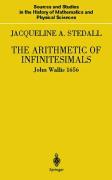
The Arithmetic of Infinitesimals
Libro 38 di 59: Sources and Studies in the History of Mathematics and Physical SciencesEUR 174,52
Spedizione EUR 48,99
Spedito da Germania a U.S.A.Quantità: Più di 20 disponibili
Aggiungi al carrelloGebunden. Condizione: New. John Wallis (1616-1703) was the most influential English mathematician prior to Newton.  He published his most famous work, Arithmetica Infinitorum, in Latin in 1656.  This book studied the quadrature of curves and systematised the an.
-
The Arithmetic of Infinitesimals (Sources and Studies in the History of Mathematics and Physical Sciences)
Libro 38 di 59: Sources and Studies in the History of Mathematics and Physical SciencesDa: Mispah books, Redhill, SURRE, Regno Unito
Valutazione del venditore 4 su 5 stelle

EUR 227,32
Spedizione EUR 28,74
Spedito da Regno Unito a U.S.A.Quantità: 1 disponibili
Aggiungi al carrelloHardcover. Condizione: Like New. LIKE NEW. SHIPS FROM MULTIPLE LOCATIONS. book.
-

The Arithmetic of Infinitesimals
Libro 38 di 59: Sources and Studies in the History of Mathematics and Physical SciencesLingua: Inglese
Editore: Springer New York Aug 2004, 2004
ISBN 10: 0387207090 ISBN 13: 9780387207094
EUR 242,88
Spedizione EUR 62,50
Spedito da Germania a U.S.A.Quantità: 2 disponibili
Aggiungi al carrelloBuch. Condizione: Neu. Neuware - The book is the first English translation of John Wallis's Arithmetica Infinitorum (1656), a key text on the seventeenth-century development of the calculus. Accompanied with annotations and an introductory essay, the translation makes Wallis's work fully available for the first time to modern readers. It shows how Wallis drew on some of the most important new ideas from the preceding twenty years, and took them forward to lay the foundations on which Newton was to build. Above all, the book displays the crucial mid-seventeenth-century shift from geometry to arithmetic and algebra as the primary language of mathematics.

