

Importo totale (1 articolo articoli):
Destinazione ordine:

9780393068481 - Supernormal Stimuli: How Primal Urges Overran Their Evolutionary Purpose di Barrett, Deirdre (25 risultati)
Vai alla pagina principale dei risultati di ricerca
Filtri di ricerca
Tipo di articolo
- Tutti i tipi di prodotto
- Libri (25)
- Riviste e Giornali (Nessun altro risultato corrispondente a questo perfezionamento)
- Fumetti (Nessun altro risultato corrispondente a questo perfezionamento)
- Spartiti (Nessun altro risultato corrispondente a questo perfezionamento)
- Arte, Stampe e Poster (Nessun altro risultato corrispondente a questo perfezionamento)
- Fotografie (Nessun altro risultato corrispondente a questo perfezionamento)
- Mappe (Nessun altro risultato corrispondente a questo perfezionamento)
- Manoscritti e Collezionismo cartaceo (Nessun altro risultato corrispondente a questo perfezionamento)
Condizioni Maggiori informazioni
Legatura
- Tutte
- Rilegato (25)
- Brossura (Nessun altro risultato corrispondente a questo perfezionamento)
Ulteriori caratteristiche
- Prima ed. (4)
- Copia autograf. (Nessun altro risultato corrispondente a questo perfezionamento)
- Sovracoperta (1)
- Con foto (16)
- Non Print on Demand (22)
Lingua (1)
Spedizione gratuita
Paese del venditore
Valutazione venditore
-

Supernormal Stimuli: How Primal Urges Overran Their Evolutionary Purpose
Da: ThriftBooks-Dallas, Dallas, TX, U.S.A.
Valutazione del venditore 5 su 5 stelle

Hardcover. Condizione: Fair. No Jacket. Former library book; Readable copy. Pages may have considerable notes/highlighting. ~ ThriftBooks: Read More, Spend Less.
-
Supernormal Stimuli: How Primal Urges Overran Their Evolutionary Purpose
Da: World of Books (was SecondSale), Montgomery, IL, U.S.A.
Valutazione del venditore 5 su 5 stelle
Condizione: Good. Item in good condition. Textbooks may not include supplemental items i.e. CDs, access codes etc.
-

Supernormal Stimuli: How Primal Urges Overran Their Evolutionary Purpose
Da: Goodwill of Greater Milwaukee and Chicago, Racine, WI, U.S.A.
Valutazione del venditore 5 su 5 stelle
Condizione: acceptable. Book is considered to be in acceptable condition. The actual cover image may not match the stock photo. Book may have one or more of the following defects: noticeable wear on the cover dust jacket or spine; curved, dog eared or creased page s ; writing or highlighting inside or on the edges; sticker s or other adhesive on cover; CD DVD may not be included; and book may be a former library copy.
-

Supernormal Stimuli: How Primal Urges Overran Their Evolutionary Purpose
Da: Goodwill of Central and Coastal Virginia, Richmond, VA, U.S.A.
Valutazione del venditore 4 su 5 stelle

Condizione: acceptable.
-
Supernormal Stimuli: How Primal Urges Overran Their Evolutionary Purpose
Da: WorldofBooks, Goring-By-Sea, WS, Regno Unito
Valutazione del venditore 5 su 5 stelle
EUR 25,50
Spedizione EUR 6,57
Spedito da Regno Unito a U.S.A.Quantità: 1 disponibili
Aggiungi al carrelloHardback. Condizione: Very Good. The book has been read, but is in excellent condition. Pages are intact and not marred by notes or highlighting. The spine remains undamaged.
-

Supernormal Stimuli : How Primal Urges Overran Their Evolutionary Purpose
Da: GreatBookPrices, Columbia, MD, U.S.A.
Valutazione del venditore 5 su 5 stelle
EUR 32,12
Spedizione EUR 2,31
Spedito in U.S.A.Quantità: Più di 20 disponibili
Aggiungi al carrelloCondizione: New.
-
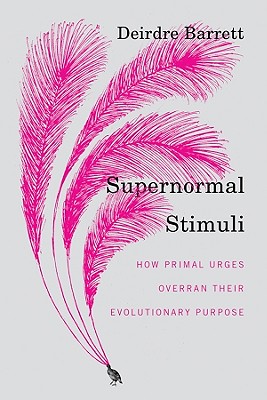
Supernormal Stimuli: How Primal Urges Overran Their Evolutionary Purpose (Hardback or Cased Book)
Lingua: Inglese
Editore: W. W. Norton & Company 2/1/2010, 2010
ISBN 10: 039306848X ISBN 13: 9780393068481
Da: BargainBookStores, Grand Rapids, MI, U.S.A.
Valutazione del venditore 5 su 5 stelle
Hardback or Cased Book. Condizione: New. Supernormal Stimuli: How Primal Urges Overran Their Evolutionary Purpose. Book.
-
Supernormal Stimuli: How Primal Urges Overran Their Evolutionary Purpose
Da: California Books, Miami, FL, U.S.A.
Valutazione del venditore 4 su 5 stelle
EUR 35,16
Spedizione gratuita
Spedito in U.S.A.Quantità: Più di 20 disponibili
Aggiungi al carrelloCondizione: New.
-
Hardcover. Condizione: new. New Copy. Customer Service Guaranteed.
-

Supernormal Stimuli: How Primal Urges Overran Their Evolutionary Purpose
Da: Book House in Dinkytown, IOBA, Minneapolis, MN, U.S.A.
Membro dell'associazione: IOBA
Valutazione del venditore 5 su 5 stelle
Prima edizione
Hardcover. Condizione: Very Good+. Condizione sovraccoperta: Very Good+ Dust Jacket. First Edition. 1st printing, with complete number line. Interior appears free of markings, pages bright and crisp. Binding is tight, sturdy, and square; corners sharp. Unclipped dust jacket looks great. NOT ex-library. Ships same or next business day from Dinkytown in Minneapolis, Minnesota.
-

Supernormal Stimuli : How Primal Urges Overran Their Evolutionary Purpose
Da: GreatBookPrices, Columbia, MD, U.S.A.
Valutazione del venditore 5 su 5 stelle
EUR 35,64
Spedizione EUR 2,31
Spedito in U.S.A.Quantità: Più di 20 disponibili
Aggiungi al carrelloCondizione: As New. Unread book in perfect condition.
-

EUR 39,29
Spedizione gratuita
Spedito in U.S.A.Quantità: Più di 20 disponibili
Aggiungi al carrelloHardback. Condizione: New. Have you ever wondered why some men choose pornography over actual women? Why so many people watch Friends instead of going out with their own buddies? Why a person would "feed" a plastic Pocket Pet while shirking real duties? Why both sides of every war see the other as the aggressor against whom their "Department of Defense" must respond?Harvard evolutionary psychologist Deirdre Barrett explains how human instincts-for food, sex, or territorial protection-developed for life on the savannah ten thousand years ago, not for today's world of densely populated cities, technological innovations, and pollution. Evolution, quite simply, has been unable to keep pace with the rapid changes of modern life. We now have access to a glut of larger-than-life objects-from candy to pornography to atomic bombs-that gratify outmoded but persistent drives with dangerous results.In the 1930s Dutch Nobel laureate Niko Tinbergen found that birds that lay small, pale-blue eggs speckled with gray preferred to sit on giant, bright-blue, plaster dummies with black polka dots. He coined the term "supernormal stimuli" to describe these imitations that appeal to primitive instincts and, oddly, exert a stronger attraction than real things. Obviously these hard-wired preferences pose a danger to a species' survival. Barrett's singular insight is to apply this phenomenon for the first time to the alarming disconnect between human instinct and our created environment. Her book adroitly demonstrates how supernormal stimuli are a driving force in many of today's most pressing problems, including obesity, our addiction to television and video games, and the past century's extraordinarily violent wars. Man-made imitations, it turns out, have wreaked havoc on how we nurture our children, what food we put into our bodies, how we make love and war, and even how we understand ourselves.Barrett does more than pull the fire alarm to show how these unfettered instincts fuel dangerous excesses. There is a hopeful message here as well. Once we recognize how supernormal stimuli operate, we can craft new approaches to modern predicaments. Humans have one stupendous advantage over Tinbergen's birds: a giant brain. The message of this book is that this gives us the unique ability to exercise self-control, override instincts that lead us astray, and save ourselves from civilization's gaudy traps.
-

Supernormal Stimuli
Da: Rarewaves.com USA, London, LONDO, Regno Unito
Valutazione del venditore 5 su 5 stelle
EUR 44,16
Spedizione gratuita
Spedito da Regno Unito a U.S.A.Quantità: Più di 20 disponibili
Aggiungi al carrelloHardback. Condizione: New. Have you ever wondered why some men choose pornography over actual women? Why so many people watch Friends instead of going out with their own buddies? Why a person would "feed" a plastic Pocket Pet while shirking real duties? Why both sides of every war see the other as the aggressor against whom their "Department of Defense" must respond?Harvard evolutionary psychologist Deirdre Barrett explains how human instincts-for food, sex, or territorial protection-developed for life on the savannah ten thousand years ago, not for today's world of densely populated cities, technological innovations, and pollution. Evolution, quite simply, has been unable to keep pace with the rapid changes of modern life. We now have access to a glut of larger-than-life objects-from candy to pornography to atomic bombs-that gratify outmoded but persistent drives with dangerous results.In the 1930s Dutch Nobel laureate Niko Tinbergen found that birds that lay small, pale-blue eggs speckled with gray preferred to sit on giant, bright-blue, plaster dummies with black polka dots. He coined the term "supernormal stimuli" to describe these imitations that appeal to primitive instincts and, oddly, exert a stronger attraction than real things. Obviously these hard-wired preferences pose a danger to a species' survival. Barrett's singular insight is to apply this phenomenon for the first time to the alarming disconnect between human instinct and our created environment. Her book adroitly demonstrates how supernormal stimuli are a driving force in many of today's most pressing problems, including obesity, our addiction to television and video games, and the past century's extraordinarily violent wars. Man-made imitations, it turns out, have wreaked havoc on how we nurture our children, what food we put into our bodies, how we make love and war, and even how we understand ourselves.Barrett does more than pull the fire alarm to show how these unfettered instincts fuel dangerous excesses. There is a hopeful message here as well. Once we recognize how supernormal stimuli operate, we can craft new approaches to modern predicaments. Humans have one stupendous advantage over Tinbergen's birds: a giant brain. The message of this book is that this gives us the unique ability to exercise self-control, override instincts that lead us astray, and save ourselves from civilization's gaudy traps.
-
SUPERNORMAL STIMULI; How Primal Urges Overran Their Evolutionary Purpose
Lingua: Inglese
Editore: W. W. Norton & Company, New York, 2010
ISBN 10: 039306848X ISBN 13: 9780393068481
Da: Rare Book Cellar, Pomona, NY, U.S.A.
Valutazione del venditore 5 su 5 stelle
Prima edizione
Hardcover. First Edition; First Printing. Very Good in a Very Good dust jacket. Stated First Edition.; 0.9 x 8.3 x 5.9 Inches; 216 pages.
-
Supernormal Stimuli How Primal Urges Overran Their Evolutionary Purpose
Da: Revaluation Books, Exeter, Regno Unito
Valutazione del venditore 5 su 5 stelle
EUR 45,96
Spedizione EUR 11,73
Spedito da Regno Unito a U.S.A.Quantità: 2 disponibili
Aggiungi al carrelloHardcover. Condizione: Brand New. 216 pages. 8.75x6.00x1.00 inches. In Stock.
-

Supernormal Stimuli : How Primal Urges Overran Their Evolutionary Purpose
Da: GreatBookPricesUK, Woodford Green, Regno Unito
Valutazione del venditore 5 su 5 stelle
EUR 40,77
Spedizione EUR 17,59
Spedito da Regno Unito a U.S.A.Quantità: Più di 20 disponibili
Aggiungi al carrelloCondizione: New.
-

Supernormal Stimuli : How Primal Urges Overran Their Evolutionary Purpose
Da: GreatBookPricesUK, Woodford Green, Regno Unito
Valutazione del venditore 5 su 5 stelle
EUR 41,84
Spedizione EUR 17,59
Spedito da Regno Unito a U.S.A.Quantità: Più di 20 disponibili
Aggiungi al carrelloCondizione: As New. Unread book in perfect condition.
-

Supernormal Stimuli
Da: Rarewaves USA United, OSWEGO, IL, U.S.A.
Valutazione del venditore 5 su 5 stelle
EUR 41,10
Spedizione EUR 43,77
Spedito in U.S.A.Quantità: Più di 20 disponibili
Aggiungi al carrelloHardback. Condizione: New. Have you ever wondered why some men choose pornography over actual women? Why so many people watch Friends instead of going out with their own buddies? Why a person would "feed" a plastic Pocket Pet while shirking real duties? Why both sides of every war see the other as the aggressor against whom their "Department of Defense" must respond?Harvard evolutionary psychologist Deirdre Barrett explains how human instincts-for food, sex, or territorial protection-developed for life on the savannah ten thousand years ago, not for today's world of densely populated cities, technological innovations, and pollution. Evolution, quite simply, has been unable to keep pace with the rapid changes of modern life. We now have access to a glut of larger-than-life objects-from candy to pornography to atomic bombs-that gratify outmoded but persistent drives with dangerous results.In the 1930s Dutch Nobel laureate Niko Tinbergen found that birds that lay small, pale-blue eggs speckled with gray preferred to sit on giant, bright-blue, plaster dummies with black polka dots. He coined the term "supernormal stimuli" to describe these imitations that appeal to primitive instincts and, oddly, exert a stronger attraction than real things. Obviously these hard-wired preferences pose a danger to a species' survival. Barrett's singular insight is to apply this phenomenon for the first time to the alarming disconnect between human instinct and our created environment. Her book adroitly demonstrates how supernormal stimuli are a driving force in many of today's most pressing problems, including obesity, our addiction to television and video games, and the past century's extraordinarily violent wars. Man-made imitations, it turns out, have wreaked havoc on how we nurture our children, what food we put into our bodies, how we make love and war, and even how we understand ourselves.Barrett does more than pull the fire alarm to show how these unfettered instincts fuel dangerous excesses. There is a hopeful message here as well. Once we recognize how supernormal stimuli operate, we can craft new approaches to modern predicaments. Humans have one stupendous advantage over Tinbergen's birds: a giant brain. The message of this book is that this gives us the unique ability to exercise self-control, override instincts that lead us astray, and save ourselves from civilization's gaudy traps.
-
Supernormal Stimuli: How Primal Urges Overran Their Evolutionary Purpose
Da: BennettBooksLtd, Los Angeles, CA, U.S.A.
Valutazione del venditore 5 su 5 stelle
hardcover. Condizione: New. In shrink wrap. Looks like an interesting title!
-

Supernormal Stimuli
Lingua: Inglese
Editore: Norton|W. W. Norton & Company, 2010
ISBN 10: 039306848X ISBN 13: 9780393068481
EUR 37,76
Spedizione EUR 48,99
Spedito da Germania a U.S.A.Quantità: Più di 20 disponibili
Aggiungi al carrelloCondizione: New. How our once-helpful instincts got hijacked by our garish modern world.Über den AutorDeirdre Barrett is an evolutionary psychologist at Harvard Medical School s Behavioral Medicine Program. She is the author of .
-

Supernormal Stimuli : How Primal Urges Overran Their Evolutionary Purpose
Lingua: Inglese
Editore: W. W. Norton & Company Feb 2010, 2010
ISBN 10: 039306848X ISBN 13: 9780393068481
EUR 47,00
Spedizione EUR 61,84
Spedito da Germania a U.S.A.Quantità: 1 disponibili
Aggiungi al carrelloBuch. Condizione: Neu. Neuware - Have you ever wondered why some men choose pornography over actual women Why so many people watch Friends instead of going out with their own buddies Why a person would 'feed' a plastic Pocket Pet while shirking real duties Why both sides of every war see the other as the aggressor against whom their 'Department of Defense' must respond Harvard evolutionary psychologist Deirdre Barrett explains how human instincts-for food, sex, or territorial protection-developed for life on the savannah ten thousand years ago, not for today's world of densely populated cities, technological innovations, and pollution. Evolution, quite simply, has been unable to keep pace with the rapid changes of modern life. We now have access to a glut of larger-than-life objects-from candy to pornography to atomic bombs-that gratify outmoded but persistent drives with dangerous results.In the 1930s Dutch Nobel laureate Niko Tinbergen found that birds that lay small, pale-blue eggs speckled with gray preferred to sit on giant, bright-blue, plaster dummies with black polka dots. He coined the term 'supernormal stimuli' to describe these imitations that appeal to primitive instincts and, oddly, exert a stronger attraction than real things. Obviously these hard-wired preferences pose a danger to a species' survival. Barrett's singular insight is to apply this phenomenon for the first time to the alarming disconnect between human instinct and our created environment. Her book adroitly demonstrates how supernormal stimuli are a driving force in many of today's most pressing problems, including obesity, our addiction to television and video games, and the past century's extraordinarily violent wars. Man-made imitations, it turns out, have wreaked havoc on how we nurture our children, what food we put into our bodies, how we make love and war, and even how we understand ourselves.Barrett does more than pull the fire alarm to show how these unfettered instincts fuel dangerous excesses. There is a hopeful message here as well. Once we recognize how supernormal stimuli operate, we can craft new approaches to modern predicaments. Humans have one stupendous advantage over Tinbergen's birds: a giant brain. The message of this book is that this gives us the unique ability to exercise self-control, override instincts that lead us astray, and save ourselves from civilization's gaudy traps.
-

Supernormal Stimuli
Da: Rarewaves.com UK, London, Regno Unito
Valutazione del venditore 5 su 5 stelle
EUR 40,76
Spedizione EUR 76,22
Spedito da Regno Unito a U.S.A.Quantità: Più di 20 disponibili
Aggiungi al carrelloHardback. Condizione: New. Have you ever wondered why some men choose pornography over actual women? Why so many people watch Friends instead of going out with their own buddies? Why a person would "feed" a plastic Pocket Pet while shirking real duties? Why both sides of every war see the other as the aggressor against whom their "Department of Defense" must respond?Harvard evolutionary psychologist Deirdre Barrett explains how human instincts-for food, sex, or territorial protection-developed for life on the savannah ten thousand years ago, not for today's world of densely populated cities, technological innovations, and pollution. Evolution, quite simply, has been unable to keep pace with the rapid changes of modern life. We now have access to a glut of larger-than-life objects-from candy to pornography to atomic bombs-that gratify outmoded but persistent drives with dangerous results.In the 1930s Dutch Nobel laureate Niko Tinbergen found that birds that lay small, pale-blue eggs speckled with gray preferred to sit on giant, bright-blue, plaster dummies with black polka dots. He coined the term "supernormal stimuli" to describe these imitations that appeal to primitive instincts and, oddly, exert a stronger attraction than real things. Obviously these hard-wired preferences pose a danger to a species' survival. Barrett's singular insight is to apply this phenomenon for the first time to the alarming disconnect between human instinct and our created environment. Her book adroitly demonstrates how supernormal stimuli are a driving force in many of today's most pressing problems, including obesity, our addiction to television and video games, and the past century's extraordinarily violent wars. Man-made imitations, it turns out, have wreaked havoc on how we nurture our children, what food we put into our bodies, how we make love and war, and even how we understand ourselves.Barrett does more than pull the fire alarm to show how these unfettered instincts fuel dangerous excesses. There is a hopeful message here as well. Once we recognize how supernormal stimuli operate, we can craft new approaches to modern predicaments. Humans have one stupendous advantage over Tinbergen's birds: a giant brain. The message of this book is that this gives us the unique ability to exercise self-control, override instincts that lead us astray, and save ourselves from civilization's gaudy traps.
-

Supernormal Stimuli (Hardcover)
Da: Grand Eagle Retail, Bensenville, IL, U.S.A.
Valutazione del venditore 5 su 5 stelle
Prima edizione Print on Demand
Hardcover. Condizione: new. Hardcover. Have you ever wondered why some men choose pornography over actual women? Why so many people watch Friends instead of going out with their own buddies? Why a person would "feed" a plastic Pocket Pet while shirking real duties? Why both sides of every war see the other as the aggressor against whom their "Department of Defense" must respond? Harvard evolutionary psychologist Deirdre Barrett explains how human instincts-for food, sex, or territorial protection-developed for life on the savannah ten thousand years ago, not for today's world of densely populated cities, technological innovations, and pollution. Evolution, quite simply, has been unable to keep pace with the rapid changes of modern life. We now have access to a glut of larger-than-life objects-from candy to pornography to atomic bombs-that gratify outmoded but persistent drives with dangerous results. In the 1930s Dutch Nobel laureate Niko Tinbergen found that birds that lay small, pale-blue eggs speckled with gray preferred to sit on giant, bright-blue, plaster dummies with black polka dots. He coined the term "supernormal stimuli" to describe these imitations that appeal to primitive instincts and, oddly, exert a stronger attraction than real things. Obviously these hard-wired preferences pose a danger to a species' survival. Barrett's singular insight is to apply this phenomenon for the first time to the alarming disconnect between human instinct and our created environment. Her book adroitly demonstrates how supernormal stimuli are a driving force in many of today's most pressing problems, including obesity, our addiction to television and video games, and the past century's extraordinarily violent wars. Man-made imitations, it turns out, have wreaked havoc on how we nurture our children, what food we put into our bodies, how we make love and war, and even how we understand ourselves. Barrett does more than pull the fire alarm to show how these unfettered instincts fuel dangerous excesses. There is a hopeful message here as well. Once we recognize how supernormal stimuli operate, we can craft new approaches to modern predicaments. Humans have one stupendous advantage over Tinbergen's birds: a giant brain. The message of this book is that this gives us the unique ability to exercise self-control, override instincts that lead us astray, and save ourselves from civilization's gaudy traps. How our once-helpful instincts got hijacked by our garish modern world. This item is printed on demand. Shipping may be from multiple locations in the US or from the UK, depending on stock availability.
-
Supernormal Stimuli: How Primal Urges Overran Their Evolutionary Purpose
Da: THE SAINT BOOKSTORE, Southport, Regno Unito
Valutazione del venditore 5 su 5 stelle
EUR 44,91
Spedizione EUR 17,65
Spedito da Regno Unito a U.S.A.Quantità: Più di 20 disponibili
Aggiungi al carrelloHardback. Condizione: New. This item is printed on demand. New copy - Usually dispatched within 5-9 working days.
-
Supernormal Stimuli (Hardcover)
Da: CitiRetail, Stevenage, Regno Unito
Valutazione del venditore 5 su 5 stelle
Prima edizione Print on Demand
EUR 46,48
Spedizione EUR 43,39
Spedito da Regno Unito a U.S.A.Quantità: 1 disponibili
Aggiungi al carrelloHardcover. Condizione: new. Hardcover. Have you ever wondered why some men choose pornography over actual women? Why so many people watch Friends instead of going out with their own buddies? Why a person would "feed" a plastic Pocket Pet while shirking real duties? Why both sides of every war see the other as the aggressor against whom their "Department of Defense" must respond? Harvard evolutionary psychologist Deirdre Barrett explains how human instincts-for food, sex, or territorial protection-developed for life on the savannah ten thousand years ago, not for today's world of densely populated cities, technological innovations, and pollution. Evolution, quite simply, has been unable to keep pace with the rapid changes of modern life. We now have access to a glut of larger-than-life objects-from candy to pornography to atomic bombs-that gratify outmoded but persistent drives with dangerous results. In the 1930s Dutch Nobel laureate Niko Tinbergen found that birds that lay small, pale-blue eggs speckled with gray preferred to sit on giant, bright-blue, plaster dummies with black polka dots. He coined the term "supernormal stimuli" to describe these imitations that appeal to primitive instincts and, oddly, exert a stronger attraction than real things. Obviously these hard-wired preferences pose a danger to a species' survival. Barrett's singular insight is to apply this phenomenon for the first time to the alarming disconnect between human instinct and our created environment. Her book adroitly demonstrates how supernormal stimuli are a driving force in many of today's most pressing problems, including obesity, our addiction to television and video games, and the past century's extraordinarily violent wars. Man-made imitations, it turns out, have wreaked havoc on how we nurture our children, what food we put into our bodies, how we make love and war, and even how we understand ourselves. Barrett does more than pull the fire alarm to show how these unfettered instincts fuel dangerous excesses. There is a hopeful message here as well. Once we recognize how supernormal stimuli operate, we can craft new approaches to modern predicaments. Humans have one stupendous advantage over Tinbergen's birds: a giant brain. The message of this book is that this gives us the unique ability to exercise self-control, override instincts that lead us astray, and save ourselves from civilization's gaudy traps. How our once-helpful instincts got hijacked by our garish modern world. This item is printed on demand. Shipping may be from our UK warehouse or from our Australian or US warehouses, depending on stock availability.


