

Importo totale (1 articolo articoli):
Destinazione ordine:

9780471289562 - Finding Lost Space: Theories of Urban Design di Trancik, Roger (28 risultati)
Vai alla pagina principale dei risultati di ricerca
Filtri di ricerca
Tipo di articolo
- Tutti i tipi di prodotto
- Libri (28)
- Riviste e Giornali (Nessun altro risultato corrispondente a questo perfezionamento)
- Fumetti (Nessun altro risultato corrispondente a questo perfezionamento)
- Spartiti (Nessun altro risultato corrispondente a questo perfezionamento)
- Arte, Stampe e Poster (Nessun altro risultato corrispondente a questo perfezionamento)
- Fotografie (Nessun altro risultato corrispondente a questo perfezionamento)
- Mappe (Nessun altro risultato corrispondente a questo perfezionamento)
- Manoscritti e Collezionismo cartaceo (Nessun altro risultato corrispondente a questo perfezionamento)
Condizioni Maggiori informazioni
- Nuovo (19)
- Come nuovo, Ottimo o Quasi ottimo (2)
- Molto buono o Buono (4)
- Discreto o Mediocre (3)
- Come descritto (Nessun altro risultato corrispondente a questo perfezionamento)
Legatura
- Tutte
- Rilegato (Nessun altro risultato corrispondente a questo perfezionamento)
- Brossura (28)
Ulteriori caratteristiche
- Prima ed. (4)
- Copia autograf. (Nessun altro risultato corrispondente a questo perfezionamento)
- Sovracoperta (Nessun altro risultato corrispondente a questo perfezionamento)
- Con foto (7)
- Non Print on Demand (26)
Lingua (1)
Prezzo
- Qualsiasi prezzo
- Inferiore a EUR 20 (Nessun altro risultato corrispondente a questo perfezionamento)
- EUR 20 a EUR 45
- Superiore a EUR 45
Spedizione gratuita
Paese del venditore
Valutazione venditore
-
EUR 38,83
Spedizione EUR 15,77
Spedito da Regno Unito a U.S.A.Quantità: 1 disponibili
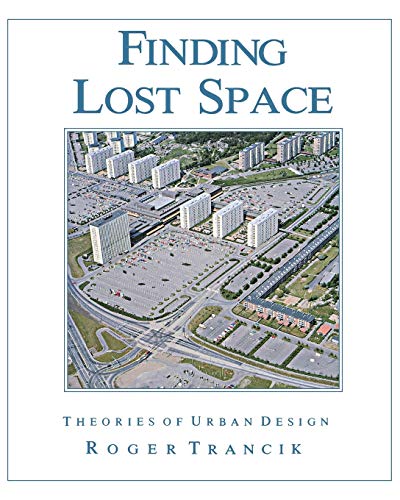
Aggiungi al carrelloCondizione: Fair. This is an ex-library book and may have the usual library/used-book markings inside.This book has soft covers. In fair condition, suitable as a study copy. Please note the Image in this listing is a stock photo and may not match the covers of the actual item,700grams, ISBN:9780471289562.
-
EUR 38,83
Spedizione EUR 15,77
Spedito da Regno Unito a U.S.A.Quantità: 1 disponibili
Aggiungi al carrelloCondizione: Fair. This is an ex-library book and may have the usual library/used-book markings inside.This book has soft covers. Book contains pencil markings. In fair condition, suitable as a study copy. Please note the Image in this listing is a stock photo and may not match the covers of the actual item,700grams, ISBN:9780471289562.
-

Finding Lost Space: Theories of Urban Design
Da: clickgoodwillbooks, Indianapolis, IN, U.S.A.
Valutazione del venditore 5 su 5 stelle

Condizione: acceptable. Used - Acceptable: All pages and the cover are intact, but shrink wrap, dust covers, or boxed set case may be missing. Pages may include limited notes, highlighting, or minor water damage but the text is readable. Item may be missing bundled media.
-

Finding Lost Space: Theories of Urban Design
Da: Zoom Books East, Glendale Heights, IL, U.S.A.
Valutazione del venditore 5 su 5 stelle
Condizione: good. Book is in good condition and may include underlining highlighting and minimal wear. The book can also include "From the library of" labels. May not contain miscellaneous items toys, dvds, etc. . We offer 100% money back guarantee and 24 7 customer service.
-
Finding Lost Space: Theories of Urban Design
Da: BooksRun, Philadelphia, PA, U.S.A.
Valutazione del venditore 5 su 5 stelle
Paperback. Condizione: Very Good. 1. It's a well-cared-for item that has seen limited use. The item may show minor signs of wear. All the text is legible, with all pages included. It may have slight markings and/or highlighting.
-
Finding Lost Space : Theories of Urban Design
Da: GreatBookPrices, Columbia, MD, U.S.A.
Valutazione del venditore 5 su 5 stelle
Condizione: New.
-
Finding Lost Space (Paperback)
Lingua: Inglese
Editore: John Wiley & Sons Inc, New York, 1986
ISBN 10: 0471289566 ISBN 13: 9780471289562
Da: Grand Eagle Retail, Bensenville, IL, U.S.A.
Valutazione del venditore 5 su 5 stelle
Prima edizione
Paperback. Condizione: new. Paperback. The problem of "lost space," or the inadequate use of space, afflicts most urban centers today. The automobile, the effects of the Modern Movement in architectural design, urban-renewal and zoning policies, the dominance of private over public interests, as well as changes in land use in the inner city have resulted in the loss of values and meanings that were traditionally associated with urban open space. This text offers a comprehensive and systematic examination of the crisis of the contemporary city and the means by which this crisis can be addressed. Finding Lost Space traces leading urban spatial design theories that have emerged over the past eighty years: the principles of Sitte and Howard; the impact of and reactions to the Functionalist movement; and designs developed by Team 10, Robert Venturi, the Krier brothers, and Fumihiko Maki, to name a few. In addition to discussions of historic precedents, contemporary approaches to urban spatial design are explored. Detailed case studies of Boston, Massachusetts; Washington, D.C.; Goteborg, Sweden; and the Byker area of Newcastle, England demonstrate the need for an integrated design approach--one that considers figure-ground, linkage, and place theories of urban spatial design. These theories and their individual strengths and weaknesses are defined and applied in the case studies, demonstrating how well they operate in different contexts. This text will prove invaluable for students and professionals in the fields of architecture, landscape architecture, and city planning. Finding Lost Space is going to be a primary text for the urban designers of the next generation. It is the first book in the field to absorb the lessons of the postmodern reaction, including the work of the Krier brothers and many others, and to integrate these into a coherent theory and set of design guidelines. Without polemics, Roger Trancik addresses the biggest issue in architecture and urbanism today: how can we regain in our shattered cities a public realm that is made of firmly shaped, coherently linked, humanly meaningful urban spaces? Robert Campbell, AIA Architect and architecture critic Boston Globe The problem of "lost space," or the inadequate use of space, afflicts most urban centers today. The automobile, the effects of the Modern Movement in architectural design, urban-renewal and zoning policies, the dominance of private over public interests, as well as changes in land use in the inner city have resulted in the loss of values and meanings that were traditionally associated with urban open space. This text offers a comprehensive and systematic examination of the crisis of the contemporary city and the means by which this crisis can be addressed. Finding Lost Space traces leading urban spatial design theories that have emerged over the past eighty years: the principles of Sitte and Howard; the impact of and reactions to the Functionalist movement; and designs developed by Team 10, Robert Venturi, the Krier brothers, and Fumihiko Maki, to name a few. In addition to discussions of historic precedents, contemporary approaches to urban spatial design are explored. Detailed case studies of Boston, Massachusetts; Washington, D.C.; Goteborg, Sweden; and the Byker area of Newcastle, England demonstrate the need for an integrated design approach—one that considers figure-ground, linkage, and place theories of urban spatial design. These theories and their individual strengths and weaknesses are defined and applied in the case studies, demonstrating how well they operate in different contexts. This text will prove invaluable for students and professionals in the fields of architecture, landscape architecture, and city planning. Finding Lost Space is going to be a primary text for the urban designers of the next generation. It is the first book in the field to absorb the le Shipping may be from multiple locations in the US or from the UK, depending on stock availability.
-
Finding Lost Space: Theories of Urban Design
Da: WorldofBooks, Goring-By-Sea, WS, Regno Unito
Valutazione del venditore 5 su 5 stelle
EUR 97,43
Spedizione EUR 6,49
Spedito da Regno Unito a U.S.A.Quantità: 1 disponibili
Aggiungi al carrelloPaperback. Condizione: Very Good. The book has been read, but is in excellent condition. Pages are intact and not marred by notes or highlighting. The spine remains undamaged.
-
Finding Lost Space
Da: PBShop.store UK, Fairford, GLOS, Regno Unito
Valutazione del venditore 5 su 5 stelle
EUR 100,48
Spedizione EUR 5,82
Spedito da Regno Unito a U.S.A.Quantità: 15 disponibili
Aggiungi al carrelloPAP. Condizione: New. New Book. Shipped from UK. Established seller since 2000.
-
Finding Lost Space: Theories of Urban Design (eng)
Da: Brook Bookstore On Demand, Napoli, NA, Italia
Valutazione del venditore 5 su 5 stelle
EUR 99,34
Spedizione EUR 6,80
Spedito da Italia a U.S.A.Quantità: Più di 20 disponibili
Aggiungi al carrelloCondizione: new.
-
Finding Lost Space : Theories of Urban Design
Da: GreatBookPrices, Columbia, MD, U.S.A.
Valutazione del venditore 5 su 5 stelle
Condizione: As New. Unread book in perfect condition.
-
Finding Lost Space : Theories of Urban Design
Da: GreatBookPricesUK, Woodford Green, Regno Unito
Valutazione del venditore 5 su 5 stelle
EUR 98,49
Spedizione EUR 17,39
Spedito da Regno Unito a U.S.A.Quantità: Più di 20 disponibili
Aggiungi al carrelloCondizione: New.
-
Finding Lost Space: Theories of Urban Design
Da: Ria Christie Collections, Uxbridge, Regno Unito
Valutazione del venditore 5 su 5 stelle
EUR 106,19
Spedizione EUR 13,89
Spedito da Regno Unito a U.S.A.Quantità: Più di 20 disponibili
Aggiungi al carrelloCondizione: New. In.
-
Finding Lost Space : Theories of Urban Design
Da: GreatBookPricesUK, Woodford Green, Regno Unito
Valutazione del venditore 5 su 5 stelle
EUR 109,79
Spedizione EUR 17,39
Spedito da Regno Unito a U.S.A.Quantità: Più di 20 disponibili
Aggiungi al carrelloCondizione: As New. Unread book in perfect condition.
-
Finding Lost Space: Theories of Urban Design
Da: Majestic Books, Hounslow, Regno Unito
Valutazione del venditore 4 su 5 stelle

EUR 131,79
Spedizione EUR 7,54
Spedito da Regno Unito a U.S.A.Quantità: 3 disponibili
Aggiungi al carrelloCondizione: New. pp. 256.
-
Finding Lost Space: Theories of Urban Design
Da: THE SAINT BOOKSTORE, Southport, Regno Unito
Valutazione del venditore 5 su 5 stelle
EUR 117,47
Spedizione EUR 20,14
Spedito da Regno Unito a U.S.A.Quantità: Più di 20 disponibili
Aggiungi al carrelloPaperback / softback. Condizione: New. New copy - Usually dispatched within 4 working days.
-
Finding Lost Space (Paperback)
Lingua: Inglese
Editore: John Wiley & Sons Inc, New York, 1986
ISBN 10: 0471289566 ISBN 13: 9780471289562
Da: CitiRetail, Stevenage, Regno Unito
Valutazione del venditore 5 su 5 stelle
Prima edizione
EUR 98,51
Spedizione EUR 42,90
Spedito da Regno Unito a U.S.A.Quantità: 1 disponibili
Aggiungi al carrelloPaperback. Condizione: new. Paperback. The problem of "lost space," or the inadequate use of space, afflicts most urban centers today. The automobile, the effects of the Modern Movement in architectural design, urban-renewal and zoning policies, the dominance of private over public interests, as well as changes in land use in the inner city have resulted in the loss of values and meanings that were traditionally associated with urban open space. This text offers a comprehensive and systematic examination of the crisis of the contemporary city and the means by which this crisis can be addressed. Finding Lost Space traces leading urban spatial design theories that have emerged over the past eighty years: the principles of Sitte and Howard; the impact of and reactions to the Functionalist movement; and designs developed by Team 10, Robert Venturi, the Krier brothers, and Fumihiko Maki, to name a few. In addition to discussions of historic precedents, contemporary approaches to urban spatial design are explored. Detailed case studies of Boston, Massachusetts; Washington, D.C.; Goteborg, Sweden; and the Byker area of Newcastle, England demonstrate the need for an integrated design approach--one that considers figure-ground, linkage, and place theories of urban spatial design. These theories and their individual strengths and weaknesses are defined and applied in the case studies, demonstrating how well they operate in different contexts. This text will prove invaluable for students and professionals in the fields of architecture, landscape architecture, and city planning. Finding Lost Space is going to be a primary text for the urban designers of the next generation. It is the first book in the field to absorb the lessons of the postmodern reaction, including the work of the Krier brothers and many others, and to integrate these into a coherent theory and set of design guidelines. Without polemics, Roger Trancik addresses the biggest issue in architecture and urbanism today: how can we regain in our shattered cities a public realm that is made of firmly shaped, coherently linked, humanly meaningful urban spaces? Robert Campbell, AIA Architect and architecture critic Boston Globe The problem of "lost space," or the inadequate use of space, afflicts most urban centers today. The automobile, the effects of the Modern Movement in architectural design, urban-renewal and zoning policies, the dominance of private over public interests, as well as changes in land use in the inner city have resulted in the loss of values and meanings that were traditionally associated with urban open space. This text offers a comprehensive and systematic examination of the crisis of the contemporary city and the means by which this crisis can be addressed. Finding Lost Space traces leading urban spatial design theories that have emerged over the past eighty years: the principles of Sitte and Howard; the impact of and reactions to the Functionalist movement; and designs developed by Team 10, Robert Venturi, the Krier brothers, and Fumihiko Maki, to name a few. In addition to discussions of historic precedents, contemporary approaches to urban spatial design are explored. Detailed case studies of Boston, Massachusetts; Washington, D.C.; Goteborg, Sweden; and the Byker area of Newcastle, England demonstrate the need for an integrated design approach—one that considers figure-ground, linkage, and place theories of urban spatial design. These theories and their individual strengths and weaknesses are defined and applied in the case studies, demonstrating how well they operate in different contexts. This text will prove invaluable for students and professionals in the fields of architecture, landscape architecture, and city planning. Finding Lost Space is going to be a primary text for the urban designers of the next generation. It is the first book in the field to Shipping may be from our UK warehouse or from our Australian or US warehouses, depending on stock availability.
-
Finding Lost Space
Da: Kennys Bookshop and Art Galleries Ltd., Galway, GY, Irlanda
Valutazione del venditore 5 su 5 stelle
Prima edizione
EUR 132,69
Spedizione EUR 10,50
Spedito da Irlanda a U.S.A.Quantità: Più di 20 disponibili
Aggiungi al carrelloCondizione: New. Num Pages: 256 pages, illustrations, maps, plans, bibliography, index. BIC Classification: AMVD. Category: (P) Professional & Vocational; (UP) Postgraduate, Research & Scholarly; (UU) Undergraduate. Dimension: 253 x 210 x 31. Weight in Grams: 632. . 1986. 1st Edition. Paperback. . . . .
-
Finding Lost Space: Theories of Urban Design
Da: Books Puddle, New York, NY, U.S.A.
Valutazione del venditore 4 su 5 stelle
Condizione: New. pp. 256.
-
Finding Lost Space (Paperback)
Lingua: Inglese
Editore: John Wiley & Sons Inc, New York, 1986
ISBN 10: 0471289566 ISBN 13: 9780471289562
Da: AussieBookSeller, Truganina, VIC, Australia
Valutazione del venditore 5 su 5 stelle
Prima edizione
EUR 125,25
Spedizione EUR 32,59
Spedito da Australia a U.S.A.Quantità: 1 disponibili
Aggiungi al carrelloPaperback. Condizione: new. Paperback. The problem of "lost space," or the inadequate use of space, afflicts most urban centers today. The automobile, the effects of the Modern Movement in architectural design, urban-renewal and zoning policies, the dominance of private over public interests, as well as changes in land use in the inner city have resulted in the loss of values and meanings that were traditionally associated with urban open space. This text offers a comprehensive and systematic examination of the crisis of the contemporary city and the means by which this crisis can be addressed. Finding Lost Space traces leading urban spatial design theories that have emerged over the past eighty years: the principles of Sitte and Howard; the impact of and reactions to the Functionalist movement; and designs developed by Team 10, Robert Venturi, the Krier brothers, and Fumihiko Maki, to name a few. In addition to discussions of historic precedents, contemporary approaches to urban spatial design are explored. Detailed case studies of Boston, Massachusetts; Washington, D.C.; Goteborg, Sweden; and the Byker area of Newcastle, England demonstrate the need for an integrated design approach--one that considers figure-ground, linkage, and place theories of urban spatial design. These theories and their individual strengths and weaknesses are defined and applied in the case studies, demonstrating how well they operate in different contexts. This text will prove invaluable for students and professionals in the fields of architecture, landscape architecture, and city planning. Finding Lost Space is going to be a primary text for the urban designers of the next generation. It is the first book in the field to absorb the lessons of the postmodern reaction, including the work of the Krier brothers and many others, and to integrate these into a coherent theory and set of design guidelines. Without polemics, Roger Trancik addresses the biggest issue in architecture and urbanism today: how can we regain in our shattered cities a public realm that is made of firmly shaped, coherently linked, humanly meaningful urban spaces? Robert Campbell, AIA Architect and architecture critic Boston Globe The problem of "lost space," or the inadequate use of space, afflicts most urban centers today. The automobile, the effects of the Modern Movement in architectural design, urban-renewal and zoning policies, the dominance of private over public interests, as well as changes in land use in the inner city have resulted in the loss of values and meanings that were traditionally associated with urban open space. This text offers a comprehensive and systematic examination of the crisis of the contemporary city and the means by which this crisis can be addressed. Finding Lost Space traces leading urban spatial design theories that have emerged over the past eighty years: the principles of Sitte and Howard; the impact of and reactions to the Functionalist movement; and designs developed by Team 10, Robert Venturi, the Krier brothers, and Fumihiko Maki, to name a few. In addition to discussions of historic precedents, contemporary approaches to urban spatial design are explored. Detailed case studies of Boston, Massachusetts; Washington, D.C.; Goteborg, Sweden; and the Byker area of Newcastle, England demonstrate the need for an integrated design approach—one that considers figure-ground, linkage, and place theories of urban spatial design. These theories and their individual strengths and weaknesses are defined and applied in the case studies, demonstrating how well they operate in different contexts. This text will prove invaluable for students and professionals in the fields of architecture, landscape architecture, and city planning. Finding Lost Space is going to be a primary text for the urban designers of the next generation. It is the first book in the field to Shipping may be from our Sydney, NSW warehouse or from our UK or US warehouse, depending on stock availability.
-
Finding Lost Space: Theories of Urban Design
Da: Revaluation Books, Exeter, Regno Unito
Valutazione del venditore 5 su 5 stelle
EUR 154,52
Spedizione EUR 14,49
Spedito da Regno Unito a U.S.A.Quantità: 2 disponibili
Aggiungi al carrelloPaperback. Condizione: Brand New. 1st edition. 256 pages. 10.00x8.50x0.50 inches. In Stock.
-

EUR 117,61
Spedizione EUR 48,99
Spedito da Germania a U.S.A.Quantità: Più di 20 disponibili
Aggiungi al carrelloCondizione: New. Über den AutorRoger Trancik has twenty years of professional and academic experience in urban design. He has held professorships at Harvard Graduate School of Design and Chalmers University of Technology in Sweden and is currently a.
-
EUR 169,91
Spedizione EUR 9,25
Spedito in U.S.A.Quantità: Più di 20 disponibili
Aggiungi al carrelloCondizione: New. Num Pages: 256 pages, illustrations, maps, plans, bibliography, index. BIC Classification: AMVD. Category: (P) Professional & Vocational; (UP) Postgraduate, Research & Scholarly; (UU) Undergraduate. Dimension: 253 x 210 x 31. Weight in Grams: 632. . 1986. 1st Edition. Paperback. . . . . Books ship from the US and Ireland.
-
Paperback. Condizione: new. New Copy. Customer Service Guaranteed.
-

EUR 145,26
Spedizione EUR 62,81
Spedito da Germania a U.S.A.Quantità: 2 disponibili
Aggiungi al carrelloTaschenbuch. Condizione: Neu. Neuware - The problem of 'lost space,' or the inadequate use of space, afflicts most urban centers today. The automobile, the effects of the Modern Movement in architectural design, urban-renewal and zoning policies, the dominance of private over public interests, as well as changes in land use in the inner city have resulted in the loss of values and meanings that were traditionally associated with urban open space. This text offers a comprehensive and systematic examination of the crisis of the contemporary city and the means by which this crisis can be addressed. Finding Lost Space traces leading urban spatial design theories that have emerged over the past eighty years: the principles of Sitte and Howard; the impact of and reactions to the Functionalist movement; and designs developed by Team 10, Robert Venturi, the Krier brothers, and Fumihiko Maki, to name a few. In addition to discussions of historic precedents, contemporary approaches to urban spatial design are explored. Detailed case studies of Boston, Massachusetts; Washington, D.C.; Göteborg, Sweden; and the Byker area of Newcastle, England demonstrate the need for an integrated design approach--one that considers figure-ground, linkage, and place theories of urban spatial design. These theories and their individual strengths and weaknesses are defined and applied in the case studies, demonstrating how well they operate in different contexts. This text will prove invaluable for students and professionals in the fields of architecture, landscape architecture, and city planning. Finding Lost Space is going to be a primary text for the urban designers of the next generation. It is the first book in the field to absorb the lessons of the postmodern reaction, including the work of the Krier brothers and many others, and to integrate these into a coherent theory and set of design guidelines. Without polemics, Roger Trancik addresses the biggest issue in architecture and urbanism today: how can we regain in our shattered cities a public realm that is made of firmly shaped, coherently linked, humanly meaningful urban spaces Robert Campbell, AIA Architect and architecture critic Boston Globe.
-
Finding Lost Space: Theories of Urban Design
Da: Mispah books, Redhill, SURRE, Regno Unito
Valutazione del venditore 4 su 5 stelle
EUR 218,54
Spedizione EUR 28,99
Spedito da Regno Unito a U.S.A.Quantità: 1 disponibili
Aggiungi al carrelloPaperback. Condizione: Very Good. Very Good. book.
-
Finding Lost Space: Theories of Urban Design
Da: THE SAINT BOOKSTORE, Southport, Regno Unito
Valutazione del venditore 5 su 5 stelle
EUR 121,58
Spedizione EUR 20,14
Spedito da Regno Unito a U.S.A.Quantità: Più di 20 disponibili
Aggiungi al carrelloPaperback / softback. Condizione: New. This item is printed on demand. New copy - Usually dispatched within 5-9 working days 662.
-
Finding Lost Space: Theories of Urban Design
Da: Revaluation Books, Exeter, Regno Unito
Valutazione del venditore 5 su 5 stelle
EUR 139,41
Spedizione EUR 14,49
Spedito da Regno Unito a U.S.A.Quantità: 2 disponibili
Aggiungi al carrelloPaperback. Condizione: Brand New. 1st edition. 256 pages. 10.00x8.50x0.50 inches. In Stock. This item is printed on demand.

