

Importo totale (1 articolo articoli):
Destinazione ordine:

9780804738934 - Why the French Love Jerry Lewis: From Cabaret to Early Cinema di Gordon, Rae Beth (7 risultati)
Vai alla pagina principale dei risultati di ricerca
Filtri di ricerca
Tipo di articolo
- Tutti i tipi di prodotto
- Libri (7)
- Riviste e Giornali (Nessun altro risultato corrispondente a questo perfezionamento)
- Fumetti (Nessun altro risultato corrispondente a questo perfezionamento)
- Spartiti (Nessun altro risultato corrispondente a questo perfezionamento)
- Arte, Stampe e Poster (Nessun altro risultato corrispondente a questo perfezionamento)
- Fotografie (Nessun altro risultato corrispondente a questo perfezionamento)
- Mappe (Nessun altro risultato corrispondente a questo perfezionamento)
- Manoscritti e Collezionismo cartaceo (Nessun altro risultato corrispondente a questo perfezionamento)
Condizioni Maggiori informazioni
- Nuovo (5)
- Come nuovo, Ottimo o Quasi ottimo (Nessun altro risultato corrispondente a questo perfezionamento)
- Molto buono o Buono (2)
- Discreto o Mediocre (Nessun altro risultato corrispondente a questo perfezionamento)
- Come descritto (Nessun altro risultato corrispondente a questo perfezionamento)
Legatura
- Tutte
- Rilegato (7)
- Brossura (Nessun altro risultato corrispondente a questo perfezionamento)
Ulteriori caratteristiche
- Prima ed. (Nessun altro risultato corrispondente a questo perfezionamento)
- Copia autograf. (Nessun altro risultato corrispondente a questo perfezionamento)
- Sovracoperta (Nessun altro risultato corrispondente a questo perfezionamento)
- Con foto (4)
- Non Print on Demand (7)
Lingua (1)
Prezzo
- Qualsiasi prezzo
- Inferiore a EUR 20 (Nessun altro risultato corrispondente a questo perfezionamento)
- EUR 20 a EUR 45
- Superiore a EUR 45
Spedizione gratuita
Paese del venditore
Valutazione venditore
-
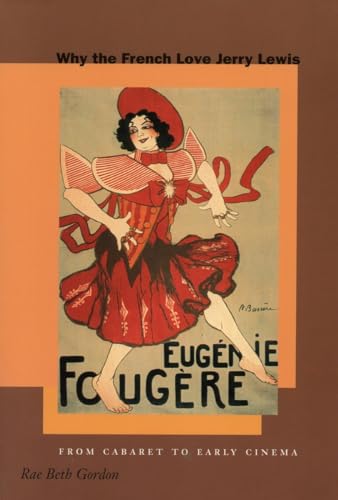
Why the French Love Jerry Lewis: From Cabaret to Early Cinema
Da: Midtown Scholar Bookstore, Harrisburg, PA, U.S.A.
Valutazione del venditore 5 su 5 stelle

Hardcover. Condizione: Good. Good - Bumped and creased book with tears to the extremities, but not affecting the text block, may have remainder mark or previous owner's name - GOOD Standard-sized.
-
EUR 84,61
Spedizione EUR 36,38
Spedito da Regno Unito a U.S.A.Quantità: 1 disponibili
Aggiungi al carrelloCondizione: Good. This is an ex-library book and may have the usual library/used-book markings inside.This book has hardback covers. In good all round condition. No dust jacket. Please note the Image in this listing is a stock photo and may not match the covers of the actual item,650grams, ISBN:0804738939.
-
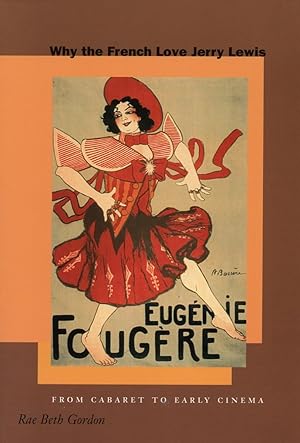
EUR 134,00
Spedizione EUR 48,99
Spedito da Germania a U.S.A.Quantità: Più di 20 disponibili
Aggiungi al carrelloCondizione: New. Vividly bringing to light the tradition of physical comedy in the French cabaret, cafe-concert, and early French film comedy, this book answers the perplexing question, Why do the French love Jerry Lewis? It shows how Lewis touches a nerve in the French .
-
Why the French Love Jerry Lewis From Cabaret to Early Cinema
Da: Revaluation Books, Exeter, Regno Unito
Valutazione del venditore 5 su 5 stelle
EUR 174,74
Spedizione EUR 14,48
Spedito da Regno Unito a U.S.A.Quantità: 2 disponibili
Aggiungi al carrelloHardcover. Condizione: Brand New. 1st edition. 296 pages. 9.75x6.50x1.00 inches. In Stock.
-

Why the French Love Jerry Lewis
Lingua: Inglese
Editore: Stanford University Press, US, 2002
ISBN 10: 0804738939 ISBN 13: 9780804738934
EUR 192,63
Spedizione gratuita
Spedito in U.S.A.Quantità: Più di 20 disponibili
Aggiungi al carrelloHardback. Condizione: New. Vividly bringing to light the tradition of physical comedy in the French cabaret, café-concert, and early French film comedy, this book answers the perplexing question, "Why do the French love Jerry Lewis?" The extraordinary emphasis on nervous pathology in the Parisian café-concert, where the genres of the Epileptic Singer and the Idiot Comic took center stage, and where popular comic monologues and songs included "Man with a Tic" and "I'm Neurasthenic," points to a fascinating intersection between medicine and popular culture. The French tradition of comic performance style between 1870 and 1910 nearly exactly duplicates the movements, gestures, tics, grimaces, and speech anomalies found in nineteenth-century hysteria; the characteristics of hysteria became a new aesthetics. Early French film comedy carried on this tradition of frenetic gesture and gait, as most film performers came from these entertainments and from the circus. Even before Chaplin's films triumphed in France, film comics were instantly recognizable from their pathological gait, just as Jacques Tati would be a half-century later. Comedy, a genre that dominated French cinema until World War I, has often been linked to a mass public for film; the author elucidates this link by proposing a broadly generalized cultural-medical phenomenon as the explanation for the dominance of the comic genre. Comic performance style drew from a group of nervous disorders characterized by the psychological automatism emanating from the "lower faculties": nervous reflex, motor impulses, sensation, and instinct. Building on her previous work on hysteria, the cabaret, and pathologies of movement in the films of Georges Méliès, and drawing on over 400 French films made between 1896 and 1915, the author contributes to a new theory of spectatorship at work in the cabaret, in shows of magnetizers, and in early French film comedy. Jerry Lewis touches a nerve in French cultural memory because, more than any other film comic, he incarnates this tradition of performance style.
-

Why the French Love Jerry Lewis
Lingua: Inglese
Editore: Stanford University Press, US, 2002
ISBN 10: 0804738939 ISBN 13: 9780804738934
Da: Rarewaves USA United, OSWEGO, IL, U.S.A.
Valutazione del venditore 5 su 5 stelle
EUR 167,89
Spedizione EUR 43,21
Spedito in U.S.A.Quantità: Più di 20 disponibili
Aggiungi al carrelloHardback. Condizione: New. Vividly bringing to light the tradition of physical comedy in the French cabaret, café-concert, and early French film comedy, this book answers the perplexing question, "Why do the French love Jerry Lewis?" The extraordinary emphasis on nervous pathology in the Parisian café-concert, where the genres of the Epileptic Singer and the Idiot Comic took center stage, and where popular comic monologues and songs included "Man with a Tic" and "I'm Neurasthenic," points to a fascinating intersection between medicine and popular culture. The French tradition of comic performance style between 1870 and 1910 nearly exactly duplicates the movements, gestures, tics, grimaces, and speech anomalies found in nineteenth-century hysteria; the characteristics of hysteria became a new aesthetics. Early French film comedy carried on this tradition of frenetic gesture and gait, as most film performers came from these entertainments and from the circus. Even before Chaplin's films triumphed in France, film comics were instantly recognizable from their pathological gait, just as Jacques Tati would be a half-century later. Comedy, a genre that dominated French cinema until World War I, has often been linked to a mass public for film; the author elucidates this link by proposing a broadly generalized cultural-medical phenomenon as the explanation for the dominance of the comic genre. Comic performance style drew from a group of nervous disorders characterized by the psychological automatism emanating from the "lower faculties": nervous reflex, motor impulses, sensation, and instinct. Building on her previous work on hysteria, the cabaret, and pathologies of movement in the films of Georges Méliès, and drawing on over 400 French films made between 1896 and 1915, the author contributes to a new theory of spectatorship at work in the cabaret, in shows of magnetizers, and in early French film comedy. Jerry Lewis touches a nerve in French cultural memory because, more than any other film comic, he incarnates this tradition of performance style.
-

Why the French Love Jerry Lewis : From Cabaret to Early Cinema
Lingua: Inglese
Editore: Stanford University Press Apr 2002, 2002
ISBN 10: 0804738939 ISBN 13: 9780804738934
EUR 185,20
Spedizione EUR 62,88
Spedito da Germania a U.S.A.Quantità: 2 disponibili
Aggiungi al carrelloBuch. Condizione: Neu. Neuware - Vividly bringing to light the tradition of physical comedy in the French cabaret, café-concert, and early French film comedy, this book answers the perplexing question, 'Why do the French love Jerry Lewis ' The extraordinary emphasis on nervous pathology in the Parisian café-concert, where the genres of the Epileptic Singer and the Idiot Comic took center stage, and where popular comic monologues and songs included 'Man with a Tic' and 'I'm Neurasthenic,' points to a fascinating intersection between medicine and popular culture. The French tradition of comic performance style between 1870 and 1910 nearly exactly duplicates the movements, gestures, tics, grimaces, and speech anomalies found in nineteenth-century hysteria; the characteristics of hysteria became a new aesthetics.Early French film comedy carried on this tradition of frenetic gesture and gait, as most film performers came from these entertainments and from the circus. Even before Chaplin's films triumphed in France, film comics were instantly recognizable from their pathological gait, just as Jacques Tati would be a half-century later. Comedy, a genre that dominated French cinema until World War I, has often been linked to a mass public for film; the author elucidates this link by proposing a broadly generalized cultural-medical phenomenon as the explanation for the dominance of the comic genre. Comic performance style drew from a group of nervous disorders characterized by the psychological automatism emanating from the 'lower faculties' nervous reflex, motor impulses, sensation, and instinct.Building on her previous work on hysteria, the cabaret, and pathologies of movement in the films of Georges Méliès, and drawing on over 400 French films made between 1896 and 1915, the author contributes to a new theory of spectatorship at work in the cabaret, in shows of magnetizers, and in early French film comedy. Jerry Lewis touches a nerve in French cultural memory because, more than any other film comic, he incarnates this tradition of performance style.
