

Importo totale (1 articolo articoli):
Destinazione ordine:

9780804797436 - The Politics of Weapons Inspections: Assessing WMD Monitoring and Verification Regimes di Busch, Nathan E.; Pilat, Joseph F. (16 risultati)
Vai alla pagina principale dei risultati di ricerca
Filtri di ricerca
Tipo di articolo
- Tutti i tipi di prodotto
- Libri (16)
- Riviste e Giornali (Nessun altro risultato corrispondente a questo perfezionamento)
- Fumetti (Nessun altro risultato corrispondente a questo perfezionamento)
- Spartiti (Nessun altro risultato corrispondente a questo perfezionamento)
- Arte, Stampe e Poster (Nessun altro risultato corrispondente a questo perfezionamento)
- Fotografie (Nessun altro risultato corrispondente a questo perfezionamento)
- Mappe (Nessun altro risultato corrispondente a questo perfezionamento)
- Manoscritti e Collezionismo cartaceo (Nessun altro risultato corrispondente a questo perfezionamento)
Condizioni Maggiori informazioni
- Nuovo (14)
- Come nuovo, Ottimo o Quasi ottimo (2)
- Molto buono o Buono (Nessun altro risultato corrispondente a questo perfezionamento)
- Discreto o Mediocre (Nessun altro risultato corrispondente a questo perfezionamento)
- Come descritto (Nessun altro risultato corrispondente a questo perfezionamento)
Legatura
- Tutte
- Rilegato (16)
- Brossura (Nessun altro risultato corrispondente a questo perfezionamento)
Ulteriori caratteristiche
- Prima ed. (Nessun altro risultato corrispondente a questo perfezionamento)
- Copia autograf. (Nessun altro risultato corrispondente a questo perfezionamento)
- Sovracoperta (Nessun altro risultato corrispondente a questo perfezionamento)
- Con foto (7)
- Non Print on Demand (13)
Lingua (1)
Prezzo
- Qualsiasi prezzo
- Inferiore a EUR 20 (Nessun altro risultato corrispondente a questo perfezionamento)
- EUR 20 a EUR 45 (Nessun altro risultato corrispondente a questo perfezionamento)
- Superiore a EUR 45
Spedizione gratuita
Paese del venditore
Valutazione venditore
-

The Politics of Weapons Inspections
Da: PBShop.store UK, Fairford, GLOS, Regno Unito
Valutazione del venditore 5 su 5 stelle

EUR 108,25
Spedizione EUR 6,80
Spedito da Regno Unito a U.S.A.Quantità: 15 disponibili
Aggiungi al carrelloHRD. Condizione: New. New Book. Shipped from UK. Established seller since 2000.
-
The Politics of Weapons Inspections: Assessing WMD Monitoring and Verification Regimes
Da: THE SAINT BOOKSTORE, Southport, Regno Unito
Valutazione del venditore 5 su 5 stelle
EUR 128,37
Spedizione EUR 18,55
Spedito da Regno Unito a U.S.A.Quantità: Più di 20 disponibili
Aggiungi al carrelloHardback. Condizione: New. New copy - Usually dispatched within 4 working days.
-

Politics of Weapons Inspections : Assessing WMD Monitoring and Verification Regimes
Da: GreatBookPrices, Columbia, MD, U.S.A.
Valutazione del venditore 5 su 5 stelle
EUR 147,55
Spedizione EUR 2,28
Spedito in U.S.A.Quantità: Più di 20 disponibili
Aggiungi al carrelloCondizione: New.
-

The Politics of Weapons Inspections
Lingua: Inglese
Editore: Stanford University Press, US, 2017
ISBN 10: 0804797439 ISBN 13: 9780804797436
EUR 149,91
Spedizione gratuita
Spedito in U.S.A.Quantità: Più di 20 disponibili
Aggiungi al carrelloHardback. Condizione: New. Given recent controversies over suspected WMD programs in proliferating countries, there is an increasingly urgent need for effective monitoring and verification regimes-the international mechanisms, including on-site inspections, intended in part to clarify the status of WMD programs in suspected proliferators. Yet the strengths and limitations of these nonproliferation and arms control mechanisms remain unclear. How should these regimes best be implemented? What are the technological, political, and other limitations to these tools? What technologies and other innovations should be utilized to make these regimes most effective? How should recent developments, such as the 2015 Iran nuclear deal or Syria's declared renunciation and actual use of its chemical weapons, influence their architecture? The Politics of Weapons Inspections examines the successes, failures, and lessons that can be learned from WMD monitoring and verification regimes in order to help determine how best to maintain and strengthen these regimes in the future. In addition to examining these regimes' technological, political, and legal contexts, Nathan E. Busch and Joseph F. Pilat reevaluate the track record of monitoring and verification in the historical cases of South Africa, Libya, and Iraq; assess the prospects of using these mechanisms in verifying arms control and disarmament; and apply the lessons learned from these cases to contemporary controversies over suspected or confirmed programs in North Korea, Iran, and Syria. Finally, they provide a forward-looking set of policy recommendations for the future.
-
The Politics of Weapons Inspections: Assessing WMD Monitoring and Verification Regimes (eng)
Da: Brook Bookstore On Demand, Napoli, NA, Italia
Valutazione del venditore 3 su 5 stelle

EUR 144,31
Spedizione EUR 6,80
Spedito da Italia a U.S.A.Quantità: Più di 20 disponibili
Aggiungi al carrelloCondizione: new.
-
Politics of Weapons Inspections : Assessing WMD Monitoring and Verification Regimes
Da: GreatBookPrices, Columbia, MD, U.S.A.
Valutazione del venditore 5 su 5 stelle
EUR 157,11
Spedizione EUR 2,28
Spedito in U.S.A.Quantità: Più di 20 disponibili
Aggiungi al carrelloCondizione: As New. Unread book in perfect condition.
-

Politics of Weapons Inspections : Assessing WMD Monitoring and Verification Regimes
Da: GreatBookPricesUK, Woodford Green, Regno Unito
Valutazione del venditore 5 su 5 stelle
EUR 153,03
Spedizione EUR 17,38
Spedito da Regno Unito a U.S.A.Quantità: Più di 20 disponibili
Aggiungi al carrelloCondizione: New.
-
Politics Of Weapons Inspections
Da: Kennys Bookshop and Art Galleries Ltd., Galway, GY, Irlanda
Valutazione del venditore 5 su 5 stelle
EUR 157,53
Spedizione EUR 10,50
Spedito da Irlanda a U.S.A.Quantità: Più di 20 disponibili
Aggiungi al carrelloCondizione: New.
-
Politics of Weapons Inspections : Assessing WMD Monitoring and Verification Regimes
Da: GreatBookPricesUK, Woodford Green, Regno Unito
Valutazione del venditore 5 su 5 stelle
EUR 157,33
Spedizione EUR 17,38
Spedito da Regno Unito a U.S.A.Quantità: Più di 20 disponibili
Aggiungi al carrelloCondizione: As New. Unread book in perfect condition.
-

The Politics of Weapons Inspections
Lingua: Inglese
Editore: Stanford University Press, US, 2017
ISBN 10: 0804797439 ISBN 13: 9780804797436
Da: Rarewaves USA United, OSWEGO, IL, U.S.A.
Valutazione del venditore 5 su 5 stelle
EUR 153,04
Spedizione EUR 43,20
Spedito in U.S.A.Quantità: Più di 20 disponibili
Aggiungi al carrelloHardback. Condizione: New. Given recent controversies over suspected WMD programs in proliferating countries, there is an increasingly urgent need for effective monitoring and verification regimes-the international mechanisms, including on-site inspections, intended in part to clarify the status of WMD programs in suspected proliferators. Yet the strengths and limitations of these nonproliferation and arms control mechanisms remain unclear. How should these regimes best be implemented? What are the technological, political, and other limitations to these tools? What technologies and other innovations should be utilized to make these regimes most effective? How should recent developments, such as the 2015 Iran nuclear deal or Syria's declared renunciation and actual use of its chemical weapons, influence their architecture? The Politics of Weapons Inspections examines the successes, failures, and lessons that can be learned from WMD monitoring and verification regimes in order to help determine how best to maintain and strengthen these regimes in the future. In addition to examining these regimes' technological, political, and legal contexts, Nathan E. Busch and Joseph F. Pilat reevaluate the track record of monitoring and verification in the historical cases of South Africa, Libya, and Iraq; assess the prospects of using these mechanisms in verifying arms control and disarmament; and apply the lessons learned from these cases to contemporary controversies over suspected or confirmed programs in North Korea, Iran, and Syria. Finally, they provide a forward-looking set of policy recommendations for the future.
-
Politics Of Weapons Inspections
Da: Kennys Bookstore, Olney, MD, U.S.A.
Valutazione del venditore 5 su 5 stelle
EUR 202,18
Spedizione EUR 9,07
Spedito in U.S.A.Quantità: Più di 20 disponibili
Aggiungi al carrelloCondizione: New.
-
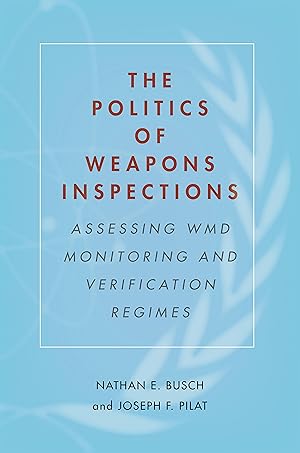
EUR 156,11
Spedizione EUR 48,99
Spedito da Germania a U.S.A.Quantità: Più di 20 disponibili
Aggiungi al carrelloGebunden. Condizione: New. Über den AutorNathan E. Busch is Professor and Co-Director of the Center for American Studies at Christopher Newport University. Joseph F. Pilat is Program Manager in the National Security and International Studies Off.
-
The Politics of Weapons Inspections Assessing WMD Monitoring and Verification Regimes
Da: Revaluation Books, Exeter, Regno Unito
Valutazione del venditore 5 su 5 stelle
EUR 206,69
Spedizione EUR 14,49
Spedito da Regno Unito a U.S.A.Quantità: 2 disponibili
Aggiungi al carrelloHardcover. Condizione: Brand New. 386 pages. 9.50x6.50x1.00 inches. In Stock.
-

The Politics of Weapons Inspections
Lingua: Inglese
Editore: Stanford University Press Mär 2017, 2017
ISBN 10: 0804797439 ISBN 13: 9780804797436
Da: BuchWeltWeit Ludwig Meier e.K., Bergisch Gladbach, Germania
Valutazione del venditore 5 su 5 stelle
EUR 138,03
Spedizione EUR 23,00
Spedito da Germania a U.S.A.Quantità: 2 disponibili
Aggiungi al carrelloBuch. Condizione: Neu. This item is printed on demand - it takes 3-4 days longer - Neuware -Given recent controversies over suspected WMD programs in proliferating countries, there is an increasingly urgent need for effective monitoring and verification regimes-the international mechanisms, including on-site inspections, intended in part to clarify the status of WMD programs in suspected proliferators. Yet the strengths and limitations of these nonproliferation and arms control mechanisms remain unclear. How should these regimes best be implemented What are the technological, political, and other limitations to these tools What technologies and other innovations should be utilized to make these regimes most effective How should recent developments, such as the 2015 Iran nuclear deal or Syria's declared renunciation and actual use of its chemical weapons, influence their architecture The Politics of Weapons Inspections examines the successes, failures, and lessons that can be learned from WMD monitoring and verification regimes in order to help determine how best to maintain and strengthen these regimes in the future. In addition to examining these regimes' technological, political, and legal contexts, Nathan E. Busch and Joseph F. Pilat reevaluate the track record of monitoring and verification in the historical cases of South Africa, Libya, and Iraq; assess the prospects of using these mechanisms in verifying arms control and disarmament; and apply the lessons learned from these cases to contemporary controversies over suspected or confirmed programs in North Korea, Iran, and Syria. Finally, they provide a forward-looking set of policy recommendations for the future. 400 pp. Englisch.
-
The Politics of Weapons Inspections Assessing WMD Monitoring and Verification Regimes
Da: Revaluation Books, Exeter, Regno Unito
Valutazione del venditore 5 su 5 stelle
EUR 167,89
Spedizione EUR 14,49
Spedito da Regno Unito a U.S.A.Quantità: 2 disponibili
Aggiungi al carrelloHardcover. Condizione: Brand New. 386 pages. 9.50x6.50x1.00 inches. In Stock. This item is printed on demand.
-

EUR 144,08
Spedizione EUR 63,29
Spedito da Germania a U.S.A.Quantità: 2 disponibili
Aggiungi al carrelloBuch. Condizione: Neu. nach der Bestellung gedruckt Neuware - Printed after ordering - Given recent controversies over suspected WMD programs in proliferating countries, there is an increasingly urgent need for effective monitoring and verification regimes-the international mechanisms, including on-site inspections, intended in part to clarify the status of WMD programs in suspected proliferators. Yet the strengths and limitations of these nonproliferation and arms control mechanisms remain unclear. How should these regimes best be implemented What are the technological, political, and other limitations to these tools What technologies and other innovations should be utilized to make these regimes most effective How should recent developments, such as the 2015 Iran nuclear deal or Syria's declared renunciation and actual use of its chemical weapons, influence their architecture The Politics of Weapons Inspections examines the successes, failures, and lessons that can be learned from WMD monitoring and verification regimes in order to help determine how best to maintain and strengthen these regimes in the future. In addition to examining these regimes' technological, political, and legal contexts, Nathan E. Busch and Joseph F. Pilat reevaluate the track record of monitoring and verification in the historical cases of South Africa, Libya, and Iraq; assess the prospects of using these mechanisms in verifying arms control and disarmament; and apply the lessons learned from these cases to contemporary controversies over suspected or confirmed programs in North Korea, Iran, and Syria. Finally, they provide a forward-looking set of policy recommendations for the future.

