

Importo totale (1 articolo articoli):
Destinazione ordine:

9780813160597 - The Air Force Way of War: U.S. Tactics and Training After Vietnam di Laslie, Brian D. (15 risultati)
Vai alla pagina principale dei risultati di ricerca
Filtri di ricerca
Tipo di articolo
- Tutti i tipi di prodotto
- Libri (15)
- Riviste e Giornali (Nessun altro risultato corrispondente a questo perfezionamento)
- Fumetti (Nessun altro risultato corrispondente a questo perfezionamento)
- Spartiti (Nessun altro risultato corrispondente a questo perfezionamento)
- Arte, Stampe e Poster (Nessun altro risultato corrispondente a questo perfezionamento)
- Fotografie (Nessun altro risultato corrispondente a questo perfezionamento)
- Mappe (Nessun altro risultato corrispondente a questo perfezionamento)
- Manoscritti e Collezionismo cartaceo (Nessun altro risultato corrispondente a questo perfezionamento)
Condizioni Maggiori informazioni
- Nuovo (11)
- Come nuovo, Ottimo o Quasi ottimo (Nessun altro risultato corrispondente a questo perfezionamento)
- Molto buono o Buono (3)
- Discreto o Mediocre (1)
- Come descritto (Nessun altro risultato corrispondente a questo perfezionamento)
Legatura
Ulteriori caratteristiche
- Prima ed. (Nessun altro risultato corrispondente a questo perfezionamento)
- Copia autograf. (Nessun altro risultato corrispondente a questo perfezionamento)
- Sovracoperta (Nessun altro risultato corrispondente a questo perfezionamento)
- Con foto (7)
- Non Print on Demand (15)
Lingua (1)
Prezzo
- Qualsiasi prezzo
- Inferiore a EUR 20 (Nessun altro risultato corrispondente a questo perfezionamento)
- EUR 20 a EUR 45
- Superiore a EUR 45
Spedizione gratuita
Paese del venditore
Valutazione venditore
-

The Air Force Way of War: U.S. Tactics and Training after Vietnam
Lingua: Inglese
Editore: University Press of Kentucky, 2015
ISBN 10: 0813160596 ISBN 13: 9780813160597
Da: Midtown Scholar Bookstore, Harrisburg, PA, U.S.A.
Valutazione del venditore 5 su 5 stelle

Hardcover. Condizione: Very Good. HARDCOVER Very Good - Crisp, clean, unread book with some shelfwear/edgewear, may have a remainder mark - NICE Standard-sized.
-
The Air Force Way of War: U.S. Tactics and Training after Vietnam
Lingua: Inglese
Editore: University Press of Kentucky, 2015
ISBN 10: 0813160596 ISBN 13: 9780813160597
Da: Midtown Scholar Bookstore, Harrisburg, PA, U.S.A.
Valutazione del venditore 5 su 5 stelle
Hardcover. Condizione: Good. HARDCOVER Good - Bumped and creased book with tears to the extremities, but not affecting the text block, may have remainder mark or previous owner's name - GOOD Standard-sized.
-
The Air Force Way of War: U.S. Tactics and Training after Vietnam
Lingua: Inglese
Editore: University Press of Kentucky, 2015
ISBN 10: 0813160596 ISBN 13: 9780813160597
Da: Midtown Scholar Bookstore, Harrisburg, PA, U.S.A.
Valutazione del venditore 5 su 5 stelle
Hardcover. Condizione: Acceptable. HARDCOVER Acceptable - This is a significantly damaged book. It should be considered a reading copy only. Please order this book only if you are interested in the content and not the condition. May be ex-library. Standard-sized.
-
The Air Force Way of War (Hardcover)
Lingua: Inglese
Editore: The University Press of Kentucky, Lexington, 2015
ISBN 10: 0813160596 ISBN 13: 9780813160597
Da: Grand Eagle Retail, Bensenville, IL, U.S.A.
Valutazione del venditore 5 su 5 stelle
Hardcover. Condizione: new. Hardcover. On December 18, 1972, more than one hundred U.S. B-52 bombers flew over North Vietnam to initiate Operation Linebacker II. During the next eleven days, sixteen of these planes were shot down and another four suffered heavy damage. These losses soon proved so devastating that Strategic Air Command was ordered to halt the bombing. The U.S. Air Force's poor performance in this and other operations during Vietnam was partly due to the fact that they had trained their pilots according to methods devised during World War II and the Korean War, when strategic bombers attacking targets were expected to take heavy losses. Warfare had changed by the 1960s, but the USAF had not adapted. Between 1972 and 1991, however, the Air Force dramatically changed its doctrines and began to overhaul the way it trained pilots through the introduction of a groundbreaking new training program called "Red Flag."In The Air Force Way of War, Brian D. Laslie examines the revolution in pilot instruction that Red Flag brought about after Vietnam. The program's new instruction methods were dubbed "realistic" because they prepared pilots for real-life situations better than the simple cockpit simulations of the past, and students gained proficiency on primary and secondary missions instead of superficially training for numerous possible scenarios. In addition to discussing the program's methods, Laslie analyzes the way its graduates actually functioned in combat during the 1980s and '90s in places such as Grenada, Panama, Libya, and Iraq. Military historians have traditionally emphasized the primacy of technological developments during this period and have overlooked the vital importance of advances in training, but Laslie's unprecedented study of Red Flag addresses this oversight through its examination of the seminal program. Between 1972 and 1991, however, the Air Force dramatically changed its doctrines and began to overhaul the way it trained pilots through the introduction of a groundbreaking new training program called "Red Flag."In The Air Force Way of War, Brian D. Shipping may be from multiple locations in the US or from the UK, depending on stock availability.
-
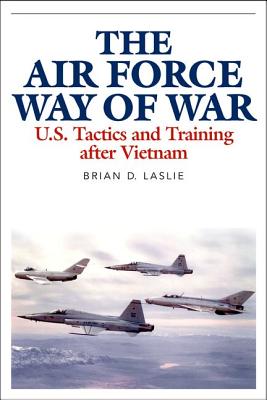
The Air Force Way of War: U.S. Tactics and Training After Vietnam (Hardback or Cased Book)
Lingua: Inglese
Editore: University Press of Kentucky 6/5/2015, 2015
ISBN 10: 0813160596 ISBN 13: 9780813160597
Da: BargainBookStores, Grand Rapids, MI, U.S.A.
Valutazione del venditore 5 su 5 stelle
Hardback or Cased Book. Condizione: New. The Air Force Way of War: U.S. Tactics and Training After Vietnam. Book.
-
The Air Force Way of War: U.S. Tactics and Training after Vietnam
Lingua: Inglese
Editore: University Press of Kentucky, Lexington, Kentucky U. S. A., 2015
ISBN 10: 0813160596 ISBN 13: 9780813160597
Da: Lowry's Books, Three Rivers, MI, U.S.A.
Valutazione del venditore 4 su 5 stelle

Hardcover. Condizione: Good. No Jacket. Some light rubbing and edgewear, minor staining, tape remnants at foot of spine. Text is clean and tight in binding. Size: 8vo - over 7¾" - 9¾" tall.
-

The Air Force Way of War
Lingua: Inglese
Editore: The University Press of Kentucky, US, 2015
ISBN 10: 0813160596 ISBN 13: 9780813160597
EUR 50,49
Spedizione gratuita
Spedito in U.S.A.Quantità: Più di 20 disponibili
Aggiungi al carrelloHardback. Condizione: New. On December 18, 1972, more than one hundred U.S. B-52 bombers flew over North Vietnam to initiate Operation Linebacker II. During the next eleven days, sixteen of these planes were shot down and another four suffered heavy damage. These losses soon proved so devastating that Strategic Air Command was ordered to halt the bombing. The U.S. Air Force's poor performance in this and other operations during Vietnam was partly due to the fact that they had trained their pilots according to methods devised during World War II and the Korean War, when strategic bombers attacking targets were expected to take heavy losses. Warfare had changed by the 1960s, but the USAF had not adapted. Between 1972 and 1991, however, the Air Force dramatically changed its doctrines and began to overhaul the way it trained pilots through the introduction of a groundbreaking new training program called "Red Flag."In The Air Force Way of War, Brian D. Laslie examines the revolution in pilot instruction that Red Flag brought about after Vietnam. The program's new instruction methods were dubbed "realistic" because they prepared pilots for real-life situations better than the simple cockpit simulations of the past, and students gained proficiency on primary and secondary missions instead of superficially training for numerous possible scenarios. In addition to discussing the program's methods, Laslie analyzes the way its graduates actually functioned in combat during the 1980s and '90s in places such as Grenada, Panama, Libya, and Iraq. Military historians have traditionally emphasized the primacy of technological developments during this period and have overlooked the vital importance of advances in training, but Laslie's unprecedented study of Red Flag addresses this oversight through its examination of the seminal program.
-

The Air Force Way of War
Lingua: Inglese
Editore: The University Press of Kentucky, US, 2015
ISBN 10: 0813160596 ISBN 13: 9780813160597
Da: Rarewaves.com USA, London, LONDO, Regno Unito
Valutazione del venditore 5 su 5 stelle
EUR 56,82
Spedizione gratuita
Spedito da Regno Unito a U.S.A.Quantità: Più di 20 disponibili
Aggiungi al carrelloHardback. Condizione: New. On December 18, 1972, more than one hundred U.S. B-52 bombers flew over North Vietnam to initiate Operation Linebacker II. During the next eleven days, sixteen of these planes were shot down and another four suffered heavy damage. These losses soon proved so devastating that Strategic Air Command was ordered to halt the bombing. The U.S. Air Force's poor performance in this and other operations during Vietnam was partly due to the fact that they had trained their pilots according to methods devised during World War II and the Korean War, when strategic bombers attacking targets were expected to take heavy losses. Warfare had changed by the 1960s, but the USAF had not adapted. Between 1972 and 1991, however, the Air Force dramatically changed its doctrines and began to overhaul the way it trained pilots through the introduction of a groundbreaking new training program called "Red Flag."In The Air Force Way of War, Brian D. Laslie examines the revolution in pilot instruction that Red Flag brought about after Vietnam. The program's new instruction methods were dubbed "realistic" because they prepared pilots for real-life situations better than the simple cockpit simulations of the past, and students gained proficiency on primary and secondary missions instead of superficially training for numerous possible scenarios. In addition to discussing the program's methods, Laslie analyzes the way its graduates actually functioned in combat during the 1980s and '90s in places such as Grenada, Panama, Libya, and Iraq. Military historians have traditionally emphasized the primacy of technological developments during this period and have overlooked the vital importance of advances in training, but Laslie's unprecedented study of Red Flag addresses this oversight through its examination of the seminal program.
-
The Air Force Way of War. U.S. Tactics and Training After Vietnam.
Lingua: Inglese
Editore: The University Press of Kentucky, 2015
ISBN 10: 0813160596 ISBN 13: 9780813160597
Da: Kennys Bookshop and Art Galleries Ltd., Galway, GY, Irlanda
Valutazione del venditore 5 su 5 stelle
EUR 52,77
Spedizione EUR 10,50
Spedito da Irlanda a U.S.A.Quantità: Più di 20 disponibili
Aggiungi al carrelloCondizione: New. Between 1972 and 1991, the US Air Force dramatically changed its doctrines and began to overhaul the way it trained pilots through the introduction of a groundbreaking new training programme called "Red Flag". In The Air Force Way of War , Brian D. Laslie examines the revolution in pilot instruction that "Red Flag" brought about after Vietnam. Num Pages: 256 pages, black & white illustrations. BIC Classification: 1KBB; 3JJPL; 3JJPN; HBJK; HBLW3; HBWS; JWG. Category: (G) General (US: Trade). Dimension: 162 x 236 x 26. Weight in Grams: 556. . 2015. Hardcover. . . . .
-
The Air Force Way of War. U.S. Tactics and Training After Vietnam.
Lingua: Inglese
Editore: The University Press of Kentucky, 2015
ISBN 10: 0813160596 ISBN 13: 9780813160597
Da: Kennys Bookstore, Olney, MD, U.S.A.
Valutazione del venditore 5 su 5 stelle
EUR 66,04
Spedizione EUR 9,10
Spedito in U.S.A.Quantità: Più di 20 disponibili
Aggiungi al carrelloCondizione: New. Between 1972 and 1991, the US Air Force dramatically changed its doctrines and began to overhaul the way it trained pilots through the introduction of a groundbreaking new training programme called "Red Flag". In The Air Force Way of War , Brian D. Laslie examines the revolution in pilot instruction that "Red Flag" brought about after Vietnam. Num Pages: 256 pages, black & white illustrations. BIC Classification: 1KBB; 3JJPL; 3JJPN; HBJK; HBLW3; HBWS; JWG. Category: (G) General (US: Trade). Dimension: 162 x 236 x 26. Weight in Grams: 556. . 2015. Hardcover. . . . . Books ship from the US and Ireland.
-

The Air Force Way of War
Lingua: Inglese
Editore: The University Press of Kentucky, US, 2015
ISBN 10: 0813160596 ISBN 13: 9780813160597
Da: Rarewaves USA United, OSWEGO, IL, U.S.A.
Valutazione del venditore 5 su 5 stelle
EUR 54,57
Spedizione EUR 43,35
Spedito in U.S.A.Quantità: Più di 20 disponibili
Aggiungi al carrelloHardback. Condizione: New. On December 18, 1972, more than one hundred U.S. B-52 bombers flew over North Vietnam to initiate Operation Linebacker II. During the next eleven days, sixteen of these planes were shot down and another four suffered heavy damage. These losses soon proved so devastating that Strategic Air Command was ordered to halt the bombing. The U.S. Air Force's poor performance in this and other operations during Vietnam was partly due to the fact that they had trained their pilots according to methods devised during World War II and the Korean War, when strategic bombers attacking targets were expected to take heavy losses. Warfare had changed by the 1960s, but the USAF had not adapted. Between 1972 and 1991, however, the Air Force dramatically changed its doctrines and began to overhaul the way it trained pilots through the introduction of a groundbreaking new training program called "Red Flag."In The Air Force Way of War, Brian D. Laslie examines the revolution in pilot instruction that Red Flag brought about after Vietnam. The program's new instruction methods were dubbed "realistic" because they prepared pilots for real-life situations better than the simple cockpit simulations of the past, and students gained proficiency on primary and secondary missions instead of superficially training for numerous possible scenarios. In addition to discussing the program's methods, Laslie analyzes the way its graduates actually functioned in combat during the 1980s and '90s in places such as Grenada, Panama, Libya, and Iraq. Military historians have traditionally emphasized the primacy of technological developments during this period and have overlooked the vital importance of advances in training, but Laslie's unprecedented study of Red Flag addresses this oversight through its examination of the seminal program.
-

EUR 49,94
Spedizione EUR 48,99
Spedito da Germania a U.S.A.Quantità: Più di 20 disponibili
Aggiungi al carrelloCondizione: New. In The Air Force Way of War, Brian D. Laslie examines the revolution in pilot instruction that Red Flag brought about after Vietnam.Über den AutorBrian D. Laslie is deputy command historian at the North American Aerosp.
-
The Air Force Way of War (Hardcover)
Lingua: Inglese
Editore: The University Press of Kentucky, Lexington, 2015
ISBN 10: 0813160596 ISBN 13: 9780813160597
Da: AussieBookSeller, Truganina, VIC, Australia
Valutazione del venditore 5 su 5 stelle
EUR 79,66
Spedizione EUR 32,08
Spedito da Australia a U.S.A.Quantità: 1 disponibili
Aggiungi al carrelloHardcover. Condizione: new. Hardcover. On December 18, 1972, more than one hundred U.S. B-52 bombers flew over North Vietnam to initiate Operation Linebacker II. During the next eleven days, sixteen of these planes were shot down and another four suffered heavy damage. These losses soon proved so devastating that Strategic Air Command was ordered to halt the bombing. The U.S. Air Force's poor performance in this and other operations during Vietnam was partly due to the fact that they had trained their pilots according to methods devised during World War II and the Korean War, when strategic bombers attacking targets were expected to take heavy losses. Warfare had changed by the 1960s, but the USAF had not adapted. Between 1972 and 1991, however, the Air Force dramatically changed its doctrines and began to overhaul the way it trained pilots through the introduction of a groundbreaking new training program called "Red Flag."In The Air Force Way of War, Brian D. Laslie examines the revolution in pilot instruction that Red Flag brought about after Vietnam. The program's new instruction methods were dubbed "realistic" because they prepared pilots for real-life situations better than the simple cockpit simulations of the past, and students gained proficiency on primary and secondary missions instead of superficially training for numerous possible scenarios. In addition to discussing the program's methods, Laslie analyzes the way its graduates actually functioned in combat during the 1980s and '90s in places such as Grenada, Panama, Libya, and Iraq. Military historians have traditionally emphasized the primacy of technological developments during this period and have overlooked the vital importance of advances in training, but Laslie's unprecedented study of Red Flag addresses this oversight through its examination of the seminal program. Between 1972 and 1991, however, the Air Force dramatically changed its doctrines and began to overhaul the way it trained pilots through the introduction of a groundbreaking new training program called "Red Flag."In The Air Force Way of War, Brian D. Shipping may be from our Sydney, NSW warehouse or from our UK or US warehouse, depending on stock availability.
-

The Air Force Way of War
Lingua: Inglese
Editore: The University Press of Kentucky, US, 2015
ISBN 10: 0813160596 ISBN 13: 9780813160597
Da: Rarewaves.com UK, London, Regno Unito
Valutazione del venditore 5 su 5 stelle
EUR 54,57
Spedizione EUR 75,29
Spedito da Regno Unito a U.S.A.Quantità: Più di 20 disponibili
Aggiungi al carrelloHardback. Condizione: New. On December 18, 1972, more than one hundred U.S. B-52 bombers flew over North Vietnam to initiate Operation Linebacker II. During the next eleven days, sixteen of these planes were shot down and another four suffered heavy damage. These losses soon proved so devastating that Strategic Air Command was ordered to halt the bombing. The U.S. Air Force's poor performance in this and other operations during Vietnam was partly due to the fact that they had trained their pilots according to methods devised during World War II and the Korean War, when strategic bombers attacking targets were expected to take heavy losses. Warfare had changed by the 1960s, but the USAF had not adapted. Between 1972 and 1991, however, the Air Force dramatically changed its doctrines and began to overhaul the way it trained pilots through the introduction of a groundbreaking new training program called "Red Flag."In The Air Force Way of War, Brian D. Laslie examines the revolution in pilot instruction that Red Flag brought about after Vietnam. The program's new instruction methods were dubbed "realistic" because they prepared pilots for real-life situations better than the simple cockpit simulations of the past, and students gained proficiency on primary and secondary missions instead of superficially training for numerous possible scenarios. In addition to discussing the program's methods, Laslie analyzes the way its graduates actually functioned in combat during the 1980s and '90s in places such as Grenada, Panama, Libya, and Iraq. Military historians have traditionally emphasized the primacy of technological developments during this period and have overlooked the vital importance of advances in training, but Laslie's unprecedented study of Red Flag addresses this oversight through its examination of the seminal program.
-

The Air Force Way of War : U.S. Tactics and Training After Vietnam
Lingua: Inglese
Editore: University Press Of Kentucky Jun 2015, 2015
ISBN 10: 0813160596 ISBN 13: 9780813160597
EUR 65,78
Spedizione EUR 62,80
Spedito da Germania a U.S.A.Quantità: 2 disponibili
Aggiungi al carrelloBuch. Condizione: Neu. Neuware - On December 18, 1972, more than one hundred U.S. B-52 bombers flew over North Vietnam to initiate Operation Linebacker II. During the next eleven days, sixteen of these planes were shot down and another four suffered heavy damage. These losses soon proved so devastating that Strategic Air Command was ordered to halt the bombing. The U.S. Air Force's poor performance in this and other operations during Vietnam was partly due to the fact that they had trained their pilots according to methods devi.

