

Importo totale (1 articolo articoli):
Destinazione ordine:

9780817930028 - Reacting to the Spending Spree: Policy Changes We Can Afford (14 risultati)
Vai alla pagina principale dei risultati di ricerca
Filtri di ricerca
Tipo di articolo
- Tutti i tipi di prodotto
- Libri (14)
- Riviste e Giornali (Nessun altro risultato corrispondente a questo perfezionamento)
- Fumetti (Nessun altro risultato corrispondente a questo perfezionamento)
- Spartiti (Nessun altro risultato corrispondente a questo perfezionamento)
- Arte, Stampe e Poster (Nessun altro risultato corrispondente a questo perfezionamento)
- Fotografie (Nessun altro risultato corrispondente a questo perfezionamento)
- Mappe (Nessun altro risultato corrispondente a questo perfezionamento)
- Manoscritti e Collezionismo cartaceo (Nessun altro risultato corrispondente a questo perfezionamento)
Condizioni Maggiori informazioni
- Nuovo (12)
- Come nuovo, Ottimo o Quasi ottimo (1)
- Molto buono o Buono (1)
- Discreto o Mediocre (Nessun altro risultato corrispondente a questo perfezionamento)
- Come descritto (Nessun altro risultato corrispondente a questo perfezionamento)
Legatura
- Tutte
- Rilegato (Nessun altro risultato corrispondente a questo perfezionamento)
- Brossura (14)
Ulteriori caratteristiche
- Prima ed. (Nessun altro risultato corrispondente a questo perfezionamento)
- Copia autograf. (Nessun altro risultato corrispondente a questo perfezionamento)
- Sovracoperta (Nessun altro risultato corrispondente a questo perfezionamento)
- Con foto (7)
- Non Print on Demand (14)
Lingua (1)
Prezzo
- Qualsiasi prezzo
- Inferiore a EUR 20
- EUR 20 a EUR 45
- Superiore a EUR 45 (Nessun altro risultato corrispondente a questo perfezionamento)
Spedizione gratuita
Paese del venditore
Valutazione venditore
-
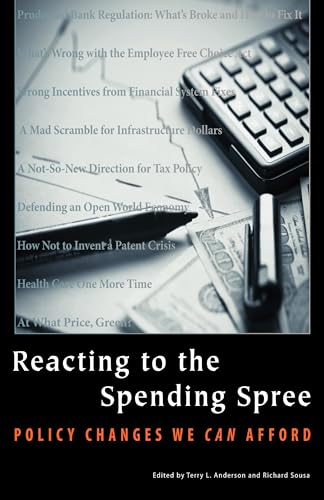
Reacting to the Spending Spree: Policy Change We Can Afford
Libro 153 di 174: Hoover Institution Press PublicationLingua: Inglese
Editore: Hoover Inst Press, Stanford, CA; USA, 2009
ISBN 10: 0817930027 ISBN 13: 9780817930028
Trade Paperback. Condizione: Very Good. Clean, unmarked; tight and square.
-

Reacting to the Spending Spree : Policy Changes We Can Afford
Libro 153 di 174: Hoover Institution Press PublicationDa: GreatBookPrices, Columbia, MD, U.S.A.
Valutazione del venditore 5 su 5 stelle

EUR 11,93
Spedizione EUR 2,28
Spedito in U.S.A.Quantità: Più di 20 disponibili
Aggiungi al carrelloCondizione: New.
-

Reacting to the Spending Spree
Libro 153 di 174: Hoover Institution Press PublicationLingua: Inglese
Editore: Hoover Institution Press,U.S., US, 2009
ISBN 10: 0817930027 ISBN 13: 9780817930028
Paperback. Condizione: New. A team of expert contributors analyze the near- and long-term implications of efforts by both the Obama and Bush administrations to fix the current financial crisis. They examine a range of issues affected by the proposed reforms, including health care, ""going green,"" the Employee Free Choice Act, an openFew doubt the seriousness of the recent crisis afflicting the financial systems of the United States and the world, and still fewer claim that nothing needs to be fixed. But many of the reforms proposed by both the Bush and Obama administrations have triggered risks-risks that have direct, short-term impact but that have been seriously underexplored. In Reacting to the Spending Spree, a team of expert contributors examines the implications of these reforms and how they might affect a number of issues.Terry Anderson and Gary Libecap argue, for instance, that the administration has not been candid with the American public about the costs of the "green" initiatives or about the likelihood of their ability to improve the environment and that these initiatives are likely to encourage protectionism, reduce international trade, and hence slow the recovery of the U.S. and world economies. James Huffman asserts that the "mad flurry" of infrastructure funding has simply led to a rush for the money, with no rational system for ensuring that the stated goals are achieved. And Richard Epstein examines the two major health-care policy initiatives and claims that both are too costly, as no government can successfully devise rules to constrain demand while seeking to drive to zero the health-care costs of recipients.Kevin Hassett offers his views on upcoming tax reforms, raising the key question: Will they be a simple extension of the more-popular preexisting policies or reforms that are guided by the academic consensus? The answer, he says, will depend on our new president's economic philosophy. In addition, Charles W. Calomiris looks at bank regulatory reform, F. Scott Kieff and Henry E. Smith analyze the important but often-overlooked debate on patent reform, and Jagdish Bhagwati offers his views on the challenges of embracing an open world economy.Ultimately, Reacting to the Spending Spree shows that it is important for the government to very soon pick one set of institutions, boldly similar or different from those our society has long used, and then stick to whatever it selects-for the costs of the vast uncertainties caused by ongoing change outweigh whatever benefits may come from tinkering further.Terry Anderson is the John and Jean De Nault Senior Fellow at the Hoover Institution and the executive director of PERC-the Property and Environment Research Center-a think tank in Bozeman, Montana, that focuses on market solutions to environmental problems.Contributors: Jagdish Bhagwati, Charles W. Calomiris, Richard A. Epstein, Stephen H. Haber, Kevin Hassett, James Huffman, F. Scott Kieff, Gary D. Libecap, and Henry E. Smith world economy, and more.
-

Reacting to the Spending Spree : Policy Changes We Can Afford
Libro 153 di 174: Hoover Institution Press PublicationDa: GreatBookPrices, Columbia, MD, U.S.A.
Valutazione del venditore 5 su 5 stelle
EUR 11,96
Spedizione EUR 2,28
Spedito in U.S.A.Quantità: Più di 20 disponibili
Aggiungi al carrelloCondizione: As New. Unread book in perfect condition.
-
Reacting to the Spending Spree (Paperback)
Libro 153 di 174: Hoover Institution Press PublicationLingua: Inglese
Editore: Hoover Institution Press,U.S., Stanford, 2009
ISBN 10: 0817930027 ISBN 13: 9780817930028
Da: Grand Eagle Retail, Bensenville, IL, U.S.A.
Valutazione del venditore 5 su 5 stelle
Paperback. Condizione: new. Paperback. A team of expert contributors analyze the near- and long-term implications of efforts by both the Obama and Bush administrations to fix the current financial crisis. They examine a range of issues affected by the proposed reforms, including health care, ""going green,"" the Employee Free Choice Act, an openFew doubt the seriousness of the recent crisis afflicting the financial systems of the United States and the world, and still fewer claim that nothing needs to be fixed. But many of the reforms proposed by both the Bush and Obama administrations have triggered risksrisks that have direct, short-term impact but that have been seriously underexplored. In Reacting to the Spending Spree, a team of expert contributors examines the implications of these reforms and how they might affect a number of issues.Terry Anderson and Gary Libecap argue, for instance, that the administration has not been candid with the American public about the costs of the "green" initiatives or about the likelihood of their ability to improve the environment and that these initiatives are likely to encourage protectionism, reduce international trade, and hence slow the recovery of the U.S. and world economies. James Huffman asserts that the "mad flurry" of infrastructure funding has simply led to a rush for the money, with no rational system for ensuring that the stated goals are achieved. And Richard Epstein examines the two major health-care policy initiatives and claims that both are too costly, as no government can successfully devise rules to constrain demand while seeking to drive to zero the health-care costs of recipients.Kevin Hassett offers his views on upcoming tax reforms, raising the key question: Will they be a simple extension of the more-popular preexisting policies or reforms that are guided by the academic consensus? The answer, he says, will depend on our new president's economic philosophy. In addition, Charles W. Calomiris looks at bank regulatory reform, F. Scott Kieff and Henry E. Smith analyze the important but often-overlooked debate on patent reform, and Jagdish Bhagwati offers his views on the challenges of embracing an open world economy.Ultimately, Reacting to the Spending Spree shows that it is important for the government to very soon pick one set of institutions, boldly similar or different from those our society has long used, and then stick to whatever it selects-for the costs of the vast uncertainties caused by ongoing change outweigh whatever benefits may come from tinkering further.Terry Anderson is the John and Jean De Nault Senior Fellow at the Hoover Institution and the executive director of PERCthe Property and Environment Research Centera think tank in Bozeman, Montana, that focuses on market solutions to environmental problems.Contributors: Jagdish Bhagwati, Charles W. Calomiris, Richard A. Epstein, Stephen H. Haber, Kevin Hassett, James Huffman, F. Scott Kieff, Gary D. Libecap, and Henry E. Smith world economy, and more. A team of expert contributors analyse the near- and long-term implications of efforts by both the Obama and Bush administrations to fix the financial crisis. They examine a range of issues affected by the proposed reforms, including health care, going green, the Employee Free Choice Act, an open world economy, and more. Shipping may be from multiple locations in the US or from the UK, depending on stock availability.
-

Reacting to the Spending Spree
Libro 153 di 174: Hoover Institution Press PublicationLingua: Inglese
Editore: Hoover Institution Press,U.S., US, 2009
ISBN 10: 0817930027 ISBN 13: 9780817930028
Da: Rarewaves.com USA, London, LONDO, Regno Unito
Valutazione del venditore 5 su 5 stelle
EUR 16,75
Spedizione gratuita
Spedito da Regno Unito a U.S.A.Quantità: 11 disponibili
Aggiungi al carrelloPaperback. Condizione: New. A team of expert contributors analyze the near- and long-term implications of efforts by both the Obama and Bush administrations to fix the current financial crisis. They examine a range of issues affected by the proposed reforms, including health care, ""going green,"" the Employee Free Choice Act, an openFew doubt the seriousness of the recent crisis afflicting the financial systems of the United States and the world, and still fewer claim that nothing needs to be fixed. But many of the reforms proposed by both the Bush and Obama administrations have triggered risks-risks that have direct, short-term impact but that have been seriously underexplored. In Reacting to the Spending Spree, a team of expert contributors examines the implications of these reforms and how they might affect a number of issues.Terry Anderson and Gary Libecap argue, for instance, that the administration has not been candid with the American public about the costs of the "green" initiatives or about the likelihood of their ability to improve the environment and that these initiatives are likely to encourage protectionism, reduce international trade, and hence slow the recovery of the U.S. and world economies. James Huffman asserts that the "mad flurry" of infrastructure funding has simply led to a rush for the money, with no rational system for ensuring that the stated goals are achieved. And Richard Epstein examines the two major health-care policy initiatives and claims that both are too costly, as no government can successfully devise rules to constrain demand while seeking to drive to zero the health-care costs of recipients.Kevin Hassett offers his views on upcoming tax reforms, raising the key question: Will they be a simple extension of the more-popular preexisting policies or reforms that are guided by the academic consensus? The answer, he says, will depend on our new president's economic philosophy. In addition, Charles W. Calomiris looks at bank regulatory reform, F. Scott Kieff and Henry E. Smith analyze the important but often-overlooked debate on patent reform, and Jagdish Bhagwati offers his views on the challenges of embracing an open world economy.Ultimately, Reacting to the Spending Spree shows that it is important for the government to very soon pick one set of institutions, boldly similar or different from those our society has long used, and then stick to whatever it selects-for the costs of the vast uncertainties caused by ongoing change outweigh whatever benefits may come from tinkering further.Terry Anderson is the John and Jean De Nault Senior Fellow at the Hoover Institution and the executive director of PERC-the Property and Environment Research Center-a think tank in Bozeman, Montana, that focuses on market solutions to environmental problems.Contributors: Jagdish Bhagwati, Charles W. Calomiris, Richard A. Epstein, Stephen H. Haber, Kevin Hassett, James Huffman, F. Scott Kieff, Gary D. Libecap, and Henry E. Smith world economy, and more.
-
EUR 19,52
Spedizione gratuita
Spedito in U.S.A.Quantità: Più di 20 disponibili
Aggiungi al carrelloCondizione: New. Brand New.
-
Reacting to the Spending Spree: Policy Changes We Can Afford (Hoover Institution Press Publication)
Libro 153 di 174: Hoover Institution Press PublicationDa: Cronus Books, Carson City, NV, U.S.A.
Valutazione del venditore 5 su 5 stelle
paperback. Condizione: New. * NEW Inside and Out! Clean & Crisp Pages. (E-mail for more info./pics).
-
Reacting to the Spending Spree: Policy Changes We Can Afford (Hoover Institution Press Publication)
Libro 153 di 174: Hoover Institution Press PublicationDa: Kennys Bookshop and Art Galleries Ltd., Galway, GY, Irlanda
Valutazione del venditore 5 su 5 stelle
EUR 23,99
Spedizione EUR 10,50
Spedito da Irlanda a U.S.A.Quantità: Più di 20 disponibili
Aggiungi al carrelloCondizione: New. A team of expert contributors analyse the near- and long-term implications of efforts by both the Obama and Bush administrations to fix the financial crisis. They examine a range of issues affected by the proposed reforms, including health care, 'going green', the Employee Free Choice Act, an open world economy, and more. Num Pages: 162 pages, black & white tables, figures. BIC Classification: KFFD1. Category: (G) General (US: Trade). Dimension: 229 x 152 x 13. Weight in Grams: 272. . 2009. 1st. Paperback. . . . .
-
Reacting to the Spending Spree: Policy Changes We Can Afford (Hoover Institution Press Publication)
Libro 153 di 174: Hoover Institution Press PublicationDa: Kennys Bookstore, Olney, MD, U.S.A.
Valutazione del venditore 5 su 5 stelle
EUR 29,10
Spedizione EUR 9,07
Spedito in U.S.A.Quantità: Più di 20 disponibili
Aggiungi al carrelloCondizione: New. A team of expert contributors analyse the near- and long-term implications of efforts by both the Obama and Bush administrations to fix the financial crisis. They examine a range of issues affected by the proposed reforms, including health care, 'going green', the Employee Free Choice Act, an open world economy, and more. Num Pages: 162 pages, black & white tables, figures. BIC Classification: KFFD1. Category: (G) General (US: Trade). Dimension: 229 x 152 x 13. Weight in Grams: 272. . 2009. 1st. Paperback. . . . . Books ship from the US and Ireland.
-
Reacting to the Spending Spree (Paperback)
Libro 153 di 174: Hoover Institution Press PublicationLingua: Inglese
Editore: Hoover Institution Press,U.S., Stanford, 2009
ISBN 10: 0817930027 ISBN 13: 9780817930028
Da: AussieBookSeller, Truganina, VIC, Australia
Valutazione del venditore 5 su 5 stelle
EUR 31,39
Spedizione EUR 31,97
Spedito da Australia a U.S.A.Quantità: 1 disponibili
Aggiungi al carrelloPaperback. Condizione: new. Paperback. A team of expert contributors analyze the near- and long-term implications of efforts by both the Obama and Bush administrations to fix the current financial crisis. They examine a range of issues affected by the proposed reforms, including health care, ""going green,"" the Employee Free Choice Act, an openFew doubt the seriousness of the recent crisis afflicting the financial systems of the United States and the world, and still fewer claim that nothing needs to be fixed. But many of the reforms proposed by both the Bush and Obama administrations have triggered risksrisks that have direct, short-term impact but that have been seriously underexplored. In Reacting to the Spending Spree, a team of expert contributors examines the implications of these reforms and how they might affect a number of issues.Terry Anderson and Gary Libecap argue, for instance, that the administration has not been candid with the American public about the costs of the "green" initiatives or about the likelihood of their ability to improve the environment and that these initiatives are likely to encourage protectionism, reduce international trade, and hence slow the recovery of the U.S. and world economies. James Huffman asserts that the "mad flurry" of infrastructure funding has simply led to a rush for the money, with no rational system for ensuring that the stated goals are achieved. And Richard Epstein examines the two major health-care policy initiatives and claims that both are too costly, as no government can successfully devise rules to constrain demand while seeking to drive to zero the health-care costs of recipients.Kevin Hassett offers his views on upcoming tax reforms, raising the key question: Will they be a simple extension of the more-popular preexisting policies or reforms that are guided by the academic consensus? The answer, he says, will depend on our new president's economic philosophy. In addition, Charles W. Calomiris looks at bank regulatory reform, F. Scott Kieff and Henry E. Smith analyze the important but often-overlooked debate on patent reform, and Jagdish Bhagwati offers his views on the challenges of embracing an open world economy.Ultimately, Reacting to the Spending Spree shows that it is important for the government to very soon pick one set of institutions, boldly similar or different from those our society has long used, and then stick to whatever it selects-for the costs of the vast uncertainties caused by ongoing change outweigh whatever benefits may come from tinkering further.Terry Anderson is the John and Jean De Nault Senior Fellow at the Hoover Institution and the executive director of PERCthe Property and Environment Research Centera think tank in Bozeman, Montana, that focuses on market solutions to environmental problems.Contributors: Jagdish Bhagwati, Charles W. Calomiris, Richard A. Epstein, Stephen H. Haber, Kevin Hassett, James Huffman, F. Scott Kieff, Gary D. Libecap, and Henry E. Smith world economy, and more. A team of expert contributors analyse the near- and long-term implications of efforts by both the Obama and Bush administrations to fix the financial crisis. They examine a range of issues affected by the proposed reforms, including health care, going green, the Employee Free Choice Act, an open world economy, and more. Shipping may be from our Sydney, NSW warehouse or from our UK or US warehouse, depending on stock availability.
-

Reacting to the Spending Spree: Policy Changes We Can Afford
Libro 153 di 174: Hoover Institution Press PublicationEUR 21,28
Spedizione EUR 48,99
Spedito da Germania a U.S.A.Quantità: Più di 20 disponibili
Aggiungi al carrelloCondizione: New. A team of expert contributors analyse the near- and long-term implications of efforts by both the Obama and Bush administrations to fix the financial crisis. They examine a range of issues affected by the proposed reforms, including health care, going gree.
-

Reacting to the Spending Spree
Libro 153 di 174: Hoover Institution Press PublicationLingua: Inglese
Editore: Hoover Institution Press,U.S., US, 2009
ISBN 10: 0817930027 ISBN 13: 9780817930028
Da: Rarewaves USA United, OSWEGO, IL, U.S.A.
Valutazione del venditore 5 su 5 stelle
Paperback. Condizione: New. A team of expert contributors analyze the near- and long-term implications of efforts by both the Obama and Bush administrations to fix the current financial crisis. They examine a range of issues affected by the proposed reforms, including health care, ""going green,"" the Employee Free Choice Act, an openFew doubt the seriousness of the recent crisis afflicting the financial systems of the United States and the world, and still fewer claim that nothing needs to be fixed. But many of the reforms proposed by both the Bush and Obama administrations have triggered risks-risks that have direct, short-term impact but that have been seriously underexplored. In Reacting to the Spending Spree, a team of expert contributors examines the implications of these reforms and how they might affect a number of issues.Terry Anderson and Gary Libecap argue, for instance, that the administration has not been candid with the American public about the costs of the "green" initiatives or about the likelihood of their ability to improve the environment and that these initiatives are likely to encourage protectionism, reduce international trade, and hence slow the recovery of the U.S. and world economies. James Huffman asserts that the "mad flurry" of infrastructure funding has simply led to a rush for the money, with no rational system for ensuring that the stated goals are achieved. And Richard Epstein examines the two major health-care policy initiatives and claims that both are too costly, as no government can successfully devise rules to constrain demand while seeking to drive to zero the health-care costs of recipients.Kevin Hassett offers his views on upcoming tax reforms, raising the key question: Will they be a simple extension of the more-popular preexisting policies or reforms that are guided by the academic consensus? The answer, he says, will depend on our new president's economic philosophy. In addition, Charles W. Calomiris looks at bank regulatory reform, F. Scott Kieff and Henry E. Smith analyze the important but often-overlooked debate on patent reform, and Jagdish Bhagwati offers his views on the challenges of embracing an open world economy.Ultimately, Reacting to the Spending Spree shows that it is important for the government to very soon pick one set of institutions, boldly similar or different from those our society has long used, and then stick to whatever it selects-for the costs of the vast uncertainties caused by ongoing change outweigh whatever benefits may come from tinkering further.Terry Anderson is the John and Jean De Nault Senior Fellow at the Hoover Institution and the executive director of PERC-the Property and Environment Research Center-a think tank in Bozeman, Montana, that focuses on market solutions to environmental problems.Contributors: Jagdish Bhagwati, Charles W. Calomiris, Richard A. Epstein, Stephen H. Haber, Kevin Hassett, James Huffman, F. Scott Kieff, Gary D. Libecap, and Henry E. Smith world economy, and more.
-

Reacting to the Spending Spree
Libro 153 di 174: Hoover Institution Press PublicationLingua: Inglese
Editore: Hoover Institution Press,U.S., US, 2009
ISBN 10: 0817930027 ISBN 13: 9780817930028
Da: Rarewaves.com UK, London, Regno Unito
Valutazione del venditore 5 su 5 stelle
EUR 28,54
Spedizione EUR 75,31
Spedito da Regno Unito a U.S.A.Quantità: 11 disponibili
Aggiungi al carrelloPaperback. Condizione: New. A team of expert contributors analyze the near- and long-term implications of efforts by both the Obama and Bush administrations to fix the current financial crisis. They examine a range of issues affected by the proposed reforms, including health care, ""going green,"" the Employee Free Choice Act, an openFew doubt the seriousness of the recent crisis afflicting the financial systems of the United States and the world, and still fewer claim that nothing needs to be fixed. But many of the reforms proposed by both the Bush and Obama administrations have triggered risks-risks that have direct, short-term impact but that have been seriously underexplored. In Reacting to the Spending Spree, a team of expert contributors examines the implications of these reforms and how they might affect a number of issues.Terry Anderson and Gary Libecap argue, for instance, that the administration has not been candid with the American public about the costs of the "green" initiatives or about the likelihood of their ability to improve the environment and that these initiatives are likely to encourage protectionism, reduce international trade, and hence slow the recovery of the U.S. and world economies. James Huffman asserts that the "mad flurry" of infrastructure funding has simply led to a rush for the money, with no rational system for ensuring that the stated goals are achieved. And Richard Epstein examines the two major health-care policy initiatives and claims that both are too costly, as no government can successfully devise rules to constrain demand while seeking to drive to zero the health-care costs of recipients.Kevin Hassett offers his views on upcoming tax reforms, raising the key question: Will they be a simple extension of the more-popular preexisting policies or reforms that are guided by the academic consensus? The answer, he says, will depend on our new president's economic philosophy. In addition, Charles W. Calomiris looks at bank regulatory reform, F. Scott Kieff and Henry E. Smith analyze the important but often-overlooked debate on patent reform, and Jagdish Bhagwati offers his views on the challenges of embracing an open world economy.Ultimately, Reacting to the Spending Spree shows that it is important for the government to very soon pick one set of institutions, boldly similar or different from those our society has long used, and then stick to whatever it selects-for the costs of the vast uncertainties caused by ongoing change outweigh whatever benefits may come from tinkering further.Terry Anderson is the John and Jean De Nault Senior Fellow at the Hoover Institution and the executive director of PERC-the Property and Environment Research Center-a think tank in Bozeman, Montana, that focuses on market solutions to environmental problems.Contributors: Jagdish Bhagwati, Charles W. Calomiris, Richard A. Epstein, Stephen H. Haber, Kevin Hassett, James Huffman, F. Scott Kieff, Gary D. Libecap, and Henry E. Smith world economy, and more.
