
Importo totale (1 articolo articoli):
Destinazione ordine:

9780896034570 - Transgenic Xenopus: Microinjection Methods and Developmental Neurobiology: 28 di Soreq, Hermona; Seidman, Shlomo (23 risultati)
Vai alla pagina principale dei risultati di ricerca
Filtri di ricerca
Tipo di articolo
- Tutti i tipi di prodotto
- Libri (23)
- Riviste e Giornali (Nessun altro risultato corrispondente a questo perfezionamento)
- Fumetti (Nessun altro risultato corrispondente a questo perfezionamento)
- Spartiti (Nessun altro risultato corrispondente a questo perfezionamento)
- Arte, Stampe e Poster (Nessun altro risultato corrispondente a questo perfezionamento)
- Fotografie (Nessun altro risultato corrispondente a questo perfezionamento)
- Mappe (Nessun altro risultato corrispondente a questo perfezionamento)
- Manoscritti e Collezionismo cartaceo (Nessun altro risultato corrispondente a questo perfezionamento)
Condizioni Maggiori informazioni
- Nuovo (17)
- Come nuovo, Ottimo o Quasi ottimo (2)
- Molto buono o Buono (1)
- Discreto o Mediocre (Nessun altro risultato corrispondente a questo perfezionamento)
- Come descritto (3)
Legatura
- Tutte
- Rilegato (23)
- Brossura (Nessun altro risultato corrispondente a questo perfezionamento)
Ulteriori caratteristiche
- Prima ed. (Nessun altro risultato corrispondente a questo perfezionamento)
- Copia autograf. (Nessun altro risultato corrispondente a questo perfezionamento)
- Sovracoperta (Nessun altro risultato corrispondente a questo perfezionamento)
- Con foto (7)
- Non Print on Demand (19)
Lingua (1)
Prezzo
- Qualsiasi prezzo
- Inferiore a EUR 20 (Nessun altro risultato corrispondente a questo perfezionamento)
- EUR 20 a EUR 40
- Superiore a EUR 40
Spedizione gratuita
Paese del venditore
Valutazione venditore
-

Transgenic Xenopus: Microinjection Methods and Developmental Neurobiology Neuromethods, Band 28
Da: books4less (Versandantiquariat Petra Gros GmbH & Co. KG), Welling, Germania
Valutazione del venditore 5 su 5 stelle

EUR 34,95
Spedizione EUR 12,95
Spedito da Germania a U.S.A.Quantità: 1 disponibili
Aggiungi al carrellogebundene Ausgabe. Condizione: Gut. 198 Seiten Das hier angebotene Buch stammt aus einer teilaufgelösten wissenschaftlichen Bibliothek und trägt die entsprechenden Kennzeichnungen (Rückenschild, Instituts-Stempel.); Einbandkanten sind leicht bestoßen; der Buchzustand ist ansonsten ordentlich und dem Alter entsprechend gut. Sprache: Englisch Gewicht in Gramm: 540.
-

TRANSGENIC XENOPUS : MICROINJECTION METHODS AND DEVELOPMENTAL NEUROBIOLOGY
Da: Basi6 International, Irving, TX, U.S.A.
Valutazione del venditore 5 su 5 stelle
Condizione: Brand New. New. US edition. Expediting shipping for all USA and Europe orders excluding PO Box. Excellent Customer Service.
-
Transgenic Xenopus
Da: Basi6 International, Irving, TX, U.S.A.
Valutazione del venditore 5 su 5 stelle
Condizione: Brand New. New. US edition. Expediting shipping for all USA and Europe orders excluding PO Box. Excellent Customer Service.
-
Transgenic Xenopus
Da: Romtrade Corp., STERLING HEIGHTS, MI, U.S.A.
Valutazione del venditore 5 su 5 stelle
Condizione: New. This is a Brand-new US Edition. This Item may be shipped from US or any other country as we have multiple locations worldwide.
-
EUR 74,65
Spedizione gratuita
Spedito da Australia a U.S.A.Quantità: 1 disponibili
Aggiungi al carrelloBrand new book. Fast ship. Please provide full street address as we are not able to ship to P O box address.
-
EUR 83,35
Spedizione gratuita
Spedito da Australia a U.S.A.Quantità: 1 disponibili
Aggiungi al carrelloBrand new book. Fast ship. Please provide full street address as we are not able to ship to P O box address.
-
Condizione: Used. pp. 224.
-

Transgenic Xenopus : Microinjection Methods and Developmental Neurobiology
Da: GreatBookPrices, Columbia, MD, U.S.A.
Valutazione del venditore 5 su 5 stelle
Condizione: New.
-
Transgenic Xenopus: Microinjection Methods and Developmental Neurobiology (Neuromethods, 28)
Da: Lucky's Textbooks, Dallas, TX, U.S.A.
Valutazione del venditore 5 su 5 stelle
EUR 101,15
Spedizione EUR 3,37
Spedito in U.S.A.Quantità: Più di 20 disponibili
Aggiungi al carrelloCondizione: New.
-
Transgenic Xenopus
Da: Majestic Books, Hounslow, Regno Unito
Valutazione del venditore 4 su 5 stelle

EUR 100,96
Spedizione EUR 7,50
Spedito da Regno Unito a U.S.A.Quantità: 1 disponibili
Aggiungi al carrelloCondizione: Used. pp. 224.
-
Transgenic Xenopus
Da: Biblios, Frankfurt am main, HESSE, Germania
Valutazione del venditore 4 su 5 stelle
EUR 104,66
Spedizione EUR 9,95
Spedito da Germania a U.S.A.Quantità: 1 disponibili
Aggiungi al carrelloCondizione: Used. pp. 224.
-
Transgenic Xenopus (Hardcover)
Lingua: Inglese
Editore: Humana Press Inc., Totowa, NJ, 1996
ISBN 10: 0896034577 ISBN 13: 9780896034570
Da: Grand Eagle Retail, Bensenville, IL, U.S.A.
Valutazione del venditore 5 su 5 stelle
Hardcover. Condizione: new. Hardcover. Two distinguished international experts offer a fully illustrated, thoroughly referenced guide to the use of microinjected Xenopus embryos to study the role and spatiotemporal regulation of nervous system proteins during vertebrate development. Drs. Seidman and Soreq include all the basic scientific background and protocols needed to consider and exploit the vast potential of this model system. They provide an outline of Xenopus development, detailed methods for in vitro fertilization and microinjection, and protocols and references for a variety of biochemical and histochemical techniques to analyze the results of a microinjection experiment. They also present extensive experimental data illustrating the use of enzyme activity assays, gel electrophoresis, density ultracentrifugation, EAIA, RT-PCR, cytochemical and immunocytochemical staining, and electron microscopy. Transgenic Xenopus demonstrates convincingly the special utility of Xenopus embryo microinjection as a sophisticated and versatile tool for studying nervous system proteins. The need to better understand the molecular, b- chemical, and cellular processes by which a developing neuronal system unfolds has led to the development of a unique set of experimental tools and organisms. Shipping may be from multiple locations in the US or from the UK, depending on stock availability.
-
Transgenic Xenopus: Microinjection Methods and Developmental Neurobiology (Neuromethods, 28)
Da: Ria Christie Collections, Uxbridge, Regno Unito
Valutazione del venditore 5 su 5 stelle
EUR 112,14
Spedizione EUR 13,83
Spedito da Regno Unito a U.S.A.Quantità: Più di 20 disponibili
Aggiungi al carrelloCondizione: New. In.
-
Transgenic Xenopus
Da: Kennys Bookshop and Art Galleries Ltd., Galway, GY, Irlanda
Valutazione del venditore 5 su 5 stelle
EUR 130,49
Spedizione EUR 10,50
Spedito da Irlanda a U.S.A.Quantità: 15 disponibili
Aggiungi al carrelloCondizione: New. This demonstration of the special utility of Xenopus embryo microinjection for the study of nervous system proteins opens up a range of possibilites for researchers who have exhausted the potential of the Xenopus oocyte. Series: Neuromethods. Num Pages: 198 pages, biography. BIC Classification: PSAN; PSVW3. Category: (P) Professional & Vocational; (UP) Postgraduate, Research & Scholarly; (UU) Undergraduate. Dimension: 235 x 155 x 20. Weight in Grams: 543. . 1996. 1997th Edition. hardcover. . . . .
-
Transgenic Xenopus: Microinjection Methods and Developmental Neurobiology (Neuromethods)
Da: Mispah books, Redhill, SURRE, Regno Unito
Valutazione del venditore 4 su 5 stelle
EUR 141,51
Spedizione EUR 28,86
Spedito da Regno Unito a U.S.A.Quantità: 1 disponibili
Aggiungi al carrelloHardcover. Condizione: Like New. Like New. book.
-
Transgenic Xenopus: Microinjection Methods and Developmental Neurobiology
Da: Revaluation Books, Exeter, Regno Unito
Valutazione del venditore 5 su 5 stelle
EUR 149,59
Spedizione EUR 14,43
Spedito da Regno Unito a U.S.A.Quantità: 2 disponibili
Aggiungi al carrelloHardcover. Condizione: Brand New. 1st edition. 198 pages. 9.50x6.25x0.75 inches. In Stock.
-
Condizione: New. This demonstration of the special utility of Xenopus embryo microinjection for the study of nervous system proteins opens up a range of possibilites for researchers who have exhausted the potential of the Xenopus oocyte. Series: Neuromethods. Num Pages: 198 pages, biography. BIC Classification: PSAN; PSVW3. Category: (P) Professional & Vocational; (UP) Postgraduate, Research & Scholarly; (UU) Undergraduate. Dimension: 235 x 155 x 20. Weight in Grams: 543. . 1996. 1997th Edition. hardcover. . . . . Books ship from the US and Ireland.
-

Transgenic Xenopus : Microinjection Methods and Developmental Neurobiology
Da: GreatBookPrices, Columbia, MD, U.S.A.
Valutazione del venditore 5 su 5 stelle
Condizione: As New. Unread book in perfect condition.
-
Transgenic Xenopus (Hardcover)
Lingua: Inglese
Editore: Humana Press Inc., Totowa, NJ, 1996
ISBN 10: 0896034577 ISBN 13: 9780896034570
Da: AussieBookSeller, Truganina, VIC, Australia
Valutazione del venditore 5 su 5 stelle
EUR 200,80
Spedizione EUR 31,21
Spedito da Australia a U.S.A.Quantità: 1 disponibili
Aggiungi al carrelloHardcover. Condizione: new. Hardcover. Two distinguished international experts offer a fully illustrated, thoroughly referenced guide to the use of microinjected Xenopus embryos to study the role and spatiotemporal regulation of nervous system proteins during vertebrate development. Drs. Seidman and Soreq include all the basic scientific background and protocols needed to consider and exploit the vast potential of this model system. They provide an outline of Xenopus development, detailed methods for in vitro fertilization and microinjection, and protocols and references for a variety of biochemical and histochemical techniques to analyze the results of a microinjection experiment. They also present extensive experimental data illustrating the use of enzyme activity assays, gel electrophoresis, density ultracentrifugation, EAIA, RT-PCR, cytochemical and immunocytochemical staining, and electron microscopy. Transgenic Xenopus demonstrates convincingly the special utility of Xenopus embryo microinjection as a sophisticated and versatile tool for studying nervous system proteins. The need to better understand the molecular, b- chemical, and cellular processes by which a developing neuronal system unfolds has led to the development of a unique set of experimental tools and organisms. Shipping may be from our Sydney, NSW warehouse or from our UK or US warehouse, depending on stock availability.
-

Transgenic Xenopus
Da: BuchWeltWeit Ludwig Meier e.K., Bergisch Gladbach, Germania
Valutazione del venditore 5 su 5 stelle
EUR 112,34
Spedizione EUR 23,00
Spedito da Germania a U.S.A.Quantità: 2 disponibili
Aggiungi al carrelloBuch. Condizione: Neu. This item is printed on demand - it takes 3-4 days longer - Neuware -The need to better understand the molecular, b- chemical, and cellular processes by which a developing neuronal system unfolds has led to the development of a unique set of experimental tools and organisms. Special emphasis was devoted to allowing us access, at the ear- est stages, to the genomic basis underlying the system's ultimate complexity, as exhibited once its structures are fully formed. Yet, nerve cells are anatomically, physiolo- cally, and biochemically diverse. The multitude of d- tinctly different routes for their development thus makes the developing nervous system especially intriguing for molecular neurobiologists. In particular, the demands of modern molecular neuroscience call for the establishment of efficient yet versatile systems for studying these c- plex processes. Transgenic embryos of the frog Xenopus laevis offer an excellent system for approaching neuroscientific issues. Insertion of foreign genes is performed simply, by mic- injection under binocular observation; hundreds of in vitro-fertilized embryos can be microinjected in one experiment. Embryos develop in tap water, at room t- perature, and within a few days become independent swimming tadpoles with fully functioning neuromus- lar systems. Being relatively small, these organisms are amenable to detailed analyses at the levels of mRNA, protein, and cell. Their rapid development permits the study of morphogenetic processes involved in early development, such as myogenesis and neural induction, as well as those involved in organogenesis and formation of the brain, the musculature, and the interconnections between them. Foreign DNA remains predominantly extrachromosomal. 224 pp. Englisch.
-

EUR 92,27
Spedizione EUR 48,99
Spedito da Germania a U.S.A.Quantità: Più di 20 disponibili
Aggiungi al carrelloGebunden. Condizione: New. Dieser Artikel ist ein Print on Demand Artikel und wird nach Ihrer Bestellung fuer Sie gedruckt. The need to better understand the molecular, b- chemical, and cellular processes by which a developing neuronal system unfolds has led to the development of a unique set of experimental tools and organisms. Special emphasis was devoted to allowing us access.
-
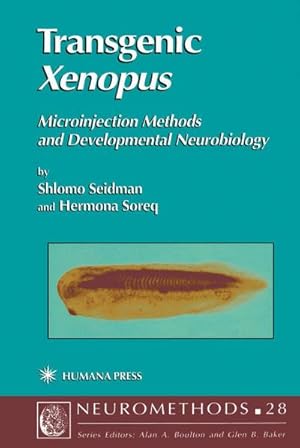
Transgenic Xenopus
Lingua: Inglese
Editore: Humana Press, Humana Press Nov 1996, 1996
ISBN 10: 0896034577 ISBN 13: 9780896034570
Da: buchversandmimpf2000, Emtmannsberg, BAYE, Germania
Valutazione del venditore 5 su 5 stelle
EUR 106,99
Spedizione EUR 60,00
Spedito da Germania a U.S.A.Quantità: 1 disponibili
Aggiungi al carrelloBuch. Condizione: Neu. This item is printed on demand - Print on Demand Titel. Neuware -The need to better understand the molecular, b- chemical, and cellular processes by which a developing neuronal system unfolds has led to the development of a unique set of experimental tools and organisms. Special emphasis was devoted to allowing us access, at the ear- est stages, to the genomic basis underlying the system¿s ultimate complexity, as exhibited once its structures are fully formed. Yet, nerve cells are anatomically, physiolo- cally, and biochemically diverse. The multitude of d- tinctly different routes for their development thus makes the developing nervous system especially intriguing for molecular neurobiologists. In particular, the demands of modern molecular neuroscience call for the establishment of efficient yet versatile systems for studying these c- plex processes. Transgenic embryos of the frog Xenopus laevis offer an excellent system for approaching neuroscientific issues. Insertion of foreign genes is performed simply, by mic- injection under binocular observation; hundreds of in vitro-fertilized embryos can be microinjected in one experiment. Embryos develop in tap water, at room t- perature, and within a few days become independent swimming tadpoles with fully functioning neuromus- lar systems. Being relatively small, these organisms are amenable to detailed analyses at the levels of mRNA, protein, and cell. Their rapid development permits the study of morphogenetic processes involved in early development, such as myogenesis and neural induction, as well as those involved in organogenesis and formation of the brain, the musculature, and the interconnections between them. Foreign DNA remains predominantly extrachromosomal. 224 pp. Englisch.
-

Transgenic Xenopus : Microinjection Methods and Developmental Neurobiology
Lingua: Inglese
Editore: Humana Press, Humana Press, 1996
ISBN 10: 0896034577 ISBN 13: 9780896034570
EUR 114,36
Spedizione EUR 62,74
Spedito da Germania a U.S.A.Quantità: 1 disponibili
Aggiungi al carrelloBuch. Condizione: Neu. nach der Bestellung gedruckt Neuware - Printed after ordering - The need to better understand the molecular, b- chemical, and cellular processes by which a developing neuronal system unfolds has led to the development of a unique set of experimental tools and organisms. Special emphasis was devoted to allowing us access, at the ear- est stages, to the genomic basis underlying the system's ultimate complexity, as exhibited once its structures are fully formed. Yet, nerve cells are anatomically, physiolo- cally, and biochemically diverse. The multitude of d- tinctly different routes for their development thus makes the developing nervous system especially intriguing for molecular neurobiologists. In particular, the demands of modern molecular neuroscience call for the establishment of efficient yet versatile systems for studying these c- plex processes. Transgenic embryos of the frog Xenopus laevis offer an excellent system for approaching neuroscientific issues. Insertion of foreign genes is performed simply, by mic- injection under binocular observation; hundreds of in vitro-fertilized embryos can be microinjected in one experiment. Embryos develop in tap water, at room t- perature, and within a few days become independent swimming tadpoles with fully functioning neuromus- lar systems. Being relatively small, these organisms are amenable to detailed analyses at the levels of mRNA, protein, and cell. Their rapid development permits the study of morphogenetic processes involved in early development, such as myogenesis and neural induction, as well as those involved in organogenesis and formation of the brain, the musculature, and the interconnections between them. Foreign DNA remains predominantly extrachromosomal.

