

Importo totale (1 articolo articoli):
Destinazione ordine:

9781118472897 - Reconstituting the Curriculum di Islam, M. R.; Zatzman, Gary M.; Islam, Jaan (21 risultati)
Vai alla pagina principale dei risultati di ricerca
Filtri di ricerca
Tipo di articolo
- Tutti i tipi di prodotto
- Libri (21)
- Riviste e Giornali (Nessun altro risultato corrispondente a questo perfezionamento)
- Fumetti (Nessun altro risultato corrispondente a questo perfezionamento)
- Spartiti (Nessun altro risultato corrispondente a questo perfezionamento)
- Arte, Stampe e Poster (Nessun altro risultato corrispondente a questo perfezionamento)
- Fotografie (Nessun altro risultato corrispondente a questo perfezionamento)
- Mappe (Nessun altro risultato corrispondente a questo perfezionamento)
- Manoscritti e Collezionismo cartaceo (Nessun altro risultato corrispondente a questo perfezionamento)
Condizioni Maggiori informazioni
- Nuovo (17)
- Come nuovo, Ottimo o Quasi ottimo (3)
- Molto buono o Buono (1)
- Discreto o Mediocre (Nessun altro risultato corrispondente a questo perfezionamento)
- Come descritto (Nessun altro risultato corrispondente a questo perfezionamento)
Legatura
- Tutte
- Rilegato (21)
- Brossura (Nessun altro risultato corrispondente a questo perfezionamento)
Ulteriori caratteristiche
- Prima ed. (4)
- Copia autograf. (Nessun altro risultato corrispondente a questo perfezionamento)
- Sovracoperta (Nessun altro risultato corrispondente a questo perfezionamento)
- Con foto (9)
- Non Print on Demand (21)
Lingua (1)
Prezzo
- Qualsiasi prezzo
- Inferiore a EUR 20 (Nessun altro risultato corrispondente a questo perfezionamento)
- EUR 20 a EUR 45 (Nessun altro risultato corrispondente a questo perfezionamento)
- Superiore a EUR 45
Spedizione gratuita
Paese del venditore
Valutazione venditore
-
hardcover. Condizione: Good. Connecting readers with great books since 1972! Used textbooks may not include companion materials such as access codes, etc. May have some wear or writing/highlighting. We ship orders daily and Customer Service is our top priority!
-
Reconstituting the Curriculum
Da: PBShop.store UK, Fairford, GLOS, Regno Unito
Valutazione del venditore 5 su 5 stelle

EUR 94,39
Spedizione EUR 6,81
Spedito da Regno Unito a U.S.A.Quantità: 15 disponibili
Aggiungi al carrelloHRD. Condizione: New. New Book. Shipped from UK. Established seller since 2000.
-

Reconstituting the Curriculum (Hardcover)
Lingua: Inglese
Editore: John Wiley & Sons Inc, New York, 2014
ISBN 10: 1118472896 ISBN 13: 9781118472897
Da: Grand Eagle Retail, Bensenville, IL, U.S.A.
Valutazione del venditore 5 su 5 stelle
Prima edizione
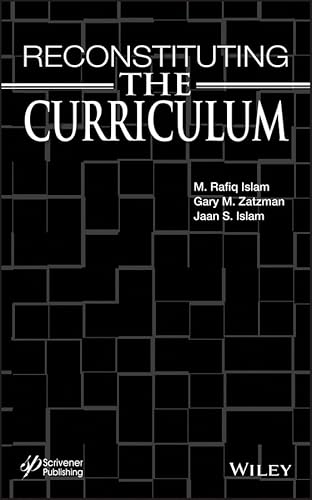
Hardcover. Condizione: new. Hardcover. Based on groundbreaking new ideas, this treatise signals a return to a rebuilding and reshaping of the curriculum as the primary tool for education This book presents a new definition of "curriculum" and what it should consist of, with a view toward creating a more ethical, educated, and thinking person. Rather than treating students as "products" for society, this approach returns to a view of the curriculum as a tool for educating students to reason through problems, be bold in creating new solutions, and contribute to a more vibrant, just world. The university curriculum introduced in the post-Renaissance era, dominated by doctrinal philosophy, is based on "learning" or "skill development," suitable for creating a "learned" society that would eventually serve the establishment. This curriculum has been promoted as the only form suitable for the modern education system. It has introduced a tremendous amount of tangible advancement in all fields of the structured education system. These tangible gains are often promoted as "knowledge." This has created confusion between education (acquiring knowledge) and learning, training or skill development. This book seeks to clarify the difference between these two divergent views of education. It has been shown that the current curriculum is not conducive to increasing a student's knowledge because it is based on consolidating preconceived ideas that have been either passed on from previous generations or gained through personal experience. In most cases, this mode of cognition will not create a pathway for gaining knowledge that brings one closer to discovery. The term "education," on the other hand, is always meant to be a process of "bringing forth" one's inherent qualities and unique traits, necessary and sufficient for increasing one's knowledge. This inspiring work presents a truly knowledge-based approach to education as an alternative to the current curriculum that is based on consolidating pre-conceived ideas. Shipping may be from multiple locations in the US or from the UK, depending on stock availability.
-

Reconstituting the Curriculum
Da: GreatBookPrices, Columbia, MD, U.S.A.
Valutazione del venditore 5 su 5 stelle
Condizione: New.
-
Reconstituting the Curriculum (eng)
Da: Brook Bookstore On Demand, Napoli, NA, Italia
Valutazione del venditore 3 su 5 stelle

EUR 94,33
Spedizione EUR 8,00
Spedito da Italia a U.S.A.Quantità: Più di 20 disponibili
Aggiungi al carrelloCondizione: new.
-

Reconstituting the Curriculum
Da: GreatBookPricesUK, Woodford Green, Regno Unito
Valutazione del venditore 5 su 5 stelle
EUR 94,38
Spedizione EUR 17,39
Spedito da Regno Unito a U.S.A.Quantità: Più di 20 disponibili
Aggiungi al carrelloCondizione: New.
-

Reconstituting the Curriculum
Da: GreatBookPricesUK, Woodford Green, Regno Unito
Valutazione del venditore 5 su 5 stelle
EUR 102,68
Spedizione EUR 17,39
Spedito da Regno Unito a U.S.A.Quantità: Più di 20 disponibili
Aggiungi al carrelloCondizione: As New. Unread book in perfect condition.
-

Reconstituting the Curriculum
Lingua: Inglese
Editore: John Wiley and Sons Inc, US, 2014
ISBN 10: 1118472896 ISBN 13: 9781118472897
Da: Rarewaves.com USA, London, LONDO, Regno Unito
Valutazione del venditore 5 su 5 stelle
EUR 122,98
Spedizione gratuita
Spedito da Regno Unito a U.S.A.Quantità: 11 disponibili
Aggiungi al carrelloHardback. Condizione: New. Based on groundbreaking new ideas, this treatise signals a return to a rebuilding and reshaping of the curriculum as the primary tool for education This book presents a new definition of "curriculum" and what it should consist of, with a view toward creating a more ethical, educated, and thinking person. Rather than treating students as "products" for society, this approach returns to a view of the curriculum as a tool for educating students to reason through problems, be bold in creating new solutions, and contribute to a more vibrant, just world. The university curriculum introduced in the post-Renaissance era, dominated by doctrinal philosophy, is based on "learning" or "skill development," suitable for creating a "learned" society that would eventually serve the establishment. This curriculum has been promoted as the only form suitable for the modern education system. It has introduced a tremendous amount of tangible advancement in all fields of the structured education system. These tangible gains are often promoted as "knowledge." This has created confusion between education (acquiring knowledge) and learning, training or skill development. This book seeks to clarify the difference between these two divergent views of education. It has been shown that the current curriculum is not conducive to increasing a student's knowledge because it is based on consolidating preconceived ideas that have been either passed on from previous generations or gained through personal experience. In most cases, this mode of cognition will not create a pathway for gaining knowledge that brings one closer to discovery. The term "education," on the other hand, is always meant to be a process of "bringing forth" one's inherent qualities and unique traits, necessary and sufficient for increasing one's knowledge.
-
Reconstituting the Curriculum
Da: Mispah books, Redhill, SURRE, Regno Unito
Valutazione del venditore 4 su 5 stelle

EUR 93,14
Spedizione EUR 28,98
Spedito da Regno Unito a U.S.A.Quantità: 1 disponibili
Aggiungi al carrelloHardcover. Condizione: Like New. LIKE NEW. SHIPS FROM MULTIPLE LOCATIONS. book.
-

Reconstituting the Curriculum
Da: GreatBookPrices, Columbia, MD, U.S.A.
Valutazione del venditore 5 su 5 stelle
Condizione: As New. Unread book in perfect condition.
-
Reconstituting the Curriculum
Lingua: Inglese
Editore: Wiley-Scrivener 2014-01-28, 2014
ISBN 10: 1118472896 ISBN 13: 9781118472897
Da: Chiron Media, Wallingford, Regno Unito
Valutazione del venditore 5 su 5 stelle
EUR 111,00
Spedizione EUR 17,96
Spedito da Regno Unito a U.S.A.Quantità: Più di 20 disponibili
Aggiungi al carrelloHardcover. Condizione: New.
-
EUR 127,75
Spedizione EUR 2,63
Spedito in U.S.A.Quantità: Più di 20 disponibili
Aggiungi al carrelloCondizione: New. Brand new! Please provide a physical shipping address.
-
Reconstituting the Curriculum
Da: Kennys Bookshop and Art Galleries Ltd., Galway, GY, Irlanda
Valutazione del venditore 5 su 5 stelle
Prima edizione
EUR 116,80
Spedizione EUR 10,50
Spedito da Irlanda a U.S.A.Quantità: 15 disponibili
Aggiungi al carrelloCondizione: New. This inspiring work presents a truly knowledge-based approach to education as an alternative to the current curriculum that is based on consolidating pre-conceived ideas. Num Pages: 536 pages, black & white tables, figures. BIC Classification: JNKC. Category: (P) Professional & Vocational. Dimension: 167 x 242 x 32. Weight in Grams: 874. . 2013. 1st Edition. Hardcover. . . . .
-
Reconstituting the Curriculum
Da: Majestic Books, Hounslow, Regno Unito
Valutazione del venditore 4 su 5 stelle
EUR 125,10
Spedizione EUR 7,54
Spedito da Regno Unito a U.S.A.Quantità: 3 disponibili
Aggiungi al carrelloCondizione: New. pp. 536.
-
Reconstituting the Curriculum
Da: THE SAINT BOOKSTORE, Southport, Regno Unito
Valutazione del venditore 5 su 5 stelle
EUR 112,64
Spedizione EUR 22,99
Spedito da Regno Unito a U.S.A.Quantità: Più di 20 disponibili
Aggiungi al carrelloHardback. Condizione: New. New copy - Usually dispatched within 4 working days.
-
Reconstituting the Curriculum
Da: Books Puddle, New York, NY, U.S.A.
Valutazione del venditore 4 su 5 stelle
Condizione: New. pp. 536.
-
Reconstituting the Curriculum
Da: Revaluation Books, Exeter, Regno Unito
Valutazione del venditore 5 su 5 stelle
EUR 132,62
Spedizione EUR 14,49
Spedito da Regno Unito a U.S.A.Quantità: 2 disponibili
Aggiungi al carrelloHardcover. Condizione: Brand New. 1st edition. 536 pages. 9.75x6.50x1.20 inches. In Stock.
-
Reconstituting the Curriculum
Da: Kennys Bookstore, Olney, MD, U.S.A.
Valutazione del venditore 5 su 5 stelle
Condizione: New. This inspiring work presents a truly knowledge-based approach to education as an alternative to the current curriculum that is based on consolidating pre-conceived ideas. Num Pages: 536 pages, black & white tables, figures. BIC Classification: JNKC. Category: (P) Professional & Vocational. Dimension: 167 x 242 x 32. Weight in Grams: 874. . 2013. 1st Edition. Hardcover. . . . . Books ship from the US and Ireland.
-

Reconstituting the Curriculum (Hardcover)
Lingua: Inglese
Editore: John Wiley & Sons Inc, New York, 2014
ISBN 10: 1118472896 ISBN 13: 9781118472897
Da: CitiRetail, Stevenage, Regno Unito
Valutazione del venditore 5 su 5 stelle
Prima edizione
EUR 115,21
Spedizione EUR 42,89
Spedito da Regno Unito a U.S.A.Quantità: 1 disponibili
Aggiungi al carrelloHardcover. Condizione: new. Hardcover. Based on groundbreaking new ideas, this treatise signals a return to a rebuilding and reshaping of the curriculum as the primary tool for education This book presents a new definition of "curriculum" and what it should consist of, with a view toward creating a more ethical, educated, and thinking person. Rather than treating students as "products" for society, this approach returns to a view of the curriculum as a tool for educating students to reason through problems, be bold in creating new solutions, and contribute to a more vibrant, just world. The university curriculum introduced in the post-Renaissance era, dominated by doctrinal philosophy, is based on "learning" or "skill development," suitable for creating a "learned" society that would eventually serve the establishment. This curriculum has been promoted as the only form suitable for the modern education system. It has introduced a tremendous amount of tangible advancement in all fields of the structured education system. These tangible gains are often promoted as "knowledge." This has created confusion between education (acquiring knowledge) and learning, training or skill development. This book seeks to clarify the difference between these two divergent views of education. It has been shown that the current curriculum is not conducive to increasing a student's knowledge because it is based on consolidating preconceived ideas that have been either passed on from previous generations or gained through personal experience. In most cases, this mode of cognition will not create a pathway for gaining knowledge that brings one closer to discovery. The term "education," on the other hand, is always meant to be a process of "bringing forth" one's inherent qualities and unique traits, necessary and sufficient for increasing one's knowledge. This inspiring work presents a truly knowledge-based approach to education as an alternative to the current curriculum that is based on consolidating pre-conceived ideas. Shipping may be from our UK warehouse or from our Australian or US warehouses, depending on stock availability.
-

Reconstituting the Curriculum
Lingua: Inglese
Editore: John Wiley and Sons Inc, US, 2014
ISBN 10: 1118472896 ISBN 13: 9781118472897
Da: Rarewaves.com UK, London, Regno Unito
Valutazione del venditore 5 su 5 stelle
EUR 115,48
Spedizione EUR 75,35
Spedito da Regno Unito a U.S.A.Quantità: 11 disponibili
Aggiungi al carrelloHardback. Condizione: New. Based on groundbreaking new ideas, this treatise signals a return to a rebuilding and reshaping of the curriculum as the primary tool for education This book presents a new definition of "curriculum" and what it should consist of, with a view toward creating a more ethical, educated, and thinking person. Rather than treating students as "products" for society, this approach returns to a view of the curriculum as a tool for educating students to reason through problems, be bold in creating new solutions, and contribute to a more vibrant, just world. The university curriculum introduced in the post-Renaissance era, dominated by doctrinal philosophy, is based on "learning" or "skill development," suitable for creating a "learned" society that would eventually serve the establishment. This curriculum has been promoted as the only form suitable for the modern education system. It has introduced a tremendous amount of tangible advancement in all fields of the structured education system. These tangible gains are often promoted as "knowledge." This has created confusion between education (acquiring knowledge) and learning, training or skill development. This book seeks to clarify the difference between these two divergent views of education. It has been shown that the current curriculum is not conducive to increasing a student's knowledge because it is based on consolidating preconceived ideas that have been either passed on from previous generations or gained through personal experience. In most cases, this mode of cognition will not create a pathway for gaining knowledge that brings one closer to discovery. The term "education," on the other hand, is always meant to be a process of "bringing forth" one's inherent qualities and unique traits, necessary and sufficient for increasing one's knowledge.
-

Reconstituting the Curriculum (Hardcover)
Lingua: Inglese
Editore: John Wiley & Sons Inc, New York, 2014
ISBN 10: 1118472896 ISBN 13: 9781118472897
Da: AussieBookSeller, Truganina, VIC, Australia
Valutazione del venditore 5 su 5 stelle
Prima edizione
EUR 173,44
Spedizione EUR 32,38
Spedito da Australia a U.S.A.Quantità: 1 disponibili
Aggiungi al carrelloHardcover. Condizione: new. Hardcover. Based on groundbreaking new ideas, this treatise signals a return to a rebuilding and reshaping of the curriculum as the primary tool for education This book presents a new definition of "curriculum" and what it should consist of, with a view toward creating a more ethical, educated, and thinking person. Rather than treating students as "products" for society, this approach returns to a view of the curriculum as a tool for educating students to reason through problems, be bold in creating new solutions, and contribute to a more vibrant, just world. The university curriculum introduced in the post-Renaissance era, dominated by doctrinal philosophy, is based on "learning" or "skill development," suitable for creating a "learned" society that would eventually serve the establishment. This curriculum has been promoted as the only form suitable for the modern education system. It has introduced a tremendous amount of tangible advancement in all fields of the structured education system. These tangible gains are often promoted as "knowledge." This has created confusion between education (acquiring knowledge) and learning, training or skill development. This book seeks to clarify the difference between these two divergent views of education. It has been shown that the current curriculum is not conducive to increasing a student's knowledge because it is based on consolidating preconceived ideas that have been either passed on from previous generations or gained through personal experience. In most cases, this mode of cognition will not create a pathway for gaining knowledge that brings one closer to discovery. The term "education," on the other hand, is always meant to be a process of "bringing forth" one's inherent qualities and unique traits, necessary and sufficient for increasing one's knowledge. This inspiring work presents a truly knowledge-based approach to education as an alternative to the current curriculum that is based on consolidating pre-conceived ideas. Shipping may be from our Sydney, NSW warehouse or from our UK or US warehouse, depending on stock availability.


