

Importo totale (1 articolo articoli):
Destinazione ordine:

9781250758224 - Geography of Risk: Epic Storms, Rising Seas, and the Cost of America's Coasts di Gaul, Gilbert M (19 risultati)
Vai alla pagina principale dei risultati di ricerca
Filtri di ricerca
Tipo di articolo
- Tutti i tipi di prodotto
- Libri (19)
- Riviste e Giornali (Nessun altro risultato corrispondente a questo perfezionamento)
- Fumetti (Nessun altro risultato corrispondente a questo perfezionamento)
- Spartiti (Nessun altro risultato corrispondente a questo perfezionamento)
- Arte, Stampe e Poster (Nessun altro risultato corrispondente a questo perfezionamento)
- Fotografie (Nessun altro risultato corrispondente a questo perfezionamento)
- Mappe (Nessun altro risultato corrispondente a questo perfezionamento)
- Manoscritti e Collezionismo cartaceo (Nessun altro risultato corrispondente a questo perfezionamento)
Condizioni Maggiori informazioni
- Nuovo (10)
- Come nuovo, Ottimo o Quasi ottimo (2)
- Molto buono o Buono (6)
- Discreto o Mediocre (Nessun altro risultato corrispondente a questo perfezionamento)
- Come descritto (1)
Legatura
- Tutte
- Rilegato (Nessun altro risultato corrispondente a questo perfezionamento)
- Brossura (19)
Ulteriori caratteristiche
- Prima ed. (Nessun altro risultato corrispondente a questo perfezionamento)
- Copia autograf. (Nessun altro risultato corrispondente a questo perfezionamento)
- Sovracoperta (1)
- Con foto (8)
- Non Print on Demand (17)
Lingua (1)
Spedizione gratuita
Paese del venditore
Valutazione venditore
-
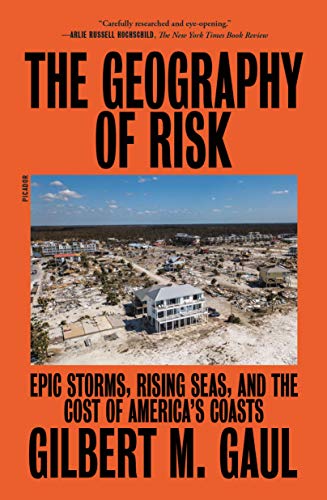
Geography of Risk
Lingua: Inglese
Editore: Picador Paper (edition Reprint), 2020
ISBN 10: 125075822X ISBN 13: 9781250758224
Da: BooksRun, Philadelphia, PA, U.S.A.
Valutazione del venditore 5 su 5 stelle

Paperback. Condizione: Very Good. Reprint. It's a well-cared-for item that has seen limited use. The item may show minor signs of wear. All the text is legible, with all pages included. It may have slight markings and/or highlighting.
-
The Geography of Risk : Epic Storms, Rising Seas, and the Cost of America's Coasts
Da: Better World Books, Mishawaka, IN, U.S.A.
Valutazione del venditore 5 su 5 stelle
Condizione: Good. Pages intact with minimal writing/highlighting. The binding may be loose and creased. Dust jackets/supplements are not included. Stock photo provided. Product includes identifying sticker. Better World Books: Buy Books. Do Good.
-
Geography of Risk
Da: World of Books (was SecondSale), Montgomery, IL, U.S.A.
Valutazione del venditore 5 su 5 stelle
Condizione: Good. Item in very good condition! Textbooks may not include supplemental items i.e. CDs, access codes etc.
-
Geography of Risk
Da: World of Books (was SecondSale), Montgomery, IL, U.S.A.
Valutazione del venditore 5 su 5 stelle
Condizione: Very Good. Item in very good condition! Textbooks may not include supplemental items i.e. CDs, access codes etc.
-
Condizione: Very Good. Great shape! Has a publisher remainder mark. paperback Used - Very Good 2020.
-
The Geography of Risk: Epic Storms, Rising Seas, and the Cost of America's Coasts
Da: BookOutlet, St. Catharines, ON, Canada
Valutazione del venditore 5 su 5 stelle
EUR 6,12
Spedizione EUR 2,76
Spedito da Canada a U.S.A.Quantità: Più di 20 disponibili
Aggiungi al carrelloPaperback. Condizione: New. Paperback. Publisher overstock, may contain remainder mark on edge.
-
Geography of Risk
Da: Books From California, Simi Valley, CA, U.S.A.
Valutazione del venditore 4 su 5 stelle

paperback. Condizione: Very Good.
-

Geography of Risk : Epic Storms, Rising Seas, and the Cost of America's Coasts
Da: GreatBookPrices, Columbia, MD, U.S.A.
Valutazione del venditore 5 su 5 stelle
Condizione: New.
-

The Geography of Risk: Epic Storms, Rising Seas, and the Cost of America's Coasts (Paperback or Softback)
Da: BargainBookStores, Grand Rapids, MI, U.S.A.
Valutazione del venditore 5 su 5 stelle
Paperback or Softback. Condizione: New. The Geography of Risk: Epic Storms, Rising Seas, and the Cost of America's Coasts. Book.
-

Geography of Risk : Epic Storms, Rising Seas, and the Cost of America's Coasts
Da: GreatBookPrices, Columbia, MD, U.S.A.
Valutazione del venditore 5 su 5 stelle
Condizione: As New. Unread book in perfect condition.
-
EUR 19,22
Spedizione gratuita
Spedito in U.S.A.Quantità: Più di 20 disponibili
Aggiungi al carrelloCondizione: New.
-
The Geography of Risk (Paperback)
Lingua: Inglese
Editore: St Martin's Press, New York, 2020
ISBN 10: 125075822X ISBN 13: 9781250758224
Da: Grand Eagle Retail, Bensenville, IL, U.S.A.
Valutazione del venditore 5 su 5 stelle
Paperback. Condizione: new. Paperback. This century has seen the costliest hurricanes in U.S. history--but who bears the brunt of these monster storms? Consider this: Five of the most expensive hurricanes in history have made landfall since 2005: Katrina ($160 billion), Ike ($40 billion), Sandy ($72 billion), Harvey ($125 billion), and Maria ($90 billion). With more property than ever in harm's way, and the planet and oceans warming dangerously, it won't be long before we see a $250 billion hurricane. Why? Because Americans have built $3 trillion worth of property in some of the riskiest places on earth: barrier islands and coastal floodplains. And they have been encouraged to do so by what Gilbert M. Gaul reveals in The Geography of Risk to be a confounding array of federal subsidies, tax breaks, low-interest loans, grants, and government flood insurance that shift the risk of life at the beach from private investors to public taxpayers, radically distorting common notions of risk. These federal incentives, Gaul argues, have resulted in one of the worst planning failures in American history, and the costs to taxpayers are reaching unsustainable levels. We have become responsible for a shocking array of coastal amenities: new roads, bridges, buildings, streetlights, tennis courts, marinas, gazebos, and even spoiled food after hurricanes. The Geography of Risk will forever change the way you think about the coasts, from the clash between economic interests and nature, to the heated politics of regulators and developers. Shipping may be from multiple locations in the US or from the UK, depending on stock availability.
-

The Geography of Risk: Epic Storms, Rising Seas, and the Cost of America's Coasts
Da: Book Grocer, Tullamarine, VIC, Australia
Valutazione del venditore 5 su 5 stelle
EUR 9,23
Spedizione EUR 25,45
Spedito da Australia a U.S.A.Quantità: 4 disponibili
Aggiungi al carrelloPaperback. Gilbert M Gaul, St Martin's Press. This century has seen the costliest hurricanes in U.S. history--but who bears the brunt of these monster storms? Consider this: Five of the most expensive hurricanes in history have made landfall since 2005: Katrina ($160 billion), Ike ($40 billion), Sandy ($72 billion), Harvey ($125 billion), and Maria ($90 billion). With more property than ever in harm's way, and the planet and oceans warming dangerously, it won't be long before we see a $250 billion hurricane. Why? Because Americans have built $3 trillion worth of property in some of the riskiest places on earth: barrier islands and coastal floodplains. And they have been encouraged to do so by what Gilbert M. Gaul reveals in The Geography of Risk to be a confounding array of federal subsidies, tax breaks, low-interest loans, grants, and government flood insurance that shift the risk of life at the beach from private investors to public taxpayers, radically distorting common notions of risk. These federal incentives, Gaul argues, have resulted in one of the worst planning failures in American history, and the costs to taxpayers are reaching unsustainable levels. We have become responsible for a shocking array of coastal amenities: new roads, bridges, buildings, streetlights, tennis courts, marinas, gazebos, and even spoiled food after hurricanes. The Geography of Risk will forever change the way you think about the coasts, from the clash between economic interests and nature, to the heated politics of regulators and developers.Gilbert M. Gaul has twice won the Pulitzer Prize and has been shortlisted for the Pulitzer four other times. For more than thirty-five years, he worked as an investigative journalist for The Washington Post, The Philadelphia Inquirer, and other newspapers. He has reported on non-profit organizations, the business of college sports, homeland security, the black market for prescription drugs, and problems in the Medicare program. His books include Giant Steps, Free Ride (with Neill A. Borowski), and Billion-Dollar Ball. He was a Nieman Fellow at Harvard University and a Ferris Fellow at Princeton University. Gaul lives in New Jersey. Paperback.
-

Geography of Risk : Epic Storms, Rising Seas, and the Cost of America's Coasts
Da: GreatBookPricesUK, Woodford Green, Regno Unito
Valutazione del venditore 5 su 5 stelle
EUR 22,85
Spedizione EUR 17,17
Spedito da Regno Unito a U.S.A.Quantità: Più di 20 disponibili
Aggiungi al carrelloCondizione: New.
-

Geography of Risk : Epic Storms, Rising Seas, and the Cost of America's Coasts
Da: GreatBookPricesUK, Woodford Green, Regno Unito
Valutazione del venditore 5 su 5 stelle
EUR 43,60
Spedizione EUR 17,17
Spedito da Regno Unito a U.S.A.Quantità: Più di 20 disponibili
Aggiungi al carrelloCondizione: As New. Unread book in perfect condition.
-

EUR 25,85
Spedizione EUR 48,99
Spedito da Germania a U.S.A.Quantità: Più di 20 disponibili
Aggiungi al carrelloCondizione: New. Über den AutorGilbert M. Gaul has twice won the Pulitzer Prize and has been shortlisted for the Pulitzer four other times. For more than thirty-five years, he worked as an investigative journalist for The Washington Post.
-

The Geography of Risk
Lingua: Inglese
Editore: St. Martins Press-3PL Nov 2020, 2020
ISBN 10: 125075822X ISBN 13: 9781250758224
EUR 30,65
Spedizione EUR 61,58
Spedito da Germania a U.S.A.Quantità: 2 disponibili
Aggiungi al carrelloTaschenbuch. Condizione: Neu. Neuware - This century has seen the costliest hurricanes in U.S. history-but who bears the brunt of these monster storms Consider this: Five of the most expensive hurricanes in history have made landfall since 2005: Katrina ($160 billion), Ike ($40 billion), Sandy ($72 billion), Harvey ($125 billion), and Maria ($90 billion). With more property than ever in harm's way, and the planet and oceans warming dangerously, it won't be long before we see a $250 billion hurricane. Why Because Americans have built $3 trillion worth of property in some of the riskiest places on earth: barrier islands and coastal floodplains. And they have been encouraged to do so by what Gilbert M. Gaul reveals in The Geography of Risk to be a confounding array of federal subsidies, tax breaks, low-interest loans, grants, and government flood insurance that shift the risk of life at the beach from private investors to public taxpayers, radically distorting common notions of risk.These federal incentives, Gaul argues, have resulted in one of the worst planning failures in American history, and the costs to taxpayers are reaching unsustainable levels. We have become responsible for a shocking array of coastal amenities: new roads, bridges, buildings, streetlights, tennis courts, marinas, gazebos, and even spoiled food after hurricanes. The Geography of Risk will forever change the way you think about the coasts, from the clash between economic interests and nature, to the heated politics of regulators and developers.
-
The Geography of Risk: Epic Storms, Rising Seas, and the Cost of America's Coasts
Da: THE SAINT BOOKSTORE, Southport, Regno Unito
Valutazione del venditore 5 su 5 stelle
EUR 22,90
Spedizione EUR 15,42
Spedito da Regno Unito a U.S.A.Quantità: Più di 20 disponibili
Aggiungi al carrelloPaperback / softback. Condizione: New. This item is printed on demand. New copy - Usually dispatched within 5-9 working days.
-
The Geography of Risk (Paperback)
Lingua: Inglese
Editore: St Martin's Press, New York, 2020
ISBN 10: 125075822X ISBN 13: 9781250758224
Da: CitiRetail, Stevenage, Regno Unito
Valutazione del venditore 5 su 5 stelle
EUR 25,93
Spedizione EUR 42,36
Spedito da Regno Unito a U.S.A.Quantità: 1 disponibili
Aggiungi al carrelloPaperback. Condizione: new. Paperback. This century has seen the costliest hurricanes in U.S. history--but who bears the brunt of these monster storms? Consider this: Five of the most expensive hurricanes in history have made landfall since 2005: Katrina ($160 billion), Ike ($40 billion), Sandy ($72 billion), Harvey ($125 billion), and Maria ($90 billion). With more property than ever in harm's way, and the planet and oceans warming dangerously, it won't be long before we see a $250 billion hurricane. Why? Because Americans have built $3 trillion worth of property in some of the riskiest places on earth: barrier islands and coastal floodplains. And they have been encouraged to do so by what Gilbert M. Gaul reveals in The Geography of Risk to be a confounding array of federal subsidies, tax breaks, low-interest loans, grants, and government flood insurance that shift the risk of life at the beach from private investors to public taxpayers, radically distorting common notions of risk. These federal incentives, Gaul argues, have resulted in one of the worst planning failures in American history, and the costs to taxpayers are reaching unsustainable levels. We have become responsible for a shocking array of coastal amenities: new roads, bridges, buildings, streetlights, tennis courts, marinas, gazebos, and even spoiled food after hurricanes. The Geography of Risk will forever change the way you think about the coasts, from the clash between economic interests and nature, to the heated politics of regulators and developers. This item is printed on demand. Shipping may be from our UK warehouse or from our Australian or US warehouses, depending on stock availability.

