

Importo totale (1 articolo articoli):
Destinazione ordine:

9781461295587 - Advances in Soil Science: Volume 2 di Bragg, E. (12 risultati)
Vai alla pagina principale dei risultati di ricerca
Filtri di ricerca
Tipo di articolo
- Tutti i tipi di prodotto
- Libri (12)
- Riviste e Giornali (Nessun altro risultato corrispondente a questo perfezionamento)
- Fumetti (Nessun altro risultato corrispondente a questo perfezionamento)
- Spartiti (Nessun altro risultato corrispondente a questo perfezionamento)
- Arte, Stampe e Poster (Nessun altro risultato corrispondente a questo perfezionamento)
- Fotografie (Nessun altro risultato corrispondente a questo perfezionamento)
- Mappe (Nessun altro risultato corrispondente a questo perfezionamento)
- Manoscritti e Collezionismo cartaceo (Nessun altro risultato corrispondente a questo perfezionamento)
Condizioni Maggiori informazioni
- Nuovo (11)
- Come nuovo, Ottimo o Quasi ottimo (1)
- Molto buono o Buono (Nessun altro risultato corrispondente a questo perfezionamento)
- Discreto o Mediocre (Nessun altro risultato corrispondente a questo perfezionamento)
- Come descritto (Nessun altro risultato corrispondente a questo perfezionamento)
Legatura
- Tutte
- Rilegato (Nessun altro risultato corrispondente a questo perfezionamento)
- Brossura (12)
Ulteriori caratteristiche
- Prima ed. (Nessun altro risultato corrispondente a questo perfezionamento)
- Copia autograf. (Nessun altro risultato corrispondente a questo perfezionamento)
- Sovracoperta (Nessun altro risultato corrispondente a questo perfezionamento)
- Con foto (5)
- Non Print on Demand (6)
Lingua (1)
Prezzo
- Qualsiasi prezzo
- Inferiore a EUR 20 (Nessun altro risultato corrispondente a questo perfezionamento)
- EUR 20 a EUR 45 (Nessun altro risultato corrispondente a questo perfezionamento)
- Superiore a EUR 45
Spedizione gratuita
Paese del venditore
Valutazione venditore
-

Advances in Soil Science (Paperback)
Lingua: Inglese
Editore: Springer-Verlag New York Inc., New York, NY, 2011
ISBN 10: 1461295580 ISBN 13: 9781461295587
Da: Grand Eagle Retail, Bensenville, IL, U.S.A.
Valutazione del venditore 5 su 5 stelle

Paperback. Condizione: new. Paperback. The world population in 1930 was 2 billion. It reached 3 billion in 1960, stands at 4. 6 billion today, and is expected to reach 6 billion by the end of the century. The food and fiber needs of such a rapidly increasing population are enormous. One of the most basic resources, perhaps the most basic of all, for meeting these needs is the soil. There is an urgent need to improve and protect this resource on which the future of mankind directly depends. We must not only learn how to use the soil to furnish our immediate needs, but also ensure that the ability of the soil to sustain food production in the future is unimpaired. This is indeed a mammoth task; a 1977 United Nations survey reported that almost one-fifth of the world's is now being steadily degraded. The diversity of soil makes it cropland necessary for research to be conducted in many locations. There are basic principles, however, that are universal. This, Advances in Soil Sciences, presents clear and concise reviews in all areas of soil science for everyone interested in this basic resource and man's influence on it. The purpose of the series is to provide a forum for leading scientists to analyze and summarize the available scientific information on a subject, assessing its importance and identifying additional research needs. But most importantly, the contributors will develop principles that have practical applications to both developing and developed agricultures. We must not only learn how to use the soil to furnish our immediate needs, but also ensure that the ability of the soil to sustain food production in the future is unimpaired. This, Advances in Soil Sciences, presents clear and concise reviews in all areas of soil science for everyone interested in this basic resource and man's influence on it. Shipping may be from multiple locations in the US or from the UK, depending on stock availability.
-
Advances in Soil Science: Vol 2
Da: Revaluation Books, Exeter, Regno Unito
Valutazione del venditore 5 su 5 stelle
EUR 77,85
Spedizione EUR 11,58
Spedito da Regno Unito a U.S.A.Quantità: 2 disponibili
Aggiungi al carrelloPaperback. Condizione: Brand New. 235 pages. 9.00x6.25x0.75 inches. In Stock.
-
Advances in Soil Science: Volume 2
Da: Ria Christie Collections, Uxbridge, Regno Unito
Valutazione del venditore 5 su 5 stelle
EUR 60,58
Spedizione EUR 13,87
Spedito da Regno Unito a U.S.A.Quantità: Più di 20 disponibili
Aggiungi al carrelloCondizione: New. In.
-
EUR 50,25
Spedizione EUR 70,00
Spedito da Germania a U.S.A.Quantità: 5 disponibili
Aggiungi al carrelloTaschenbuch. Condizione: Neu. Advances in Soil Science | Volume 2 | Taschenbuch | 235 S. | Englisch | 2011 | Springer | EAN 9781461295587 | Verantwortliche Person für die EU: Springer Verlag GmbH, Tiergartenstr. 17, 69121 Heidelberg, juergen[dot]hartmann[at]springer[dot]com | Anbieter: preigu.
-

EUR 58,39
Spedizione EUR 61,91
Spedito da Germania a U.S.A.Quantità: 1 disponibili
Aggiungi al carrelloTaschenbuch. Condizione: Neu. Druck auf Anfrage Neuware - Printed after ordering - The world population in 1930 was 2 billion. It reached 3 billion in 1960, stands at 4. 6 billion today, and is expected to reach 6 billion by the end of the century. The food and fiber needs of such a rapidly increasing population are enormous. One of the most basic resources, perhaps the most basic of all, for meeting these needs is the soil. There is an urgent need to improve and protect this resource on which the future of mankind directly depends. We must not only learn how to use the soil to furnish our immediate needs, but also ensure that the ability of the soil to sustain food production in the future is unimpaired. This is indeed a mammoth task; a 1977 United Nations survey reported that almost one-fifth of the world's is now being steadily degraded. The diversity of soil makes it cropland necessary for research to be conducted in many locations. There are basic principles, however, that are universal. This, Advances in Soil Sciences, presents clear and concise reviews in all areas of soil science for everyone interested in this basic resource and man's influence on it. The purpose of the series is to provide a forum for leading scientists to analyze and summarize the available scientific information on a subject, assessing its importance and identifying additional research needs. But most importantly, the contributors will develop principles that have practical applications to both developing and developed agricultures.
-
Advances in Soil Science: Volume 2 (Advances in Soil Science, 2)
Da: Mispah books, Redhill, SURRE, Regno Unito
Valutazione del venditore 4 su 5 stelle

EUR 96,60
Spedizione EUR 28,95
Spedito da Regno Unito a U.S.A.Quantità: 1 disponibili
Aggiungi al carrelloPaperback. Condizione: Like New. Like New. book.
-
Advances in Soil Science (eng)
Da: Brook Bookstore On Demand, Napoli, NA, Italia
Valutazione del venditore 3 su 5 stelle

EUR 46,22
Spedizione EUR 5,50
Spedito da Italia a U.S.A.Quantità: Più di 20 disponibili
Aggiungi al carrelloCondizione: new. Questo è un articolo print on demand.
-
EUR 48,37
Spedizione EUR 48,99
Spedito da Germania a U.S.A.Quantità: Più di 20 disponibili
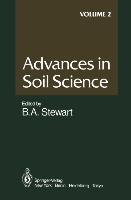
Aggiungi al carrelloCondizione: New. Dieser Artikel ist ein Print on Demand Artikel und wird nach Ihrer Bestellung fuer Sie gedruckt. The world population in 1930 was 2 billion. It reached 3 billion in 1960, stands at 4. 6 billion today, and is expected to reach 6 billion by the end of the century. The food and fiber needs of such a rapidly increasing population are enormous. One of the m.
-
Advances in Soil Science (Paperback)
Lingua: Inglese
Editore: Springer-Verlag New York Inc., New York, NY, 2011
ISBN 10: 1461295580 ISBN 13: 9781461295587
Da: CitiRetail, Stevenage, Regno Unito
Valutazione del venditore 5 su 5 stelle
EUR 66,17
Spedizione EUR 42,84
Spedito da Regno Unito a U.S.A.Quantità: 1 disponibili
Aggiungi al carrelloPaperback. Condizione: new. Paperback. The world population in 1930 was 2 billion. It reached 3 billion in 1960, stands at 4. 6 billion today, and is expected to reach 6 billion by the end of the century. The food and fiber needs of such a rapidly increasing population are enormous. One of the most basic resources, perhaps the most basic of all, for meeting these needs is the soil. There is an urgent need to improve and protect this resource on which the future of mankind directly depends. We must not only learn how to use the soil to furnish our immediate needs, but also ensure that the ability of the soil to sustain food production in the future is unimpaired. This is indeed a mammoth task; a 1977 United Nations survey reported that almost one-fifth of the world's is now being steadily degraded. The diversity of soil makes it cropland necessary for research to be conducted in many locations. There are basic principles, however, that are universal. This, Advances in Soil Sciences, presents clear and concise reviews in all areas of soil science for everyone interested in this basic resource and man's influence on it. The purpose of the series is to provide a forum for leading scientists to analyze and summarize the available scientific information on a subject, assessing its importance and identifying additional research needs. But most importantly, the contributors will develop principles that have practical applications to both developing and developed agricultures. We must not only learn how to use the soil to furnish our immediate needs, but also ensure that the ability of the soil to sustain food production in the future is unimpaired. This, Advances in Soil Sciences, presents clear and concise reviews in all areas of soil science for everyone interested in this basic resource and man's influence on it. This item is printed on demand. Shipping may be from our UK warehouse or from our Australian or US warehouses, depending on stock availability.
-
Advances in Soil Science (Paperback)
Lingua: Inglese
Editore: Springer-Verlag New York Inc., New York, NY, 2011
ISBN 10: 1461295580 ISBN 13: 9781461295587
Da: AussieBookSeller, Truganina, VIC, Australia
Valutazione del venditore 5 su 5 stelle
EUR 87,11
Spedizione EUR 32,11
Spedito da Australia a U.S.A.Quantità: 1 disponibili
Aggiungi al carrelloPaperback. Condizione: new. Paperback. The world population in 1930 was 2 billion. It reached 3 billion in 1960, stands at 4. 6 billion today, and is expected to reach 6 billion by the end of the century. The food and fiber needs of such a rapidly increasing population are enormous. One of the most basic resources, perhaps the most basic of all, for meeting these needs is the soil. There is an urgent need to improve and protect this resource on which the future of mankind directly depends. We must not only learn how to use the soil to furnish our immediate needs, but also ensure that the ability of the soil to sustain food production in the future is unimpaired. This is indeed a mammoth task; a 1977 United Nations survey reported that almost one-fifth of the world's is now being steadily degraded. The diversity of soil makes it cropland necessary for research to be conducted in many locations. There are basic principles, however, that are universal. This, Advances in Soil Sciences, presents clear and concise reviews in all areas of soil science for everyone interested in this basic resource and man's influence on it. The purpose of the series is to provide a forum for leading scientists to analyze and summarize the available scientific information on a subject, assessing its importance and identifying additional research needs. But most importantly, the contributors will develop principles that have practical applications to both developing and developed agricultures. We must not only learn how to use the soil to furnish our immediate needs, but also ensure that the ability of the soil to sustain food production in the future is unimpaired. This, Advances in Soil Sciences, presents clear and concise reviews in all areas of soil science for everyone interested in this basic resource and man's influence on it. This item is printed on demand. Shipping may be from our Sydney, NSW warehouse or from our UK or US warehouse, depending on stock availability.
-

Advances in Soil Science
Lingua: Inglese
Editore: Springer, Springer Okt 2011, 2011
ISBN 10: 1461295580 ISBN 13: 9781461295587
Da: BuchWeltWeit Ludwig Meier e.K., Bergisch Gladbach, Germania
Valutazione del venditore 5 su 5 stelle
EUR 53,49
Spedizione EUR 23,00
Spedito da Germania a U.S.A.Quantità: 2 disponibili
Aggiungi al carrelloTaschenbuch. Condizione: Neu. This item is printed on demand - it takes 3-4 days longer - Neuware -The world population in 1930 was 2 billion. It reached 3 billion in 1960, stands at 4. 6 billion today, and is expected to reach 6 billion by the end of the century. The food and fiber needs of such a rapidly increasing population are enormous. One of the most basic resources, perhaps the most basic of all, for meeting these needs is the soil. There is an urgent need to improve and protect this resource on which the future of mankind directly depends. We must not only learn how to use the soil to furnish our immediate needs, but also ensure that the ability of the soil to sustain food production in the future is unimpaired. This is indeed a mammoth task; a 1977 United Nations survey reported that almost one-fifth of the world's is now being steadily degraded. The diversity of soil makes it cropland necessary for research to be conducted in many locations. There are basic principles, however, that are universal. This, Advances in Soil Sciences, presents clear and concise reviews in all areas of soil science for everyone interested in this basic resource and man's influence on it. The purpose of the series is to provide a forum for leading scientists to analyze and summarize the available scientific information on a subject, assessing its importance and identifying additional research needs. But most importantly, the contributors will develop principles that have practical applications to both developing and developed agricultures. 248 pp. Englisch.
-

Advances in Soil Science
Lingua: Inglese
Editore: Springer, Springer US Okt 2011, 2011
ISBN 10: 1461295580 ISBN 13: 9781461295587
Da: buchversandmimpf2000, Emtmannsberg, BAYE, Germania
Valutazione del venditore 5 su 5 stelle
EUR 53,49
Spedizione EUR 60,00
Spedito da Germania a U.S.A.Quantità: 1 disponibili
Aggiungi al carrelloTaschenbuch. Condizione: Neu. This item is printed on demand - Print on Demand Titel. Neuware -The world population in 1930 was 2 billion. It reached 3 billion in 1960, stands at 4. 6 billion today, and is expected to reach 6 billion by the end of the century. The food and fiber needs of such a rapidly increasing population are enormous. One of the most basic resources, perhaps the most basic of all, for meeting these needs is the soil. There is an urgent need to improve and protect this resource on which the future of mankind directly depends. We must not only learn how to use the soil to furnish our immediate needs, but also ensure that the ability of the soil to sustain food production in the future is unimpaired. This is indeed a mammoth task; a 1977 United Nations survey reported that almost one-fifth of the world's is now being steadily degraded. The diversity of soil makes it cropland necessary for research to be conducted in many locations. There are basic principles, however, that are universal. This, Advances in Soil Sciences, presents clear and concise reviews in all areas of soil science for everyone interested in this basic resource and man's influence on it. The purpose of the series is to provide a forum for leading scientists to analyze and summarize the available scientific information on a subject, assessing its importance and identifying additional research needs. But most importantly, the contributors will develop principles that have practical applications to both developing and developed agricultures.Springer-Verlag KG, Sachsenplatz 4-6, 1201 Wien 248 pp. Englisch.


