

Importo totale (1 articolo articoli):
Destinazione ordine:

9781461366423 - Chemical Carcinogenesis 2: Modulating Factors (10 risultati)
Vai alla pagina principale dei risultati di ricerca
Filtri di ricerca
Tipo di articolo
- Tutti i tipi di prodotto
- Libri (10)
- Riviste e Giornali (Nessun altro risultato corrispondente a questo perfezionamento)
- Fumetti (Nessun altro risultato corrispondente a questo perfezionamento)
- Spartiti (Nessun altro risultato corrispondente a questo perfezionamento)
- Arte, Stampe e Poster (Nessun altro risultato corrispondente a questo perfezionamento)
- Fotografie (Nessun altro risultato corrispondente a questo perfezionamento)
- Mappe (Nessun altro risultato corrispondente a questo perfezionamento)
- Manoscritti e Collezionismo cartaceo (Nessun altro risultato corrispondente a questo perfezionamento)
Condizioni Maggiori informazioni
- Nuovo (9)
- Come nuovo, Ottimo o Quasi ottimo (1)
- Molto buono o Buono (Nessun altro risultato corrispondente a questo perfezionamento)
- Discreto o Mediocre (Nessun altro risultato corrispondente a questo perfezionamento)
- Come descritto (Nessun altro risultato corrispondente a questo perfezionamento)
Legatura
- Tutte
- Rilegato (Nessun altro risultato corrispondente a questo perfezionamento)
- Brossura (10)
Ulteriori caratteristiche
- Prima ed. (Nessun altro risultato corrispondente a questo perfezionamento)
- Copia autograf. (Nessun altro risultato corrispondente a questo perfezionamento)
- Sovracoperta (Nessun altro risultato corrispondente a questo perfezionamento)
- Con foto (4)
- Non Print on Demand (4)
Lingua (1)
Prezzo
- Qualsiasi prezzo
- Inferiore a EUR 20 (Nessun altro risultato corrispondente a questo perfezionamento)
- EUR 20 a EUR 45 (Nessun altro risultato corrispondente a questo perfezionamento)
- Superiore a EUR 45
Spedizione gratuita
- Spedizione gratuita in U.S.A. (Nessun altro risultato corrispondente a questo perfezionamento)
Paese del venditore
Valutazione venditore
-

Chemical Carcinogenesis 2
Da: Books Puddle, New York, NY, U.S.A.
Valutazione del venditore 4 su 5 stelle

Condizione: New. pp. xii + 653.
-
Chemical Carcinogenesis 2: Modulating Factors
Da: Revaluation Books, Exeter, Regno Unito
Valutazione del venditore 5 su 5 stelle

EUR 95,70
Spedizione EUR 23,15
Spedito da Regno Unito a U.S.A.Quantità: 1 disponibili
Aggiungi al carrelloPaperback. Condizione: Brand New. 653 pages. 9.61x6.14x1.51 inches. In Stock.
-
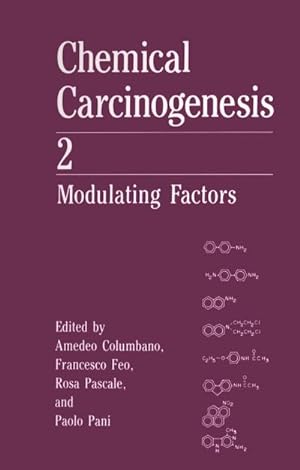
Chemical Carcinogenesis 2 : Modulating Factors
Lingua: Inglese
Editore: Springer, Chapman And Hall/CRC, 2012
ISBN 10: 1461366429 ISBN 13: 9781461366423
EUR 61,89
Spedizione EUR 65,20
Spedito da Germania a U.S.A.Quantità: 1 disponibili
Aggiungi al carrelloTaschenbuch. Condizione: Neu. Druck auf Anfrage Neuware - Printed after ordering - 'chemical carcinogenesis' is the general title of the series of international meetings which are held, biannually, in sardinia (Italy) since 1981. Despite the generality of the title, the main effort of the scientific Committee has been to pursue a coherent line around one of the most distinguishing features of carcinogenesis: the 'multifasic' development of the process. Given that many chemical compounds are known to cause 'experimental cancer', many questions still remain unresolved or are given too simplistic answers. The very first question concerning the interaction between the chemical carcinogen and the molecular target in the cell is a debatable one despite the overwhelming literature in this field. It is certain that chemical carcinogens are toxic to cells and cause DNA damage: however it is still an open question as to how to relate these changes to the different stages of carcinogenesis including initiation. We have not to forget that 1/3 to 2/3 of the average life time of a given species elapses between the experimental administration of the carcinogen and the appearance of 'cancer'. The experimental manipulation of carcinogenesis through the use of 'adequate biological models' has not simplified the problems about cancer, but it has led us to face the complexity of otherwise elementary biological properties, cell proliferation and differentiation. The understanding of this biological complexity is not just theoretical, but it may give us those adequate conceptual tools to approach 'cancer' also from a medical point of view.
-
Chemical Carcinogenesis 2: Modulating Factors
Da: Mispah books, Redhill, SURRE, Regno Unito
Valutazione del venditore 4 su 5 stelle
EUR 118,04
Spedizione EUR 28,94
Spedito da Regno Unito a U.S.A.Quantità: 1 disponibili
Aggiungi al carrelloPaperback. Condizione: Like New. LIKE NEW. SHIPS FROM MULTIPLE LOCATIONS. book.
-
Chemical Carcinogenesis 2 (eng)
Da: Brook Bookstore On Demand, Napoli, NA, Italia
Valutazione del venditore 3 su 5 stelle

EUR 46,22
Spedizione EUR 13,50
Spedito da Italia a U.S.A.Quantità: Più di 20 disponibili
Aggiungi al carrelloCondizione: new. Questo è un articolo print on demand.
-
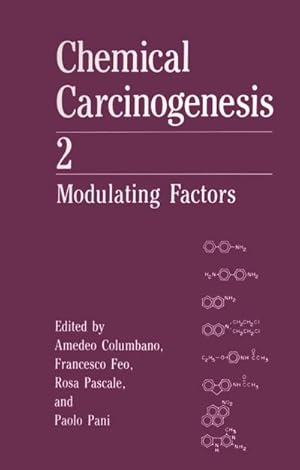
Chemical Carcinogenesis 2
Da: BuchWeltWeit Ludwig Meier e.K., Bergisch Gladbach, Germania
Valutazione del venditore 5 su 5 stelle
EUR 53,49
Spedizione EUR 23,00
Spedito da Germania a U.S.A.Quantità: 2 disponibili
Aggiungi al carrelloTaschenbuch. Condizione: Neu. This item is printed on demand - it takes 3-4 days longer - Neuware -'chemical carcinogenesis' is the general title of the series of international meetings which are held, biannually, in sardinia (Italy) since 1981. Despite the generality of the title, the main effort of the scientific Committee has been to pursue a coherent line around one of the most distinguishing features of carcinogenesis: the 'multifasic' development of the process. Given that many chemical compounds are known to cause 'experimental cancer', many questions still remain unresolved or are given too simplistic answers. The very first question concerning the interaction between the chemical carcinogen and the molecular target in the cell is a debatable one despite the overwhelming literature in this field. It is certain that chemical carcinogens are toxic to cells and cause DNA damage: however it is still an open question as to how to relate these changes to the different stages of carcinogenesis including initiation. We have not to forget that 1/3 to 2/3 of the average life time of a given species elapses between the experimental administration of the carcinogen and the appearance of 'cancer'. The experimental manipulation of carcinogenesis through the use of 'adequate biological models' has not simplified the problems about cancer, but it has led us to face the complexity of otherwise elementary biological properties, cell proliferation and differentiation. The understanding of this biological complexity is not just theoretical, but it may give us those adequate conceptual tools to approach 'cancer' also from a medical point of view. 668 pp. Englisch.
-

EUR 48,37
Spedizione EUR 48,99
Spedito da Germania a U.S.A.Quantità: Più di 20 disponibili
Aggiungi al carrelloCondizione: New. Dieser Artikel ist ein Print on Demand Artikel und wird nach Ihrer Bestellung fuer Sie gedruckt. chemical carcinogenesis is the general title of the series of international meetings which are held, biannually, in sardinia (Italy) since 1981. Despite the generality of the title, the main effort of the scientific Committee has been to pursue a coherent.
-
Chemical Carcinogenesis 2
Da: Majestic Books, Hounslow, Regno Unito
Valutazione del venditore 4 su 5 stelle
EUR 99,47
Spedizione EUR 7,52
Spedito da Regno Unito a U.S.A.Quantità: 4 disponibili
Aggiungi al carrelloCondizione: New. Print on Demand pp. xii + 653.
-
Chemical Carcinogenesis 2
Da: Biblios, Frankfurt am main, HESSE, Germania
Valutazione del venditore 4 su 5 stelle
EUR 101,51
Spedizione EUR 9,95
Spedito da Germania a U.S.A.Quantità: 4 disponibili
Aggiungi al carrelloCondizione: New. PRINT ON DEMAND pp. xii + 653.
-

Chemical Carcinogenesis 2
Lingua: Inglese
Editore: Springer, Chapman And Hall/CRC Nov 2012, 2012
ISBN 10: 1461366429 ISBN 13: 9781461366423
Da: buchversandmimpf2000, Emtmannsberg, BAYE, Germania
Valutazione del venditore 5 su 5 stelle
EUR 53,49
Spedizione EUR 60,00
Spedito da Germania a U.S.A.Quantità: 1 disponibili
Aggiungi al carrelloTaschenbuch. Condizione: Neu. This item is printed on demand - Print on Demand Titel. Neuware -'chemical carcinogenesis' is the general title of the series of international meetings which are held, biannually, in sardinia (Italy) since 1981. Despite the generality of the title, the main effort of the scientific Committee has been to pursue a coherent line around one of the most distinguishing features of carcinogenesis: the 'multifasic' development of the process. Given that many chemical compounds are known to cause 'experimental cancer', many questions still remain unresolved or are given too simplistic answers. The very first question concerning the interaction between the chemical carcinogen and the molecular target in the cell is a debatable one despite the overwhelming literature in this field. It is certain that chemical carcinogens are toxic to cells and cause DNA damage: however it is still an open question as to how to relate these changes to the different stages of carcinogenesis including initiation. We have not to forget that 1/3 to 2/3 of the average life time of a given species elapses between the experimental administration of the carcinogen and the appearance of 'cancer'. The experimental manipulation of carcinogenesis through the use of 'adequate biological models' has not simplified the problems about cancer, but it has led us to face the complexity of otherwise elementary biological properties, cell proliferation and differentiation. The understanding of this biological complexity is not just theoretical, but it may give us those adequate conceptual tools to approach 'cancer' also from a medical point of view.Springer-Verlag KG, Sachsenplatz 4-6, 1201 Wien 668 pp. Englisch.


