

Importo totale (1 articolo articoli):
Destinazione ordine:

9781461419839 - Risk Regulation in Europe: Assessing the Application of the Precautionary Principle: 3 di Tosun, Jale (11 risultati)
Vai alla pagina principale dei risultati di ricerca
Filtri di ricerca
Tipo di articolo
- Tutti i tipi di prodotto
- Libri (11)
- Riviste e Giornali (Nessun altro risultato corrispondente a questo perfezionamento)
- Fumetti (Nessun altro risultato corrispondente a questo perfezionamento)
- Spartiti (Nessun altro risultato corrispondente a questo perfezionamento)
- Arte, Stampe e Poster (Nessun altro risultato corrispondente a questo perfezionamento)
- Fotografie (Nessun altro risultato corrispondente a questo perfezionamento)
- Mappe (Nessun altro risultato corrispondente a questo perfezionamento)
- Manoscritti e Collezionismo cartaceo (Nessun altro risultato corrispondente a questo perfezionamento)
Condizioni Maggiori informazioni
- Nuovo (9)
- Come nuovo, Ottimo o Quasi ottimo (2)
- Molto buono o Buono (Nessun altro risultato corrispondente a questo perfezionamento)
- Discreto o Mediocre (Nessun altro risultato corrispondente a questo perfezionamento)
- Come descritto (Nessun altro risultato corrispondente a questo perfezionamento)
Legatura
- Tutte
- Rilegato (Nessun altro risultato corrispondente a questo perfezionamento)
- Brossura (8)
Ulteriori caratteristiche
- Prima ed. (Nessun altro risultato corrispondente a questo perfezionamento)
- Copia autograf. (Nessun altro risultato corrispondente a questo perfezionamento)
- Sovracoperta (Nessun altro risultato corrispondente a questo perfezionamento)
- Con foto (5)
- Non Print on Demand (8)
Lingua (1)
Prezzo
- Qualsiasi prezzo
- Inferiore a EUR 20 (Nessun altro risultato corrispondente a questo perfezionamento)
- EUR 20 a EUR 45
- Superiore a EUR 45
Spedizione gratuita
- Spedizione gratuita in U.S.A. (Nessun altro risultato corrispondente a questo perfezionamento)
Paese del venditore
Valutazione venditore
-

Risk Regulation in Europe: Assessing the Application of the Precautionary Principle (SpringerBriefs in Political Science)
Libro 6 di 65: SpringerBriefs in Political ScienceDa: Revaluation Books, Exeter, Regno Unito
Valutazione del venditore 5 su 5 stelle

EUR 69,19
Spedizione EUR 11,52
Spedito da Regno Unito a U.S.A.Quantità: 2 disponibili
Aggiungi al carrelloPaperback. Condizione: Brand New. 100 pages. 9.25x6.25x0.25 inches. In Stock.
-
Risk Regulation in Europe: Assessing the Application of the Precautionary Principle (SpringerBriefs in Political Science, 3)
Libro 6 di 65: SpringerBriefs in Political ScienceDa: Ria Christie Collections, Uxbridge, Regno Unito
Valutazione del venditore 5 su 5 stelle
EUR 56,97
Spedizione EUR 13,81
Spedito da Regno Unito a U.S.A.Quantità: Più di 20 disponibili
Aggiungi al carrelloCondizione: New. In.
-

Risk Regulation in Europe : Assessing the Application of the Precautionary Principle
Libro 6 di 65: SpringerBriefs in Political ScienceLingua: Inglese
Editore: Springer New York, Springer US, 2012
ISBN 10: 1461419832 ISBN 13: 9781461419839
EUR 57,65
Spedizione EUR 60,95
Spedito da Germania a U.S.A.Quantità: 1 disponibili
Aggiungi al carrelloTaschenbuch. Condizione: Neu. Druck auf Anfrage Neuware - Printed after ordering - The publication aims to familiarize students of public policy with the precautionary principle, which plays a vital role in the European Union's approach toward regulating risks. The precautionary principle contends that policy makers should refrain from actions having a suspected risk of causing harm to the public and/or the environment. However, the precautionary principle only provides guidance to policy makers but does not prescribe specific policy responses. Therefore, there should be variation in the way the principle is applied. Furthermore, precautionary measures are, in principle, of a provisional nature, suggesting that they are likely to be subject to changes over time. This book is thus interested in shedding light on how the precautionary principle is put into practice and to what extent precautionary measures become modified. Empirically, it focuses on how the EU has regulated the use of growth hormones in meat production, the cultivation of genetically modified corn and the use of Stevia-based sweeteners in foods and beverages. The main theoretical argument advanced by this study is that the way in which the original regulatory standards were formulated affects whether and how they are changed. By placing particular emphasis on the relevance of scientific evidence for the (re-)definition of precautionary measures, the book is expected to appeal to both academics and practitioners.
-
Risk Regulation in Europe : Assessing the Application of the Precautionary Principle
Libro 6 di 65: SpringerBriefs in Political ScienceDa: Chiron Media, Wallingford, Regno Unito
Valutazione del venditore 5 su 5 stelle
EUR 56,25
Spedizione EUR 17,85
Spedito da Regno Unito a U.S.A.Quantità: 10 disponibili
Aggiungi al carrelloPF. Condizione: New.
-
Risk Regulation in Europe | Assessing the Application of the Precautionary Principle
Libro 6 di 65: SpringerBriefs in Political ScienceEUR 50,20
Spedizione EUR 70,00
Spedito da Germania a U.S.A.Quantità: 5 disponibili
Aggiungi al carrelloTaschenbuch. Condizione: Neu. Risk Regulation in Europe | Assessing the Application of the Precautionary Principle | Jale Tosun | Taschenbuch | xi | Englisch | 2012 | Humana | EAN 9781461419839 | Verantwortliche Person für die EU: Springer Verlag GmbH, Tiergartenstr. 17, 69121 Heidelberg, juergen[dot]hartmann[at]springer[dot]com | Anbieter: preigu.
-
Risk Regulation in Europe: Assessing the Application of the Precautionary Principle (SpringerBriefs in Political Science, 3)
Libro 6 di 65: SpringerBriefs in Political ScienceDa: Mispah books, Redhill, SURRE, Regno Unito
Valutazione del venditore 4 su 5 stelle

EUR 98,53
Spedizione EUR 28,81
Spedito da Regno Unito a U.S.A.Quantità: 1 disponibili
Aggiungi al carrelloPaperback. Condizione: Like New. Like New. book.
-
Risk Regulation in Europe : Assessing the Application of the Precautionary Principle
Libro 6 di 65: SpringerBriefs in Political ScienceAffareEUR 35,78
Spedizione EUR 105,00
Spedito da Germania a U.S.A.Quantità: 1 disponibili
Aggiungi al carrelloCondizione: Sehr gut. Zustand: Sehr gut | Sprache: Englisch | Produktart: Bücher | The publication aims to familiarize students of public policy with the precautionary principle, which plays a vital role in the European Union¿s approach toward regulating risks. The precautionary principle contends that policy makers should refrain from actions having a suspected risk of causing harm to the public and/or the environment. However, the precautionary principle only provides guidance to policy makers but does not prescribe specific policy responses. Therefore, there should be variation in the way the principle is applied. Furthermore, precautionary measures are, in principle, of a provisional nature, suggesting that they are likely to be subject to changes over time. This book is thus interested in shedding light on how the precautionary principle is put into practice and to what extent precautionary measures become modified. Empirically, it focuses on how the EU has regulated the use of growth hormones in meat production, the cultivation of genetically modified corn and the use of Stevia-based sweeteners in foods and beverages. The main theoretical argument advanced by this study is that the way in which the original regulatory standards were formulated affects whether and how they are changed. By placing particular emphasis on the relevance of scientific evidence for the (re-)definition of precautionary measures, the book is expected to appeal to both academics and practitioners.
-

EUR 48,33
Spedizione EUR 48,99
Spedito da Germania a U.S.A.Quantità: Più di 20 disponibili
Aggiungi al carrelloCondizione: New.
-
Risk Regulation in Europe (eng)
Libro 6 di 65: SpringerBriefs in Political ScienceDa: Brook Bookstore On Demand, Napoli, NA, Italia
Valutazione del venditore 4 su 5 stelle
EUR 46,20
Spedizione EUR 4,00
Spedito da Italia a U.S.A.Quantità: Più di 20 disponibili
Aggiungi al carrelloCondizione: new. Questo è un articolo print on demand.
-
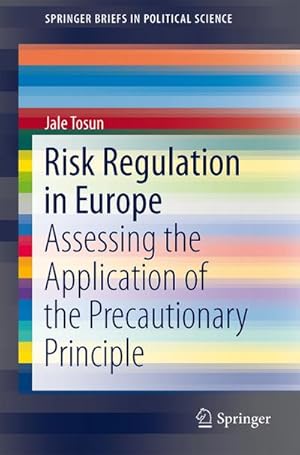
Risk Regulation in Europe
Libro 6 di 65: SpringerBriefs in Political ScienceLingua: Inglese
Editore: Springer New York Nov 2012, 2012
ISBN 10: 1461419832 ISBN 13: 9781461419839
Da: BuchWeltWeit Ludwig Meier e.K., Bergisch Gladbach, Germania
Valutazione del venditore 5 su 5 stelle
EUR 53,45
Spedizione EUR 23,00
Spedito da Germania a U.S.A.Quantità: 2 disponibili
Aggiungi al carrelloTaschenbuch. Condizione: Neu. This item is printed on demand - it takes 3-4 days longer - Neuware -The publication aims to familiarize students of public policy with the precautionary principle, which plays a vital role in the European Union's approach toward regulating risks. The precautionary principle contends that policy makers should refrain from actions having a suspected risk of causing harm to the public and/or the environment. However, the precautionary principle only provides guidance to policy makers but does not prescribe specific policy responses. Therefore, there should be variation in the way the principle is applied. Furthermore, precautionary measures are, in principle, of a provisional nature, suggesting that they are likely to be subject to changes over time. This book is thus interested in shedding light on how the precautionary principle is put into practice and to what extent precautionary measures become modified. Empirically, it focuses on how the EU has regulated the use of growth hormones in meat production, the cultivation of genetically modified corn and the use of Stevia-based sweeteners in foods and beverages. The main theoretical argument advanced by this study is that the way in which the original regulatory standards were formulated affects whether and how they are changed. By placing particular emphasis on the relevance of scientific evidence for the (re-)definition of precautionary measures, the book is expected to appeal to both academics and practitioners. 116 pp. Englisch.
-

Risk Regulation in Europe
Libro 6 di 65: SpringerBriefs in Political ScienceLingua: Inglese
Editore: Springer New York, Springer US Nov 2012, 2012
ISBN 10: 1461419832 ISBN 13: 9781461419839
Da: buchversandmimpf2000, Emtmannsberg, BAYE, Germania
Valutazione del venditore 5 su 5 stelle
EUR 53,45
Spedizione EUR 60,00
Spedito da Germania a U.S.A.Quantità: 1 disponibili
Aggiungi al carrelloTaschenbuch. Condizione: Neu. This item is printed on demand - Print on Demand Titel. Neuware -The publication aims to familiarize students of public policy with the precautionary principle, which plays a vital role in the European Union¿s approach toward regulating risks. The precautionary principle contends that policy makers should refrain from actions having a suspected risk of causing harm to the public and/or the environment. However, the precautionary principle only provides guidance to policy makers but does not prescribe specific policy responses. Therefore, there should be variation in the way the principle is applied. Furthermore, precautionary measures are, in principle, of a provisional nature, suggesting that they are likely to be subject to changes over time. This book is thus interested in shedding light on how the precautionary principle is put into practice and to what extent precautionary measures become modified. Empirically, it focuses on how the EU has regulated the use of growth hormones in meat production, the cultivation of genetically modified corn and the use of Stevia-based sweeteners in foods and beverages. The main theoretical argument advanced by this study is that the way in which the original regulatory standards were formulated affects whether and how they are changed. By placing particular emphasis on the relevance of scientific evidence for the (re-)definition of precautionary measures, the book is expected to appeal to both academics and practitioners.Springer Verlag GmbH, Tiergartenstr. 17, 69121 Heidelberg 116 pp. Englisch.


