
9781461448747 - application of peptide-based prodrug chemistry in drug development di de, arnab (15 risultati)

Lingua: Inglese
Editore: Springer 2012
Serie: SpringerBriefs in Pharmaceutical Science & Drug Development, Libro 4 di 13. Libro 4 di 13 - SpringerBriefs in Pharmaceutical Science & Drug Development
- Brossura
Da: GreatBookPrices, Columbia, MD, U.S.A.GreatBookPrices
Contatta il venditoreVenditore con 5 stelleCondizione: Usato - Come nuovo
EUR 61,82
EUR 2,29 spedizioneSpedito in U.S.A.Quantità: 15 disponibili
Condizione: As New. Unread book in perfect condition.
Lingua: Inglese
Editore: Springer 2012
Serie: SpringerBriefs in Pharmaceutical Science & Drug Development, Libro 4 di 13. Libro 4 di 13 - SpringerBriefs in Pharmaceutical Science & Drug Development
- Brossura
Da: Ria Christie Collections, Uxbridge, Regno UnitoRia Christie Collections
Contatta il venditoreVenditore con 5 stelleCondizione: Nuovo
EUR 58,74
EUR 13,85 spedizioneSpedito da Regno Unito a U.S.A.Quantità: Più di 20 disponibili
Condizione: New. In.
Lingua: Inglese
Editore: Springer 2012
Serie: SpringerBriefs in Pharmaceutical Science & Drug Development, Libro 4 di 13. Libro 4 di 13 - SpringerBriefs in Pharmaceutical Science & Drug Development
- Brossura
Da: GreatBookPrices, Columbia, MD, U.S.A.GreatBookPrices
Contatta il venditoreVenditore con 5 stelleCondizione: Nuovo
EUR 72,39
EUR 2,29 spedizioneSpedito in U.S.A.Quantità: 15 disponibili
Condizione: New.
Lingua: Inglese
Editore: Springer 2012-08 2012
Serie: SpringerBriefs in Pharmaceutical Science & Drug Development, Libro 4 di 13. Libro 4 di 13 - SpringerBriefs in Pharmaceutical Science & Drug Development
- Brossura
Da: Chiron Media, Wallingford, , Regno UnitoChiron Media
Contatta il venditoreVenditore con 5 stelleCondizione: Nuovo
EUR 56,35
EUR 17,90 spedizioneSpedito da Regno Unito a U.S.A.Quantità: 10 disponibili
PF. Condizione: New.
Lingua: Inglese
Editore: Springer 2012
Serie: SpringerBriefs in Pharmaceutical Science & Drug Development, Libro 4 di 13. Libro 4 di 13 - SpringerBriefs in Pharmaceutical Science & Drug Development
- Brossura
Da: Books Puddle, New York, NY, U.S.A.Books Puddle
Contatta il venditoreVenditore con 4 stelleCondizione: Nuovo
EUR 82,76
EUR 3,47 spedizioneSpedito in U.S.A.Quantità: 4 disponibili
Condizione: New. pp. 104.
Lingua: Inglese
Editore: Springer Verlag 2012
Serie: SpringerBriefs in Pharmaceutical Science & Drug Development, Libro 4 di 13. Libro 4 di 13 - SpringerBriefs in Pharmaceutical Science & Drug Development
- Brossura
Da: Revaluation Books, Exeter, , Regno UnitoRevaluation Books
Contatta il venditoreVenditore con 5 stelleCondizione: Nuovo
EUR 75,81
EUR 11,56 spedizioneSpedito da Regno Unito a U.S.A.Quantità: 2 disponibili
Paperback. Condizione: Brand New. 1st edition. 89 pages. 9.00x6.00x0.25 inches. In Stock.

Lingua: Inglese
Editore: Springer, Springer 2012
Serie: SpringerBriefs in Pharmaceutical Science & Drug Development, Libro 4 di 13. Libro 4 di 13 - SpringerBriefs in Pharmaceutical Science & Drug Development
- Brossura
Da: AHA-BUCH GmbH, Einbeck, GermaniaAHA-BUCH GmbH
Contatta il venditoreVenditore con 5 stelleCondizione: Nuovo
EUR 58,39
EUR 60,86 spedizioneSpedito da Germania a U.S.A.Quantità: 1 disponibili
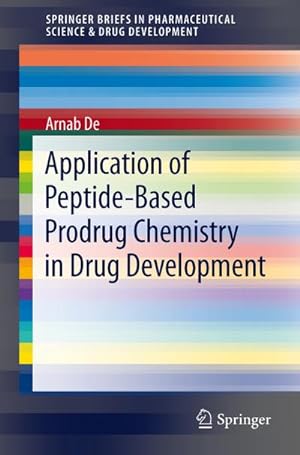
Taschenbuch. Condizione: Neu. Druck auf Anfrage Neuware - Printed after ordering - Macromolecular (specifically peptide-based) drugs could potentially be highly effective medicines. However they have a relatively short duration of action and variable therapeutic index. An example of such a peptide is Glucagon-like Peptide I whic…h could potentially be used as a revolutionary drug for diabetes. This is because it stimulates insulin only when the blood glucose level is high thereby reducing the risk of hypoglycemia (a significant disadvantage of using insulin is that an insulin overdose is the single most potent cause of life-threatening hypoglycemia). However it's short duration of action (half-life of 2 minutes in plasma) precludes its therapeutic use. In this volume, the use of novel therapeutics like GLP1 as an alternative to tradition insulin-based drugs in diabetes is described. Application of Peptide-Based Prodrug Chemistry in Drug Development elucidates the traditional concept of prodrugs as 'specialized non-toxic protective groups used in a transient manner to alter or to eliminate certain limiting properties in the parent small molecule' (IUPAC definition). It goes on to provide insight into how prodrugs of peptides (with GLP1 as an example) could be appropriately used to extend the biological half life, broaden the therapeutic index of macromolecules and improve the pharmacodynamics of such drugs. Author explains the logic behind designing peptide prodrugs, synthetic procedures and bioassays to examine the conversion of the prodrug to the drug under therapeutic conditions. The prodrugs described slowly convert to the parent drug at physiological conditions of 37C and pH 7.2 driven by their inherent chemical instability without the need of any enzymatic cleavage. The diketopiperazine and diketomorpholine (DKP and DMP) strategies for prodrug conversion are demonstrated in detail with special emphasis on the chemical flexibility that it offers to develop prodrugs with variable time actions.This book will be of usefulto chemists, biochemists, medicinal chemists, biologists and people in the medical profession (doctors). It may be used in undergraduate classes but will certainly help post-graduate students and advanced professionals. The author is grateful to Prof. Richard DiMarchi (Standiford H. Cox Professor of Chemistry and the Linda & Jack Gill Chair in Biomolecular Sciences at Indiana University) for valuable suggestions. The foreword for the book has been written by Prof. Jean Martinez, (Legion d'Honneur awarded by the French Republic; Professor of Chemistry and Medicinal Chemistry of the University of Montpellier, France; and Chairman of European Peptide Society, 2002-2010).
 Altre immagini
Lingua: Inglese
Editore: Springer 2012
Serie: SpringerBriefs in Pharmaceutical Science & Drug Development, Libro 4 di 13. Libro 4 di 13 - SpringerBriefs in Pharmaceutical Science & Drug Development
- Brossura
Da: preigu, Osnabrück, Germaniapreigu
Contatta il venditoreVenditore con 5 stelleCondizione: Nuovo
EUR 50,35
EUR 70,00 spedizioneSpedito da Germania a U.S.A.Quantità: 5 disponibili
Taschenbuch. Condizione: Neu. Application of Peptide-Based Prodrug Chemistry in Drug Development | Arnab De | Taschenbuch | SpringerBriefs in Pharmaceutical Science & Drug Development | xii | Englisch | 2012 | Springer | EAN 9781461448747 | Verantwortliche Person für die EU: Springer Verlag GmbH, Tiergartenstr. 17, 69121 Heidelb…erg, juergen[dot]hartmann[at]springer[dot]com | Anbieter: preigu.
Lingua: Inglese
Editore: Springer New York 2012
Serie: SpringerBriefs in Pharmaceutical Science & Drug Development, Libro 4 di 13. Libro 4 di 13 - SpringerBriefs in Pharmaceutical Science & Drug Development
- Brossura
Da: Buchpark, Trebbin, , GermaniaBuchpark
Contatta il venditoreVenditore con 5 stelleCondizione: Usato - Ottimo
EUR 40,86
EUR 105,00 spedizioneSpedito da Germania a U.S.A.Quantità: 1 disponibili
Condizione: Sehr gut. Zustand: Sehr gut | Sprache: Englisch | Produktart: Bücher | Macromolecular (specifically peptide-based) drugs could potentially be highly effective medicines. However they have a relatively short duration of action and variable therapeutic index. An example of such a peptide is Glucagon-like Peptide I whic…h could potentially be used as a revolutionary drug for diabetes. This is because it stimulates insulin only when the blood glucose level is high thereby reducing the risk of hypoglycemia (a significant disadvantage of using insulin is that an insulin overdose is the single most potent cause of life-threatening hypoglycemia). However it¿s short duration of action (half-life of 2 minutes in plasma) precludes its therapeutic use. In this volume, the use of novel therapeutics like GLP1 as an alternative to tradition insulin-based drugs in diabetes is described. Application of Peptide-Based Prodrug Chemistry in Drug Development elucidates the traditional concept of prodrugs as ¿specialized non-toxic protective groups used in a transient manner to alter or to eliminate certain limiting properties in the parent small molecule¿ (IUPAC definition). It goes on to provide insight into how prodrugs of peptides (with GLP1 as an example) could be appropriately used to extend the biological half life, broaden the therapeutic index of macromolecules and improve the pharmacodynamics of such drugs. Author explains the logic behind designing peptide prodrugs, synthetic procedures and bioassays to examine the conversion of the prodrug to the drug under therapeutic conditions. The prodrugs described slowly convert to the parent drug at physiological conditions of 37C and pH 7.2 driven by their inherent chemical instability without the need of any enzymatic cleavage. The diketopiperazine and diketomorpholine (DKP and DMP) strategies for prodrug conversion are demonstrated in detail with special emphasis on the chemical flexibility that it offers to develop prodrugs with variable time actions. This book will be of usefulto chemists, biochemists, medicinal chemists, biologists and people in the medical profession (doctors). It may be used in undergraduate classes but will certainly help post-graduate students and advanced professionals. The author is grateful to Prof. Richard DiMarchi (Standiford H. Cox Professor of Chemistry and the Linda & Jack Gill Chair in Biomolecular Sciences at Indiana University) for valuable suggestions. The foreword for the book has been written by Prof. Jean Martinez, (Legion d'Honneur awarded by the French Republic; Professor of Chemistry and Medicinal Chemistry of the University of Montpellier, France; and Chairman of European Peptide Society, 2002-2010).
Lingua: Inglese
Editore: Springer 2012
Serie: SpringerBriefs in Pharmaceutical Science & Drug Development, Libro 4 di 13. Libro 4 di 13 - SpringerBriefs in Pharmaceutical Science & Drug Development
- Brossura
- Print on Demand
Da: Brook Bookstore On Demand, Napoli, NA, ItaliaBrook Bookstore On Demand
Contatta il venditoreVenditore con 3 stelleCondizione: Nuovo
EUR 46,22
EUR 4,00 spedizioneSpedito da Italia a U.S.A.Quantità: Più di 20 disponibili
Condizione: new. Questo è un articolo print on demand.
Lingua: Inglese
Editore: Springer New York Aug 2012 2012
Serie: SpringerBriefs in Pharmaceutical Science & Drug Development, Libro 4 di 13. Libro 4 di 13 - SpringerBriefs in Pharmaceutical Science & Drug Development
- Brossura
- Print on Demand
Da: BuchWeltWeit Ludwig Meier e.K., Bergisch Gladbach, , GermaniaBuchWeltWeit Ludwig Meier e.K.
Contatta il venditoreVenditore con 5 stelleCondizione: Nuovo
EUR 53,49
EUR 23,00 spedizioneSpedito da Germania a U.S.A.Quantità: 2 disponibili
Taschenbuch. Condizione: Neu. This item is printed on demand - it takes 3-4 days longer - Neuware -Macromolecular (specifically peptide-based) drugs could potentially be highly effective medicines. However they have a relatively short duration of action and variable therapeutic index. An example of such a peptide is Glucagon-lik…e Peptide I which could potentially be used as a revolutionary drug for diabetes. This is because it stimulates insulin only when the blood glucose level is high thereby reducing the risk of hypoglycemia (a significant disadvantage of using insulin is that an insulin overdose is the single most potent cause of life-threatening hypoglycemia). However it's short duration of action (half-life of 2 minutes in plasma) precludes its therapeutic use. In this volume, the use of novel therapeutics like GLP1 as an alternative to tradition insulin-based drugs in diabetes is described. Application of Peptide-Based Prodrug Chemistry in Drug Development elucidates the traditional concept of prodrugs as 'specialized non-toxic protective groups used in a transient manner to alter or to eliminate certain limiting properties in the parent small molecule' (IUPAC definition). It goes on to provide insight into how prodrugs of peptides (with GLP1 as an example) could be appropriately used to extend the biological half life, broaden the therapeutic index of macromolecules and improve the pharmacodynamics of such drugs. Author explains the logic behind designing peptide prodrugs, synthetic procedures and bioassays to examine the conversion of the prodrug to the drug under therapeutic conditions. The prodrugs described slowly convert to the parent drug at physiological conditions of 37C and pH 7.2 driven by their inherent chemical instability without the need of any enzymatic cleavage. The diketopiperazine and diketomorpholine (DKP and DMP) strategies for prodrug conversion are demonstrated in detail with special emphasis on the chemical flexibility that it offers to develop prodrugs with variable time actions.This book will be of useful to chemists, biochemists, medicinal chemists, biologists and people in the medical profession (doctors). It may be used in undergraduate classes but will certainly help post-graduate students and advanced professionals. The author is grateful to Prof. Richard DiMarchi (Standiford H. Cox Professor of Chemistry and the Linda & Jack Gill Chair in Biomolecular Sciences at Indiana University) for valuable suggestions. The foreword for the book has been written by Prof. Jean Martinez, (Legion d'Honneur awarded by the French Republic; Professor of Chemistry and Medicinal Chemistry of the University of Montpellier, France; and Chairman of European Peptide Society, 2002-2010). 104 pp. Englisch.
Lingua: Inglese
Editore: Springer 2012
Serie: SpringerBriefs in Pharmaceutical Science & Drug Development, Libro 4 di 13. Libro 4 di 13 - SpringerBriefs in Pharmaceutical Science & Drug Development
- Brossura
- Print on Demand
Da: Majestic Books, Hounslow, , Regno UnitoMajestic Books
Contatta il venditoreVenditore con 4 stelleCondizione: Nuovo
EUR 83,58
EUR 7,51 spedizioneSpedito da Regno Unito a U.S.A.Quantità: 4 disponibili
Condizione: New. Print on Demand pp. 104 74 Illus. (23 Col.).
Lingua: Inglese
Editore: Springer 2012
Serie: SpringerBriefs in Pharmaceutical Science & Drug Development, Libro 4 di 13. Libro 4 di 13 - SpringerBriefs in Pharmaceutical Science & Drug Development
- Brossura
- Print on Demand
Da: Biblios, frankfurt am main, HESSE, GermaniaBiblios
Contatta il venditoreVenditore con 4 stelleCondizione: Nuovo
EUR 84,48
EUR 9,95 spedizioneSpedito da Germania a U.S.A.Quantità: 4 disponibili
Condizione: New. PRINT ON DEMAND pp. 104.

Lingua: Inglese
Editore: Springer New York 2012
Serie: SpringerBriefs in Pharmaceutical Science & Drug Development, Libro 4 di 13. Libro 4 di 13 - SpringerBriefs in Pharmaceutical Science & Drug Development
- Brossura
- Print on Demand
Da: moluna, Greven, , Germaniamoluna
Contatta il venditoreVenditore con 5 stelleCondizione: Nuovo
EUR 48,37
EUR 48,99 spedizioneSpedito da Germania a U.S.A.Quantità: Più di 20 disponibili
Condizione: New. Dieser Artikel ist ein Print on Demand Artikel und wird nach Ihrer Bestellung fuer Sie gedruckt. Explores a novel approach in designing prodrugs for macromoleculesArnab De, M.A, M.Phil , is currently a PhD candidate at Columbia University Medical Center. He completed his undergraduate education in Presidency Col…lege, Calcutta, India before coming t.

Lingua: Inglese
Editore: Springer, Springer Aug 2012 2012
Serie: SpringerBriefs in Pharmaceutical Science & Drug Development, Libro 4 di 13. Libro 4 di 13 - SpringerBriefs in Pharmaceutical Science & Drug Development
- Brossura
- Print on Demand
Da: buchversandmimpf2000, Emtmannsberg, BAYE, Germaniabuchversandmimpf2000
Contatta il venditoreVenditore con 5 stelleCondizione: Nuovo
EUR 53,49
EUR 60,00 spedizioneSpedito da Germania a U.S.A.Quantità: 1 disponibili
Taschenbuch. Condizione: Neu. This item is printed on demand - Print on Demand Titel. Neuware -Macromolecular (specifically peptide-based) drugs could potentially be highly effective medicines. However they have a relatively short duration of action and variable therapeutic index. An example of such a peptide is Glucagon-like Pe…ptide I which could potentially be used as a revolutionary drug for diabetes. This is because it stimulates insulin only when the blood glucose level is high thereby reducing the risk of hypoglycemia (a significant disadvantage of using insulin is that an insulin overdose is the single most potent cause of life-threatening hypoglycemia). However it¿s short duration of action (half-life of 2 minutes in plasma) precludes its therapeutic use.In this volume, the use of novel therapeutics like GLP1 as an alternative to tradition insulin-based drugs in diabetes is described. Application of Peptide-Based Prodrug Chemistry in Drug Development elucidates the traditional concept of prodrugs as ¿specialized non-toxic protective groups used in a transient manner to alter or to eliminate certain limiting properties in the parent small molecule¿ (IUPAC definition). It goes on to provide insight into how prodrugs of peptides (with GLP1 as an example) could be appropriately used to extend the biological half life, broaden the therapeutic index of macromolecules and improve the pharmacodynamics of such drugs.Author explains the logic behind designing peptide prodrugs, synthetic procedures and bioassays to examine the conversion of the prodrug to the drug under therapeutic conditions. The prodrugs described slowly convert to the parent drug at physiological conditions of 37C and pH 7.2 driven by their inherent chemical instability without the need of any enzymatic cleavage. The diketopiperazine and diketomorpholine (DKP and DMP) strategies for prodrug conversion are demonstrated in detail with special emphasis on the chemical flexibility that it offers to develop prodrugs with variable time actions.This book will be of usefulto chemists, biochemists, medicinal chemists, biologists and people in the medical profession (doctors).It may be used in undergraduate classes but will certainly help post-graduate students and advanced professionals. The author is grateful to Prof. Richard DiMarchi (Standiford H. Cox Professor of Chemistry and the Linda & Jack Gill Chair in Biomolecular Sciences at Indiana University) for valuable suggestions. The foreword for the book has been written by Prof. Jean Martinez, (Legion d'Honneur awarded by the French Republic; Professor of Chemistry and Medicinal Chemistry of the University of Montpellier, France; and Chairman of European Peptide Society, 2002-2010).Springer-Verlag KG, Sachsenplatz 4-6, 1201 Wien 104 pp. Englisch.


