

Importo totale (1 articolo articoli):
Destinazione ordine:

9781493900985 - Capybara: Biology, Use and Conservation of an Exceptional Neotropical Species (7 risultati)
Vai alla pagina principale dei risultati di ricerca
Filtri di ricerca
Tipo di articolo
- Tutti i tipi di prodotto
- Libri (7)
- Riviste e Giornali (Nessun altro risultato corrispondente a questo perfezionamento)
- Fumetti (Nessun altro risultato corrispondente a questo perfezionamento)
- Spartiti (Nessun altro risultato corrispondente a questo perfezionamento)
- Arte, Stampe e Poster (Nessun altro risultato corrispondente a questo perfezionamento)
- Fotografie (Nessun altro risultato corrispondente a questo perfezionamento)
- Mappe (Nessun altro risultato corrispondente a questo perfezionamento)
- Manoscritti e Collezionismo cartaceo (Nessun altro risultato corrispondente a questo perfezionamento)
Condizioni Maggiori informazioni
- Nuovo (7)
- Come nuovo, Ottimo o Quasi ottimo (Nessun altro risultato corrispondente a questo perfezionamento)
- Molto buono o Buono (Nessun altro risultato corrispondente a questo perfezionamento)
- Discreto o Mediocre (Nessun altro risultato corrispondente a questo perfezionamento)
- Come descritto (Nessun altro risultato corrispondente a questo perfezionamento)
Legatura
- Tutte
- Rilegato (Nessun altro risultato corrispondente a questo perfezionamento)
- Brossura (7)
Ulteriori caratteristiche
- Prima ed. (Nessun altro risultato corrispondente a questo perfezionamento)
- Copia autograf. (Nessun altro risultato corrispondente a questo perfezionamento)
- Sovracoperta (Nessun altro risultato corrispondente a questo perfezionamento)
- Con foto (5)
- Non Print on Demand (3)
Lingua (1)
Prezzo
- Qualsiasi prezzo
- Inferiore a EUR 20 (Nessun altro risultato corrispondente a questo perfezionamento)
- EUR 20 a EUR 45 (Nessun altro risultato corrispondente a questo perfezionamento)
- Superiore a EUR 45
Spedizione gratuita
- Spedizione gratuita in U.S.A. (Nessun altro risultato corrispondente a questo perfezionamento)
Paese del venditore
Valutazione venditore
-

Capybara: Biology, Use and Conservation of an Exceptional Neotropical Species
Da: Ria Christie Collections, Uxbridge, Regno Unito
Valutazione del venditore 5 su 5 stelle

EUR 243,43
Spedizione EUR 13,84
Spedito da Regno Unito a U.S.A.Quantità: Più di 20 disponibili
Aggiungi al carrelloCondizione: New. In.
-

EUR 213,95
Spedizione EUR 70,00
Spedito da Germania a U.S.A.Quantità: 5 disponibili
Aggiungi al carrelloTaschenbuch. Condizione: Neu. Capybara | Biology, Use and Conservation of an Exceptional Neotropical Species | José Roberto Moreira (u. a.) | Taschenbuch | xviii | Englisch | 2014 | Springer US | EAN 9781493900985 | Verantwortliche Person für die EU: Springer Verlag GmbH, Tiergartenstr. 17, 69121 Heidelberg, juergen[dot]hartmann[at]springer[dot]com | Anbieter: preigu.
-
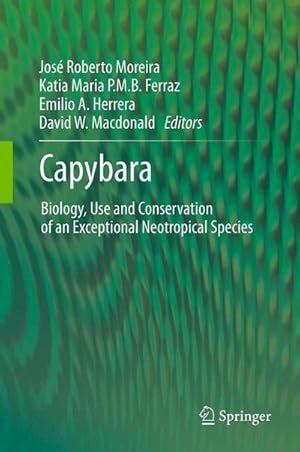
Capybara : Biology, Use and Conservation of an Exceptional Neotropical Species
Lingua: Inglese
Editore: Springer New York, Springer New York, 2014
ISBN 10: 1493900986 ISBN 13: 9781493900985
EUR 252,48
Spedizione EUR 63,32
Spedito da Germania a U.S.A.Quantità: 1 disponibili
Aggiungi al carrelloTaschenbuch. Condizione: Neu. Druck auf Anfrage Neuware - Printed after ordering - The capybara is the neotropical mammal with the highest potential for production and domestication. Amongst the favorable characteristics for domestication we can list its high prolificacy, rapid growth rate, a herbivorous diet, social behavior and relative tameness. The genus (with only two species) is found from the Panama Canal to the north of Argentina on the east of the Andes. Chile is the only country in South America where the capybara is not found. The species is eaten all over its range, especially by poor, rural and traditional communities engaged in subsistence hunting. On the other hand, in large urban settlements wildlife is consumed by city dwellers as a delicacy. The sustainable management of capybara in the wild has been adopted by some South American countries, while others have encouraged capybara rearing in captivity.
-

Capybara
Lingua: Inglese
Editore: Springer New York Sep 2014, 2014
ISBN 10: 1493900986 ISBN 13: 9781493900985
Da: BuchWeltWeit Ludwig Meier e.K., Bergisch Gladbach, Germania
Valutazione del venditore 5 su 5 stelle
EUR 197,94
Spedizione EUR 23,00
Spedito da Germania a U.S.A.Quantità: 2 disponibili
Aggiungi al carrelloTaschenbuch. Condizione: Neu. This item is printed on demand - it takes 3-4 days longer - Neuware -The capybara is the neotropical mammal with the highest potential for production and domestication. Amongst the favorable characteristics for domestication we can list its high prolificacy, rapid growth rate, a herbivorous diet, social behavior and relative tameness. The genus (with only two species) is found from the Panama Canal to the north of Argentina on the east of the Andes. Chile is the only country in South America where the capybara is not found. The species is eaten all over its range, especially by poor, rural and traditional communities engaged in subsistence hunting. On the other hand, in large urban settlements wildlife is consumed by city dwellers as a delicacy. The sustainable management of capybara in the wild has been adopted by some South American countries, while others have encouraged capybara rearing in captivity. 440 pp. Englisch.
-
Capybara: Biology, Use and Conservation of an Exceptional Neotropical Species (eng)
Da: Brook Bookstore On Demand, Napoli, NA, Italia
Valutazione del venditore 4 su 5 stelle

EUR 190,30
Spedizione EUR 42,00
Spedito da Italia a U.S.A.Quantità: Più di 20 disponibili
Aggiungi al carrelloCondizione: new. Questo è un articolo print on demand.
-

EUR 206,40
Spedizione EUR 48,99
Spedito da Germania a U.S.A.Quantità: Più di 20 disponibili
Aggiungi al carrelloCondizione: New. Dieser Artikel ist ein Print on Demand Artikel und wird nach Ihrer Bestellung fuer Sie gedruckt. Assembles the scientists who have produced the most relevant research about the speciesThe book has over 45 authors of nine different nationalities in a multidisciplinary work about a single speciesThe research in this book analyzes the neo.
-

Capybara
Lingua: Inglese
Editore: Springer New York, Springer New York Sep 2014, 2014
ISBN 10: 1493900986 ISBN 13: 9781493900985
Da: buchversandmimpf2000, Emtmannsberg, BAYE, Germania
Valutazione del venditore 5 su 5 stelle
EUR 246,09
Spedizione EUR 60,00
Spedito da Germania a U.S.A.Quantità: 1 disponibili
Aggiungi al carrelloTaschenbuch. Condizione: Neu. This item is printed on demand - Print on Demand Titel. Neuware -The capybara is the neotropical mammal with the highest potential for production and domestication. Amongst the favorable characteristics for domestication we can list its high prolificacy, rapid growth rate, a herbivorous diet, social behavior and relative tameness. The genus (with only two species) is found from the Panama Canal to the north of Argentina on the east of the Andes. Chile is the only country in South America where the capybara is not found. The species is eaten all over its range, especially by poor, rural and traditional communities engaged in subsistence hunting. On the other hand, in large urban settlements wildlife is consumed by city dwellers as a delicacy. The sustainable management of capybara in the wild has been adopted by some South American countries, while others have encouraged capybara rearing in captivity.Springer Verlag GmbH, Tiergartenstr. 17, 69121 Heidelberg 440 pp. Englisch.

