

Importo totale (1 articolo articoli):
Destinazione ordine:

9781498511247 - Dramatic Action in Greek Tragedy and Noh: Reading with and beyond Aristotle di Smethurst, Mae J. (17 risultati)
Vai alla pagina principale dei risultati di ricerca
Filtri di ricerca
Tipo di articolo
- Tutti i tipi di prodotto
- Libri (17)
- Riviste e Giornali (Nessun altro risultato corrispondente a questo perfezionamento)
- Fumetti (Nessun altro risultato corrispondente a questo perfezionamento)
- Spartiti (Nessun altro risultato corrispondente a questo perfezionamento)
- Arte, Stampe e Poster (Nessun altro risultato corrispondente a questo perfezionamento)
- Fotografie (Nessun altro risultato corrispondente a questo perfezionamento)
- Mappe (Nessun altro risultato corrispondente a questo perfezionamento)
- Manoscritti e Collezionismo cartaceo (Nessun altro risultato corrispondente a questo perfezionamento)
Condizioni Maggiori informazioni
- Nuovo (14)
- Come nuovo, Ottimo o Quasi ottimo (2)
- Molto buono o Buono (1)
- Discreto o Mediocre (Nessun altro risultato corrispondente a questo perfezionamento)
- Come descritto (Nessun altro risultato corrispondente a questo perfezionamento)
Legatura
- Tutte
- Rilegato (Nessun altro risultato corrispondente a questo perfezionamento)
- Brossura (17)
Ulteriori caratteristiche
- Prima ed. (1)
- Copia autograf. (Nessun altro risultato corrispondente a questo perfezionamento)
- Sovracoperta (Nessun altro risultato corrispondente a questo perfezionamento)
- Con foto (9)
- Non Print on Demand (10)
Lingua (1)
Prezzo
- Qualsiasi prezzo
- Inferiore a EUR 20 (Nessun altro risultato corrispondente a questo perfezionamento)
- EUR 20 a EUR 45
- Superiore a EUR 45
Spedizione gratuita
Paese del venditore
Valutazione venditore
-

Dramatic Action in Greek Tragedy and Noh: Reading with and beyond Aristotle (Greek Studies: Interdisciplinary Approaches)
Libro 17 di 20: Greek Studies: Interdisciplinary ApproachesLingua: Inglese
Editore: Lexington Books, Lanham, MD, 2015
ISBN 10: 1498511244 ISBN 13: 9781498511247
Da: Conover Books, Martinsville, VA, U.S.A.
Valutazione del venditore 5 su 5 stelle

Prima edizione
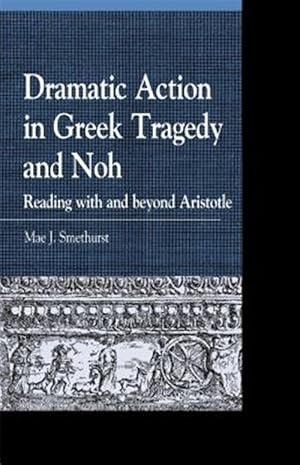
Soft cover. Condizione: Good. 1st Edition. Minor edge and corner wear; lightly scuffed and scratched; spine is gently creased; some light shelf wear; ex-library with the usual library markings; overall a nice used copy! Blue and white illustrated wrapper with black and white lettering. 115 historical and informative pages! "This book explores the ramifications of understanding the similarities and differences between the tragedies of Euripides and Sophocles and realistic Japanese noh. First, it looks at the relationship of Aristotle's definition of tragedy to the tragedies he favored. Next, his definition is applied to realistic noh, in order to show how they do and do not conform to his definition. In the third and fourth chapters, the focus moves to those junctures in the dramas that Aristotle considered crucial to a complex plot - recognitions and sudden reversals -, and shows how they are presented in performance. Chapter 3 examines the climactic moments of realistic noh and demonstrates that it is at precisely these moments that a third actor becomes involved in the dialogue or that an actor in various ways steps out of character. Chapter 4 explores how plays by Euripides and Sophocles deal with critical turns in the plot, as Aristotle defined it. It is not by an actor stepping out of character, but by the playwright's involvement of the third actor in the dialogue. The argument of this book reveals a similar symbiosis between plot and performance in both dramatic forms.By looking at noh through the lens of Aristotle and two Greek tragedies that he favored, the book uncovers first an Aristotelian plot structure in realistic noh and the relationship between the crucial points in the plot and its performance; and on the Greek side, looking at the tragedies through the lens of noh suggests a hitherto unnoticed relationship between the structure of the tragedies and their performance, that is, the involvement of the third actor at the climactic moments of the plot. This observation helps to account for Aristotle's view that tragedy be limited to three actors.".
-
Dramatic Action in Greek Tragedy and Noh: Reading with and beyond Aristotle (Greek Studies: Interdisciplinary Approaches)
Libro 17 di 20: Greek Studies: Interdisciplinary ApproachesDa: California Books, Miami, FL, U.S.A.
Valutazione del venditore 5 su 5 stelle
EUR 60,01
Spedizione gratuita
Spedito in U.S.A.Quantità: Più di 20 disponibili
Aggiungi al carrelloCondizione: New.
-

Dramatic Action in Greek Tragedy and Noh : Reading With and Beyond Aristotle
Libro 17 di 20: Greek Studies: Interdisciplinary ApproachesDa: GreatBookPrices, Columbia, MD, U.S.A.
Valutazione del venditore 5 su 5 stelle
EUR 58,34
Spedizione EUR 2,30
Spedito in U.S.A.Quantità: Più di 20 disponibili
Aggiungi al carrelloCondizione: New.
-

Dramatic Action in Greek Tragedy and Noh
Libro 17 di 20: Greek Studies: Interdisciplinary ApproachesLingua: Inglese
Editore: Bloomsbury Publishing Plc, US, 2015
ISBN 10: 1498511244 ISBN 13: 9781498511247
Da: Rarewaves.com USA, London, LONDO, Regno Unito
Valutazione del venditore 5 su 5 stelle
EUR 62,35
Spedizione gratuita
Spedito da Regno Unito a U.S.A.Quantità: Più di 20 disponibili
Aggiungi al carrelloPaperback. Condizione: New. This book explores the ramifications of understanding the similarities and differences between the tragedies of Euripides and Sophocles and realistic Japanese noh. First, it looks at the relationship of Aristotle's definition of tragedy to the tragedies he favored. Next, his definition is applied to realistic noh, in order to show how they do and do not conform to his definition. In the third and fourth chapters, the focus moves to those junctures in the dramas that Aristotle considered crucial to a complex plot - recognitions and sudden reversals -, and shows how they are presented in performance. Chapter 3 examines the climactic moments of realistic noh and demonstrates that it is at precisely these moments that a third actor becomes involved in the dialogue or that an actor in various ways steps out of character. Chapter 4 explores how plays by Euripides and Sophocles deal with critical turns in the plot, as Aristotle defined it. It is not by an actor stepping out of character, but by the playwright's involvement of the third actor in the dialogue. The argument of this book reveals a similar symbiosis between plot and performance in both dramatic forms.By looking at noh through the lens of Aristotle and two Greek tragedies that he favored, the book uncovers first an Aristotelian plot structure in realistic noh and the relationship between the crucial points in the plot and its performance; and on the Greek side, looking at the tragedies through the lens of noh suggests a hitherto unnoticed relationship between the structure of the tragedies and their performance, that is, the involvement of the third actor at the climactic moments of the plot. This observation helps to account for Aristotle's view that tragedy be limited to three actors.
-
Dramatic Action in Greek Tragedy and Noh : Reading With and Beyond Aristotle
Libro 17 di 20: Greek Studies: Interdisciplinary ApproachesDa: GreatBookPrices, Columbia, MD, U.S.A.
Valutazione del venditore 5 su 5 stelle
EUR 60,82
Spedizione EUR 2,30
Spedito in U.S.A.Quantità: Più di 20 disponibili
Aggiungi al carrelloCondizione: As New. Unread book in perfect condition.
-
Dramatic Action in Greek Tragedy and Noh: Reading with and beyond Aristotle (Greek Studies: Interdisciplinary Approaches)
Libro 17 di 20: Greek Studies: Interdisciplinary ApproachesDa: Ria Christie Collections, Uxbridge, Regno Unito
Valutazione del venditore 5 su 5 stelle
EUR 55,08
Spedizione EUR 13,87
Spedito da Regno Unito a U.S.A.Quantità: Più di 20 disponibili
Aggiungi al carrelloCondizione: New. In.
-

Dramatic Action in Greek Tragedy and Noh : Reading With and Beyond Aristotle
Libro 17 di 20: Greek Studies: Interdisciplinary ApproachesDa: GreatBookPricesUK, Woodford Green, Regno Unito
Valutazione del venditore 5 su 5 stelle
EUR 55,06
Spedizione EUR 17,37
Spedito da Regno Unito a U.S.A.Quantità: Più di 20 disponibili
Aggiungi al carrelloCondizione: New.
-

Dramatic Action in Greek Tragedy and Noh : Reading With and Beyond Aristotle
Libro 17 di 20: Greek Studies: Interdisciplinary ApproachesDa: GreatBookPricesUK, Woodford Green, Regno Unito
Valutazione del venditore 5 su 5 stelle
EUR 64,06
Spedizione EUR 17,37
Spedito da Regno Unito a U.S.A.Quantità: Più di 20 disponibili
Aggiungi al carrelloCondizione: As New. Unread book in perfect condition.
-
Dramatic Action in Greek Tragedy and Noh: Reading With and Beyond Aristotle
Libro 17 di 20: Greek Studies: Interdisciplinary ApproachesDa: Revaluation Books, Exeter, Regno Unito
Valutazione del venditore 5 su 5 stelle
EUR 84,90
Spedizione EUR 11,58
Spedito da Regno Unito a U.S.A.Quantità: 2 disponibili
Aggiungi al carrelloPaperback. Condizione: Brand New. reprint edition. 115 pages. 8.75x6.00x0.50 inches. In Stock.
-

Dramatic Action in Greek Tragedy and Noh
Libro 17 di 20: Greek Studies: Interdisciplinary ApproachesLingua: Inglese
Editore: Bloomsbury Publishing Plc, US, 2015
ISBN 10: 1498511244 ISBN 13: 9781498511247
Da: Rarewaves.com UK, London, Regno Unito
Valutazione del venditore 5 su 5 stelle
EUR 57,17
Spedizione EUR 75,26
Spedito da Regno Unito a U.S.A.Quantità: Più di 20 disponibili
Aggiungi al carrelloPaperback. Condizione: New. This book explores the ramifications of understanding the similarities and differences between the tragedies of Euripides and Sophocles and realistic Japanese noh. First, it looks at the relationship of Aristotle's definition of tragedy to the tragedies he favored. Next, his definition is applied to realistic noh, in order to show how they do and do not conform to his definition. In the third and fourth chapters, the focus moves to those junctures in the dramas that Aristotle considered crucial to a complex plot - recognitions and sudden reversals -, and shows how they are presented in performance. Chapter 3 examines the climactic moments of realistic noh and demonstrates that it is at precisely these moments that a third actor becomes involved in the dialogue or that an actor in various ways steps out of character. Chapter 4 explores how plays by Euripides and Sophocles deal with critical turns in the plot, as Aristotle defined it. It is not by an actor stepping out of character, but by the playwright's involvement of the third actor in the dialogue. The argument of this book reveals a similar symbiosis between plot and performance in both dramatic forms.By looking at noh through the lens of Aristotle and two Greek tragedies that he favored, the book uncovers first an Aristotelian plot structure in realistic noh and the relationship between the crucial points in the plot and its performance; and on the Greek side, looking at the tragedies through the lens of noh suggests a hitherto unnoticed relationship between the structure of the tragedies and their performance, that is, the involvement of the third actor at the climactic moments of the plot. This observation helps to account for Aristotle's view that tragedy be limited to three actors.
-
Dramatic Action in Greek Tragedy and Noh
Libro 17 di 20: Greek Studies: Interdisciplinary ApproachesLingua: Inglese
Editore: Bloomsbury Publishing (UK), 2015
ISBN 10: 1498511244 ISBN 13: 9781498511247
Da: PBShop.store US, Wood Dale, IL, U.S.A.
Valutazione del venditore 5 su 5 stelle
EUR 60,71
Spedizione gratuita
Spedito in U.S.A.Quantità: Più di 20 disponibili
Aggiungi al carrelloPAP. Condizione: New. New Book. Shipped from UK. THIS BOOK IS PRINTED ON DEMAND. Established seller since 2000.
-
Dramatic Action in Greek Tragedy and Noh
Libro 17 di 20: Greek Studies: Interdisciplinary ApproachesLingua: Inglese
Editore: Bloomsbury Publishing (UK), 2015
ISBN 10: 1498511244 ISBN 13: 9781498511247
Da: PBShop.store UK, Fairford, GLOS, Regno Unito
Valutazione del venditore 4 su 5 stelle

EUR 58,16
Spedizione EUR 4,82
Spedito da Regno Unito a U.S.A.Quantità: Più di 20 disponibili
Aggiungi al carrelloPAP. Condizione: New. New Book. Delivered from our UK warehouse in 4 to 14 business days. THIS BOOK IS PRINTED ON DEMAND. Established seller since 2000.
-
Dramatic Action in Greek Tragedy and Noh (Paperback)
Libro 17 di 20: Greek Studies: Interdisciplinary ApproachesLingua: Inglese
Editore: Bloomsbury Publishing Plc, Lanham, MD, 2015
ISBN 10: 1498511244 ISBN 13: 9781498511247
Da: Grand Eagle Retail, Bensenville, IL, U.S.A.
Valutazione del venditore 5 su 5 stelle
Paperback. Condizione: new. Paperback. This book explores the ramifications of understanding the similarities and differences between the tragedies of Euripides and Sophocles and realistic Japanese noh. First, it looks at the relationship of Aristotles definition of tragedy to the tragedies he favored. Next, his definition is applied to realistic noh, in order to show how they do and do not conform to his definition. In the third and fourth chapters, the focus moves to those junctures in the dramas that Aristotle considered crucial to a complex plot - recognitions and sudden reversals -, and shows how they are presented in performance. Chapter 3 examines the climactic moments of realistic noh and demonstrates that it is at precisely these moments that a third actor becomes involved in the dialogue or that an actor in various ways steps out of character. Chapter 4 explores how plays by Euripides and Sophocles deal with critical turns in the plot, as Aristotle defined it. It is not by an actor stepping out of character, but by the playwrights involvement of the third actor in the dialogue. The argument of this book reveals a similar symbiosis between plot and performance in both dramatic forms.By looking at noh through the lens of Aristotle and two Greek tragedies that he favored, the book uncovers first an Aristotelian plot structure in realistic noh and the relationship between the crucial points in the plot and its performance; and on the Greek side, looking at the tragedies through the lens of noh suggests a hitherto unnoticed relationship between the structure of the tragedies and their performance, that is, the involvement of the third actor at the climactic moments of the plot. This observation helps to account for Aristotles view that tragedy be limited to three actors. By looking at 15th/16th realistic noh and Greek tragedies through the lens of Aristotle and of each other, this comparison reveals a previously unnoticed relationship between the structure of the tragedies and their performance, that is, the involvement of the third actor at t. This item is printed on demand. Shipping may be from multiple locations in the US or from the UK, depending on stock availability.
-
Dramatic Action in Greek Tragedy and Noh (Paperback)
Libro 17 di 20: Greek Studies: Interdisciplinary ApproachesLingua: Inglese
Editore: Bloomsbury Publishing Plc, Lanham, MD, 2015
ISBN 10: 1498511244 ISBN 13: 9781498511247
Da: CitiRetail, Stevenage, Regno Unito
Valutazione del venditore 5 su 5 stelle
EUR 63,78
Spedizione EUR 42,84
Spedito da Regno Unito a U.S.A.Quantità: 1 disponibili
Aggiungi al carrelloPaperback. Condizione: new. Paperback. This book explores the ramifications of understanding the similarities and differences between the tragedies of Euripides and Sophocles and realistic Japanese noh. First, it looks at the relationship of Aristotles definition of tragedy to the tragedies he favored. Next, his definition is applied to realistic noh, in order to show how they do and do not conform to his definition. In the third and fourth chapters, the focus moves to those junctures in the dramas that Aristotle considered crucial to a complex plot - recognitions and sudden reversals -, and shows how they are presented in performance. Chapter 3 examines the climactic moments of realistic noh and demonstrates that it is at precisely these moments that a third actor becomes involved in the dialogue or that an actor in various ways steps out of character. Chapter 4 explores how plays by Euripides and Sophocles deal with critical turns in the plot, as Aristotle defined it. It is not by an actor stepping out of character, but by the playwrights involvement of the third actor in the dialogue. The argument of this book reveals a similar symbiosis between plot and performance in both dramatic forms.By looking at noh through the lens of Aristotle and two Greek tragedies that he favored, the book uncovers first an Aristotelian plot structure in realistic noh and the relationship between the crucial points in the plot and its performance; and on the Greek side, looking at the tragedies through the lens of noh suggests a hitherto unnoticed relationship between the structure of the tragedies and their performance, that is, the involvement of the third actor at the climactic moments of the plot. This observation helps to account for Aristotles view that tragedy be limited to three actors. By looking at 15th/16th realistic noh and Greek tragedies through the lens of Aristotle and of each other, this comparison reveals a previously unnoticed relationship between the structure of the tragedies and their performance, that is, the involvement of the third actor at t. This item is printed on demand. Shipping may be from our UK warehouse or from our Australian or US warehouses, depending on stock availability.
-

Dramatic Action in Greek Tragedy and Noh
Libro 17 di 20: Greek Studies: Interdisciplinary ApproachesEUR 65,63
Spedizione EUR 48,99
Spedito da Germania a U.S.A.Quantità: Più di 20 disponibili
Aggiungi al carrelloCondizione: New. Dieser Artikel ist ein Print on Demand Artikel und wird nach Ihrer Bestellung fuer Sie gedruckt. Über den AutorMae Smethurst is professor of classics and East Asian literature at the University of Pittsburgh. She has authored two books: The Artistry of Aeschylus and Zeami: A Comparative Study of Greek Tragedy and Noh (Princeton.
-
Dramatic Action in Greek Tragedy and Noh | Reading with and beyond Aristotle
Libro 17 di 20: Greek Studies: Interdisciplinary ApproachesEUR 68,10
Spedizione EUR 70,00
Spedito da Germania a U.S.A.Quantità: 5 disponibili
Aggiungi al carrelloTaschenbuch. Condizione: Neu. Dramatic Action in Greek Tragedy and Noh | Reading with and beyond Aristotle | Mae J. Smethurst | Taschenbuch | Kartoniert / Broschiert | Englisch | 2015 | Lexington Books | EAN 9781498511247 | Verantwortliche Person für die EU: Libri GmbH, Europaallee 1, 36244 Bad Hersfeld, gpsr[at]libri[dot]de | Anbieter: preigu Print on Demand.
-

Dramatic Action in Greek Tragedy and Noh : Reading with and beyond Aristotle
Libro 17 di 20: Greek Studies: Interdisciplinary ApproachesEUR 79,77
Spedizione EUR 60,98
Spedito da Germania a U.S.A.Quantità: 1 disponibili
Aggiungi al carrelloTaschenbuch. Condizione: Neu. nach der Bestellung gedruckt Neuware - Printed after ordering - By looking at 15th/16th realistic noh and Greek tragedies through the lens of Aristotle and of each other, this comparison reveals a previously unnoticed relationship between the structure of the tragedies and their performance, that is, the involvement of the third actor at the climactic moments of the plot in both and the actor stepping out of character in noh. This observation helps to account for Aristotle's view that tragedy be limited to three actors.


