

Importo totale (1 articolo articoli):
Destinazione ordine:

9781501313110 - How Bad Writing Destroyed the World: Ayn Rand and the Literary Origins of the Financial Crisis di Weiner, Adam (27 risultati)
Vai alla pagina principale dei risultati di ricerca
Filtri di ricerca
Tipo di articolo
- Tutti i tipi di prodotto
- Libri (27)
- Riviste e Giornali (Nessun altro risultato corrispondente a questo perfezionamento)
- Fumetti (Nessun altro risultato corrispondente a questo perfezionamento)
- Spartiti (Nessun altro risultato corrispondente a questo perfezionamento)
- Arte, Stampe e Poster (Nessun altro risultato corrispondente a questo perfezionamento)
- Fotografie (Nessun altro risultato corrispondente a questo perfezionamento)
- Mappe (Nessun altro risultato corrispondente a questo perfezionamento)
- Manoscritti e Collezionismo cartaceo (Nessun altro risultato corrispondente a questo perfezionamento)
Condizioni Maggiori informazioni
Legatura
- Tutte
- Rilegato (Nessun altro risultato corrispondente a questo perfezionamento)
- Brossura (27)
Ulteriori caratteristiche
- Prima ed. (Nessun altro risultato corrispondente a questo perfezionamento)
- Copia autograf. (Nessun altro risultato corrispondente a questo perfezionamento)
- Sovracoperta (Nessun altro risultato corrispondente a questo perfezionamento)
- Con foto (7)
- Non Print on Demand (24)
Lingua (1)
Prezzo
- Qualsiasi prezzo
- Inferiore a EUR 20
- EUR 20 a EUR 45
- Superiore a EUR 45 (Nessun altro risultato corrispondente a questo perfezionamento)
Spedizione gratuita
Paese del venditore
Valutazione venditore
-

How Bad Writing Destroyed the World: Ayn Rand and the Literary Origins of the Financial Crisis
Da: Greenworld Books, Arlington, TX, U.S.A.
Valutazione del venditore 5 su 5 stelle

Condizione: good. Fast Free Shipping â" Good condition. It may show normal signs of use, such as light writing, highlighting, or library markings, but all pages are intact and the book is fully readable. A solid, complete copy that's ready to enjoy.
-
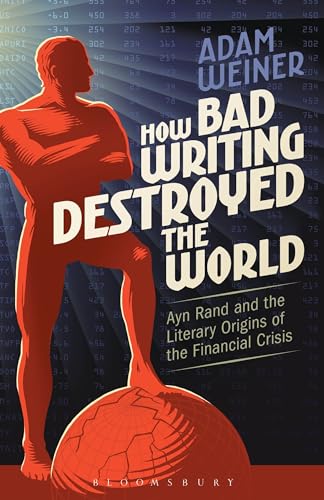
How Bad Writing Destroyed the World: Ayn Rand and the Literary Origins of the Financial Crisis
Da: ThriftBooks-Dallas, Dallas, TX, U.S.A.
Valutazione del venditore 5 su 5 stelle
Paperback. Condizione: Very Good. No Jacket. Former library book; May have limited writing in cover pages. Pages are unmarked. ~ ThriftBooks: Read More, Spend Less.
-

How Bad Writing Destroyed the World: Ayn Rand and the Literary Origins of the Financial Crisis
Da: Goodwill Books, Hillsboro, OR, U.S.A.
Valutazione del venditore 5 su 5 stelle
Condizione: acceptable. Fairly worn, but readable and intact. If applicable: Dust jacket, disc or access code may not be included.
-

How Bad Writing Destroyed the World: Ayn Rand and the Literary Origins of the Financial Crisis
Da: Globus Books, San Francisco, CA, U.S.A.
Membro dell'associazione: ABAA ILAB
Valutazione del venditore 5 su 5 stelle
-
How Bad Writing Destroyed the World
Lingua: Inglese
Editore: Bloomsbury Publishing (UK), 2016
ISBN 10: 1501313118 ISBN 13: 9781501313110
Da: PBShop.store US, Wood Dale, IL, U.S.A.
Valutazione del venditore 5 su 5 stelle
PAP. Condizione: New. New Book. Shipped from UK. Established seller since 2000.
-

How Bad Writing Destroyed the World
Lingua: Inglese
Editore: Bloomsbury Publishing Plc, US, 2016
ISBN 10: 1501313118 ISBN 13: 9781501313110
Da: Rarewaves.com USA, London, LONDO, Regno Unito
Valutazione del venditore 5 su 5 stelle
EUR 27,13
Spedizione gratuita
Spedito da Regno Unito a U.S.A.Quantità: 2 disponibili
Aggiungi al carrelloPaperback. Condizione: New. Literature can be used to disseminate ideas with devastating real-life consequences. In How Bad Writing Destroyed the World, Adam Weiner spans decades and continents to reveal the surprising connections between the 2008-2009 financial crisis and a relatively unknown nineteenth-century Russian author. A congressional investigation placed the blame for the financial crisis on Alan Greenspan and his deregulatory policies-his attempts, in essence, to put Ayn Rand's Objectivism into practice. Though developed most famously in Rand's Atlas Shrugged, Objectivism sprouted from the Rational Egoism of Nikolai Chernyshevsky's What Is to be Done? (1863), an enormously influential Russian novel decried by the likes of Fyodor Dostoevsky and Vladimir Nabokov for its destructive radical ethics. In tracing the origins of Greenspan's ruinous ideology, How Bad Writing Destroyed the World combines literary and intellectual history to uncover the danger of hawking "the virtues of selfishness," even in fiction.
-
How Bad Writing Destroyed the World: Ayn Rand and the Literary Origins of the Financial Crisis
Da: Housing Works Online Bookstore, New York, NY, U.S.A.
Valutazione del venditore 5 su 5 stelle
Condizione: Very Good. Minimal wear to cover. Pages clean and binding tight. shelf wear. bumped edges. Paperback.
-
How Bad Writing Destroyed the World
Lingua: Inglese
Editore: Bloomsbury Publishing (UK), 2016
ISBN 10: 1501313118 ISBN 13: 9781501313110
Da: PBShop.store UK, Fairford, GLOS, Regno Unito
Valutazione del venditore 5 su 5 stelle
EUR 25,28
Spedizione EUR 4,81
Spedito da Regno Unito a U.S.A.Quantità: 1 disponibili
Aggiungi al carrelloPAP. Condizione: New. New Book. Shipped from UK. Established seller since 2000.
-
How Bad Writing Destroyed the World : Ayn Rand and the Literary Origins of the Financial Crisis
Da: GreatBookPrices, Columbia, MD, U.S.A.
Valutazione del venditore 5 su 5 stelle
Condizione: New.
-
How Bad Writing Destroyed the World : Ayn Rand and the Literary Origins of the Financial Crisis
Da: GreatBookPrices, Columbia, MD, U.S.A.
Valutazione del venditore 5 su 5 stelle
Condizione: As New. Unread book in perfect condition.
-
How Bad Writing Destroyed the World
Da: Brook Bookstore On Demand, Napoli, NA, Italia
Valutazione del venditore 3 su 5 stelle

EUR 27,49
Spedizione EUR 5,50
Spedito da Italia a U.S.A.Quantità: 5 disponibili
Aggiungi al carrelloCondizione: new.
-
How Bad Writing Destroyed the World: Ayn Rand and the Literary Origins of the Financial Crisis
Da: Majestic Books, Hounslow, Regno Unito
Valutazione del venditore 4 su 5 stelle

EUR 28,32
Spedizione EUR 7,51
Spedito da Regno Unito a U.S.A.Quantità: 3 disponibili
Aggiungi al carrelloCondizione: New. pp. 176.
-
How Bad Writing Destroyed the World: Ayn Rand and the Literary Origins of the Financial Crisis
Da: Kennys Bookshop and Art Galleries Ltd., Galway, GY, Irlanda
Valutazione del venditore 5 su 5 stelle
EUR 25,19
Spedizione EUR 10,50
Spedito da Irlanda a U.S.A.Quantità: 1 disponibili
Aggiungi al carrelloCondizione: New. Literary history meets economic policy in this entertaining polemic on the ethical and potentially destructive power of terrible literature. Num Pages: 264 pages. BIC Classification: DSB; DSK; KCX. Category: (G) General (US: Trade). Dimension: 130 x 376 x 27. Weight in Grams: 304. . 2016. Paperback. . . . .
-
How Bad Writing Destroyed the World: Ayn Rand and the Literary Origins of the Financial Crisis
Da: Kennys Bookstore, Olney, MD, U.S.A.
Valutazione del venditore 5 su 5 stelle
Condizione: New. Literary history meets economic policy in this entertaining polemic on the ethical and potentially destructive power of terrible literature. Num Pages: 264 pages. BIC Classification: DSB; DSK; KCX. Category: (G) General (US: Trade). Dimension: 130 x 376 x 27. Weight in Grams: 304. . 2016. Paperback. . . . . Books ship from the US and Ireland.
-
How Bad Writing Destroyed the World: Ayn Rand and the Literary Origins of the Financial Crisis
Da: THE SAINT BOOKSTORE, Southport, Regno Unito
Valutazione del venditore 5 su 5 stelle
EUR 25,28
Spedizione EUR 16,45
Spedito da Regno Unito a U.S.A.Quantità: 1 disponibili
Aggiungi al carrelloPaperback / softback. Condizione: New. New copy - Usually dispatched within 3 working days.
-
How Bad Writing Destroyed the World: Ayn Rand and the Literary Origins of the Financial Crisis
Da: Chiron Media, Wallingford, Regno Unito
Valutazione del venditore 5 su 5 stelle
EUR 23,88
Spedizione EUR 17,90
Spedito da Regno Unito a U.S.A.Quantità: 1 disponibili
Aggiungi al carrellopaperback. Condizione: New.
-
How Bad Writing Destroyed the World: Ayn Rand and the Literary Origins of the Financial Crisis
Da: Biblios, Frankfurt am main, HESSE, Germania
Valutazione del venditore 4 su 5 stelle
EUR 34,54
Spedizione EUR 9,95
Spedito da Germania a U.S.A.Quantità: 3 disponibili
Aggiungi al carrelloCondizione: New. pp. 176.
-
How Bad Writing Destroyed the World: Ayn Rand and the Literary Origins of the Financial Crisis
Da: Books Puddle, New York, NY, U.S.A.
Valutazione del venditore 4 su 5 stelle
Condizione: New. pp. 176.
-
How Bad Writing Destroyed the World: Ayn Rand and the Literary Origins of the Financial Crisis
Da: Revaluation Books, Exeter, Regno Unito
Valutazione del venditore 5 su 5 stelle
EUR 35,64
Spedizione EUR 11,56
Spedito da Regno Unito a U.S.A.Quantità: 2 disponibili
Aggiungi al carrelloPaperback. Condizione: Brand New. 250 pages. 7.50x5.00x0.75 inches. In Stock.
-
How Bad Writing Destroyed the World : Ayn Rand and the Literary Origins of the Financial Crisis
Da: GreatBookPricesUK, Woodford Green, Regno Unito
Valutazione del venditore 5 su 5 stelle
EUR 29,78
Spedizione EUR 17,34
Spedito da Regno Unito a U.S.A.Quantità: 1 disponibili
Aggiungi al carrelloCondizione: New.
-
How Bad Writing Destroyed the World : Ayn Rand and the Literary Origins of the Financial Crisis
Da: GreatBookPricesUK, Woodford Green, Regno Unito
Valutazione del venditore 5 su 5 stelle
EUR 33,62
Spedizione EUR 17,34
Spedito da Regno Unito a U.S.A.Quantità: 1 disponibili
Aggiungi al carrelloCondizione: As New. Unread book in perfect condition.
-

EUR 28,72
Spedizione EUR 48,99
Spedito da Germania a U.S.A.Quantità: 1 disponibili
Aggiungi al carrelloCondizione: New. Literature can be used to disseminate ideas with devastating real-life consequences. In How Bad Writing Destroyed the World, Adam Weiner spans decades and continents to reveal the surprising connections between the 2008-2009 financial crisis and a re.
-

How Bad Writing Destroyed the World : Ayn Rand and the Literary Origins of the Financial Crisis
Lingua: Inglese
Editore: Bloomsbury Academic Okt 2016, 2016
ISBN 10: 1501313118 ISBN 13: 9781501313110
EUR 34,18
Spedizione EUR 61,52
Spedito da Germania a U.S.A.Quantità: 1 disponibili
Aggiungi al carrelloTaschenbuch. Condizione: Neu. Neuware - Literature can be used to disseminate ideas with devastating real-life consequences. In How Bad Writing Destroyed the World, Adam Weiner spans decades and continents to reveal the surprising connections between the 2008-2009 financial crisis and a relatively unknown nineteenth-century Russian author. A congressional investigation placed the blame for the financial crisis on Alan Greenspan and his deregulatory policies-his attempts, in essence, to put Ayn Rand's Objectivism into practice. Though developed most famously in Rand's Atlas Shrugged, Objectivism sprouted from the Rational Egoism of Nikolai Chernyshevsky's What Is to be Done (1863), an enormously influential Russian novel decried by the likes of Fyodor Dostoevsky and Vladimir Nabokov for its destructive radical ethics. In tracing the origins of Greenspan's ruinous ideology, How Bad Writing Destroyed the World combines literary and intellectual history to uncover the danger of hawking 'the virtues of selfishness,' even in fiction.
-

How Bad Writing Destroyed the World
Lingua: Inglese
Editore: Bloomsbury Publishing Plc, US, 2016
ISBN 10: 1501313118 ISBN 13: 9781501313110
Da: Rarewaves.com UK, London, Regno Unito
Valutazione del venditore 5 su 5 stelle
EUR 25,27
Spedizione EUR 75,13
Spedito da Regno Unito a U.S.A.Quantità: 2 disponibili
Aggiungi al carrelloPaperback. Condizione: New. Literature can be used to disseminate ideas with devastating real-life consequences. In How Bad Writing Destroyed the World, Adam Weiner spans decades and continents to reveal the surprising connections between the 2008-2009 financial crisis and a relatively unknown nineteenth-century Russian author. A congressional investigation placed the blame for the financial crisis on Alan Greenspan and his deregulatory policies-his attempts, in essence, to put Ayn Rand's Objectivism into practice. Though developed most famously in Rand's Atlas Shrugged, Objectivism sprouted from the Rational Egoism of Nikolai Chernyshevsky's What Is to be Done? (1863), an enormously influential Russian novel decried by the likes of Fyodor Dostoevsky and Vladimir Nabokov for its destructive radical ethics. In tracing the origins of Greenspan's ruinous ideology, How Bad Writing Destroyed the World combines literary and intellectual history to uncover the danger of hawking "the virtues of selfishness," even in fiction.
-
How Bad Writing Destroyed the World (Paperback)
Lingua: Inglese
Editore: Bloomsbury Publishing Plc, New York, 2016
ISBN 10: 1501313118 ISBN 13: 9781501313110
Da: Grand Eagle Retail, Bensenville, IL, U.S.A.
Valutazione del venditore 5 su 5 stelle
Paperback. Condizione: new. Paperback. Literature can be used to disseminate ideas with devastating real-life consequences. In How Bad Writing Destroyed the World, Adam Weiner spans decades and continents to reveal the surprising connections between the 2008-2009 financial crisis and a relatively unknown nineteenth-century Russian author. A congressional investigation placed the blame for the financial crisis on Alan Greenspan and his deregulatory policieshis attempts, in essence, to put Ayn Rands Objectivism into practice. Though developed most famously in Rands Atlas Shrugged, Objectivism sprouted from the Rational Egoism of Nikolai Chernyshevskys What Is to be Done? (1863), an enormously influential Russian novel decried by the likes of Fyodor Dostoevsky and Vladimir Nabokov for its destructive radical ethics. In tracing the origins of Greenspans ruinous ideology, How Bad Writing Destroyed the World combines literary and intellectual history to uncover the danger of hawking the virtues of selfishness, even in fiction. Literary history meets economic policy in this entertaining polemic on the ethical and potentially destructive power of terrible literature. This item is printed on demand. Shipping may be from multiple locations in the US or from the UK, depending on stock availability.
-
How Bad Writing Destroyed the World: Ayn Rand and the Literary Origins of the Financial Crisis
Da: Revaluation Books, Exeter, Regno Unito
Valutazione del venditore 5 su 5 stelle
EUR 31,56
Spedizione EUR 11,56
Spedito da Regno Unito a U.S.A.Quantità: 1 disponibili
Aggiungi al carrelloPaperback. Condizione: Brand New. 250 pages. 7.50x5.00x0.75 inches. In Stock. This item is printed on demand.
-
How Bad Writing Destroyed the World (Paperback)
Lingua: Inglese
Editore: Bloomsbury Publishing Plc, New York, 2016
ISBN 10: 1501313118 ISBN 13: 9781501313110
Da: CitiRetail, Stevenage, Regno Unito
Valutazione del venditore 5 su 5 stelle
EUR 37,49
Spedizione EUR 42,77
Spedito da Regno Unito a U.S.A.Quantità: 1 disponibili
Aggiungi al carrelloPaperback. Condizione: new. Paperback. Literature can be used to disseminate ideas with devastating real-life consequences. In How Bad Writing Destroyed the World, Adam Weiner spans decades and continents to reveal the surprising connections between the 2008-2009 financial crisis and a relatively unknown nineteenth-century Russian author. A congressional investigation placed the blame for the financial crisis on Alan Greenspan and his deregulatory policieshis attempts, in essence, to put Ayn Rands Objectivism into practice. Though developed most famously in Rands Atlas Shrugged, Objectivism sprouted from the Rational Egoism of Nikolai Chernyshevskys What Is to be Done? (1863), an enormously influential Russian novel decried by the likes of Fyodor Dostoevsky and Vladimir Nabokov for its destructive radical ethics. In tracing the origins of Greenspans ruinous ideology, How Bad Writing Destroyed the World combines literary and intellectual history to uncover the danger of hawking the virtues of selfishness, even in fiction. Literary history meets economic policy in this entertaining polemic on the ethical and potentially destructive power of terrible literature. This item is printed on demand. Shipping may be from our UK warehouse or from our Australian or US warehouses, depending on stock availability.


