

Importo totale (1 articolo articoli):
Destinazione ordine:

9781554811588 - The Siege of Jerusalem: A Broadview Anthology of British Literature Edition (18 risultati)
Vai alla pagina principale dei risultati di ricerca
Filtri di ricerca
Tipo di articolo
- Tutti i tipi di prodotto
- Libri (18)
- Riviste e Giornali (Nessun altro risultato corrispondente a questo perfezionamento)
- Fumetti (Nessun altro risultato corrispondente a questo perfezionamento)
- Spartiti (Nessun altro risultato corrispondente a questo perfezionamento)
- Arte, Stampe e Poster (Nessun altro risultato corrispondente a questo perfezionamento)
- Fotografie (Nessun altro risultato corrispondente a questo perfezionamento)
- Mappe (Nessun altro risultato corrispondente a questo perfezionamento)
- Manoscritti e Collezionismo cartaceo (Nessun altro risultato corrispondente a questo perfezionamento)
Condizioni Maggiori informazioni
- Nuovo (14)
- Come nuovo, Ottimo o Quasi ottimo (Nessun altro risultato corrispondente a questo perfezionamento)
- Molto buono o Buono (3)
- Discreto o Mediocre (1)
- Come descritto (Nessun altro risultato corrispondente a questo perfezionamento)
Legatura
- Tutte
- Rilegato (Nessun altro risultato corrispondente a questo perfezionamento)
- Brossura (18)
Ulteriori caratteristiche
- Prima ed. (Nessun altro risultato corrispondente a questo perfezionamento)
- Copia autograf. (Nessun altro risultato corrispondente a questo perfezionamento)
- Sovracoperta (Nessun altro risultato corrispondente a questo perfezionamento)
- Con foto (5)
- Non Print on Demand (18)
Lingua (1)
Prezzo
- Qualsiasi prezzo
- Inferiore a EUR 20
- EUR 20 a EUR 45
- Superiore a EUR 45 (Nessun altro risultato corrispondente a questo perfezionamento)
Spedizione gratuita
Paese del venditore
Valutazione venditore
-
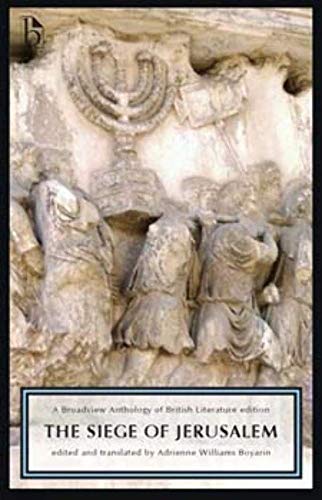
The Siege of Jerusalem: A Broadview Anthology of British Literature Edition
Da: ThriftBooks-Atlanta, AUSTELL, GA, U.S.A.
Valutazione del venditore 5 su 5 stelle

Paperback. Condizione: Good. No Jacket. Pages can have notes/highlighting. Spine may show signs of wear. ~ ThriftBooks: Read More, Spend Less.
-

The Siege of Jerusalem
Da: Goodbooks Company, Springdale, AR, U.S.A.
Valutazione del venditore 5 su 5 stelle
Condizione: acceptable. This book is in acceptable condition and may have highlighting and or writing throughout. The actual cover image may not match the stock photo, dust jacket may be damaged or missing. Book may show internal and or external wear on spine or cover and may be slightly skewed or have creased pages. This is a used book so codes may be invalid or accompanying media may be missing. May be an Ex library book with stickers and stamps.
-
The Siege of Jerusalem
Da: Textbooks_Source, Columbia, MO, U.S.A.
Valutazione del venditore 5 su 5 stelle
paperback. Condizione: Good. Ships in a BOX from Central Missouri! May not include working access code. Will not include dust jacket. Has used sticker(s) and some writing or highlighting. UPS shipping for most packages, (Priority Mail for AK/HI/APO/PO Boxes).
-

The Siege of Jerusalem
Da: Rarewaves.com USA, London, LONDO, Regno Unito
Valutazione del venditore 5 su 5 stelle
EUR 29,65
Spedizione gratuita
Spedito da Regno Unito a U.S.A.Quantità: 4 disponibili
Aggiungi al carrelloPaperback. Condizione: New. The Siege of Jerusalem (c. 1370-90 CE) is a difficult text. By twenty-first-century standards, it is gruesomely violent and offensive. It tells the story of the Roman destruction of the Second Temple in Jerusalem in 70 CE, an event viewed by its author (as by many in the Middle Ages) as divine retribution against Jews for the killing of Christ. It anachronistically turns first-century Roman emperors Titus and Vespasian into Christian converts who battle like medieval crusaders to avenge their savior and cleanse the Holy Land of enemies of the faith. It makes little sense without frank understanding of medieval Christian anti-Semitism. There is, nevertheless, some consensus that Siege is a finely crafted piece of poetry, and that its combination of horror, beauty, and learnedness makes it an effective work of art. As literary scholar A.C. Spearing has put it, "We may not like what the poet does, but it is done with skillful craftsmanship and sometimes with brilliant virtuosity." The tale that the anonymous Siege poet tells, moreover, is an important and still reverberating part of the history of Western thinking about the East. It is, in Yehuda Amichai's phrase, a "currency of the past" that continues to be negotiated. The first-century destruction of Jerusalem has been understood in both Christian and Jewish traditions as the beginning of the Jewish Diaspora; for medieval Christians it was also a model of successful Christian leadership and justified warfare, an allegory of political and personal spiritual battle. As part of the story of the historical rift between Christianity and Judaism-and of the inevitable victory of Christianity-the destroyed Second Temple was taken as symbolic of the fall of Judaism and the rise of the new Christian era in which anyone who rejected Christ would suffer.Written in alliterative verse in the late fourteenth century, The Siege of Jerusalem seems to have been popular in its day; at least nine fourteenth- and fifteen-century manuscripts containing the poem have come down to us. Yet this is the first volume to offer a full Modern English translation. In addition, appendices provide extensive samples of the alliterative original, a wide-ranging compendium of materials documenting anti-Semitism in the Middle Ages, comparative biblical passages, and much else.
-
The Siege of Jerusalem (Paperback)
Lingua: Inglese
Editore: Broadview Press Ltd, Peterborough, 2013
ISBN 10: 1554811589 ISBN 13: 9781554811588
Da: Grand Eagle Retail, Bensenville, IL, U.S.A.
Valutazione del venditore 5 su 5 stelle
Paperback. Condizione: new. Paperback. The Siege of Jerusalem was likely popular in its day; by twenty-first-century standards it is gruesomely violent and offensively anti-Semitic. It tells the story of the Roman destruction of the Second Temple in Jerusalem in 70 CE, an event viewed by its author (as by many in the Middle Ages) as divine retribution against Jews for the killing of Christ. The poem anachronistically turns first-century Roman emperors Titus and Vespasian into Christian converts who battle like medieval crusaders to avenge their savior and cleanse the Holy Land of enemies of the faith. While the poems anti-Semitism is undisputed, there is nevertheless some consensus that Siege of Jerusalem is a finely crafted piece of poetry, and that its combination of horror, beauty, and learnedness makes it an effective work of art. As literary scholar A.C. Spearing has put it, We may not like what the poet does, but it is done with skillful craftsmanship and sometimes with brilliant virtuosity.Boyarins eloquent translationthe first full translation in Modern English conveys something of the alliterative sound of the Middle English poem without sacrificing meaning or readability. Appendices provide extensive samples of the original alliterative verse, a wide-ranging compendium of materials related to anti-Semitism in the Middle Ages, comparative biblical passages, and other illuminating resources. This is the first translation into modern English of one of the most interesting and important works of fourteenth-century literature. Shipping may be from multiple locations in the US or from the UK, depending on stock availability.
-
The Siege of Jerusalem
Da: PBShop.store UK, Fairford, GLOS, Regno Unito
Valutazione del venditore 5 su 5 stelle
EUR 27,72
Spedizione EUR 4,89
Spedito da Regno Unito a U.S.A.Quantità: 7 disponibili
Aggiungi al carrelloPAP. Condizione: New. New Book. Shipped from UK. Established seller since 2000.
-
The Siege of Jerusalem
Da: Majestic Books, Hounslow, Regno Unito
Valutazione del venditore 4 su 5 stelle

EUR 30,05
Spedizione EUR 7,64
Spedito da Regno Unito a U.S.A.Quantità: 3 disponibili
Aggiungi al carrelloCondizione: New. pp. 170.
-
The Siege of Jerusalem: A Broadview Anthology of British Literature Edition
Da: Kennys Bookshop and Art Galleries Ltd., Galway, GY, Irlanda
Valutazione del venditore 5 su 5 stelle
EUR 28,40
Spedizione EUR 10,50
Spedito da Irlanda a U.S.A.Quantità: 2 disponibili
Aggiungi al carrelloCondizione: New. Series: Broadview Anthology of British Literature Editions. Num Pages: 170 pages. BIC Classification: DCF; DSBB. Category: (G) General (US: Trade). Dimension: 185 x 214 x 12. Weight in Grams: 246. . 2013. Paperback. . . . .
-
The Siege of Jerusalem: A Broadview Anthology of British Literature Edition
Da: THE SAINT BOOKSTORE, Southport, Regno Unito
Valutazione del venditore 5 su 5 stelle
EUR 27,01
Spedizione EUR 15,58
Spedito da Regno Unito a U.S.A.Quantità: 2 disponibili
Aggiungi al carrelloPaperback / softback. Condizione: New. New copy - Usually dispatched within 4 working days.
-
The Siege of Jerusalem
Da: Books Puddle, New York, NY, U.S.A.
Valutazione del venditore 4 su 5 stelle
Condizione: New. pp. 170.
-
The Siege of Jerusalem: A Broadview Anthology of British Literature Edition
Da: Kennys Bookstore, Olney, MD, U.S.A.
Valutazione del venditore 5 su 5 stelle
Condizione: New. Series: Broadview Anthology of British Literature Editions. Num Pages: 170 pages. BIC Classification: DCF; DSBB. Category: (G) General (US: Trade). Dimension: 185 x 214 x 12. Weight in Grams: 246. . 2013. Paperback. . . . . Books ship from the US and Ireland.
-
The Siege of Jerusalem
Da: Biblios, Frankfurt am main, HESSE, Germania
Valutazione del venditore 4 su 5 stelle
EUR 35,53
Spedizione EUR 9,95
Spedito da Germania a U.S.A.Quantità: 3 disponibili
Aggiungi al carrelloCondizione: New. pp. 170.
-
The Siege of Jerusalem: A Broadview Anthology of British Literature Edition
Lingua: Inglese
Editore: Broadview Pr, Peterborough, 2014
ISBN 10: 1554811589 ISBN 13: 9781554811588
Da: Edmonton Book Store, Edmonton, AB, Canada
Membro dell'associazione: ABAC ILAB
Valutazione del venditore 4 su 5 stelle
EUR 16,21
Spedizione EUR 49,83
Spedito da Canada a U.S.A.Quantità: 1 disponibili
Aggiungi al carrelloCondizione: very good. Condizione sovraccoperta: no dustjacket. 8vo pp.198. book.
-
The Siege of Jerusalem (Paperback)
Lingua: Inglese
Editore: Broadview Press Ltd, Peterborough, 2013
ISBN 10: 1554811589 ISBN 13: 9781554811588
Da: AussieBookSeller, Truganina, VIC, Australia
Valutazione del venditore 5 su 5 stelle
EUR 36,91
Spedizione EUR 32,35
Spedito da Australia a U.S.A.Quantità: 1 disponibili
Aggiungi al carrelloPaperback. Condizione: new. Paperback. The Siege of Jerusalem was likely popular in its day; by twenty-first-century standards it is gruesomely violent and offensively anti-Semitic. It tells the story of the Roman destruction of the Second Temple in Jerusalem in 70 CE, an event viewed by its author (as by many in the Middle Ages) as divine retribution against Jews for the killing of Christ. The poem anachronistically turns first-century Roman emperors Titus and Vespasian into Christian converts who battle like medieval crusaders to avenge their savior and cleanse the Holy Land of enemies of the faith. While the poems anti-Semitism is undisputed, there is nevertheless some consensus that Siege of Jerusalem is a finely crafted piece of poetry, and that its combination of horror, beauty, and learnedness makes it an effective work of art. As literary scholar A.C. Spearing has put it, We may not like what the poet does, but it is done with skillful craftsmanship and sometimes with brilliant virtuosity.Boyarins eloquent translationthe first full translation in Modern English conveys something of the alliterative sound of the Middle English poem without sacrificing meaning or readability. Appendices provide extensive samples of the original alliterative verse, a wide-ranging compendium of materials related to anti-Semitism in the Middle Ages, comparative biblical passages, and other illuminating resources. This is the first translation into modern English of one of the most interesting and important works of fourteenth-century literature. Shipping may be from our Sydney, NSW warehouse or from our UK or US warehouse, depending on stock availability.
-

EUR 33,11
Spedizione EUR 48,99
Spedito da Germania a U.S.A.Quantità: 5 disponibili
Aggiungi al carrelloCondizione: New. KlappentextrnrnThe Siege of Jerusalem tells the story of the Roman destruction of the Second Temple in Jerusalem in 70 CE, an event viewed by its author as divine retribution against Jews for the killing of Christ. This is the first vol.
-
The Siege of Jerusalem
Da: Gazelle Books, Lancaster, LANCA, Regno Unito
Valutazione del venditore 4 su 5 stelle
EUR 23,39
Spedizione EUR 64,67
Spedito da Regno Unito a U.S.A.Quantità: 7 disponibili
Aggiungi al carrelloPaperback. Condizione: New. New Book, Direct from Publisher.
-

EUR 39,29
Spedizione EUR 61,23
Spedito da Germania a U.S.A.Quantità: 1 disponibili
Aggiungi al carrelloTaschenbuch. Condizione: Neu. Neuware - The Siege of Jerusalem tells the story of the Roman destruction of the Second Temple in Jerusalem in 70 CE, an event viewed by its author as divine retribution against Jews for the killing of Christ. This is the first volume to offer a full modern English translation. In addition, appendices provide extensive samples of the alliterative original, a wide-ranging compendium of materials documenting anti-Semitism in the Middle Ages, comparative biblical passages and much else.
-

The Siege of Jerusalem
Da: Rarewaves.com UK, London, Regno Unito
Valutazione del venditore 5 su 5 stelle
EUR 27,00
Spedizione EUR 76,43
Spedito da Regno Unito a U.S.A.Quantità: 4 disponibili
Aggiungi al carrelloPaperback. Condizione: New. The Siege of Jerusalem (c. 1370-90 CE) is a difficult text. By twenty-first-century standards, it is gruesomely violent and offensive. It tells the story of the Roman destruction of the Second Temple in Jerusalem in 70 CE, an event viewed by its author (as by many in the Middle Ages) as divine retribution against Jews for the killing of Christ. It anachronistically turns first-century Roman emperors Titus and Vespasian into Christian converts who battle like medieval crusaders to avenge their savior and cleanse the Holy Land of enemies of the faith. It makes little sense without frank understanding of medieval Christian anti-Semitism. There is, nevertheless, some consensus that Siege is a finely crafted piece of poetry, and that its combination of horror, beauty, and learnedness makes it an effective work of art. As literary scholar A.C. Spearing has put it, "We may not like what the poet does, but it is done with skillful craftsmanship and sometimes with brilliant virtuosity." The tale that the anonymous Siege poet tells, moreover, is an important and still reverberating part of the history of Western thinking about the East. It is, in Yehuda Amichai's phrase, a "currency of the past" that continues to be negotiated. The first-century destruction of Jerusalem has been understood in both Christian and Jewish traditions as the beginning of the Jewish Diaspora; for medieval Christians it was also a model of successful Christian leadership and justified warfare, an allegory of political and personal spiritual battle. As part of the story of the historical rift between Christianity and Judaism-and of the inevitable victory of Christianity-the destroyed Second Temple was taken as symbolic of the fall of Judaism and the rise of the new Christian era in which anyone who rejected Christ would suffer.Written in alliterative verse in the late fourteenth century, The Siege of Jerusalem seems to have been popular in its day; at least nine fourteenth- and fifteen-century manuscripts containing the poem have come down to us. Yet this is the first volume to offer a full Modern English translation. In addition, appendices provide extensive samples of the alliterative original, a wide-ranging compendium of materials documenting anti-Semitism in the Middle Ages, comparative biblical passages, and much else.

