

Importo totale (1 articolo articoli):
Destinazione ordine:

9781612512174 - Lessons from the Hanoi Hilton: Six Characteristics of High-Performance Teams di Fretwell, Peter; Kiland, Taylor Baldwin (6 risultati)
Vai alla pagina principale dei risultati di ricerca
Filtri di ricerca
Tipo di articolo
- Tutti i tipi di prodotto
- Libri (6)
- Riviste e Giornali (Nessun altro risultato corrispondente a questo perfezionamento)
- Fumetti (Nessun altro risultato corrispondente a questo perfezionamento)
- Spartiti (Nessun altro risultato corrispondente a questo perfezionamento)
- Arte, Stampe e Poster (Nessun altro risultato corrispondente a questo perfezionamento)
- Fotografie (Nessun altro risultato corrispondente a questo perfezionamento)
- Mappe (Nessun altro risultato corrispondente a questo perfezionamento)
- Manoscritti e Collezionismo cartaceo (Nessun altro risultato corrispondente a questo perfezionamento)
Condizioni Maggiori informazioni
- Nuovo (4)
- Come nuovo, Ottimo o Quasi ottimo (Nessun altro risultato corrispondente a questo perfezionamento)
- Molto buono o Buono (2)
- Discreto o Mediocre (Nessun altro risultato corrispondente a questo perfezionamento)
- Come descritto (Nessun altro risultato corrispondente a questo perfezionamento)
Legatura
- Tutte
- Rilegato (6)
- Brossura (Nessun altro risultato corrispondente a questo perfezionamento)
Ulteriori caratteristiche
- Prima ed. (Nessun altro risultato corrispondente a questo perfezionamento)
- Copia autograf. (Nessun altro risultato corrispondente a questo perfezionamento)
- Sovracoperta (Nessun altro risultato corrispondente a questo perfezionamento)
- Con foto (3)
- Non Print on Demand (6)
Lingua (1)
Spedizione gratuita
Paese del venditore
Valutazione venditore
-

Lessons from the Hanoi Hilton: Six Characteristics of High-Performance Teams
Da: Greenworld Books, Arlington, TX, U.S.A.
Valutazione del venditore 5 su 5 stelle

Condizione: good. Fast Free Shipping â" Good condition. It may show normal signs of use, such as light writing, highlighting, or library markings, but all pages are intact and the book is fully readable. A solid, complete copy that's ready to enjoy.
-
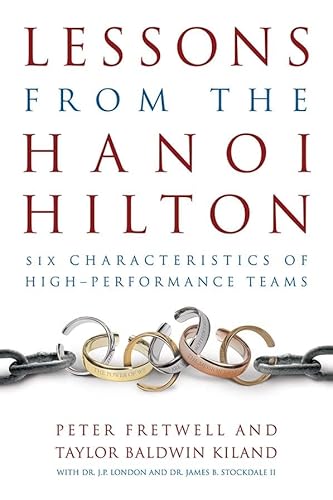
Hardcover. Condizione: Very Good. Connecting readers with great books since 1972! Used books may not include companion materials, and may have some shelf wear or limited writing. We ship orders daily and Customer Service is our top priority!
-
Lessons from the Hanoi Hilton: Six Characteristics of High Performance Teams
Da: Revaluation Books, Exeter, Regno Unito
Valutazione del venditore 5 su 5 stelle
EUR 49,11
Spedizione EUR 11,58
Spedito da Regno Unito a U.S.A.Quantità: 1 disponibili
Aggiungi al carrelloHardcover. Condizione: Brand New. 152 pages. 8.25x5.50x1.00 inches. In Stock.
-

Hardback. Condizione: New. Why were the American POWs imprisoned at the "Hanoi Hilton" so resilient in captivity and so successful in their subsequent careers? This book presents six principles practiced within the POW organisational culture that can be used to develop high-performance teams everywhere. The authors offer examples from both the POWs' time in captivity and their later professional lives that identify, in real-life situations, the characteristics necessary for sustainable, high-performance teamwork. The book takes readers inside the mind of James Stockdale, a fighter pilot with a degree in philosophy, who was the senior ranking officer at the Hanoi prison. The theories Stockdale practiced become readily understandable in this book. Drawing parallels between Stockdale's guiding philosophies from the Stoic Epictetus and the principles of modern sports psychology, Peter Fretwell and Taylor Baldwin Kiland show readers how to apply these principles to their own organisations and create a culture with staying power.Originally intending their book to focus on Stockdale's leadership style, the authors found that his approach toward completing a mission was to assure that it could be accomplished without him. Stockdale, they explain, had created a mission-centric organisation, not a leader-centric organisation. He had understood that a truly sustainable culture must not be dependent on a single individual. At one level, this book is a business school case study. It is also an examination of how leadership and organisational principles employed in the crucible of a Hanoi prison align with today's sports psychology and modern psychological theories and therapies, as well as the training principles used by Olympic athletes and Navy SEALs. Any group willing to apply these principles can move their mission forward and create a culture with staying power-one that outlives individual members.
-
Lessons from the Hanoi Hilton: Six Characteristics of High-Performance Teams
Da: BennettBooksLtd, Los Angeles, CA, U.S.A.
Valutazione del venditore 5 su 5 stelle
Hardcover. Condizione: New. In shrink wrap. Looks like an interesting title!
-

Lessons from the Hanoi Hilton
Da: Rarewaves USA United, OSWEGO, IL, U.S.A.
Valutazione del venditore 5 su 5 stelle
Hardback. Condizione: New. Why were the American POWs imprisoned at the "Hanoi Hilton" so resilient in captivity and so successful in their subsequent careers? This book presents six principles practiced within the POW organisational culture that can be used to develop high-performance teams everywhere. The authors offer examples from both the POWs' time in captivity and their later professional lives that identify, in real-life situations, the characteristics necessary for sustainable, high-performance teamwork. The book takes readers inside the mind of James Stockdale, a fighter pilot with a degree in philosophy, who was the senior ranking officer at the Hanoi prison. The theories Stockdale practiced become readily understandable in this book. Drawing parallels between Stockdale's guiding philosophies from the Stoic Epictetus and the principles of modern sports psychology, Peter Fretwell and Taylor Baldwin Kiland show readers how to apply these principles to their own organisations and create a culture with staying power.Originally intending their book to focus on Stockdale's leadership style, the authors found that his approach toward completing a mission was to assure that it could be accomplished without him. Stockdale, they explain, had created a mission-centric organisation, not a leader-centric organisation. He had understood that a truly sustainable culture must not be dependent on a single individual. At one level, this book is a business school case study. It is also an examination of how leadership and organisational principles employed in the crucible of a Hanoi prison align with today's sports psychology and modern psychological theories and therapies, as well as the training principles used by Olympic athletes and Navy SEALs. Any group willing to apply these principles can move their mission forward and create a culture with staying power-one that outlives individual members.
