

Importo totale (1 articolo articoli):
Destinazione ordine:

9781626163621 - Arab Fall: How the Muslim Brotherhood Won and Lost Egypt in 891 Days di Trager, Eric (21 risultati)
Vai alla pagina principale dei risultati di ricerca
Filtri di ricerca
Tipo di articolo
- Tutti i tipi di prodotto
- Libri (21)
- Riviste e Giornali (Nessun altro risultato corrispondente a questo perfezionamento)
- Fumetti (Nessun altro risultato corrispondente a questo perfezionamento)
- Spartiti (Nessun altro risultato corrispondente a questo perfezionamento)
- Arte, Stampe e Poster (Nessun altro risultato corrispondente a questo perfezionamento)
- Fotografie (Nessun altro risultato corrispondente a questo perfezionamento)
- Mappe (Nessun altro risultato corrispondente a questo perfezionamento)
- Manoscritti e Collezionismo cartaceo (Nessun altro risultato corrispondente a questo perfezionamento)
Condizioni Maggiori informazioni
Legatura
- Tutte
- Rilegato (21)
- Brossura (Nessun altro risultato corrispondente a questo perfezionamento)
Ulteriori caratteristiche
- Prima ed. (1)
- Copia autograf. (Nessun altro risultato corrispondente a questo perfezionamento)
- Sovracoperta (Nessun altro risultato corrispondente a questo perfezionamento)
- Con foto (7)
- Non Print on Demand (21)
Lingua (1)
Spedizione gratuita
Paese del venditore
Valutazione venditore
-
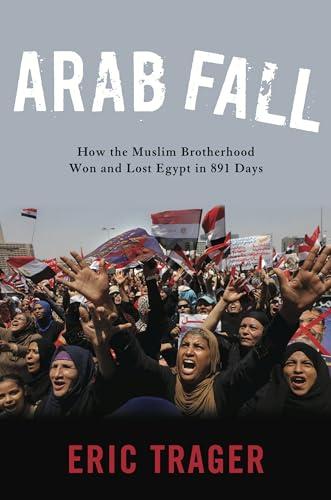
Arab Fall: How the Muslim Brotherhood Won and Lost Egypt in 891 Days
Lingua: Inglese
Editore: Georgetown University Press (edition Illustrated), 2016
ISBN 10: 1626163626 ISBN 13: 9781626163621
Da: BooksRun, Philadelphia, PA, U.S.A.
Valutazione del venditore 5 su 5 stelle

Hardcover. Condizione: Fair. Illustrated. The item might be beaten up but readable. May contain markings or highlighting, as well as stains, bent corners, or any other major defect, but the text is not obscured in any way.
-
Arab Fall: How the Muslim Brotherhood Won and Lost Egypt in 891 Days
Lingua: Inglese
Editore: Georgetown University Press, 2016
ISBN 10: 1626163626 ISBN 13: 9781626163621
Da: ThriftBooks-Dallas, Dallas, TX, U.S.A.
Valutazione del venditore 5 su 5 stelle
Hardcover. Condizione: Good. No Jacket. Missing dust jacket; Pages can have notes/highlighting. Spine may show signs of wear. ~ ThriftBooks: Read More, Spend Less.
-
Arab Fall: How the Muslim Brotherhood Won and Lost Egypt in 891 Days
Lingua: Inglese
Editore: Georgetown University Press, 2016
ISBN 10: 1626163626 ISBN 13: 9781626163621
Da: ThriftBooks-Atlanta, AUSTELL, GA, U.S.A.
Valutazione del venditore 5 su 5 stelle
Hardcover. Condizione: As New. No Jacket. Pages are clean and are not marred by notes or folds of any kind. ~ ThriftBooks: Read More, Spend Less.
-
Arab Fall: How the Muslim Brotherhood Won and Lost Egypt in 891 Days
Lingua: Inglese
Editore: Georgetown University Press, 2016
ISBN 10: 1626163626 ISBN 13: 9781626163621
hardcover. Condizione: Very Good. Connecting readers with great books since 1972! Used books may not include companion materials, and may have some shelf wear or limited writing. We ship orders daily and Customer Service is our top priority!
-
Arab Fall: How the Muslim Brotherhood Won and Lost Egypt in 891 Days
Lingua: Inglese
Editore: Georgetown University Press, 2016
ISBN 10: 1626163626 ISBN 13: 9781626163621
Hardcover. Condizione: new. New Copy. Customer Service Guaranteed.
-

Arab Fall : How the Muslim Brotherhood Won and Lost Egypt in 891 Days
Lingua: Inglese
Editore: Georgetown University Press, 2016
ISBN 10: 1626163626 ISBN 13: 9781626163621
Da: GreatBookPrices, Columbia, MD, U.S.A.
Valutazione del venditore 5 su 5 stelle
Condizione: As New. Unread book in perfect condition.
-

Arab Fall : How the Muslim Brotherhood Won and Lost Egypt in 891 Days
Lingua: Inglese
Editore: Georgetown University Press, 2016
ISBN 10: 1626163626 ISBN 13: 9781626163621
Da: GreatBookPrices, Columbia, MD, U.S.A.
Valutazione del venditore 5 su 5 stelle
Condizione: New.
-
Arab Fall
Lingua: Inglese
Editore: Georgetown University Press, 2016
ISBN 10: 1626163626 ISBN 13: 9781626163621
Da: PBShop.store US, Wood Dale, IL, U.S.A.
Valutazione del venditore 5 su 5 stelle
HRD. Condizione: New. New Book. Shipped from UK. Established seller since 2000.
-

Arab Fall
Lingua: Inglese
Editore: Georgetown University Press, US, 2016
ISBN 10: 1626163626 ISBN 13: 9781626163621
Da: Rarewaves.com USA, London, LONDO, Regno Unito
Valutazione del venditore 5 su 5 stelle
EUR 38,57
Spedizione gratuita
Spedito da Regno Unito a U.S.A.Quantità: 3 disponibili
Aggiungi al carrelloHardback. Condizione: New. How did Egypt's Muslim Brotherhood win power so quickly after the dramatic "Arab Spring" uprising that ended President Hosni Mubarak's thirty-year reign in February 2011? And why did the Brotherhood fall from power even more quickly, culminating with the popular "rebellion" and military coup that toppled Egypt's first elected president, Brotherhood leader Mohamed Morsi, in July 2013? In Arab Fall, Eric Trager examines the Brotherhood's decision making throughout this critical period, explaining its reasons for joining the 2011 uprising, running for a majority of the seats in the 2011-2012 parliamentary elections, and nominating a presidential candidate despite its initial promise not to do so. Based on extensive research in Egypt and interviews with dozens of Brotherhood leaders and cadres including Morsi, Trager argues that the very organizational characteristics that helped the Brotherhood win power also contributed to its rapid downfall. The Brotherhood's intensive process for recruiting members and its rigid nationwide command-chain meant that it possessed unparalleled mobilizing capabilities for winning the first post-Mubarak parliamentary and presidential elections.Yet the Brotherhood's hierarchical organizational culture, in which dissenters are banished and critics are viewed as enemies of Islam, bred exclusivism. This alienated many Egyptians, including many within Egypt's state institutions. The Brotherhood's insularity also prevented its leaders from recognizing how quickly the country was slipping from their grasp, leaving hundreds of thousands of Muslim Brothers entirely unprepared for the brutal crackdown that followed Morsi's overthrow. Trager concludes with an assessment of the current state of Egyptian politics and examines the Brotherhood's prospects for reemerging.
-
Arab Fall
Lingua: Inglese
Editore: Georgetown University Press, 2016
ISBN 10: 1626163626 ISBN 13: 9781626163621
Da: PBShop.store UK, Fairford, GLOS, Regno Unito
Valutazione del venditore 5 su 5 stelle
EUR 33,85
Spedizione EUR 5,76
Spedito da Regno Unito a U.S.A.Quantità: 3 disponibili
Aggiungi al carrelloHRD. Condizione: New. New Book. Shipped from UK. Established seller since 2000.
-
Arab Fall (Hardcover)
Lingua: Inglese
Editore: Georgetown University Press, Washington, DC, 2016
ISBN 10: 1626163626 ISBN 13: 9781626163621
Da: Grand Eagle Retail, Bensenville, IL, U.S.A.
Valutazione del venditore 5 su 5 stelle
Hardcover. Condizione: new. Hardcover. How did Egypt's Muslim Brotherhood win power so quickly after the dramatic "Arab Spring" uprising that ended President Hosni Mubarak's thirty-year reign in February 2011? And why did the Brotherhood fall from power even more quickly, culminating with the popular "rebellion" and military coup that toppled Egypt's first elected president, Brotherhood leader Mohamed Morsi, in July 2013? In Arab Fall, Eric Trager examines the Brotherhood's decision making throughout this critical period, explaining its reasons for joining the 2011 uprising, running for a majority of the seats in the 2011-2012 parliamentary elections, and nominating a presidential candidate despite its initial promise not to do so. Based on extensive research in Egypt and interviews with dozens of Brotherhood leaders and cadres including Morsi, Trager argues that the very organizational characteristics that helped the Brotherhood win power also contributed to its rapid downfall. The Brotherhood's intensive process for recruiting members and its rigid nationwide command-chain meant that it possessed unparalleled mobilizing capabilities for winning the first post-Mubarak parliamentary and presidential elections.Yet the Brotherhood's hierarchical organizational culture, in which dissenters are banished and critics are viewed as enemies of Islam, bred exclusivism. This alienated many Egyptians, including many within Egypt's state institutions. The Brotherhood's insularity also prevented its leaders from recognizing how quickly the country was slipping from their grasp, leaving hundreds of thousands of Muslim Brothers entirely unprepared for the brutal crackdown that followed Morsi's overthrow. Trager concludes with an assessment of the current state of Egyptian politics and examines the Brotherhood's prospects for reemerging. How did Egypt's Muslim Brotherhood win power so quickly after the dramatic "Arab Spring" uprising that ended President Hosni Mubarak's reign? Based on research in Egypt and interviews with dozens of Brotherhood leaders, the author argues that the very organizational characteristics that helped them win power also contributed to its rapid downfall. Shipping may be from multiple locations in the US or from the UK, depending on stock availability.
-
Arab Fall: How the Muslim Brotherhood Won and Lost Egypt in 891 Days
Da: Revaluation Books, Exeter, Regno Unito
Valutazione del venditore 5 su 5 stelle
EUR 34,21
Spedizione EUR 14,35
Spedito da Regno Unito a U.S.A.Quantità: 2 disponibili
Aggiungi al carrelloHardcover. Condizione: Brand New. 327 pages. 9.25x6.25x1.25 inches. In Stock.
-
Arab Fall: How the Muslim Brotherhood Won and Lost Egypt in 891 Days
Lingua: Inglese
Editore: Georgetown University Press, 2016
ISBN 10: 1626163626 ISBN 13: 9781626163621
Da: Ria Christie Collections, Uxbridge, Regno Unito
Valutazione del venditore 5 su 5 stelle
EUR 35,02
Spedizione EUR 13,76
Spedito da Regno Unito a U.S.A.Quantità: 12 disponibili
Aggiungi al carrelloCondizione: New. In.
-

Arab Fall : How the Muslim Brotherhood Won and Lost Egypt in 891 Days
Lingua: Inglese
Editore: Georgetown University Press, 2016
ISBN 10: 1626163626 ISBN 13: 9781626163621
Da: GreatBookPricesUK, Woodford Green, Regno Unito
Valutazione del venditore 5 su 5 stelle
EUR 33,84
Spedizione EUR 17,22
Spedito da Regno Unito a U.S.A.Quantità: 8 disponibili
Aggiungi al carrelloCondizione: New.
-

Arab Fall : How the Muslim Brotherhood Won and Lost Egypt in 891 Days
Lingua: Inglese
Editore: Georgetown University Press, 2016
ISBN 10: 1626163626 ISBN 13: 9781626163621
Da: GreatBookPricesUK, Woodford Green, Regno Unito
Valutazione del venditore 5 su 5 stelle
EUR 33,42
Spedizione EUR 17,22
Spedito da Regno Unito a U.S.A.Quantità: 8 disponibili
Aggiungi al carrelloCondizione: As New. Unread book in perfect condition.
-

ARAB FALL How the Muslim Brotherhood Won and Lost Egypt in 891 Days
Lingua: Inglese
Editore: Georgetown University Press, Washington, 2016
ISBN 10: 1626163626 ISBN 13: 9781626163621
Da: Rare Book Cellar, Pomona, NY, U.S.A.
Valutazione del venditore 5 su 5 stelle
Prima edizione
Hardcover. First Edition; First Printing. Fine in a Near Fine dust jacket. ; 9.1 X 5.8 X 1.3 inches; 296 pages.
-
Arab Fall: How the Muslim Brotherhood Won and Lost Egypt in 891 Days
Lingua: Inglese
Editore: Georgetown University Press, 2016
ISBN 10: 1626163626 ISBN 13: 9781626163621
Da: THE SAINT BOOKSTORE, Southport, Regno Unito
Valutazione del venditore 5 su 5 stelle
EUR 38,11
Spedizione EUR 19,90
Spedito da Regno Unito a U.S.A.Quantità: 3 disponibili
Aggiungi al carrelloHardback. Condizione: New. New copy - Usually dispatched within 4 working days.
-
Arab Fall: How the Muslim Brotherhood Won and Lost Egypt in 891 Days
Lingua: Inglese
Editore: Georgetown University Press, 2016
ISBN 10: 1626163626 ISBN 13: 9781626163621
Da: Kennys Bookshop and Art Galleries Ltd., Galway, GY, Irlanda
Valutazione del venditore 5 su 5 stelle
EUR 50,24
Spedizione EUR 10,50
Spedito da Irlanda a U.S.A.Quantità: Più di 20 disponibili
Aggiungi al carrelloCondizione: New. How did Egypt's Muslim Brotherhood win power so quickly after the dramatic "Arab Spring" uprising that ended President Hosni Mubarak's reign? Based on research in Egypt and interviews with dozens of Brotherhood leaders, the author argues that the very organizational characteristics that helped them win power also contributed to its rapid downfall. Num Pages: 296 pages, 3 figures, 2 tables, 3 figures, 2 tables. BIC Classification: 1HBE; 3JMG; HBJF; HBLW3; HBTV; JFSR2; JPWQ. Category: (P) Professional & Vocational. Dimension: 229 x 152 x 28. Weight in Grams: 635. . 2016. Hardcover. . . . .
-
Arab Fall: How the Muslim Brotherhood Won and Lost Egypt in 891 Days
Lingua: Inglese
Editore: Georgetown University Press, 2016
ISBN 10: 1626163626 ISBN 13: 9781626163621
Da: Kennys Bookstore, Olney, MD, U.S.A.
Valutazione del venditore 5 su 5 stelle
EUR 61,81
Spedizione EUR 9,00
Spedito in U.S.A.Quantità: Più di 20 disponibili
Aggiungi al carrelloCondizione: New. How did Egypt's Muslim Brotherhood win power so quickly after the dramatic "Arab Spring" uprising that ended President Hosni Mubarak's reign? Based on research in Egypt and interviews with dozens of Brotherhood leaders, the author argues that the very organizational characteristics that helped them win power also contributed to its rapid downfall. Num Pages: 296 pages, 3 figures, 2 tables, 3 figures, 2 tables. BIC Classification: 1HBE; 3JMG; HBJF; HBLW3; HBTV; JFSR2; JPWQ. Category: (P) Professional & Vocational. Dimension: 229 x 152 x 28. Weight in Grams: 635. . 2016. Hardcover. . . . . Books ship from the US and Ireland.
-
Arab Fall (Hardcover)
Lingua: Inglese
Editore: Georgetown University Press, Washington, DC, 2016
ISBN 10: 1626163626 ISBN 13: 9781626163621
Da: AussieBookSeller, Truganina, VIC, Australia
Valutazione del venditore 5 su 5 stelle
EUR 71,12
Spedizione EUR 31,73
Spedito da Australia a U.S.A.Quantità: 1 disponibili
Aggiungi al carrelloHardcover. Condizione: new. Hardcover. How did Egypt's Muslim Brotherhood win power so quickly after the dramatic "Arab Spring" uprising that ended President Hosni Mubarak's thirty-year reign in February 2011? And why did the Brotherhood fall from power even more quickly, culminating with the popular "rebellion" and military coup that toppled Egypt's first elected president, Brotherhood leader Mohamed Morsi, in July 2013? In Arab Fall, Eric Trager examines the Brotherhood's decision making throughout this critical period, explaining its reasons for joining the 2011 uprising, running for a majority of the seats in the 2011-2012 parliamentary elections, and nominating a presidential candidate despite its initial promise not to do so. Based on extensive research in Egypt and interviews with dozens of Brotherhood leaders and cadres including Morsi, Trager argues that the very organizational characteristics that helped the Brotherhood win power also contributed to its rapid downfall. The Brotherhood's intensive process for recruiting members and its rigid nationwide command-chain meant that it possessed unparalleled mobilizing capabilities for winning the first post-Mubarak parliamentary and presidential elections.Yet the Brotherhood's hierarchical organizational culture, in which dissenters are banished and critics are viewed as enemies of Islam, bred exclusivism. This alienated many Egyptians, including many within Egypt's state institutions. The Brotherhood's insularity also prevented its leaders from recognizing how quickly the country was slipping from their grasp, leaving hundreds of thousands of Muslim Brothers entirely unprepared for the brutal crackdown that followed Morsi's overthrow. Trager concludes with an assessment of the current state of Egyptian politics and examines the Brotherhood's prospects for reemerging. How did Egypt's Muslim Brotherhood win power so quickly after the dramatic "Arab Spring" uprising that ended President Hosni Mubarak's reign? Based on research in Egypt and interviews with dozens of Brotherhood leaders, the author argues that the very organizational characteristics that helped them win power also contributed to its rapid downfall. Shipping may be from our Sydney, NSW warehouse or from our UK or US warehouse, depending on stock availability.
-

Arab Fall
Lingua: Inglese
Editore: Georgetown University Press, US, 2016
ISBN 10: 1626163626 ISBN 13: 9781626163621
Da: Rarewaves.com UK, London, Regno Unito
Valutazione del venditore 5 su 5 stelle
EUR 34,66
Spedizione EUR 74,63
Spedito da Regno Unito a U.S.A.Quantità: 3 disponibili
Aggiungi al carrelloHardback. Condizione: New. How did Egypt's Muslim Brotherhood win power so quickly after the dramatic "Arab Spring" uprising that ended President Hosni Mubarak's thirty-year reign in February 2011? And why did the Brotherhood fall from power even more quickly, culminating with the popular "rebellion" and military coup that toppled Egypt's first elected president, Brotherhood leader Mohamed Morsi, in July 2013? In Arab Fall, Eric Trager examines the Brotherhood's decision making throughout this critical period, explaining its reasons for joining the 2011 uprising, running for a majority of the seats in the 2011-2012 parliamentary elections, and nominating a presidential candidate despite its initial promise not to do so. Based on extensive research in Egypt and interviews with dozens of Brotherhood leaders and cadres including Morsi, Trager argues that the very organizational characteristics that helped the Brotherhood win power also contributed to its rapid downfall. The Brotherhood's intensive process for recruiting members and its rigid nationwide command-chain meant that it possessed unparalleled mobilizing capabilities for winning the first post-Mubarak parliamentary and presidential elections.Yet the Brotherhood's hierarchical organizational culture, in which dissenters are banished and critics are viewed as enemies of Islam, bred exclusivism. This alienated many Egyptians, including many within Egypt's state institutions. The Brotherhood's insularity also prevented its leaders from recognizing how quickly the country was slipping from their grasp, leaving hundreds of thousands of Muslim Brothers entirely unprepared for the brutal crackdown that followed Morsi's overthrow. Trager concludes with an assessment of the current state of Egyptian politics and examines the Brotherhood's prospects for reemerging.

