

Importo totale (1 articolo articoli):
Destinazione ordine:

9781784917210 - Current Approaches to Collective Burials in the Late European Prehistory: Proceedings of the XVII UISPP World Congress (1?7 September 2014, Burgos, Spain) Volume 14... (20 risultati)
Vai alla pagina principale dei risultati di ricerca
Filtri di ricerca
Tipo di articolo
- Tutti i tipi di prodotto
- Libri (20)
- Riviste e Giornali (Nessun altro risultato corrispondente a questo perfezionamento)
- Fumetti (Nessun altro risultato corrispondente a questo perfezionamento)
- Spartiti (Nessun altro risultato corrispondente a questo perfezionamento)
- Arte, Stampe e Poster (Nessun altro risultato corrispondente a questo perfezionamento)
- Fotografie (Nessun altro risultato corrispondente a questo perfezionamento)
- Mappe (Nessun altro risultato corrispondente a questo perfezionamento)
- Manoscritti e Collezionismo cartaceo (Nessun altro risultato corrispondente a questo perfezionamento)
Condizioni Maggiori informazioni
- Nuovo (18)
- Come nuovo, Ottimo o Quasi ottimo (2)
- Molto buono o Buono (Nessun altro risultato corrispondente a questo perfezionamento)
- Discreto o Mediocre (Nessun altro risultato corrispondente a questo perfezionamento)
- Come descritto (Nessun altro risultato corrispondente a questo perfezionamento)
Legatura
- Tutte
- Rilegato (Nessun altro risultato corrispondente a questo perfezionamento)
- Brossura (20)
Ulteriori caratteristiche
- Prima ed. (1)
- Copia autograf. (Nessun altro risultato corrispondente a questo perfezionamento)
- Sovracoperta (Nessun altro risultato corrispondente a questo perfezionamento)
- Con foto (5)
- Non Print on Demand (20)
Lingua (1)
Prezzo
- Qualsiasi prezzo
- Inferiore a EUR 20 (Nessun altro risultato corrispondente a questo perfezionamento)
- EUR 20 a EUR 45
- Superiore a EUR 45
Spedizione gratuita
Paese del venditore
Valutazione venditore
-
Current Approaches to Collective Burials in the Late European Prehistory
Da: GreatBookPrices, Columbia, MD, U.S.A.
Valutazione del venditore 5 su 5 stelle

Condizione: As New. Unread book in perfect condition.
-
Current Approaches to Collective Burials in the Late European Prehistory
Da: PBShop.store UK, Fairford, GLOS, Regno Unito
Valutazione del venditore 5 su 5 stelle
EUR 36,78
Spedizione EUR 5,80
Spedito da Regno Unito a U.S.A.Quantità: 1 disponibili
Aggiungi al carrelloPAP. Condizione: New. New Book. Shipped from UK. Established seller since 2000.
-
Current Approaches to Collective Burials in the Late European Prehistory
Da: GreatBookPrices, Columbia, MD, U.S.A.
Valutazione del venditore 5 su 5 stelle
Condizione: New.
-
paperback. Condizione: New. 1st.
-

Current Approaches to Collective Burials in the Late European Prehistory
Da: Rarewaves.com USA, London, LONDO, Regno Unito
Valutazione del venditore 5 su 5 stelle
EUR 44,87
Spedizione gratuita
Spedito da Regno Unito a U.S.A.Quantità: 1 disponibili
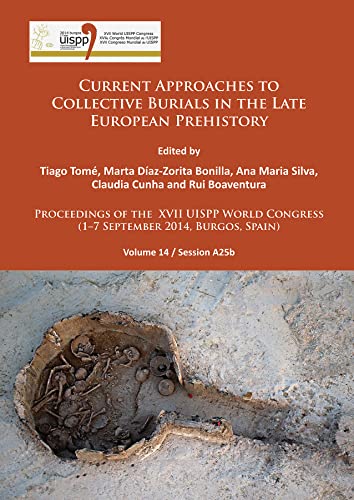
Aggiungi al carrelloPaperback. Condizione: New. The present volume originated in session A25b ('Current Approaches to Collective Burials in the Late European Prehistory') of the XVII World Congress of the International Union of the Prehistoric and Protohistoric Sciences (UISPP), held in Burgos in September 2014. Collective burials are quite a common feature in Prehistoric Europe, with the gathering of multiple individuals in a shared burial place occurring in different types of burial structures (natural caves, megalithic structures, artificial caves, corbelled-roof tombs, pits, etc.). Such features are generally associated with communities along the agropastoralist transition and fully agricultural societies of the Neolithic and Chalcolithic. For a long time, human skeletal remains exhumed from collective burials were dismissed as valuable sources of information, their studies being limited mostly to morphological assessments and subsequent classification in predefined 'races'. They currently represent a starting point for diversified, often interdisciplinary, research projects, allowing for a more accurate reconstruction of funerary practices, as well as of palaeobiological and environmental aspects, which are fundamental for the understanding of populations in the Late Prehistory of Europe and of the processes leading to the emergence of agricultural societies in this part of the world. The articles in this volume provide examples of different approaches currently being developed on Prehistoric collective burials of southern Europe, mostly focusing on case studies, but also including contributions of a more methodological scope.
-
Current Approaches to Collective Burials in the Late European Prehistory: Proceedings of the XVII UISPP World Congress (1-7 September 2014, Burgos, Spain) Volume 14/Session A25b
Lingua: Inglese
Editore: Archaeopress Archaeology 2017-11-30, 2017
ISBN 10: 1784917214 ISBN 13: 9781784917210
Da: Chiron Media, Wallingford, Regno Unito
Valutazione del venditore 5 su 5 stelle
EUR 34,68
Spedizione EUR 17,90
Spedito da Regno Unito a U.S.A.Quantità: 1 disponibili
Aggiungi al carrelloJP Oversized. Condizione: New.
-
Current Approaches to Collective Burials in the Late European Prehistory: Proceedings of the XVII UISPP World Congress (1-7 September 2014, Burgos, Spain) Volume 14/Session A25b
Da: Ria Christie Collections, Uxbridge, Regno Unito
Valutazione del venditore 5 su 5 stelle
EUR 39,76
Spedizione EUR 13,85
Spedito da Regno Unito a U.S.A.Quantità: 1 disponibili
Aggiungi al carrelloCondizione: New. In.
-
Current Approaches to Collective Burials in the Late European Prehistory: Proceedings of the XVII UISPP World Congress (1-7 September 2014, Burgos, Spain) Volume 14/Session A25b
Da: Revaluation Books, Exeter, Regno Unito
Valutazione del venditore 5 su 5 stelle
EUR 42,43
Spedizione EUR 11,56
Spedito da Regno Unito a U.S.A.Quantità: 1 disponibili
Aggiungi al carrelloPaperback. Condizione: Brand New. 127 pages. 11.25x7.75x0.50 inches. In Stock.
-
Current Approaches to Collective Burials in the Late European Prehistory
Da: GreatBookPricesUK, Woodford Green, Regno Unito
Valutazione del venditore 5 su 5 stelle
EUR 36,77
Spedizione EUR 17,34
Spedito da Regno Unito a U.S.A.Quantità: 1 disponibili
Aggiungi al carrelloCondizione: New.
-
Current Approaches to Collective Burials in the Late European Prehistory
Da: GreatBookPricesUK, Woodford Green, Regno Unito
Valutazione del venditore 5 su 5 stelle
EUR 40,58
Spedizione EUR 17,34
Spedito da Regno Unito a U.S.A.Quantità: 1 disponibili
Aggiungi al carrelloCondizione: As New. Unread book in perfect condition.
-
Current Approaches to Collective Burials in the Late European Prehistory: Proceedings of the XVII UISPP World Congress (1-7 September 2014, Burgos, Spain) Volume 14/Session A25b
Da: THE SAINT BOOKSTORE, Southport, Regno Unito
Valutazione del venditore 5 su 5 stelle
EUR 43,41
Spedizione EUR 19,09
Spedito da Regno Unito a U.S.A.Quantità: 1 disponibili
Aggiungi al carrelloPaperback / softback. Condizione: New. New copy - Usually dispatched within 3 working days.
-
Current Approaches to Collective Burials in the Late European Prehistory (Paperback)
Da: Grand Eagle Retail, Bensenville, IL, U.S.A.
Valutazione del venditore 5 su 5 stelle
Paperback. Condizione: new. Paperback. The present volume originated in session A25b (Current Approaches to Collective Burials in the Late European Prehistory) of the XVII World Congress of the International Union of the Prehistoric and Protohistoric Sciences (UISPP), held in Burgos in September 2014. Collective burials are quite a common feature in Prehistoric Europe, with the gathering of multiple individuals in a shared burial place occurring in different types of burial structures (natural caves, megalithic structures, artificial caves, corbelled-roof tombs, pits, etc.). Such features are generally associated with communities along the agropastoralist transition and fully agricultural societies of the Neolithic and Chalcolithic. For a long time, human skeletal remains exhumed from collective burials were dismissed as valuable sources of information, their studies being limited mostly to morphological assessments and subsequent classification in predefined races. They currently represent a starting point for diversified, often interdisciplinary, research projects, allowing for a more accurate reconstruction of funerary practices, as well as of palaeobiological and environmental aspects, which are fundamental for the understanding of populations in the Late Prehistory of Europe and of the processes leading to the emergence of agricultural societies in this part of the world. The articles in this volume provide examples of different approaches currently being developed on Prehistoric collective burials of southern Europe, mostly focusing on case studies, but also including contributions of a more methodological scope. The articles in this volume provide examples of different approaches currently being developed on Prehistoric collective burials of southern Europe, mostly focusing on case studies, but also including contributions of a more methodological scope. Shipping may be from multiple locations in the US or from the UK, depending on stock availability.
-
CURRENT APPROACHES TO COLLECTIVE BURIALS
Da: Speedyhen, Hertfordshire, Regno Unito
Valutazione del venditore 5 su 5 stelle
EUR 33,00
Spedizione EUR 47,39
Spedito da Regno Unito a U.S.A.Quantità: 1 disponibili
Aggiungi al carrelloCondizione: NEW.
-
Current Approaches to Collective Burials in the Late European Prehistory: Proceedings of the XVII UISPP World Congress (1-7 September 2014, Burgos, Spain) Volume 14/Session A25b
Da: Kennys Bookshop and Art Galleries Ltd., Galway, GY, Irlanda
Valutazione del venditore 5 su 5 stelle
EUR 71,74
Spedizione EUR 10,50
Spedito da Irlanda a U.S.A.Quantità: 1 disponibili
Aggiungi al carrelloCondizione: New. 2017. Paperback. . . . . .
-

EUR 42,05
Spedizione EUR 48,99
Spedito da Germania a U.S.A.Quantità: 1 disponibili
Aggiungi al carrelloCondizione: New. The articles in this volume provide examples of different approaches currently being developed on Prehistoric collective burials of southern Europe, mostly focusing on case studies, but also including contributions of a more methodological scope.Kla.
-
Current Approaches to Collective Burials in the Late European Prehistory: Proceedings of the XVII UISPP World Congress (1-7 September 2014, Burgos, Spain) Volume 14/Session A25b
Da: Kennys Bookstore, Olney, MD, U.S.A.
Valutazione del venditore 5 su 5 stelle
Condizione: New. 2017. Paperback. . . . . . Books ship from the US and Ireland.
-

EUR 42,57
Spedizione EUR 62,65
Spedito da Germania a U.S.A.Quantità: 1 disponibili
Aggiungi al carrelloTaschenbuch. Condizione: Neu. Neuware - The present volume originated in session A25b ('Current Approaches to Collective Burials in the Late European Prehistory') of the XVII World Congress of the International Union of the Prehistoric and Protohistoric Sciences (UISPP), held in Burgos in September 2014. Collective burials are quite a common feature in Prehistoric Europe, with the gathering of multiple individuals in a shared burial place occurring in different types of burial structures (natural caves, megalithic structures, artificial caves, corbelled-roof tombs, pits, etc.). Such features are generally associated with communities along the agropastoralist transition and fully agricultural societies of the Neolithic and Chalcolithic. For a long time, human skeletal remains exhumed from collective burials were dismissed as valuable sources of information, their studies being limited mostly to morphological assessments and subsequent classification in predefined 'races'. They currently represent a starting point for diversified, often interdisciplinary, research projects, allowing for a more accurate reconstruction of funerary practices, as well as of palaeobiological and environmental aspects, which are fundamental for the understanding of populations in the Late Prehistory of Europe and of the processes leading to the emergence of agricultural societies in this part of the world. The articles in this volume provide examples of different approaches currently being developed on Prehistoric collective burials of southern Europe, mostly focusing on case studies, but also including contributions of a more methodological scope.
-

Current Approaches to Collective Burials in the Late European Prehistory
Da: Rarewaves.com UK, London, Regno Unito
Valutazione del venditore 5 su 5 stelle
EUR 41,00
Spedizione EUR 75,13
Spedito da Regno Unito a U.S.A.Quantità: 1 disponibili
Aggiungi al carrelloPaperback. Condizione: New. The present volume originated in session A25b ('Current Approaches to Collective Burials in the Late European Prehistory') of the XVII World Congress of the International Union of the Prehistoric and Protohistoric Sciences (UISPP), held in Burgos in September 2014. Collective burials are quite a common feature in Prehistoric Europe, with the gathering of multiple individuals in a shared burial place occurring in different types of burial structures (natural caves, megalithic structures, artificial caves, corbelled-roof tombs, pits, etc.). Such features are generally associated with communities along the agropastoralist transition and fully agricultural societies of the Neolithic and Chalcolithic. For a long time, human skeletal remains exhumed from collective burials were dismissed as valuable sources of information, their studies being limited mostly to morphological assessments and subsequent classification in predefined 'races'. They currently represent a starting point for diversified, often interdisciplinary, research projects, allowing for a more accurate reconstruction of funerary practices, as well as of palaeobiological and environmental aspects, which are fundamental for the understanding of populations in the Late Prehistory of Europe and of the processes leading to the emergence of agricultural societies in this part of the world. The articles in this volume provide examples of different approaches currently being developed on Prehistoric collective burials of southern Europe, mostly focusing on case studies, but also including contributions of a more methodological scope.
-

EUR 47,60
Spedizione EUR 70,00
Spedito da Germania a U.S.A.Quantità: 1 disponibili
Aggiungi al carrelloTaschenbuch. Condizione: Neu. Current Approaches to Collective Burials in the Late European Prehistory | Proceedings of the XVII UISPP World Congress (1-7 September 2014, Burgos, Spain) Volume 14/Session A25b | Ana Maria Silva (u. a.) | Taschenbuch | Proceedings of the UISPP World Congress | Kartoniert / Broschiert | Englisch | 2017 | Archaeopress | EAN 9781784917210 | Verantwortliche Person für die EU: Libri GmbH, Europaallee 1, 36244 Bad Hersfeld, gpsr[at]libri[dot]de | Anbieter: preigu.
-
Current Approaches to Collective Burials in the Late European Prehistory (Paperback)
Da: AussieBookSeller, Truganina, VIC, Australia
Valutazione del venditore 5 su 5 stelle
EUR 114,62
Spedizione EUR 32,16
Spedito da Australia a U.S.A.Quantità: 1 disponibili
Aggiungi al carrelloPaperback. Condizione: new. Paperback. The present volume originated in session A25b (Current Approaches to Collective Burials in the Late European Prehistory) of the XVII World Congress of the International Union of the Prehistoric and Protohistoric Sciences (UISPP), held in Burgos in September 2014. Collective burials are quite a common feature in Prehistoric Europe, with the gathering of multiple individuals in a shared burial place occurring in different types of burial structures (natural caves, megalithic structures, artificial caves, corbelled-roof tombs, pits, etc.). Such features are generally associated with communities along the agropastoralist transition and fully agricultural societies of the Neolithic and Chalcolithic. For a long time, human skeletal remains exhumed from collective burials were dismissed as valuable sources of information, their studies being limited mostly to morphological assessments and subsequent classification in predefined races. They currently represent a starting point for diversified, often interdisciplinary, research projects, allowing for a more accurate reconstruction of funerary practices, as well as of palaeobiological and environmental aspects, which are fundamental for the understanding of populations in the Late Prehistory of Europe and of the processes leading to the emergence of agricultural societies in this part of the world. The articles in this volume provide examples of different approaches currently being developed on Prehistoric collective burials of southern Europe, mostly focusing on case studies, but also including contributions of a more methodological scope. The articles in this volume provide examples of different approaches currently being developed on Prehistoric collective burials of southern Europe, mostly focusing on case studies, but also including contributions of a more methodological scope. Shipping may be from our Sydney, NSW warehouse or from our UK or US warehouse, depending on stock availability.
