

Importo totale (1 articolo articoli):
Destinazione ordine:

9781850658061 - Between God and the Sultan: A History of Islamic Law di Vikor, Knut S. (17 risultati)
Vai alla pagina principale dei risultati di ricerca
Filtri di ricerca
Tipo di articolo
- Tutti i tipi di prodotto
- Libri (17)
- Riviste e Giornali (Nessun altro risultato corrispondente a questo perfezionamento)
- Fumetti (Nessun altro risultato corrispondente a questo perfezionamento)
- Spartiti (Nessun altro risultato corrispondente a questo perfezionamento)
- Arte, Stampe e Poster (Nessun altro risultato corrispondente a questo perfezionamento)
- Fotografie (Nessun altro risultato corrispondente a questo perfezionamento)
- Mappe (Nessun altro risultato corrispondente a questo perfezionamento)
- Manoscritti e Collezionismo cartaceo (Nessun altro risultato corrispondente a questo perfezionamento)
Condizioni Maggiori informazioni
- Nuovo (15)
- Come nuovo, Ottimo o Quasi ottimo (Nessun altro risultato corrispondente a questo perfezionamento)
- Molto buono o Buono (2)
- Discreto o Mediocre (Nessun altro risultato corrispondente a questo perfezionamento)
- Come descritto (Nessun altro risultato corrispondente a questo perfezionamento)
Legatura
- Tutte
- Rilegato (Nessun altro risultato corrispondente a questo perfezionamento)
- Brossura (17)
Ulteriori caratteristiche
- Prima ed. (Nessun altro risultato corrispondente a questo perfezionamento)
- Copia autograf. (Nessun altro risultato corrispondente a questo perfezionamento)
- Sovracoperta (Nessun altro risultato corrispondente a questo perfezionamento)
- Con foto (4)
- Non Print on Demand (17)
Lingua (1)
Prezzo
- Qualsiasi prezzo
- Inferiore a EUR 20 (Nessun altro risultato corrispondente a questo perfezionamento)
- EUR 20 a EUR 45
- Superiore a EUR 45
Spedizione gratuita
Paese del venditore
Valutazione venditore
-
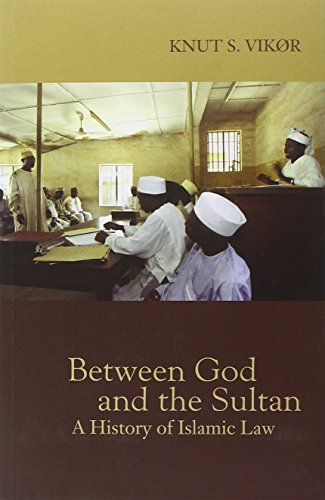
Between God and the Sultan : A History of Islamic Law
Lingua: Inglese
Editore: C. Hurst and Company (Publishers) Limited, 2005
ISBN 10: 1850658064 ISBN 13: 9781850658061
Da: Better World Books Ltd, Dunfermline, Regno Unito
Valutazione del venditore 5 su 5 stelle

EUR 23,99
Spedizione EUR 5,84
Spedito da Regno Unito a U.S.A.Quantità: 1 disponibili
Aggiungi al carrelloCondizione: Very Good. Pages intact with possible writing/highlighting. Binding strong with minor wear. Dust jackets/supplements may not be included. Stock photo provided. Product includes identifying sticker. Better World Books: Buy Books. Do Good.
-
Between God and the Sultan
Lingua: Inglese
Editore: C Hurst and Co Publishers Ltd, 2005
ISBN 10: 1850658064 ISBN 13: 9781850658061
Da: PBShop.store UK, Fairford, GLOS, Regno Unito
Valutazione del venditore 5 su 5 stelle
EUR 31,30
Spedizione EUR 5,86
Spedito da Regno Unito a U.S.A.Quantità: 10 disponibili
Aggiungi al carrelloPAP. Condizione: New. New Book. Shipped from UK. Established seller since 2000.
-

Between God and the Sultan
Lingua: Inglese
Editore: C Hurst and Co Publishers Ltd, GB, 2005
ISBN 10: 1850658064 ISBN 13: 9781850658061
Da: Rarewaves.com USA, London, LONDO, Regno Unito
Valutazione del venditore 5 su 5 stelle
EUR 37,76
Spedizione gratuita
Spedito da Regno Unito a U.S.A.Quantità: 5 disponibili
Aggiungi al carrelloPaperback. Condizione: New. Today's discussions on Islam and the place religion should have in society often lead to questions about the Shari'a - Islamic law. Those who work for a political role for Islam demand that the Shari'a must be applied in their country, while those critical of Islam use the law as proof of its 'medieval' character. Islam is sometimes, not quite justly, called a 'religion of rules', and the rules of Islam are the Shari'a. But it is often hard to establish the exact nature of this law in more practical terms. Asking those who favour it or those who oppose it may only lead to greater confusion. But a rule and its exact opposite can both be said to be 'what the Shari'a says' and what God demands of the believer. It may even be questioned if there is any Shari'a at all in the work-a-day world, or whether it is just an ethical ideal, or a body whose secrets are known only to God. At the same time people may be stoned or mutilated in the name of this law. The key to understanding Shari'a is the concept of 'religious law', a term which might seem contradictory. 'Religion' is faith in a non-material force of some kind, and something we consider internal to the human soul. 'Law', on the other hand, is external to us, established by society in order to regulate the material needs of the community. The contrast between 'religion' and 'law' has been continuous throughout Muslim history. Islamic law has always existed in a tension between these two forces: God, who gave the law, and the state - the 'sultan' - representing society and implementing the law. This tension and dynamic have created a very particular history for the law - in how it was formulated and by whom, in its theoretical basis and its actual rules, and in how it was practised in historical reality from the time of its formation till today. That is the main theme of the book. Knut S. Vikor aims in this book to introduce the development and practice of Islamic law to a wide readership: students, lawyers and the growing number of those interested in Islamic civilisation. He summarises the main concepts of Islamic jurisprudence, discusses debates concerning the historicity of Islamic sources of dogma and the dating of early Islamic law; describes the classic practice of the law, in the formulation of legal rules and practice in the courts; and sets out various substantive legal rules, on such vital matters as the family and economic activity.
-
Between God and the Sultan (Paperback)
Lingua: Inglese
Editore: C Hurst & Co Publishers Ltd, London, 2005
ISBN 10: 1850658064 ISBN 13: 9781850658061
Da: Grand Eagle Retail, Bensenville, IL, U.S.A.
Valutazione del venditore 5 su 5 stelle
Paperback. Condizione: new. Paperback. Today's discussions on Islam and the place religion should have in society often lead to questions about the Shari'a - Islamic law. Those who work for a political role for Islam demand that the Shari'a must be applied in their country, while those critical of Islam use the law as proof of its 'medieval' character. Islam is sometimes, not quite justly, called a 'religion of rules', and the rules of Islam are the Shari'a. But it is often hard to establish the exact nature of this law in more practical terms. Asking those who favour it or those who oppose it may only lead to greater confusion. But a rule and its exact opposite can both be said to be 'what the Shari'a says' and what God demands of the believer. It may even be questioned if there is any Shari'a at all in the work-a-day world, or whether it is just an ethical ideal, or a body whose secrets are known only to God. At the same time people may be stoned or mutilated in the name of this law. The key to understanding Shari'a is the concept of 'religious law', a term which might seem contradictory. 'Religion' is faith in a non-material force of some kind, and something we consider internal to the human soul. 'Law', on the other hand, is external to us, established by society in order to regulate the material needs of the community. The contrast between 'religion' and 'law' has been continuous throughout Muslim history. Islamic law has always existed in a tension between these two forces: God, who gave the law, and the state - the 'sultan' - representing society and implementing the law. This tension and dynamic have created a very particular history for the law - in how it was formulated and by whom, in its theoretical basis and its actual rules, and in how it was practised in historical reality from the time of its formation till today. That is the main theme of the book. Knut S. Vikor aims in this book to introduce the development and practice of Islamic law to a wide readership: students, lawyers and the growing number of those interested in Islamic civilisation. He summarises the main concepts of Islamic jurisprudence, discusses debates concerning the historicity of Islamic sources of dogma and the dating of early Islamic law; describes the classic practice of the law, in the formulation of legal rules and practice in the courts; and sets out various substantive legal rules, on such vital matters as the family and economic activity. Summarizing the main concepts of Islamic jurisprudence, this book discusses the debates concerning the historicity of Islamic sources of dogma. It describes the classic practice of the law, in the formulation of legal rules and practice in the courts, and sets out various substantive legal rules on matters, such as family and economic activity. Shipping may be from multiple locations in the US or from the UK, depending on stock availability.
-
Between God and the Sultan: A History of Islamic Law
Lingua: Inglese
Editore: C Hurst & Co Publishers Ltd, 2012
ISBN 10: 1850658064 ISBN 13: 9781850658061
EUR 24,05
Spedizione EUR 15,88
Spedito da Regno Unito a U.S.A.Quantità: 1 disponibili
Aggiungi al carrelloCondizione: Good. This is an ex-library book and may have the usual library/used-book markings inside.This book has soft covers. In good all round condition. Please note the Image in this listing is a stock photo and may not match the covers of the actual item,600grams, ISBN:9781850658061.
-
Between God and the Sultan an Historical Introduction to Islamic Law
Lingua: Inglese
Editore: C. Hurst & Co. (Publishers) Ltd., 2005
ISBN 10: 1850658064 ISBN 13: 9781850658061
Da: Majestic Books, Hounslow, Regno Unito
Valutazione del venditore 4 su 5 stelle

EUR 32,91
Spedizione EUR 7,59
Spedito da Regno Unito a U.S.A.Quantità: 3 disponibili
Aggiungi al carrelloCondizione: New. pp. xi + 387.
-
Between Od and the Sultan
Da: Revaluation Books, Exeter, Regno Unito
Valutazione del venditore 5 su 5 stelle
EUR 30,29
Spedizione EUR 14,59
Spedito da Regno Unito a U.S.A.Quantità: 1 disponibili
Aggiungi al carrelloPaperback. Condizione: Brand New. 288 pages. 8.50x5.43x1.34 inches. In Stock.
-
Between God and the Sultan an Historical Introduction to Islamic Law
Lingua: Inglese
Editore: C. Hurst & Co. (Publishers) Ltd., 2005
ISBN 10: 1850658064 ISBN 13: 9781850658061
Da: Books Puddle, New York, NY, U.S.A.
Valutazione del venditore 4 su 5 stelle
Condizione: New. pp. xi + 387.
-
Between God and the Sultan: A History of Islamic Law
Lingua: Inglese
Editore: C Hurst & Co Publishers Ltd -, 2005
ISBN 10: 1850658064 ISBN 13: 9781850658061
Da: Chiron Media, Wallingford, Regno Unito
Valutazione del venditore 5 su 5 stelle
EUR 28,33
Spedizione EUR 18,08
Spedito da Regno Unito a U.S.A.Quantità: 10 disponibili
Aggiungi al carrelloPaperback. Condizione: New.
-
Between God and the Sultan: A History of Islamic Law
Lingua: Inglese
Editore: C Hurst & Co Publishers Ltd, 2005
ISBN 10: 1850658064 ISBN 13: 9781850658061
Da: Kennys Bookshop and Art Galleries Ltd., Galway, GY, Irlanda
Valutazione del venditore 5 su 5 stelle
EUR 34,87
Spedizione EUR 10,50
Spedito da Irlanda a U.S.A.Quantità: Più di 20 disponibili
Aggiungi al carrelloCondizione: New. 2005. Paperback. Summarizing the main concepts of Islamic jurisprudence, this book discusses the debates concerning the historicity of Islamic sources of dogma. It describes the classic practice of the law, in the formulation of legal rules and practice in the courts, and sets out various substantive legal rules on matters, such as family and economic activity. BIC Classification: LAFS. Category: (UU) Undergraduate. Dimension: 216 x 151 x 25. Weight in Grams: 520. . . . . .
-
Between God and the Sultan an Historical Introduction to Islamic Law
Lingua: Inglese
Editore: C. Hurst & Co. (Publishers) Ltd., 2005
ISBN 10: 1850658064 ISBN 13: 9781850658061
Da: Biblios, Frankfurt am main, HESSE, Germania
Valutazione del venditore 4 su 5 stelle
EUR 39,02
Spedizione EUR 9,95
Spedito da Germania a U.S.A.Quantità: 3 disponibili
Aggiungi al carrelloCondizione: New. pp. xi + 387.
-
Between God and the Sultan: A History of Islamic Law
Lingua: Inglese
Editore: C Hurst & Co Publishers Ltd, 2005
ISBN 10: 1850658064 ISBN 13: 9781850658061
Da: Kennys Bookstore, Olney, MD, U.S.A.
Valutazione del venditore 5 su 5 stelle
EUR 42,78
Spedizione EUR 9,18
Spedito in U.S.A.Quantità: Più di 20 disponibili
Aggiungi al carrelloCondizione: New. 2005. Paperback. Summarizing the main concepts of Islamic jurisprudence, this book discusses the debates concerning the historicity of Islamic sources of dogma. It describes the classic practice of the law, in the formulation of legal rules and practice in the courts, and sets out various substantive legal rules on matters, such as family and economic activity. BIC Classification: LAFS. Category: (UU) Undergraduate. Dimension: 216 x 151 x 25. Weight in Grams: 520. . . . . . Books ship from the US and Ireland.
-
Between God and the Sultan: A History of Islamic Law
Lingua: Inglese
Editore: C Hurst & Co Publishers Ltd, 2005
ISBN 10: 1850658064 ISBN 13: 9781850658061
Da: THE SAINT BOOKSTORE, Southport, Regno Unito
Valutazione del venditore 5 su 5 stelle
EUR 34,04
Spedizione EUR 18,97
Spedito da Regno Unito a U.S.A.Quantità: 10 disponibili
Aggiungi al carrelloPaperback / softback. Condizione: New. New copy - Usually dispatched within 4 working days.
-

Between God and the Sultan
Lingua: Inglese
Editore: C Hurst & Co Publishers Ltd, 2005
ISBN 10: 1850658064 ISBN 13: 9781850658061
EUR 34,23
Spedizione EUR 48,99
Spedito da Germania a U.S.A.Quantità: Più di 20 disponibili
Aggiungi al carrelloCondizione: New. Summarizing the main concepts of Islamic jurisprudence, this book discusses the debates concerning the historicity of Islamic sources of dogma. It describes the classic practice of the law, in the formulation of legal rules and practice in the courts, and s.
-
Between God and the Sultan (Paperback)
Lingua: Inglese
Editore: C Hurst & Co Publishers Ltd, London, 2005
ISBN 10: 1850658064 ISBN 13: 9781850658061
Da: AussieBookSeller, Truganina, VIC, Australia
Valutazione del venditore 5 su 5 stelle
EUR 61,12
Spedizione EUR 32,34
Spedito da Australia a U.S.A.Quantità: 1 disponibili
Aggiungi al carrelloPaperback. Condizione: new. Paperback. Today's discussions on Islam and the place religion should have in society often lead to questions about the Shari'a - Islamic law. Those who work for a political role for Islam demand that the Shari'a must be applied in their country, while those critical of Islam use the law as proof of its 'medieval' character. Islam is sometimes, not quite justly, called a 'religion of rules', and the rules of Islam are the Shari'a. But it is often hard to establish the exact nature of this law in more practical terms. Asking those who favour it or those who oppose it may only lead to greater confusion. But a rule and its exact opposite can both be said to be 'what the Shari'a says' and what God demands of the believer. It may even be questioned if there is any Shari'a at all in the work-a-day world, or whether it is just an ethical ideal, or a body whose secrets are known only to God. At the same time people may be stoned or mutilated in the name of this law. The key to understanding Shari'a is the concept of 'religious law', a term which might seem contradictory. 'Religion' is faith in a non-material force of some kind, and something we consider internal to the human soul. 'Law', on the other hand, is external to us, established by society in order to regulate the material needs of the community. The contrast between 'religion' and 'law' has been continuous throughout Muslim history. Islamic law has always existed in a tension between these two forces: God, who gave the law, and the state - the 'sultan' - representing society and implementing the law. This tension and dynamic have created a very particular history for the law - in how it was formulated and by whom, in its theoretical basis and its actual rules, and in how it was practised in historical reality from the time of its formation till today. That is the main theme of the book. Knut S. Vikor aims in this book to introduce the development and practice of Islamic law to a wide readership: students, lawyers and the growing number of those interested in Islamic civilisation. He summarises the main concepts of Islamic jurisprudence, discusses debates concerning the historicity of Islamic sources of dogma and the dating of early Islamic law; describes the classic practice of the law, in the formulation of legal rules and practice in the courts; and sets out various substantive legal rules, on such vital matters as the family and economic activity. Summarizing the main concepts of Islamic jurisprudence, this book discusses the debates concerning the historicity of Islamic sources of dogma. It describes the classic practice of the law, in the formulation of legal rules and practice in the courts, and sets out various substantive legal rules on matters, such as family and economic activity. Shipping may be from our Sydney, NSW warehouse or from our UK or US warehouse, depending on stock availability.
-

Between God and the Sultan
Lingua: Inglese
Editore: C Hurst and Co Publishers Ltd, GB, 2005
ISBN 10: 1850658064 ISBN 13: 9781850658061
Da: Rarewaves.com UK, London, Regno Unito
Valutazione del venditore 5 su 5 stelle
EUR 31,29
Spedizione EUR 75,88
Spedito da Regno Unito a U.S.A.Quantità: 5 disponibili
Aggiungi al carrelloPaperback. Condizione: New. Today's discussions on Islam and the place religion should have in society often lead to questions about the Shari'a - Islamic law. Those who work for a political role for Islam demand that the Shari'a must be applied in their country, while those critical of Islam use the law as proof of its 'medieval' character. Islam is sometimes, not quite justly, called a 'religion of rules', and the rules of Islam are the Shari'a. But it is often hard to establish the exact nature of this law in more practical terms. Asking those who favour it or those who oppose it may only lead to greater confusion. But a rule and its exact opposite can both be said to be 'what the Shari'a says' and what God demands of the believer. It may even be questioned if there is any Shari'a at all in the work-a-day world, or whether it is just an ethical ideal, or a body whose secrets are known only to God. At the same time people may be stoned or mutilated in the name of this law. The key to understanding Shari'a is the concept of 'religious law', a term which might seem contradictory. 'Religion' is faith in a non-material force of some kind, and something we consider internal to the human soul. 'Law', on the other hand, is external to us, established by society in order to regulate the material needs of the community. The contrast between 'religion' and 'law' has been continuous throughout Muslim history. Islamic law has always existed in a tension between these two forces: God, who gave the law, and the state - the 'sultan' - representing society and implementing the law. This tension and dynamic have created a very particular history for the law - in how it was formulated and by whom, in its theoretical basis and its actual rules, and in how it was practised in historical reality from the time of its formation till today. That is the main theme of the book. Knut S. Vikor aims in this book to introduce the development and practice of Islamic law to a wide readership: students, lawyers and the growing number of those interested in Islamic civilisation. He summarises the main concepts of Islamic jurisprudence, discusses debates concerning the historicity of Islamic sources of dogma and the dating of early Islamic law; describes the classic practice of the law, in the formulation of legal rules and practice in the courts; and sets out various substantive legal rules, on such vital matters as the family and economic activity.
-

Between God and the Sultan
Lingua: Inglese
Editore: HURST C & CO PUBLISHERS LTD Sep 2005, 2005
ISBN 10: 1850658064 ISBN 13: 9781850658061
EUR 42,38
Spedizione EUR 62,54
Spedito da Germania a U.S.A.Quantità: 2 disponibili
Aggiungi al carrelloTaschenbuch. Condizione: Neu. Neuware - Summarizing the main concepts of Islamic jurisprudence, this book discusses the debates concerning the historicity of Islamic sources of dogma. It describes the classic practice of the law, in the formulation of legal rules and practice in the courts, and sets out various substantive legal rules on matters, such as family and economic activity.

