

Importo totale (1 articolo articoli):
Destinazione ordine:

9781855844216 - Paths and Goals of the Spiritual Human Being: Life Questions in the Light of Spiritual Science: Fourteen Lectures Held in Various Locations Between 23 January and 2... (21 risultati)
Vai alla pagina principale dei risultati di ricerca
Filtri di ricerca
Tipo di articolo
- Tutti i tipi di prodotto
- Libri (21)
- Riviste e Giornali (Nessun altro risultato corrispondente a questo perfezionamento)
- Fumetti (Nessun altro risultato corrispondente a questo perfezionamento)
- Spartiti (Nessun altro risultato corrispondente a questo perfezionamento)
- Arte, Stampe e Poster (Nessun altro risultato corrispondente a questo perfezionamento)
- Fotografie (Nessun altro risultato corrispondente a questo perfezionamento)
- Mappe (Nessun altro risultato corrispondente a questo perfezionamento)
- Manoscritti e Collezionismo cartaceo (Nessun altro risultato corrispondente a questo perfezionamento)
Condizioni Maggiori informazioni
- Nuovo (15)
- Come nuovo, Ottimo o Quasi ottimo (1)
- Molto buono o Buono (3)
- Discreto o Mediocre (Nessun altro risultato corrispondente a questo perfezionamento)
- Come descritto (2)
Legatura
- Tutte
- Rilegato (Nessun altro risultato corrispondente a questo perfezionamento)
- Brossura (21)
Ulteriori caratteristiche
- Prima ed. (Nessun altro risultato corrispondente a questo perfezionamento)
- Copia autograf. (Nessun altro risultato corrispondente a questo perfezionamento)
- Sovracoperta (Nessun altro risultato corrispondente a questo perfezionamento)
- Con foto (7)
- Non Print on Demand (21)
Lingua (1)
Spedizione gratuita
Paese del venditore
Valutazione venditore
-
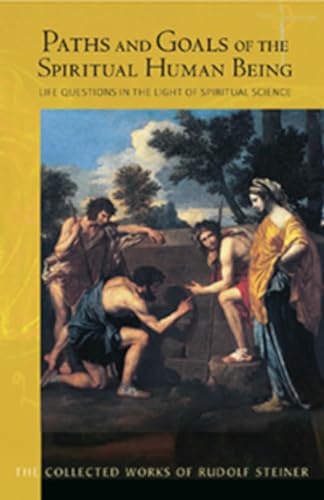
Paths and Goals of the Spiritual Human Being: Life Questions in the Light of Spiritual Science (CW 125) (The Collected Works of Rudolf Steiner, 125)
Libro 20 di 30: The Collected Works of Rudolf SteinerDa: Half Price Books Inc., Dallas, TX, U.S.A.
Valutazione del venditore 5 su 5 stelle

paperback. Condizione: Very Good. Connecting readers with great books since 1972! Used books may not include companion materials, and may have some shelf wear or limited writing. We ship orders daily and Customer Service is our top priority!
-
paperback. Condizione: Good. Connecting readers with great books since 1972! Used textbooks may not include companion materials such as access codes, etc. May have some wear or writing/highlighting. We ship orders daily and Customer Service is our top priority!
-

Paths and Goals of the Spiritual Human Being (Paperback)
Libro 20 di 30: The Collected Works of Rudolf SteinerLingua: Inglese
Editore: Rudolf Steiner Press, East Sussex, 2015
ISBN 10: 1855844214 ISBN 13: 9781855844216
Da: Grand Eagle Retail, Bensenville, IL, U.S.A.
Valutazione del venditore 5 su 5 stelle
Paperback. Condizione: new. Paperback. Speaking to audiences in Denmark, Germany and France, Rudolf Steiner discusses a wide range of topics: from positive and negative human soul capacities, true self-knowledge and karma, to changes in human consciousness, from ancient times to the modern era - all in the context of the incarnation of Christ on earth. The lectures illustrate the diversity of Steiner's approach when speaking to different audiences. Reflecting on the polymath Novalis, for example, he is urgent about the responsibility of spiritual science to help humanity awaken to the new age. A few months later, talking of Hegel and deploring the fact that an interest in spiritual matters often fails to be accompanied by an equal interest in logical thought, Steiner uses a dispassionate, philosophical tone. But throughout the lectures he is consistent in his view that spiritual science does not reject conventional science. Trained philosophical thinking leads to different conclusions than materialism, he says, but there is nothing in the field of spiritual science that need be rejected by rigorous scientific thought.Although the lectures were given to a variety of audiences, ideas recur from different perspectives and in different contexts, with strong thematic links binding them together. These include the relationship between philosophy and science; the nature of clairvoyance; Christ's presence in the etheric realm; reincarnation and karma; the mystery drama The Portal of Initiation; Christmas and its symbols; and the transformation of consciousness that occurred when Christ incarnated physically on earth. In the final lectures, Rudolf Steiner speaks inspiringly about the Christmas festival, contrasting the feeling of inwardness that people used to experience with the hectic cultural environment of modern cities. However, this does not lead Steiner to be nostalgic about the past. Rather, he states, we should seek to recreate a mood of inwardness in a new way, appropriate to our modern age and consciousness. These lectures give us the tools to bring such a contemporary spiritual approach to our lives. Speaking to audiences in Denmark, Germany and France, Rudolf Steiner discusses a wide range of topics: from positive and negative human soul capacities, true self-knowledge and karma, to changes in human consciousness, from ancient times to the modern era - all in the context of the incarnation of Christ on earth. Shipping may be from multiple locations in the US or from the UK, depending on stock availability.
-

Paths and Goals of the Spiritual Human Being
Libro 20 di 30: The Collected Works of Rudolf SteinerDa: Rarewaves.com USA, London, LONDO, Regno Unito
Valutazione del venditore 5 su 5 stelle
EUR 27,20
Spedizione gratuita
Spedito da Regno Unito a U.S.A.Quantità: Più di 20 disponibili
Aggiungi al carrelloPaperback. Condizione: New. Speaking to audiences in Denmark, Germany and France, Rudolf Steiner discusses a wide range of topics: from positive and negative human soul capacities, true self-knowledge and karma, to changes in human consciousness, from ancient times to the modern era - all in the context of the incarnation of Christ on earth. The lectures illustrate the diversity of Steiner's approach when speaking to different audiences. Reflecting on the polymath Novalis, for example, he is urgent about the responsibility of spiritual science to help humanity awaken to the new age. A few months later, talking of Hegel and deploring the fact that an interest in spiritual matters often fails to be accompanied by an equal interest in logical thought, Steiner uses a dispassionate, philosophical tone. But throughout the lectures he is consistent in his view that spiritual science does not reject conventional science. Trained philosophical thinking leads to different conclusions than materialism, he says, but there is nothing in the field of spiritual science that need be rejected by rigorous scientific thought.Although the lectures were given to a variety of audiences, ideas recur from different perspectives and in different contexts, with strong thematic links binding them together. These include the relationship between philosophy and science; the nature of clairvoyance; Christ's presence in the etheric realm; reincarnation and karma; the mystery drama The Portal of Initiation; Christmas and its symbols; and the transformation of consciousness that occurred when Christ incarnated physically on earth. In the final lectures, Rudolf Steiner speaks inspiringly about the Christmas festival, contrasting the feeling of inwardness that people used to experience with the hectic cultural environment of modern cities. However, this does not lead Steiner to be nostalgic about the past. Rather, he states, we should seek to recreate a mood of inwardness in a new way, appropriate to our modern age and consciousness. These lectures give us the tools to bring such a contemporary spiritual approach to our lives.
-
Paths and Goals of the Spiritual Human Being
Libro 20 di 30: The Collected Works of Rudolf SteinerDa: PBShop.store US, Wood Dale, IL, U.S.A.
Valutazione del venditore 5 su 5 stelle
PAP. Condizione: New. New Book. Shipped from UK. Established seller since 2000.
-
Paths and Goals of the Spiritual Human Being: Life Questions in the Light of Spiritual Science (CW 125) (The Collected Works of Rudolf Steiner)
Libro 20 di 30: The Collected Works of Rudolf SteinerDa: Veronica's Books, Gig Harbor, WA, U.S.A.
Valutazione del venditore 5 su 5 stelle
Paperback. Condizione: As New. Clean, tight unread copy. 278pp. Book.
-
Paths and Goals of the Spiritual Human Being
Libro 20 di 30: The Collected Works of Rudolf SteinerDa: PBShop.store UK, Fairford, GLOS, Regno Unito
Valutazione del venditore 5 su 5 stelle
EUR 23,45
Spedizione EUR 5,82
Spedito da Regno Unito a U.S.A.Quantità: 15 disponibili
Aggiungi al carrelloPAP. Condizione: New. New Book. Shipped from UK. Established seller since 2000.
-
Paths and Goals of the Spiritual Human Being: Life Questions in the Light of Spiritual Science
Libro 20 di 30: The Collected Works of Rudolf SteinerDa: Majestic Books, Hounslow, Regno Unito
Valutazione del venditore 4 su 5 stelle

EUR 21,69
Spedizione EUR 7,53
Spedito da Regno Unito a U.S.A.Quantità: 3 disponibili
Aggiungi al carrelloCondizione: New. pp. 296.
-
Paths and Goals of the Spiritual Human Being: Life Questions in the Light of Spiritual Science: Fourteen Lectures Held in Various Locations Between 23 January and 27 December 1910
Libro 20 di 30: The Collected Works of Rudolf SteinerDa: Revaluation Books, Exeter, Regno Unito
Valutazione del venditore 5 su 5 stelle
EUR 20,41
Spedizione EUR 11,59
Spedito da Regno Unito a U.S.A.Quantità: 2 disponibili
Aggiungi al carrelloPaperback. Condizione: Brand New. 278 pages. 9.25x6.25x0.75 inches. In Stock.
-
Paths and Goals of the Spiritual Human Being: Life Questions in the Light of Spiritual Science
Libro 20 di 30: The Collected Works of Rudolf SteinerDa: Books Puddle, New York, NY, U.S.A.
Valutazione del venditore 4 su 5 stelle
Condizione: New. pp. 296.
-
Paths and Goals of the Spiritual Human Being: Life Questions in the Light of Spiritual Science: 125 (Collected Works of Rudolf Steiner)
Libro 20 di 30: The Collected Works of Rudolf SteinerLingua: Inglese
Editore: Rudolf Steiner Press 2015-06-22, 2015
ISBN 10: 1855844214 ISBN 13: 9781855844216
Da: Chiron Media, Wallingford, Regno Unito
Valutazione del venditore 5 su 5 stelle
EUR 18,77
Spedizione EUR 17,96
Spedito da Regno Unito a U.S.A.Quantità: Più di 20 disponibili
Aggiungi al carrelloPaperback. Condizione: New.
-
Paths and Goals of the Spiritual Human Being: Life Questions in the Light of Spiritual Science
Libro 20 di 30: The Collected Works of Rudolf SteinerDa: Biblios, Frankfurt am main, HESSE, Germania
Valutazione del venditore 4 su 5 stelle
EUR 27,41
Spedizione EUR 9,95
Spedito da Germania a U.S.A.Quantità: 3 disponibili
Aggiungi al carrelloCondizione: New. pp. 296.
-
PATHS AND GOALS OF THE SPRIITUAL HUMAN BEING Life Questions in the Light of Spiritual Science
Libro 20 di 30: The Collected Works of Rudolf SteinerDa: Magis Books, Markfield, LEICS, Regno Unito
Valutazione del venditore 5 su 5 stelle
EUR 16,70
Spedizione EUR 21,97
Spedito da Regno Unito a U.S.A.Quantità: 1 disponibili
Aggiungi al carrello294pp. Soft covers. Near fine.
-
PATHS AND GOALS OF THE SPRIITUAL HUMAN BEING Life Questions in the Light of Spiritual Science
Libro 20 di 30: The Collected Works of Rudolf SteinerDa: Magis Books, Markfield, LEICS, Regno Unito
Valutazione del venditore 5 su 5 stelle
EUR 17,90
Spedizione EUR 21,97
Spedito da Regno Unito a U.S.A.Quantità: 1 disponibili
Aggiungi al carrelloNEW. 294pp. Soft covers.
-
Paths and Goals of the Spiritual Human Being: Life Questions in the Light of Spiritual Science
Libro 20 di 30: The Collected Works of Rudolf SteinerDa: THE SAINT BOOKSTORE, Southport, Regno Unito
Valutazione del venditore 5 su 5 stelle
EUR 21,75
Spedizione EUR 18,33
Spedito da Regno Unito a U.S.A.Quantità: Più di 20 disponibili
Aggiungi al carrelloPaperback / softback. Condizione: New. New copy - Usually dispatched within 4 working days. 506.
-

Paths and Goals of the Spiritual Human Being (Paperback)
Libro 20 di 30: The Collected Works of Rudolf SteinerLingua: Inglese
Editore: Rudolf Steiner Press, East Sussex, 2015
ISBN 10: 1855844214 ISBN 13: 9781855844216
Da: AussieBookSeller, Truganina, VIC, Australia
Valutazione del venditore 5 su 5 stelle
EUR 30,72
Spedizione EUR 32,08
Spedito da Australia a U.S.A.Quantità: 1 disponibili
Aggiungi al carrelloPaperback. Condizione: new. Paperback. Speaking to audiences in Denmark, Germany and France, Rudolf Steiner discusses a wide range of topics: from positive and negative human soul capacities, true self-knowledge and karma, to changes in human consciousness, from ancient times to the modern era - all in the context of the incarnation of Christ on earth. The lectures illustrate the diversity of Steiner's approach when speaking to different audiences. Reflecting on the polymath Novalis, for example, he is urgent about the responsibility of spiritual science to help humanity awaken to the new age. A few months later, talking of Hegel and deploring the fact that an interest in spiritual matters often fails to be accompanied by an equal interest in logical thought, Steiner uses a dispassionate, philosophical tone. But throughout the lectures he is consistent in his view that spiritual science does not reject conventional science. Trained philosophical thinking leads to different conclusions than materialism, he says, but there is nothing in the field of spiritual science that need be rejected by rigorous scientific thought.Although the lectures were given to a variety of audiences, ideas recur from different perspectives and in different contexts, with strong thematic links binding them together. These include the relationship between philosophy and science; the nature of clairvoyance; Christ's presence in the etheric realm; reincarnation and karma; the mystery drama The Portal of Initiation; Christmas and its symbols; and the transformation of consciousness that occurred when Christ incarnated physically on earth. In the final lectures, Rudolf Steiner speaks inspiringly about the Christmas festival, contrasting the feeling of inwardness that people used to experience with the hectic cultural environment of modern cities. However, this does not lead Steiner to be nostalgic about the past. Rather, he states, we should seek to recreate a mood of inwardness in a new way, appropriate to our modern age and consciousness. These lectures give us the tools to bring such a contemporary spiritual approach to our lives. Speaking to audiences in Denmark, Germany and France, Rudolf Steiner discusses a wide range of topics: from positive and negative human soul capacities, true self-knowledge and karma, to changes in human consciousness, from ancient times to the modern era - all in the context of the incarnation of Christ on earth. Shipping may be from our Sydney, NSW warehouse or from our UK or US warehouse, depending on stock availability.
-
Paths and Goals of the Spiritual Human Being: Life Questions in the Light of Spiritual Science (CW 125) (Volume 125) (The Collected Works of Rudolf Steiner)
Libro 20 di 30: The Collected Works of Rudolf SteinerDa: Mooney's bookstore, Den Helder, Paesi Bassi
Valutazione del venditore 4 su 5 stelle
EUR 49,12
Spedizione EUR 14,95
Spedito da Paesi Bassi a U.S.A.Quantità: 1 disponibili
Aggiungi al carrelloCondizione: Very good.
-

Paths and Goals of the Spiritual Human Being (Paperback)
Libro 20 di 30: The Collected Works of Rudolf SteinerLingua: Inglese
Editore: Rudolf Steiner Press, East Sussex, 2015
ISBN 10: 1855844214 ISBN 13: 9781855844216
Da: CitiRetail, Stevenage, Regno Unito
Valutazione del venditore 5 su 5 stelle
EUR 27,45
Spedizione EUR 42,89
Spedito da Regno Unito a U.S.A.Quantità: 1 disponibili
Aggiungi al carrelloPaperback. Condizione: new. Paperback. Speaking to audiences in Denmark, Germany and France, Rudolf Steiner discusses a wide range of topics: from positive and negative human soul capacities, true self-knowledge and karma, to changes in human consciousness, from ancient times to the modern era - all in the context of the incarnation of Christ on earth. The lectures illustrate the diversity of Steiner's approach when speaking to different audiences. Reflecting on the polymath Novalis, for example, he is urgent about the responsibility of spiritual science to help humanity awaken to the new age. A few months later, talking of Hegel and deploring the fact that an interest in spiritual matters often fails to be accompanied by an equal interest in logical thought, Steiner uses a dispassionate, philosophical tone. But throughout the lectures he is consistent in his view that spiritual science does not reject conventional science. Trained philosophical thinking leads to different conclusions than materialism, he says, but there is nothing in the field of spiritual science that need be rejected by rigorous scientific thought.Although the lectures were given to a variety of audiences, ideas recur from different perspectives and in different contexts, with strong thematic links binding them together. These include the relationship between philosophy and science; the nature of clairvoyance; Christ's presence in the etheric realm; reincarnation and karma; the mystery drama The Portal of Initiation; Christmas and its symbols; and the transformation of consciousness that occurred when Christ incarnated physically on earth. In the final lectures, Rudolf Steiner speaks inspiringly about the Christmas festival, contrasting the feeling of inwardness that people used to experience with the hectic cultural environment of modern cities. However, this does not lead Steiner to be nostalgic about the past. Rather, he states, we should seek to recreate a mood of inwardness in a new way, appropriate to our modern age and consciousness. These lectures give us the tools to bring such a contemporary spiritual approach to our lives. Speaking to audiences in Denmark, Germany and France, Rudolf Steiner discusses a wide range of topics: from positive and negative human soul capacities, true self-knowledge and karma, to changes in human consciousness, from ancient times to the modern era - all in the context of the incarnation of Christ on earth. Shipping may be from our UK warehouse or from our Australian or US warehouses, depending on stock availability.
-

EUR 28,68
Spedizione EUR 48,99
Spedito da Germania a U.S.A.Quantità: Più di 20 disponibili
Aggiungi al carrelloCondizione: New. Speaking to audiences in Denmark, Germany and France, Rudolf Steiner discusses a wide range of topics: from positive and negative human soul capacities, true self-knowledge and karma, to changes in human consciousness, from ancient times to the modern era -.
-

Paths and Goals of the Spiritual Human Being : Life Questions in the Light of Spiritual Science (Cw 125) Volume 125
Libro 20 di 30: The Collected Works of Rudolf SteinerLingua: Inglese
Editore: Rudolf Steiner Press Jul 2015, 2015
ISBN 10: 1855844214 ISBN 13: 9781855844216
EUR 35,72
Spedizione EUR 62,34
Spedito da Germania a U.S.A.Quantità: 2 disponibili
Aggiungi al carrelloTaschenbuch. Condizione: Neu. Neuware - 14 lectures, various cities, January 1 - December 27, 1910 (CW 125).
-

Paths and Goals of the Spiritual Human Being
Libro 20 di 30: The Collected Works of Rudolf SteinerDa: Rarewaves.com UK, London, Regno Unito
Valutazione del venditore 5 su 5 stelle
EUR 24,16
Spedizione EUR 75,35
Spedito da Regno Unito a U.S.A.Quantità: Più di 20 disponibili
Aggiungi al carrelloPaperback. Condizione: New. Speaking to audiences in Denmark, Germany and France, Rudolf Steiner discusses a wide range of topics: from positive and negative human soul capacities, true self-knowledge and karma, to changes in human consciousness, from ancient times to the modern era - all in the context of the incarnation of Christ on earth. The lectures illustrate the diversity of Steiner's approach when speaking to different audiences. Reflecting on the polymath Novalis, for example, he is urgent about the responsibility of spiritual science to help humanity awaken to the new age. A few months later, talking of Hegel and deploring the fact that an interest in spiritual matters often fails to be accompanied by an equal interest in logical thought, Steiner uses a dispassionate, philosophical tone. But throughout the lectures he is consistent in his view that spiritual science does not reject conventional science. Trained philosophical thinking leads to different conclusions than materialism, he says, but there is nothing in the field of spiritual science that need be rejected by rigorous scientific thought.Although the lectures were given to a variety of audiences, ideas recur from different perspectives and in different contexts, with strong thematic links binding them together. These include the relationship between philosophy and science; the nature of clairvoyance; Christ's presence in the etheric realm; reincarnation and karma; the mystery drama The Portal of Initiation; Christmas and its symbols; and the transformation of consciousness that occurred when Christ incarnated physically on earth. In the final lectures, Rudolf Steiner speaks inspiringly about the Christmas festival, contrasting the feeling of inwardness that people used to experience with the hectic cultural environment of modern cities. However, this does not lead Steiner to be nostalgic about the past. Rather, he states, we should seek to recreate a mood of inwardness in a new way, appropriate to our modern age and consciousness. These lectures give us the tools to bring such a contemporary spiritual approach to our lives.

