

Importo totale (1 articolo articoli):
Destinazione ordine:

9781990263330 - African Popular Culture and Emancipatory Politics: Amílcar Cabral (1972), Ernest Wamba dia Wamba (2003): Amilcar Cabral and Wamba Dia Wamba di Neocosmos, Michael; C... (27 risultati)
Vai alla pagina principale dei risultati di ricerca
Filtri di ricerca
Tipo di articolo
- Tutti i tipi di prodotto
- Libri (27)
- Riviste e Giornali (Nessun altro risultato corrispondente a questo perfezionamento)
- Fumetti (Nessun altro risultato corrispondente a questo perfezionamento)
- Spartiti (Nessun altro risultato corrispondente a questo perfezionamento)
- Arte, Stampe e Poster (Nessun altro risultato corrispondente a questo perfezionamento)
- Fotografie (Nessun altro risultato corrispondente a questo perfezionamento)
- Mappe (Nessun altro risultato corrispondente a questo perfezionamento)
- Manoscritti e Collezionismo cartaceo (Nessun altro risultato corrispondente a questo perfezionamento)
Condizioni Maggiori informazioni
- Nuovo (25)
- Come nuovo, Ottimo o Quasi ottimo (2)
- Molto buono o Buono (Nessun altro risultato corrispondente a questo perfezionamento)
- Discreto o Mediocre (Nessun altro risultato corrispondente a questo perfezionamento)
- Come descritto (Nessun altro risultato corrispondente a questo perfezionamento)
Legatura
- Tutte
- Rilegato (Nessun altro risultato corrispondente a questo perfezionamento)
- Brossura (27)
Ulteriori caratteristiche
- Prima ed. (Nessun altro risultato corrispondente a questo perfezionamento)
- Copia autograf. (Nessun altro risultato corrispondente a questo perfezionamento)
- Sovracoperta (Nessun altro risultato corrispondente a questo perfezionamento)
- Con foto (6)
- Non Print on Demand (24)
Lingua (1)
Prezzo
- Qualsiasi prezzo
- Inferiore a EUR 20
- EUR 20 a EUR 45
- Superiore a EUR 45 (Nessun altro risultato corrispondente a questo perfezionamento)
Spedizione gratuita
Paese del venditore
Valutazione venditore
-
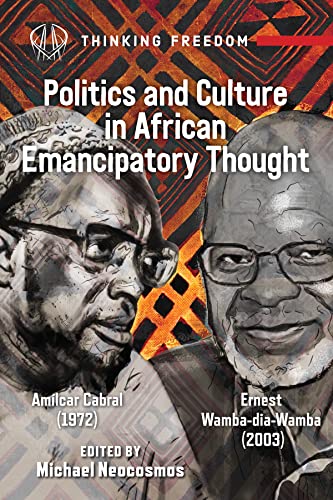
African Popular Culture and Emancipatory Politics: Amílcar Cabral (1972), Ernest Wamba dia Wamba (2003)
Da: GreatBookPrices, Columbia, MD, U.S.A.
Valutazione del venditore 5 su 5 stelle

Condizione: New.
-

African Popular Culture and Emancipatory Politics: Am�lcar Cabral (1972), Ernest Wamba dia Wamba (2003) (Paperback or Softback)
Da: BargainBookStores, Grand Rapids, MI, U.S.A.
Valutazione del venditore 5 su 5 stelle
Paperback or Softback. Condizione: New. African Popular Culture and Emancipatory Politics: Am�lcar Cabral (1972), Ernest Wamba dia Wamba (2003). Book.
-
African Popular Culture and Emancipatory Politics: Amílcar Cabral (1972), Ernest Wamba dia Wamba (2003)
Da: GreatBookPrices, Columbia, MD, U.S.A.
Valutazione del venditore 5 su 5 stelle
Condizione: As New. Unread book in perfect condition.
-

Politics and Culture in African Emancipatory Thought
Da: Rarewaves.com USA, London, LONDO, Regno Unito
Valutazione del venditore 5 su 5 stelle
EUR 12,52
Spedizione gratuita
Spedito da Regno Unito a U.S.A.Quantità: 4 disponibili
Aggiungi al carrelloPaperback. Condizione: New.
-
African Popular Culture and Emancipatory Politics: Amílcar Cabral (1972), Ernest Wamba dia Wamba (2003)
Da: California Books, Miami, FL, U.S.A.
Valutazione del venditore 4 su 5 stelle

EUR 13,28
Spedizione gratuita
Spedito in U.S.A.Quantità: Più di 20 disponibili
Aggiungi al carrelloCondizione: New.
-
Politics and Culture in African Emancipatory Thought
Da: PBShop.store US, Wood Dale, IL, U.S.A.
Valutazione del venditore 5 su 5 stelle
PAP. Condizione: New. New Book. Shipped from UK. Established seller since 2000.
-
African Popular Culture and Emancipatory Politics
Da: PBShop.store UK, Fairford, GLOS, Regno Unito
Valutazione del venditore 4 su 5 stelle
EUR 12,99
Spedizione EUR 3,81
Spedito da Regno Unito a U.S.A.Quantità: 2 disponibili
Aggiungi al carrelloPAP. Condizione: New. New Book. Shipped from UK. Established seller since 2000.
-
AFRICAN POPULAR CULTURE AND EMANCIPATO
Da: Speedyhen LLC, Hialeah, FL, U.S.A.
Valutazione del venditore 2 su 5 stelle

Condizione: NEW.
-
African Popular Culture and Emancipatory Politics: Am?lcar Cabral (1972), Ernest Wamba dia Wamba (2003)
Da: Majestic Books, Hounslow, Regno Unito
Valutazione del venditore 4 su 5 stelle
EUR 12,03
Spedizione EUR 7,52
Spedito da Regno Unito a U.S.A.Quantità: 3 disponibili
Aggiungi al carrelloCondizione: New. pp. 62.
-
Politics and Culture in African Emancipatory Thought (Paperback)
Da: Grand Eagle Retail, Bensenville, IL, U.S.A.
Valutazione del venditore 5 su 5 stelle
Paperback. Condizione: new. Paperback. The current absence of any emancipatory vision for Africa lies at the heart of our political problems of racial capitalist and colonial oppression. Any attempt to rethink political emancipation on the African continent must be able to locate a universal conception of freedom within singular cultural experiences where people live. Irrespective of the specific manner in which such struggles for freedom were thought within different historical contexts, emancipatory politics always exhibited such a dialectic when it was based within popular traditions. Yet only some militant intellectual leaders understood the importance of this dialectic in thought. The present volume outlines and discusses two particularly important views concerning the role and importance of popular culture in emancipatory politics in Africa. Each is the product of distinct forms of colonial capitalist exploitation: the former saw the light of day within a colonial context while the latter is directly confronted by the neocolonial state. All emancipatory politics are developed in confrontation with state power, and all begin with a process of discussion and debate whereby a collective subject begins to be formed. The formation of such a collective political subject has been fundamentally informed by popular cultures on the African continent. The two authors whose essays are included here understood this and posit popular culture at the centre of their politics. The first, Amilcar Cabral, addresses the central role of popular culture in the independence struggle of Guinea Bissau in the 1970s; the second, Ernest Wamba-dia-Wamba, addresses the centrality of African popular culture in an emancipatory politics for the current Democratic Republic of Congo. Despite the distance in time that separates them, both Cabral and Wamba-dia-Wamba develop a dialectics at the core of their politics which activates the universals of culture in the present. It is this that makes their views of central importance to emancipatory thought today. Shipping may be from multiple locations in the US or from the UK, depending on stock availability.
-
Politics And Culture In African Emancipatory Thought
Da: Kennys Bookshop and Art Galleries Ltd., Galway, GY, Irlanda
Valutazione del venditore 5 su 5 stelle
EUR 13,81
Spedizione EUR 10,50
Spedito da Irlanda a U.S.A.Quantità: 7 disponibili
Aggiungi al carrelloCondizione: New. 2021. Paperback. . . . . .
-
Politics And Culture In African Emancipatory Thought
Da: Kennys Bookstore, Olney, MD, U.S.A.
Valutazione del venditore 5 su 5 stelle
Condizione: New. 2021. Paperback. . . . . . Books ship from the US and Ireland.
-
African Popular Culture and Emancipatory Politics: Amílcar Cabral (1972), Ernest Wamba dia Wamba (2003)
Da: Ria Christie Collections, Uxbridge, Regno Unito
Valutazione del venditore 5 su 5 stelle
EUR 11,67
Spedizione EUR 13,86
Spedito da Regno Unito a U.S.A.Quantità: Più di 20 disponibili
Aggiungi al carrelloCondizione: New. In.
-
Politics and Culture in African Emancipatory Thought: Amilcar Cabral and Wamba Dia Wamba
Da: THE SAINT BOOKSTORE, Southport, Regno Unito
Valutazione del venditore 5 su 5 stelle
EUR 12,82
Spedizione EUR 14,19
Spedito da Regno Unito a U.S.A.Quantità: 7 disponibili
Aggiungi al carrelloPaperback / softback. Condizione: New. New copy - Usually dispatched within 4 working days.
-
African Popular Culture and Emancipatory Politics: Am�lcar Cabral (1972), Ernest Wamba dia Wamba (2003)
Da: Chiron Media, Wallingford, Regno Unito
Valutazione del venditore 5 su 5 stelle
EUR 9,84
Spedizione EUR 17,92
Spedito da Regno Unito a U.S.A.Quantità: 1 disponibili
Aggiungi al carrelloPaperback. Condizione: New.
-
African Popular Culture and Emancipatory Politics: Amílcar Cabral (1972), Ernest Wamba dia Wamba (2003)
Da: GreatBookPricesUK, Woodford Green, Regno Unito
Valutazione del venditore 5 su 5 stelle
EUR 11,36
Spedizione EUR 17,35
Spedito da Regno Unito a U.S.A.Quantità: Più di 20 disponibili
Aggiungi al carrelloCondizione: New.
-
African Popular Culture and Emancipatory Politics: Amílcar Cabral (1972), Ernest Wamba dia Wamba (2003)
Da: GreatBookPricesUK, Woodford Green, Regno Unito
Valutazione del venditore 5 su 5 stelle
EUR 13,53
Spedizione EUR 17,35
Spedito da Regno Unito a U.S.A.Quantità: Più di 20 disponibili
Aggiungi al carrelloCondizione: As New. Unread book in perfect condition.
-
African Popular Culture and Emancipatory Politics: Am?lcar Cabral (1972), Ernest Wamba dia Wamba (2003)
Da: Biblios, Frankfurt am main, HESSE, Germania
Valutazione del venditore 4 su 5 stelle
EUR 25,13
Spedizione EUR 9,95
Spedito da Germania a U.S.A.Quantità: 3 disponibili
Aggiungi al carrelloCondizione: New. pp. 62.
-
AFRICAN POPULAR CULTURE AND EMANCIPATO
Da: Speedyhen, Hertfordshire, Regno Unito
Valutazione del venditore 5 su 5 stelle
EUR 12,32
Spedizione EUR 47,43
Spedito da Regno Unito a U.S.A.Quantità: 1 disponibili
Aggiungi al carrelloCondizione: NEW.
-

EUR 16,76
Spedizione EUR 48,99
Spedito da Germania a U.S.A.Quantità: 1 disponibili
Aggiungi al carrelloCondizione: New.
-
Politics and Culture in African Emancipatory Thought (Paperback)
Da: AussieBookSeller, Truganina, VIC, Australia
Valutazione del venditore 5 su 5 stelle
EUR 36,02
Spedizione EUR 31,80
Spedito da Australia a U.S.A.Quantità: 1 disponibili
Aggiungi al carrelloPaperback. Condizione: new. Paperback. The current absence of any emancipatory vision for Africa lies at the heart of our political problems of racial capitalist and colonial oppression. Any attempt to rethink political emancipation on the African continent must be able to locate a universal conception of freedom within singular cultural experiences where people live. Irrespective of the specific manner in which such struggles for freedom were thought within different historical contexts, emancipatory politics always exhibited such a dialectic when it was based within popular traditions. Yet only some militant intellectual leaders understood the importance of this dialectic in thought. The present volume outlines and discusses two particularly important views concerning the role and importance of popular culture in emancipatory politics in Africa. Each is the product of distinct forms of colonial capitalist exploitation: the former saw the light of day within a colonial context while the latter is directly confronted by the neocolonial state. All emancipatory politics are developed in confrontation with state power, and all begin with a process of discussion and debate whereby a collective subject begins to be formed. The formation of such a collective political subject has been fundamentally informed by popular cultures on the African continent. The two authors whose essays are included here understood this and posit popular culture at the centre of their politics. The first, Amilcar Cabral, addresses the central role of popular culture in the independence struggle of Guinea Bissau in the 1970s; the second, Ernest Wamba-dia-Wamba, addresses the centrality of African popular culture in an emancipatory politics for the current Democratic Republic of Congo. Despite the distance in time that separates them, both Cabral and Wamba-dia-Wamba develop a dialectics at the core of their politics which activates the universals of culture in the present. It is this that makes their views of central importance to emancipatory thought today. Shipping may be from our Sydney, NSW warehouse or from our UK or US warehouse, depending on stock availability.
-

EUR 14,23
Spedizione EUR 60,48
Spedito da Germania a U.S.A.Quantità: 2 disponibili
Aggiungi al carrelloTaschenbuch. Condizione: Neu. Neuware - The current absence of any emancipatory vision for Africa lies at the heart of our political problems of racial capitalist and colonial oppression. Any attempt to rethink political emancipation on the African continent must be able to locate a universal conception of freedom within singular cultural experiences where people live. Irrespective of the specific manner in which such struggles for freedom were thought within different historical contexts, emancipatory politics always exhibited such a dialectic when it was based within popular traditions. Yet only some militant intellectual leaders understood the importance of this dialectic in thought. The present volume outlines and discusses two particularly important views concerning the role and importance of popular culture in emancipatory politics in Africa. Each is the product of distinct forms of colonial capitalist exploitation: the former saw the light of day within a colonial context while the latter is directly confronted by the neocolonial state. All emancipatory politics are developed in confrontation with state power, and all begin with a process of discussion and debate whereby a collective subject begins to be formed. The formation of such a collective political subject has been fundamentally informed by popular cultures on the African continent. The two authors whose essays are included here understood this and posit popular culture at the centre of their politics. The first, Amílcar Cabral, addresses the central role of popular culture in the independence struggle of Guinea Bissau in the 1970s; the second, Ernest Wamba-dia-Wamba, addresses the centrality of African popular culture in an emancipatory politics for the current Democratic Republic of Congo. Despite the distance in time that separates them, both Cabral and Wamba-dia-Wamba develop a dialectics at the core of their politics which activates the universals of culture in the present. It is this that makes their views of central importance to emancipatory thought today.
-
African Popular Culture and Emancipatory Politics: Amílcar Cabral (1972), Ernest Wamba dia Wamba (2003)
Da: Revaluation Books, Exeter, Regno Unito
Valutazione del venditore 5 su 5 stelle
EUR 8,16
Spedizione EUR 11,57
Spedito da Regno Unito a U.S.A.Quantità: 2 disponibili
Aggiungi al carrelloPaperback. Condizione: Brand New. 61 pages. 9.02x5.98x0.14 inches. In Stock. This item is printed on demand.
-

Politics and Culture in African Emancipatory Thought
Da: Rarewaves.com UK, London, Regno Unito
Valutazione del venditore 5 su 5 stelle
EUR 11,28
Spedizione EUR 75,19
Spedito da Regno Unito a U.S.A.Quantità: 4 disponibili
Aggiungi al carrelloPaperback. Condizione: New.
-

EUR 17,00
Spedizione EUR 70,00
Spedito da Germania a U.S.A.Quantità: 1 disponibili
Aggiungi al carrelloTaschenbuch. Condizione: Neu. Politics and Culture in African Emancipatory Thought | Amilcar Cabral and Wamba Dia Wamba | Michael Neocosmos | Taschenbuch | Kartoniert / Broschiert | Englisch | 2021 | Daraja Press | EAN 9781990263330 | Verantwortliche Person für die EU: Libri GmbH, Europaallee 1, 36244 Bad Hersfeld, gpsr[at]libri[dot]de | Anbieter: preigu.
-
Politics and Culture in African Emancipatory Thought: Amilcar Cabral and Wamba Dia Wamba
Da: THE SAINT BOOKSTORE, Southport, Regno Unito
Valutazione del venditore 5 su 5 stelle
EUR 11,37
Spedizione EUR 14,19
Spedito da Regno Unito a U.S.A.Quantità: Più di 20 disponibili
Aggiungi al carrelloPaperback / softback. Condizione: New. This item is printed on demand. New copy - Usually dispatched within 5-9 working days 152.
-
African Popular Culture and Emancipatory Politics: Am?lcar Cabral (1972), Ernest Wamba dia Wamba (2003)
Da: Books Puddle, New York, NY, U.S.A.
Valutazione del venditore 4 su 5 stelle
Condizione: New. Print on Demand pp. 62.


