

Importo totale (1 articolo articoli):
Destinazione ordine:

9783319857398 - The Science and Art of Simulation I: Exploring - Understanding - Knowing (8 risultati)
Vai alla pagina principale dei risultati di ricerca
Filtri di ricerca
Tipo di articolo
- Tutti i tipi di prodotto
- Libri (8)
- Riviste e Giornali (Nessun altro risultato corrispondente a questo perfezionamento)
- Fumetti (Nessun altro risultato corrispondente a questo perfezionamento)
- Spartiti (Nessun altro risultato corrispondente a questo perfezionamento)
- Arte, Stampe e Poster (Nessun altro risultato corrispondente a questo perfezionamento)
- Fotografie (Nessun altro risultato corrispondente a questo perfezionamento)
- Mappe (Nessun altro risultato corrispondente a questo perfezionamento)
- Manoscritti e Collezionismo cartaceo (Nessun altro risultato corrispondente a questo perfezionamento)
Condizioni Maggiori informazioni
- Nuovo (8)
- Come nuovo, Ottimo o Quasi ottimo (Nessun altro risultato corrispondente a questo perfezionamento)
- Molto buono o Buono (Nessun altro risultato corrispondente a questo perfezionamento)
- Discreto o Mediocre (Nessun altro risultato corrispondente a questo perfezionamento)
- Come descritto (Nessun altro risultato corrispondente a questo perfezionamento)
Legatura
- Tutte
- Rilegato (Nessun altro risultato corrispondente a questo perfezionamento)
- Brossura (8)
Ulteriori caratteristiche
- Prima ed. (Nessun altro risultato corrispondente a questo perfezionamento)
- Copia autograf. (Nessun altro risultato corrispondente a questo perfezionamento)
- Sovracoperta (Nessun altro risultato corrispondente a questo perfezionamento)
- Con foto (5)
- Non Print on Demand (6)
Lingua (1)
Prezzo
- Qualsiasi prezzo
- Inferiore a EUR 20 (Nessun altro risultato corrispondente a questo perfezionamento)
- EUR 20 a EUR 45 (Nessun altro risultato corrispondente a questo perfezionamento)
- Superiore a EUR 45
Spedizione gratuita
- Spedizione gratuita in U.S.A. (Nessun altro risultato corrispondente a questo perfezionamento)
Paese del venditore
Valutazione venditore
-

The Science and Art of Simulation I: Exploring - Understanding - Knowing
Da: Ria Christie Collections, Uxbridge, Regno Unito
Valutazione del venditore 5 su 5 stelle

EUR 111,69
Spedizione EUR 13,78
Spedito da Regno Unito a U.S.A.Quantità: Più di 20 disponibili
Aggiungi al carrelloCondizione: New. In.
-
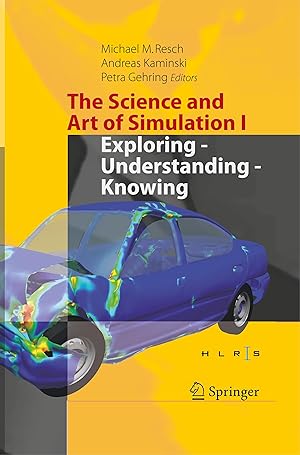
The Science and Art of Simulation I
Lingua: Inglese
Editore: Springer International Publishing, 2018
ISBN 10: 3319857398 ISBN 13: 9783319857398
EUR 92,27
Spedizione EUR 48,99
Spedito da Germania a U.S.A.Quantità: Più di 20 disponibili
Aggiungi al carrelloCondizione: New.
-

EUR 95,70
Spedizione EUR 70,00
Spedito da Germania a U.S.A.Quantità: 5 disponibili
Aggiungi al carrelloTaschenbuch. Condizione: Neu. The Science and Art of Simulation I | Exploring - Understanding - Knowing | Michael M. Resch (u. a.) | Taschenbuch | vi | Englisch | 2018 | Springer | EAN 9783319857398 | Verantwortliche Person für die EU: Springer Verlag GmbH, Tiergartenstr. 17, 69121 Heidelberg, juergen[dot]hartmann[at]springer[dot]com | Anbieter: preigu.
-

The Science and Art of Simulation I : Exploring - Understanding - Knowing
Lingua: Inglese
Editore: Springer International Publishing, Springer International Publishing, 2018
ISBN 10: 3319857398 ISBN 13: 9783319857398
EUR 106,99
Spedizione EUR 61,56
Spedito da Germania a U.S.A.Quantità: 1 disponibili
Aggiungi al carrelloTaschenbuch. Condizione: Neu. Druck auf Anfrage Neuware - Printed after ordering - The new book series 'The Science and Art of Simulation' (SAS) addresses computer simulations as a scientific activity and engineering artistry (in the sense of a techn ). The first volume is devoted to three topics: 1. The Art of Exploring Computer Simulations Philosophy began devoting attention to computer simulations at a relatively early stage. Since then, the unquestioned point of view has been that computer simulation is a new scientific method; the philosophy of simulation is therefore part of the philosophy of science. The first section of this volume discusses this implicit, unchallenged assumption by addressing, from different perspectives, the question of how to explore (and how not to explore) research on computer simulations. Scientists discuss what is still lacking or considered problematic, while philosophers draft new directions for research, and both examine the art of exploring computer simulations. 2. The Art of Understanding Computer Simulations The results of computer simulations are integrated into both political and social decisions. It is implicitly assumed that the more detailed, and consequently more realistic, a computer simulation is, the more useful it will be in decision-making. However, this idea is by no means justified. Different types of computer simulations have to be differentiated, which in turn requires the specific skill of understanding computer simulation results. The articles in this section examine the capabilities and limits of simulation results in political and social contexts, exploring the art of understanding computer simulation results. 3. The Art of Knowing through Computer Simulations The advent of computer simulation in today's scientific practices challenges the order of science. What kind of knowledge is gained through computer simulations is the key question in this section. Computer simulations are often compared to experiments or to arguments, and the transformation of our traditional scientific notions might be more challenging than expected - these Ideas are put forward in the third section to conceptualize the art of knowing through computer simulations.
-

The Science and Art of Simulation I
Lingua: Inglese
Editore: Springer International Publishing, Springer International Publishing Mai 2018, 2018
ISBN 10: 3319857398 ISBN 13: 9783319857398
Da: buchversandmimpf2000, Emtmannsberg, BAYE, Germania
Valutazione del venditore 5 su 5 stelle
EUR 106,99
Spedizione EUR 60,00
Spedito da Germania a U.S.A.Quantità: 2 disponibili
Aggiungi al carrelloTaschenbuch. Condizione: Neu. Neuware -The new book series ¿The Science and Art of Simulation¿ (SAS) addresses computer simulations as a scientific activity and engineering artistry (in the sense of a techn¿). The first volume is devoted to three topics:1. The Art of Exploring Computer SimulationsPhilosophy began devoting attention to computer simulations at a relatively early stage. Since then, the unquestioned point of view has been that computer simulation is a new scientific method; the philosophy of simulation is therefore part of the philosophy of science. The first section of this volume discusses this implicit, unchallenged assumption by addressing, from different perspectives, the question of how to explore (and how not to explore) research on computer simulations. Scientists discuss what is still lacking or considered problematic, while philosophers draft new directions for research,and both examine the art of exploring computer simulations.2. The Art of Understanding Computer SimulationsThe results of computer simulations are integrated into both political and social decisions. It is implicitly assumed that the more detailed, and consequently more realistic, a computer simulation is, the more useful it will be in decision-making. However, this idea is by no means justified. Different types of computer simulations have to be differentiated, which in turn requires the specific skill of understanding computer simulation results. The articles in this section examine the capabilities and limits of simulation results in political and social contexts, exploring the art of understanding computer simulation results.3. The Art of Knowing through Computer Simulations The advent of computer simulation in today¿s scientific practices challenges the order of science. What kind of knowledge is gained through computer simulations is the key question in this section. Computer simulations are often compared to experiments or to arguments, and the transformation of our traditional scientific notions might be more challenging than expected ¿ these Ideas are put forward in the third section to conceptualize the art of knowing through computer simulations.Springer Verlag GmbH, Tiergartenstr. 17, 69121 Heidelberg 200 pp. Englisch.
-
The Science and Art of Simulation I: Exploring - Understanding - Knowing
Da: Mispah books, Redhill, SURRE, Regno Unito
Valutazione del venditore 4 su 5 stelle

EUR 165,82
Spedizione EUR 28,75
Spedito da Regno Unito a U.S.A.Quantità: 1 disponibili
Aggiungi al carrelloPaperback. Condizione: New. NEW. SHIPS FROM MULTIPLE LOCATIONS. book.
-
The Science and Art of Simulation I (eng)
Da: Brook Bookstore On Demand, Napoli, NA, Italia
Valutazione del venditore 4 su 5 stelle
EUR 86,24
Spedizione EUR 5,50
Spedito da Italia a U.S.A.Quantità: Più di 20 disponibili
Aggiungi al carrelloCondizione: new. Questo è un articolo print on demand.
-

The Science and Art of Simulation I
Lingua: Inglese
Editore: Springer International Publishing Mai 2018, 2018
ISBN 10: 3319857398 ISBN 13: 9783319857398
Da: BuchWeltWeit Ludwig Meier e.K., Bergisch Gladbach, Germania
Valutazione del venditore 5 su 5 stelle
EUR 106,99
Spedizione EUR 23,00
Spedito da Germania a U.S.A.Quantità: 2 disponibili
Aggiungi al carrelloTaschenbuch. Condizione: Neu. This item is printed on demand - it takes 3-4 days longer - Neuware -The new book series 'The Science and Art of Simulation' (SAS) addresses computer simulations as a scientific activity and engineering artistry (in the sense of a techn ). The first volume is devoted to three topics: 1. The Art of Exploring Computer Simulations Philosophy began devoting attention to computer simulations at a relatively early stage. Since then, the unquestioned point of view has been that computer simulation is a new scientific method; the philosophy of simulation is therefore part of the philosophy of science. The first section of this volume discusses this implicit, unchallenged assumption by addressing, from different perspectives, the question of how to explore (and how not to explore) research on computer simulations. Scientists discuss what is still lacking or considered problematic, while philosophers draft new directions for research, and both examine the art of exploring computer simulations. 2. The Art of Understanding Computer Simulations The results of computer simulations are integrated into both political and social decisions. It is implicitly assumed that the more detailed, and consequently more realistic, a computer simulation is, the more useful it will be in decision-making. However, this idea is by no means justified. Different types of computer simulations have to be differentiated, which in turn requires the specific skill of understanding computer simulation results. The articles in this section examine the capabilities and limits of simulation results in political and social contexts, exploring the art of understanding computer simulation results. 3. The Art of Knowing through Computer Simulations The advent of computer simulation in today's scientific practices challenges the order of science. What kind of knowledge is gained through computer simulations is the key question in this section. Computer simulations are often compared to experiments or to arguments, and the transformation of our traditional scientific notions might be more challenging than expected - these Ideas are put forward in the third section to conceptualize the art of knowing through computer simulations. 200 pp. Englisch.

