

Importo totale (1 articolo articoli):
Destinazione ordine:

9783838215389 - Post-Soviet Secessionism: Nation-Building and State-Failure after Communism (16 risultati)
Vai alla pagina principale dei risultati di ricerca
Filtri di ricerca
Tipo di articolo
- Tutti i tipi di prodotto
- Libri (16)
- Riviste e Giornali (Nessun altro risultato corrispondente a questo perfezionamento)
- Fumetti (Nessun altro risultato corrispondente a questo perfezionamento)
- Spartiti (Nessun altro risultato corrispondente a questo perfezionamento)
- Arte, Stampe e Poster (Nessun altro risultato corrispondente a questo perfezionamento)
- Fotografie (Nessun altro risultato corrispondente a questo perfezionamento)
- Mappe (Nessun altro risultato corrispondente a questo perfezionamento)
- Manoscritti e Collezionismo cartaceo (Nessun altro risultato corrispondente a questo perfezionamento)
Condizioni Maggiori informazioni
- Nuovo (14)
- Come nuovo, Ottimo o Quasi ottimo (2)
- Molto buono o Buono (Nessun altro risultato corrispondente a questo perfezionamento)
- Discreto o Mediocre (Nessun altro risultato corrispondente a questo perfezionamento)
- Come descritto (Nessun altro risultato corrispondente a questo perfezionamento)
Legatura
- Tutte
- Rilegato (Nessun altro risultato corrispondente a questo perfezionamento)
- Brossura (16)
Ulteriori caratteristiche
- Prima ed. (Nessun altro risultato corrispondente a questo perfezionamento)
- Copia autograf. (Nessun altro risultato corrispondente a questo perfezionamento)
- Sovracoperta (Nessun altro risultato corrispondente a questo perfezionamento)
- Con foto (9)
- Non Print on Demand (12)
Lingua (1)
Prezzo
- Qualsiasi prezzo
- Inferiore a EUR 20 (Nessun altro risultato corrispondente a questo perfezionamento)
- EUR 20 a EUR 45
- Superiore a EUR 45
Spedizione gratuita
Paese del venditore
Valutazione venditore
-
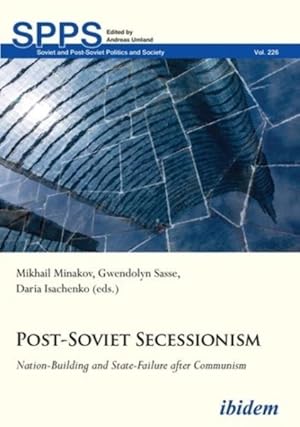
Post-Soviet Secessionism : Nation-Building and State-Failure After Communism
Libro 107: Soviet and Post-Soviet Politics and SocietyDa: GreatBookPrices, Columbia, MD, U.S.A.
Valutazione del venditore 5 su 5 stelle

Condizione: As New. Unread book in perfect condition.
-

Post-Soviet Secessionism
Libro 107: Soviet and Post-Soviet Politics and SocietyDa: PBShop.store UK, Fairford, GLOS, Regno Unito
Valutazione del venditore 5 su 5 stelle
EUR 33,17
Spedizione EUR 5,77
Spedito da Regno Unito a U.S.A.Quantità: 1 disponibili
Aggiungi al carrelloPAP. Condizione: New. New Book. Shipped from UK. Established seller since 2000.
-

Post-Soviet Secessionism : Nation-Building and State-Failure After Communism
Libro 107: Soviet and Post-Soviet Politics and SocietyDa: GreatBookPrices, Columbia, MD, U.S.A.
Valutazione del venditore 5 su 5 stelle
Condizione: New.
-
Post-Soviet Secessionism - Nation-Building and State-Failure after Communism
Libro 107: Soviet and Post-Soviet Politics and SocietyLingua: Inglese
Editore: ibidem-Verlag, Jessica Haunschild u Christian Schon, 2021
ISBN 10: 3838215389 ISBN 13: 9783838215389
Da: Kennys Bookshop and Art Galleries Ltd., Galway, GY, Irlanda
Valutazione del venditore 5 su 5 stelle
EUR 34,08
Spedizione EUR 10,50
Spedito da Irlanda a U.S.A.Quantità: 1 disponibili
Aggiungi al carrelloCondizione: New. 2021. Paperback. . . . . .
-

Post-Soviet Secessionism : Nation-Building and State-Failure After Communism
Libro 107: Soviet and Post-Soviet Politics and SocietyDa: GreatBookPricesUK, Woodford Green, Regno Unito
Valutazione del venditore 5 su 5 stelle
EUR 31,07
Spedizione EUR 17,24
Spedito da Regno Unito a U.S.A.Quantità: 3 disponibili
Aggiungi al carrelloCondizione: New.
-
Post?Soviet Secessionism ? Nation?Building and State?Failure after Communism
Libro 107: Soviet and Post-Soviet Politics and SocietyLingua: Inglese
Editore: ibidem-Verlag, Jessica Haunschild u Christian Schon, 2021
ISBN 10: 3838215389 ISBN 13: 9783838215389
Da: Kennys Bookstore, Olney, MD, U.S.A.
Valutazione del venditore 5 su 5 stelle
Condizione: New. 2021. Paperback. . . . . . Books ship from the US and Ireland.
-

Post-Soviet Secessionism : Nation-Building and State-Failure After Communism
Libro 107: Soviet and Post-Soviet Politics and SocietyDa: GreatBookPricesUK, Woodford Green, Regno Unito
Valutazione del venditore 5 su 5 stelle
EUR 33,89
Spedizione EUR 17,24
Spedito da Regno Unito a U.S.A.Quantità: 3 disponibili
Aggiungi al carrelloCondizione: As New. Unread book in perfect condition.
-
Post-Soviet Secessionism (Paperback)
Libro 107: Soviet and Post-Soviet Politics and SocietyLingua: Inglese
Editore: ibidem-Verlag, Jessica Haunschild u Christian Schon, Stuttgart, 2021
ISBN 10: 3838215389 ISBN 13: 9783838215389
Da: Grand Eagle Retail, Bensenville, IL, U.S.A.
Valutazione del venditore 5 su 5 stelle
Paperback. Condizione: new. Paperback. The USSR's dissolution resulted in the creation of not only fifteen recognized states but also of four non-recognized statelets: Nagorno-Karabakh, South Ossetia, Abkhazia, and Transnistria. Their polities comprise networks with state-like elements. Since the early 1990s, the four pseudo-states have been continously dependent on their sponsor countries (Russia, Armenia), and contesting the territorial integrity of their parental nation-states Azerbaijan, Georgia, and Moldova. In 2014, the outburst of Russia-backed separatism in Eastern Ukraine led to the creation of two more para-states, the Donetsk People's Republic (DNR) and the Luhansk People's Republic (LNR), whose leaders used the experience of older de facto states. In 2020, this growing network of de facto states counted an overall population of more than 4 million people. The essays collected in this volume address such questions as: How do post-Soviet de facto states survive and continue to grow? Is there anything specific about the political ecology of Eastern Europe that provides secessionism with the possibility to launch state-making processes in spite of international sanctions and counteractions of their parental states? How do secessionist movements become embedded in wider networks of separatism in Eastern and Western Europe? What is the impact of secessionism and war on the parental states? The contributors are Jan Claas Behrends, Petra Colmorgen, Bruno Coppieters, Nataliia Kasianenko, Alice Lackner, Mikhail Minakov, and Gwendolyn Sasse. The essays collected in this volume address such questions as: How do post-Soviet de facto states survive and continue to grow? Shipping may be from multiple locations in the US or from the UK, depending on stock availability.
-
PostSoviet Secessionism NationBuilding and StateFailure after Communism
Libro 107: Soviet and Post-Soviet Politics and SocietyLingua: Inglese
Editore: Ibidem-Verlag Haunschild/Schoen gbr, 2021
ISBN 10: 3838215389 ISBN 13: 9783838215389
Da: Revaluation Books, Exeter, Regno Unito
Valutazione del venditore 5 su 5 stelle
EUR 63,50
Spedizione EUR 14,37
Spedito da Regno Unito a U.S.A.Quantità: 2 disponibili
Aggiungi al carrelloPaperback. Condizione: Brand New. 249 pages. 8.25x6.00x0.50 inches. In Stock.
-
Post-Soviet Secessionism
Libro 107: Soviet and Post-Soviet Politics and SocietyDa: Gazelle Books, Lancaster, LANCA, Regno Unito
Valutazione del venditore 5 su 5 stelle
EUR 27,53
Spedizione EUR 63,22
Spedito da Regno Unito a U.S.A.Quantità: 1 disponibili
Aggiungi al carrelloPaperback. Condizione: New. New Book, Direct from Publisher.
-

EUR 34,90
Spedizione EUR 70,00
Spedito da Germania a U.S.A.Quantità: 5 disponibili
Aggiungi al carrelloTaschenbuch. Condizione: Neu. Post-Soviet Secessionism | Daria Minakov Isachenko | Taschenbuch | 260 S. | Englisch | 2021 | ibidem-Verlag | EAN 9783838215389 | Verantwortliche Person für die EU: ibidem-Verlag, Leuschnerstr. 40, 30457 Hannover, info[at]ibidem[dot]eu | Anbieter: preigu.
-
Post-Soviet Secessionism (Paperback)
Libro 107: Soviet and Post-Soviet Politics and SocietyLingua: Inglese
Editore: ibidem-Verlag, Jessica Haunschild u Christian Schon, Stuttgart, 2021
ISBN 10: 3838215389 ISBN 13: 9783838215389
Da: AussieBookSeller, Truganina, VIC, Australia
Valutazione del venditore 5 su 5 stelle
EUR 89,96
Spedizione EUR 31,89
Spedito da Australia a U.S.A.Quantità: 1 disponibili
Aggiungi al carrelloPaperback. Condizione: new. Paperback. The USSR's dissolution resulted in the creation of not only fifteen recognized states but also of four non-recognized statelets: Nagorno-Karabakh, South Ossetia, Abkhazia, and Transnistria. Their polities comprise networks with state-like elements. Since the early 1990s, the four pseudo-states have been continously dependent on their sponsor countries (Russia, Armenia), and contesting the territorial integrity of their parental nation-states Azerbaijan, Georgia, and Moldova. In 2014, the outburst of Russia-backed separatism in Eastern Ukraine led to the creation of two more para-states, the Donetsk People's Republic (DNR) and the Luhansk People's Republic (LNR), whose leaders used the experience of older de facto states. In 2020, this growing network of de facto states counted an overall population of more than 4 million people. The essays collected in this volume address such questions as: How do post-Soviet de facto states survive and continue to grow? Is there anything specific about the political ecology of Eastern Europe that provides secessionism with the possibility to launch state-making processes in spite of international sanctions and counteractions of their parental states? How do secessionist movements become embedded in wider networks of separatism in Eastern and Western Europe? What is the impact of secessionism and war on the parental states? The contributors are Jan Claas Behrends, Petra Colmorgen, Bruno Coppieters, Nataliia Kasianenko, Alice Lackner, Mikhail Minakov, and Gwendolyn Sasse. The essays collected in this volume address such questions as: How do post-Soviet de facto states survive and continue to grow? Shipping may be from our Sydney, NSW warehouse or from our UK or US warehouse, depending on stock availability.
-

Post-Soviet Secessionism
Libro 107: Soviet and Post-Soviet Politics and SocietyDa: BuchWeltWeit Ludwig Meier e.K., Bergisch Gladbach, Germania
Valutazione del venditore 5 su 5 stelle
EUR 34,90
Spedizione EUR 23,00
Spedito da Germania a U.S.A.Quantità: 2 disponibili
Aggiungi al carrelloTaschenbuch. Condizione: Neu. This item is printed on demand - it takes 3-4 days longer - Neuware -The USSR's dissolution resulted in the creation of not only fifteen recognized states but also of four non-recognized statelets: Nagorno-Karabakh, South Ossetia, Abkhazia, and Transnistria. Their polities comprise networks with state-like elements. Since the early 1990s, the four pseudo-states have been continously dependent on their sponsor countries (Russia, Armenia), and contesting the territorial integrity of their parental nation-states Azerbaijan, Georgia, and Moldova. In 2014, the outburst of Russia-backed separatism in Eastern Ukraine led to the creation of two more para-states, the Donetsk People's Republic (DNR) and the Luhansk People's Republic (LNR), whose leaders used the experience of older de facto states. In 2020, this growing network of de facto states counted an overall population of more than 4 million people. The essays collected in this volume address such questions as: How do post-Soviet de facto states survive and continue to grow Is there anything specific about the political ecology of Eastern Europe that provides secessionism with the possibility to launch state-making processes in spite of international sanctions and counteractions of their parental states How do secessionist movements become embedded in wider networks of separatism in Eastern and Western Europe What is the impact of secessionism and war on the parental states The contributors are Jan Claas Behrends, Petra Colmorgen, Bruno Coppieters, Nataliia Kasianenko, Alice Lackner, Mikhail Minakov, and Gwendolyn Sasse. 260 pp. Englisch.
-

EUR 34,90
Spedizione EUR 48,99
Spedito da Germania a U.S.A.Quantità: Più di 20 disponibili
Aggiungi al carrelloCondizione: New. Dieser Artikel ist ein Print on Demand Artikel und wird nach Ihrer Bestellung fuer Sie gedruckt. The USSR s dissolution resulted in the creation of not only fifteen recognized states but also of four non-recognized statelets: Nagorno-Karabakh, South Ossetia, Abkhazia, and Transnistria. Their polities comprise networks with state-like elements. Since th.
-

Post-Soviet Secessionism
Libro 107: Soviet and Post-Soviet Politics and SocietyLingua: Inglese
Editore: Ibidem-Verlag, Ibidem-Verlag, 2021
ISBN 10: 3838215389 ISBN 13: 9783838215389
EUR 34,90
Spedizione EUR 61,71
Spedito da Germania a U.S.A.Quantità: 1 disponibili
Aggiungi al carrelloTaschenbuch. Condizione: Neu. nach der Bestellung gedruckt Neuware - Printed after ordering - The USSR's dissolution resulted in the creation of not only fifteen recognized states but also of four non-recognized statelets: Nagorno-Karabakh, South Ossetia, Abkhazia, and Transnistria. Their polities comprise networks with state-like elements. Since the early 1990s, the four pseudo-states have been continously dependent on their sponsor countries (Russia, Armenia), and contesting the territorial integrity of their parental nation-states Azerbaijan, Georgia, and Moldova. In 2014, the outburst of Russia-backed separatism in Eastern Ukraine led to the creation of two more para-states, the Donetsk People's Republic (DNR) and the Luhansk People's Republic (LNR), whose leaders used the experience of older de facto states. In 2020, this growing network of de facto states counted an overall population of more than 4 million people. The essays collected in this volume address such questions as: How do post-Soviet de facto states survive and continue to grow Is there anything specific about the political ecology of Eastern Europe that provides secessionism with the possibility to launch state-making processes in spite of international sanctions and counteractions of their parental states How do secessionist movements become embedded in wider networks of separatism in Eastern and Western Europe What is the impact of secessionism and war on the parental states The contributors are Jan Claas Behrends, Petra Colmorgen, Bruno Coppieters, Nataliia Kasianenko, Alice Lackner, Mikhail Minakov, and Gwendolyn Sasse.
-

Post-Soviet Secessionism
Libro 77 di 85: Soviet and Post-Soviet Politics and SocietyLingua: Inglese
Editore: Ibidem-Verlag, Ibidem-Verlag Apr 2021, 2021
ISBN 10: 3838215389 ISBN 13: 9783838215389
Da: buchversandmimpf2000, Emtmannsberg, BAYE, Germania
Valutazione del venditore 5 su 5 stelle
EUR 34,90
Spedizione EUR 60,00
Spedito da Germania a U.S.A.Quantità: 1 disponibili
Aggiungi al carrelloTaschenbuch. Condizione: Neu. This item is printed on demand - Print on Demand Titel. Neuware -The USSR¿s dissolution resulted in the creation of not only fifteen recognized states but also of four non-recognized statelets: Nagorno-Karabakh, South Ossetia, Abkhazia, and Transnistria. Their polities comprise networks with state-like elements. Since the early 1990s, the four pseudo-states have been continously dependent on their sponsor countries (Russia, Armenia), and contesting the territorial integrity of their parental nation-states Azerbaijan, Georgia, and Moldova. In 2014, the outburst of Russia-backed separatism in Eastern Ukraine led to the creation of two more para-states, the Donetsk People¿s Republic (DNR) and the Luhansk People¿s Republic (LNR), whose leaders used the experience of older de facto states. In 2020, this growing network of de facto states counted an overall population of more than 4 million people.The essays collected in this volume address such questions as: How do post-Soviet de facto states survive and continue to grow Is there anything specific about the political ecology of Eastern Europe that provides secessionism with the possibility to launch state-making processes in spite of international sanctions and counteractions of their parental states How do secessionist movements become embedded in wider networks of separatism in Eastern and Western Europe What is the impact of secessionism and war on the parental states The contributors are Jan Claas Behrends, Petra Colmorgen, Bruno Coppieters, Nataliia Kasianenko, Alice Lackner, Mikhail Minakov, and Gwendolyn Sasse.Books on Demand GmbH, Überseering 33, 22297 Hamburg 260 pp. Englisch.

