

Importo totale (1 articolo articoli):
Destinazione ordine:

9783948318178 - World of Variation: The i Press Series on the Human Environment di Stevens, Mary Otis; Mcnulty, Thomas F. (30 risultati)
Vai alla pagina principale dei risultati di ricerca
Filtri di ricerca
Tipo di articolo
- Tutti i tipi di prodotto
- Libri (30)
- Riviste e Giornali (Nessun altro risultato corrispondente a questo perfezionamento)
- Fumetti (Nessun altro risultato corrispondente a questo perfezionamento)
- Spartiti (Nessun altro risultato corrispondente a questo perfezionamento)
- Arte, Stampe e Poster (Nessun altro risultato corrispondente a questo perfezionamento)
- Fotografie (Nessun altro risultato corrispondente a questo perfezionamento)
- Mappe (Nessun altro risultato corrispondente a questo perfezionamento)
- Manoscritti e Collezionismo cartaceo (Nessun altro risultato corrispondente a questo perfezionamento)
Condizioni Maggiori informazioni
- Nuovo (25)
- Come nuovo, Ottimo o Quasi ottimo (2)
- Molto buono o Buono (3)
- Discreto o Mediocre (Nessun altro risultato corrispondente a questo perfezionamento)
- Come descritto (Nessun altro risultato corrispondente a questo perfezionamento)
Legatura
- Tutte
- Rilegato (Nessun altro risultato corrispondente a questo perfezionamento)
- Brossura (30)
Ulteriori caratteristiche
- Prima ed. (Nessun altro risultato corrispondente a questo perfezionamento)
- Copia autograf. (Nessun altro risultato corrispondente a questo perfezionamento)
- Sovracoperta (Nessun altro risultato corrispondente a questo perfezionamento)
- Con foto (10)
- Non Print on Demand (30)
Lingua (1)
Spedizione gratuita
Paese del venditore
Valutazione venditore
-

World of Variation: The i Press Series on the Human Environment
Da: Midtown Scholar Bookstore, Harrisburg, PA, U.S.A.
Valutazione del venditore 5 su 5 stelle

paperback. Condizione: Good. Good - Bumped and creased book with tears to the extremities, but not affecting the text block, may have remainder mark or previous owner's name - GOOD PAPERBACK Standard-sized.
-
World of Variation: The i Press Series on the Human Environment
Da: Midtown Scholar Bookstore, Harrisburg, PA, U.S.A.
Valutazione del venditore 5 su 5 stelle
paperback. Condizione: Very Good. Very Good - Crisp, clean, unread book with some shelfwear/edgewear, may have a remainder mark - NICE PAPERBACK Standard-sized.
-

World of Variation
Da: GreatBookPrices, Columbia, MD, U.S.A.
Valutazione del venditore 5 su 5 stelle
EUR 15,86
Spedizione EUR 2,24
Spedito in U.S.A.Quantità: Più di 20 disponibili
Aggiungi al carrelloCondizione: New.
-
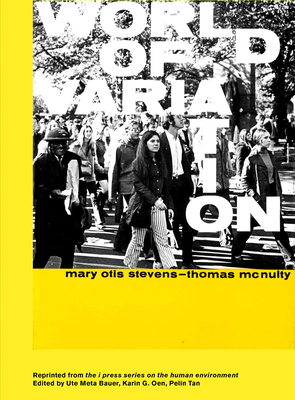
World of Variation: The I Press Series on the Human Environment (Paperback or Softback)
Da: BargainBookStores, Grand Rapids, MI, U.S.A.
Valutazione del venditore 5 su 5 stelle
Paperback or Softback. Condizione: New. World of Variation: The I Press Series on the Human Environment. Book.
-
World of Variation The i Press Series on the Human Environment
Da: Lakeside Books, Benton Harbor, MI, U.S.A.
Valutazione del venditore 5 su 5 stelle
EUR 15,04
Spedizione EUR 3,39
Spedito in U.S.A.Quantità: Più di 20 disponibili
Aggiungi al carrelloCondizione: New. Brand New! Not Overstocks or Low Quality Book Club Editions! Direct From the Publisher! We're not a giant, faceless warehouse organization! We're a small town bookstore that loves books and loves it's customers! Buy from Lakeside Books!
-

World of Variation
Da: GreatBookPrices, Columbia, MD, U.S.A.
Valutazione del venditore 5 su 5 stelle
EUR 17,80
Spedizione EUR 2,24
Spedito in U.S.A.Quantità: Più di 20 disponibili
Aggiungi al carrelloCondizione: As New. Unread book in perfect condition.
-
World of Variation: The i Press Series on the Human Environment
Da: California Books, Miami, FL, U.S.A.
Valutazione del venditore 5 su 5 stelle
EUR 21,00
Spedizione gratuita
Spedito in U.S.A.Quantità: Più di 20 disponibili
Aggiungi al carrelloCondizione: New.
-

EUR 21,79
Spedizione gratuita
Spedito in U.S.A.Quantità: Più di 20 disponibili
Aggiungi al carrelloPaperback. Condizione: New. An imaginative reenvisioning of spatial and social relations from America's 1960s urbanist movementIn World of Variation (1970), American architects Mary Otis Stevens (born 1928) and Thomas McNulty (1919-84) outlined a radical reenvisioning of socio-spatial relationships, informed by their background in philosophy and commitment to decentralizing hierarchies. Writing in the context of the Cold War and the political activism of 1960s America, they identified possible design solutions to then-current social issues. In striking abstract drawings, Stevens visualized aspects of the urban environment, proposing a design philosophy she termed "free flow." These diagrams give expression to both the "flow" of movement and points of "hesitations."This volume is a facsimile of World of Variation, accompanying the MIT Museum's exhibition on the work of Mary Otis Stevens.Born in New York in 1928, Mary Otis Stevens is considered one of the most important female American postwar architects. She is best known for Lincoln House (1965), designed with her then-husband Thomas McNulty, the first exposed-concrete and glass house in the US.Thomas McNulty (1919-84) taught on MIT's faculty from 1949 to 1956, before leaving to open a firm with his then wife, Mary Otis Stevens. In 1978, the couple divorced and McNulty moved to Saudi Arabia, where he taught at the University of Riyadh.
-
World of Variation (Paperback)
Da: Grand Eagle Retail, Bensenville, IL, U.S.A.
Valutazione del venditore 5 su 5 stelle
Paperback. Condizione: new. Paperback. An imaginative reenvisioning of spatial and social relations from America's 1960s urbanist movementIn World of Variation (1970), American architects Mary Otis Stevens (born 1928) and Thomas McNulty (191984) outlined a radical reenvisioning of socio-spatial relationships, informed by their background in philosophy and commitment to decentralizing hierarchies. Writing in the context of the Cold War and the political activism of 1960s America, they identified possible design solutions to then-current social issues. In striking abstract drawings, Stevens visualized aspects of the urban environment, proposing a design philosophy she termed free flow. These diagrams give expression to both the flow of movement and points of hesitations.This volume is a facsimile of World of Variation, accompanying the MIT Museums exhibition on the work of Mary Otis Stevens.Born in New York in 1928, Mary Otis Stevens is considered one of the most important female American postwar architects. She is best known for Lincoln House (1965), designed with her then-husband Thomas McNulty, the first exposed-concrete and glass house in the US.Thomas McNulty (191984) taught on MITs faculty from 1949 to 1956, before leaving to open a firm with his then wife, Mary Otis Stevens. In 1978, the couple divorced and McNulty moved to Saudi Arabia, where he taught at the University of Riyadh. An imaginative reenvisioning of spatial and social relations from Americas 1960s urbanist movement Shipping may be from multiple locations in the US or from the UK, depending on stock availability.
-

World of Variation
Da: Rarewaves.com USA, London, LONDO, Regno Unito
Valutazione del venditore 5 su 5 stelle
EUR 22,87
Spedizione gratuita
Spedito da Regno Unito a U.S.A.Quantità: 5 disponibili
Aggiungi al carrelloPaperback. Condizione: New. An imaginative reenvisioning of spatial and social relations from America's 1960s urbanist movementIn World of Variation (1970), American architects Mary Otis Stevens (born 1928) and Thomas McNulty (1919-84) outlined a radical reenvisioning of socio-spatial relationships, informed by their background in philosophy and commitment to decentralizing hierarchies. Writing in the context of the Cold War and the political activism of 1960s America, they identified possible design solutions to then-current social issues. In striking abstract drawings, Stevens visualized aspects of the urban environment, proposing a design philosophy she termed "free flow." These diagrams give expression to both the "flow" of movement and points of "hesitations."This volume is a facsimile of World of Variation, accompanying the MIT Museum's exhibition on the work of Mary Otis Stevens.Born in New York in 1928, Mary Otis Stevens is considered one of the most important female American postwar architects. She is best known for Lincoln House (1965), designed with her then-husband Thomas McNulty, the first exposed-concrete and glass house in the US.Thomas McNulty (1919-84) taught on MIT's faculty from 1949 to 1956, before leaving to open a firm with his then wife, Mary Otis Stevens. In 1978, the couple divorced and McNulty moved to Saudi Arabia, where he taught at the University of Riyadh.
-
World of Variation
Da: PBShop.store US, Wood Dale, IL, U.S.A.
Valutazione del venditore 5 su 5 stelle
PAP. Condizione: New. New Book. Shipped from UK. Established seller since 2000.
-
World of Variation: The I Press Series on the Human Environment
Da: Bestsellersuk, Hereford, Regno Unito
Valutazione del venditore 5 su 5 stelle
EUR 13,24
Spedizione EUR 13,75
Spedito da Regno Unito a U.S.A.Quantità: 5 disponibili
Aggiungi al carrellopaperback. Condizione: Very Good. warped, some marks to edges of pages No.1 BESTSELLERS - great prices, friendly customer service â" all orders are dispatched next working day.
-
World of Variation
Da: PBShop.store UK, Fairford, GLOS, Regno Unito
Valutazione del venditore 4 su 5 stelle

EUR 21,49
Spedizione EUR 5,75
Spedito da Regno Unito a U.S.A.Quantità: 15 disponibili
Aggiungi al carrelloPAP. Condizione: New. New Book. Shipped from UK. Established seller since 2000.
-
World of Variation: The I Press Series on the Human Environment
Da: Majestic Books, Hounslow, Regno Unito
Valutazione del venditore 4 su 5 stelle
EUR 24,94
Spedizione EUR 7,45
Spedito da Regno Unito a U.S.A.Quantità: 3 disponibili
Aggiungi al carrelloCondizione: New.
-
World of Variation
Da: Brook Bookstore On Demand, Napoli, NA, Italia
Valutazione del venditore 5 su 5 stelle
EUR 27,22
Spedizione EUR 5,50
Spedito da Italia a U.S.A.Quantità: 4 disponibili
Aggiungi al carrelloCondizione: new.
-
World of Variation: The i Press Series on the Human Environment
Da: Ria Christie Collections, Uxbridge, Regno Unito
Valutazione del venditore 5 su 5 stelle
EUR 22,82
Spedizione EUR 13,73
Spedito da Regno Unito a U.S.A.Quantità: Più di 20 disponibili
Aggiungi al carrelloCondizione: New. In.
-
World of Variation
Da: Revaluation Books, Exeter, Regno Unito
Valutazione del venditore 5 su 5 stelle
EUR 25,51
Spedizione EUR 11,46
Spedito da Regno Unito a U.S.A.Quantità: 2 disponibili
Aggiungi al carrelloPaperback. Condizione: Brand New. new edition. 207 pages. 8.00x6.00x0.50 inches. In Stock.
-
World of Variation /anglais
Lingua: Inglese
Editore: Weiss Publications 2022-11-17, 2022
ISBN 10: 3948318174 ISBN 13: 9783948318178
Da: Chiron Media, Wallingford, Regno Unito
Valutazione del venditore 4 su 5 stelle
EUR 20,84
Spedizione EUR 17,76
Spedito da Regno Unito a U.S.A.Quantità: 4 disponibili
Aggiungi al carrelloPaperback. Condizione: New.
-

World of Variation
Da: GreatBookPricesUK, Woodford Green, Regno Unito
Valutazione del venditore 5 su 5 stelle
EUR 20,70
Spedizione EUR 17,19
Spedito da Regno Unito a U.S.A.Quantità: 10 disponibili
Aggiungi al carrelloCondizione: New.
-
World of Variation
Da: Revaluation Books, Exeter, Regno Unito
Valutazione del venditore 5 su 5 stelle
EUR 26,94
Spedizione EUR 11,46
Spedito da Regno Unito a U.S.A.Quantità: 2 disponibili
Aggiungi al carrelloPaperback. Condizione: Brand New. new edition. 207 pages. 8.00x6.00x0.50 inches. In Stock.
-
World of Variation: The I Press Series on the Human Environment
Da: Books Puddle, New York, NY, U.S.A.
Valutazione del venditore 4 su 5 stelle
Condizione: New.
-
World of Variation: The i Press Series on the Human Environment
Da: Russell Books, Victoria, BC, Canada
Valutazione del venditore 4 su 5 stelle
EUR 21,87
Spedizione EUR 16,98
Spedito da Canada a U.S.A.Quantità: Più di 20 disponibili
Aggiungi al carrellopaperback. Condizione: New. Special order direct from the distributor.
-
World of Variation: The I Press Series on the Human Environment
Da: Kennys Bookshop and Art Galleries Ltd., Galway, GY, Irlanda
Valutazione del venditore 5 su 5 stelle
EUR 28,12
Spedizione EUR 10,50
Spedito da Irlanda a U.S.A.Quantità: 4 disponibili
Aggiungi al carrelloCondizione: New. 2022. New. Paperback. . . . . .
-

World of Variation
Da: GreatBookPricesUK, Woodford Green, Regno Unito
Valutazione del venditore 5 su 5 stelle
EUR 24,43
Spedizione EUR 17,19
Spedito da Regno Unito a U.S.A.Quantità: 10 disponibili
Aggiungi al carrelloCondizione: As New. Unread book in perfect condition.
-
World of Variation: The I Press Series on the Human Environment
Da: Biblios, Frankfurt am main, HESSE, Germania
Valutazione del venditore 4 su 5 stelle
EUR 31,28
Spedizione EUR 9,95
Spedito da Germania a U.S.A.Quantità: 3 disponibili
Aggiungi al carrelloCondizione: New.
-
World of Variation: The I Press Series on the Human Environment
Da: Kennys Bookstore, Olney, MD, U.S.A.
Valutazione del venditore 4 su 5 stelle
Condizione: New. 2022. New. Paperback. . . . . . Books ship from the US and Ireland.
-

World of Variation
Da: Rarewaves USA United, OSWEGO, IL, U.S.A.
Valutazione del venditore 5 su 5 stelle
EUR 23,44
Spedizione EUR 42,47
Spedito in U.S.A.Quantità: Più di 20 disponibili
Aggiungi al carrelloPaperback. Condizione: New. An imaginative reenvisioning of spatial and social relations from America's 1960s urbanist movementIn World of Variation (1970), American architects Mary Otis Stevens (born 1928) and Thomas McNulty (1919-84) outlined a radical reenvisioning of socio-spatial relationships, informed by their background in philosophy and commitment to decentralizing hierarchies. Writing in the context of the Cold War and the political activism of 1960s America, they identified possible design solutions to then-current social issues. In striking abstract drawings, Stevens visualized aspects of the urban environment, proposing a design philosophy she termed "free flow." These diagrams give expression to both the "flow" of movement and points of "hesitations."This volume is a facsimile of World of Variation, accompanying the MIT Museum's exhibition on the work of Mary Otis Stevens.Born in New York in 1928, Mary Otis Stevens is considered one of the most important female American postwar architects. She is best known for Lincoln House (1965), designed with her then-husband Thomas McNulty, the first exposed-concrete and glass house in the US.Thomas McNulty (1919-84) taught on MIT's faculty from 1949 to 1956, before leaving to open a firm with his then wife, Mary Otis Stevens. In 1978, the couple divorced and McNulty moved to Saudi Arabia, where he taught at the University of Riyadh.
-
WORLD OF VARIATION
Da: Speedyhen, Hertfordshire, Regno Unito
Valutazione del venditore 5 su 5 stelle
EUR 21,07
Spedizione EUR 47,00
Spedito da Regno Unito a U.S.A.Quantità: 4 disponibili
Aggiungi al carrelloCondizione: NEW.
-

World of Variation (Paperback)
Da: AussieBookSeller, Truganina, VIC, Australia
Valutazione del venditore 5 su 5 stelle
EUR 45,17
Spedizione EUR 31,42
Spedito da Australia a U.S.A.Quantità: 1 disponibili
Aggiungi al carrelloPaperback. Condizione: new. Paperback. An imaginative reenvisioning of spatial and social relations from America's 1960s urbanist movementIn World of Variation (1970), American architects Mary Otis Stevens (born 1928) and Thomas McNulty (191984) outlined a radical reenvisioning of socio-spatial relationships, informed by their background in philosophy and commitment to decentralizing hierarchies. Writing in the context of the Cold War and the political activism of 1960s America, they identified possible design solutions to then-current social issues. In striking abstract drawings, Stevens visualized aspects of the urban environment, proposing a design philosophy she termed free flow. These diagrams give expression to both the flow of movement and points of hesitations.This volume is a facsimile of World of Variation, accompanying the MIT Museums exhibition on the work of Mary Otis Stevens.Born in New York in 1928, Mary Otis Stevens is considered one of the most important female American postwar architects. She is best known for Lincoln House (1965), designed with her then-husband Thomas McNulty, the first exposed-concrete and glass house in the US.Thomas McNulty (191984) taught on MITs faculty from 1949 to 1956, before leaving to open a firm with his then wife, Mary Otis Stevens. In 1978, the couple divorced and McNulty moved to Saudi Arabia, where he taught at the University of Riyadh. An imaginative reenvisioning of spatial and social relations from Americas 1960s urbanist movement Shipping may be from our Sydney, NSW warehouse or from our UK or US warehouse, depending on stock availability.
-

World of Variation
Da: Rarewaves.com UK, London, Regno Unito
Valutazione del venditore 5 su 5 stelle
EUR 20,69
Spedizione EUR 74,50
Spedito da Regno Unito a U.S.A.Quantità: 5 disponibili
Aggiungi al carrelloPaperback. Condizione: New. An imaginative reenvisioning of spatial and social relations from America's 1960s urbanist movementIn World of Variation (1970), American architects Mary Otis Stevens (born 1928) and Thomas McNulty (1919-84) outlined a radical reenvisioning of socio-spatial relationships, informed by their background in philosophy and commitment to decentralizing hierarchies. Writing in the context of the Cold War and the political activism of 1960s America, they identified possible design solutions to then-current social issues. In striking abstract drawings, Stevens visualized aspects of the urban environment, proposing a design philosophy she termed "free flow." These diagrams give expression to both the "flow" of movement and points of "hesitations."This volume is a facsimile of World of Variation, accompanying the MIT Museum's exhibition on the work of Mary Otis Stevens.Born in New York in 1928, Mary Otis Stevens is considered one of the most important female American postwar architects. She is best known for Lincoln House (1965), designed with her then-husband Thomas McNulty, the first exposed-concrete and glass house in the US.Thomas McNulty (1919-84) taught on MIT's faculty from 1949 to 1956, before leaving to open a firm with his then wife, Mary Otis Stevens. In 1978, the couple divorced and McNulty moved to Saudi Arabia, where he taught at the University of Riyadh.

