
Importo totale (1 articolo articoli):
Destinazione ordine:

9786208975210 - The Use of Gamification in the Mathematics Teaching-Learning Process: Turning Challenges into Opportunities through a Didactic Sequence di Dos Santos, Arleide Conce... (6 risultati)
Vai alla pagina principale dei risultati di ricerca
Filtri di ricerca
Tipo di articolo
- Tutti i tipi di prodotto
- Libri (6)
- Riviste e Giornali (Nessun altro risultato corrispondente a questo perfezionamento)
- Fumetti (Nessun altro risultato corrispondente a questo perfezionamento)
- Spartiti (Nessun altro risultato corrispondente a questo perfezionamento)
- Arte, Stampe e Poster (Nessun altro risultato corrispondente a questo perfezionamento)
- Fotografie (Nessun altro risultato corrispondente a questo perfezionamento)
- Mappe (Nessun altro risultato corrispondente a questo perfezionamento)
- Manoscritti e Collezionismo cartaceo (Nessun altro risultato corrispondente a questo perfezionamento)
Condizioni Maggiori informazioni
- Nuovo (6)
- Come nuovo, Ottimo o Quasi ottimo (Nessun altro risultato corrispondente a questo perfezionamento)
- Molto buono o Buono (Nessun altro risultato corrispondente a questo perfezionamento)
- Discreto o Mediocre (Nessun altro risultato corrispondente a questo perfezionamento)
- Come descritto (Nessun altro risultato corrispondente a questo perfezionamento)
Legatura
- Tutte
- Rilegato (Nessun altro risultato corrispondente a questo perfezionamento)
- Brossura (6)
Ulteriori caratteristiche
- Prima ed. (Nessun altro risultato corrispondente a questo perfezionamento)
- Copia autograf. (Nessun altro risultato corrispondente a questo perfezionamento)
- Sovracoperta (Nessun altro risultato corrispondente a questo perfezionamento)
- Con foto (2)
- Non Print on Demand (2)
Lingua (1)
Prezzo
- Qualsiasi prezzo
- Inferiore a EUR 20 (Nessun altro risultato corrispondente a questo perfezionamento)
- EUR 20 a EUR 40
- Superiore a EUR 40
Spedizione gratuita
Paese del venditore
Valutazione venditore
-
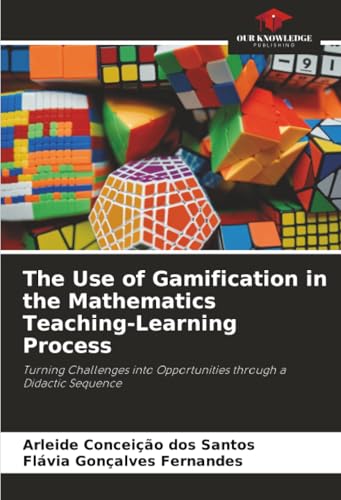
The Use of Gamification in the Mathematics Teaching-Learning Process: Turning Challenges into Opportunities through a Didactic Sequence
Da: California Books, Miami, FL, U.S.A.
Valutazione del venditore 5 su 5 stelle

EUR 48,89
Spedizione gratuita
Spedito in U.S.A.Quantità: Più di 20 disponibili
Aggiungi al carrelloCondizione: New.
-

EUR 39,35
Spedizione EUR 70,00
Spedito da Germania a U.S.A.Quantità: 5 disponibili
Aggiungi al carrelloTaschenbuch. Condizione: Neu. The Use of Gamification in the Mathematics Teaching-Learning Process | Turning Challenges into Opportunities through a Didactic Sequence | Arleide Conceição Dos Santos (u. a.) | Taschenbuch | Englisch | 2025 | Our Knowledge Publishing | EAN 9786208975210 | Verantwortliche Person für die EU: SIA OmniScriptum Publishing, Brivibas Gatve 197, 1039 RIGA, LETTLAND, customerservice[at]vdm-vsg[dot]de | Anbieter: preigu.
-
The Use of Gamification in the Mathematics Teaching-Learning Process
Da: BuchWeltWeit Ludwig Meier e.K., Bergisch Gladbach, Germania
Valutazione del venditore 5 su 5 stelle
EUR 43,90
Spedizione EUR 23,00
Spedito da Germania a U.S.A.Quantità: 2 disponibili
Aggiungi al carrelloTaschenbuch. Condizione: Neu. This item is printed on demand - it takes 3-4 days longer - Neuware -This book investigates the use of gamification in the teaching-learning process of mathematics in the 8th grade, with a focus on understanding and applying affine functions. Gamification, defined as the incorporation of game elements into non-playful contexts, proved to be an effective methodology for increasing student engagement and motivation, promoting a more dynamic and inclusive learning environment. The didactic sequence developed used games and interactive activities to teach mathematical concepts, allowing students to apply theoretical knowledge in a practical and meaningful way. Analysis of the results indicated an improvement in the students' academic performance and in the development of cognitive and socio-emotional skills, such as critical thinking, problem solving and collaboration. The implementation of gamification, although challenging, was successful due to careful planning, the personalization of activities and the use of educational technologies. 60 pp. Englisch.
-
The Use of Gamification in the Mathematics Teaching-Learning Process (Paperback)
Da: CitiRetail, Stevenage, Regno Unito
Valutazione del venditore 5 su 5 stelle
EUR 56,09
Spedizione EUR 42,88
Spedito da Regno Unito a U.S.A.Quantità: 1 disponibili
Aggiungi al carrelloPaperback. Condizione: new. Paperback. This book investigates the use of gamification in the teaching-learning process of mathematics in the 8th grade, with a focus on understanding and applying affine functions. Gamification, defined as the incorporation of game elements into non-playful contexts, proved to be an effective methodology for increasing student engagement and motivation, promoting a more dynamic and inclusive learning environment. The didactic sequence developed used games and interactive activities to teach mathematical concepts, allowing students to apply theoretical knowledge in a practical and meaningful way. Analysis of the results indicated an improvement in the students' academic performance and in the development of cognitive and socio-emotional skills, such as critical thinking, problem solving and collaboration. The implementation of gamification, although challenging, was successful due to careful planning, the personalization of activities and the use of educational technologies. This item is printed on demand. Shipping may be from our UK warehouse or from our Australian or US warehouses, depending on stock availability.
-
The Use of Gamification in the Mathematics Teaching-Learning Process
Lingua: Inglese
Editore: Our Knowledge Publishing Jun 2025, 2025
ISBN 10: 6208975212 ISBN 13: 9786208975210
Da: buchversandmimpf2000, Emtmannsberg, BAYE, Germania
Valutazione del venditore 5 su 5 stelle
EUR 43,90
Spedizione EUR 60,00
Spedito da Germania a U.S.A.Quantità: 1 disponibili
Aggiungi al carrelloTaschenbuch. Condizione: Neu. This item is printed on demand - Print on Demand Titel. Neuware VDM Verlag, Dudweiler Landstraße 99, 66123 Saarbrücken 60 pp. Englisch.
-

EUR 44,59
Spedizione EUR 60,54
Spedito da Germania a U.S.A.Quantità: 1 disponibili
Aggiungi al carrelloTaschenbuch. Condizione: Neu. nach der Bestellung gedruckt Neuware - Printed after ordering - This book investigates the use of gamification in the teaching-learning process of mathematics in the 8th grade, with a focus on understanding and applying affine functions. Gamification, defined as the incorporation of game elements into non-playful contexts, proved to be an effective methodology for increasing student engagement and motivation, promoting a more dynamic and inclusive learning environment. The didactic sequence developed used games and interactive activities to teach mathematical concepts, allowing students to apply theoretical knowledge in a practical and meaningful way. Analysis of the results indicated an improvement in the students' academic performance and in the development of cognitive and socio-emotional skills, such as critical thinking, problem solving and collaboration. The implementation of gamification, although challenging, was successful due to careful planning, the personalization of activities and the use of educational technologies.
